Bulk material conveyor types
Saturday November-22 2025 15:18:50
Bulk material conveyor include various types such as belt conveyors, bucket elevators, screw conveyors, chain conveyors, and pneumatic conveyors. The conveying capacity varies greatly among different types of equipment. Belt conveyors can reach 3 to 800 tons per hour, screw conveyors are typically in the 100-ton range, and bucket elevators are suitable for vertical lifting, reaching up to 500 tons per hour. In terms of lifting height, bucket elevators can reach approximately 60 meters, while belt conveyors are generally used for horizontal or small-angle lifting, with inclination angles ranging from 0 to 30°. Regarding conveying distance, belt conveyors can achieve continuous conveying from 10 meters to 20 kilometers. Their working principle is mostly based on mechanical drive, utilizing the continuous movement of belts, buckets, screw blades, or chain plates to achieve a stable transfer of materials from the starting point to the target conveying distance.

Common Bulk Material Conveyor Types
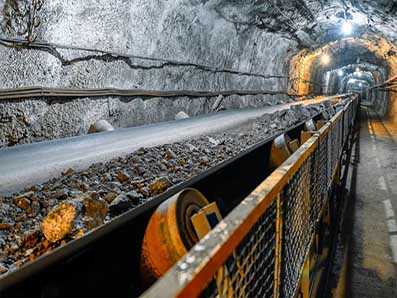
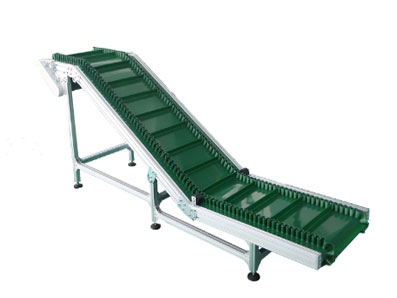
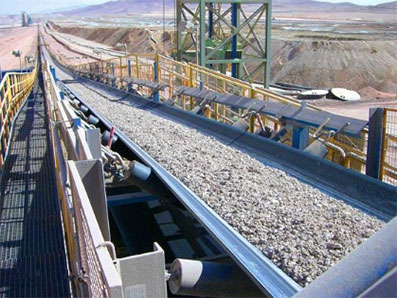
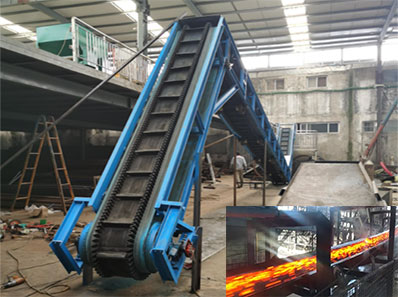
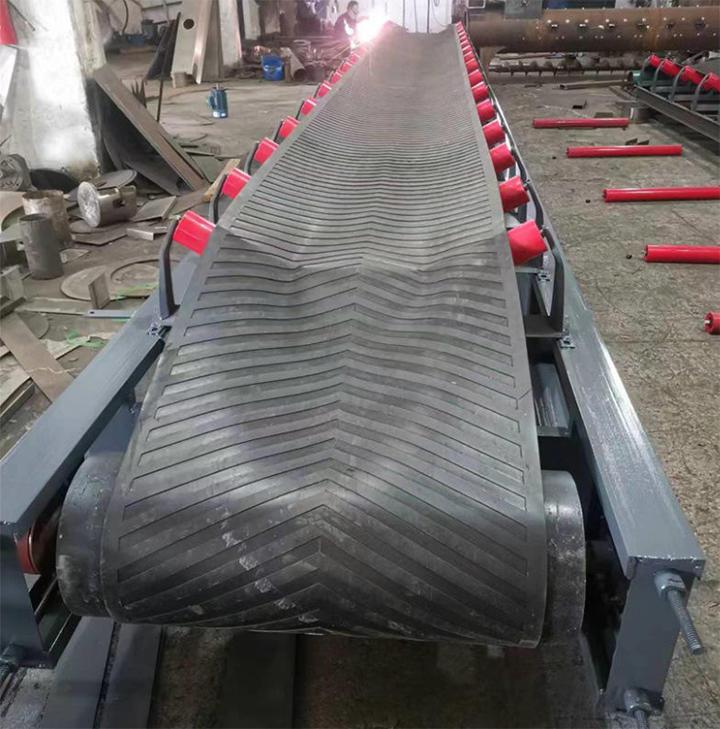
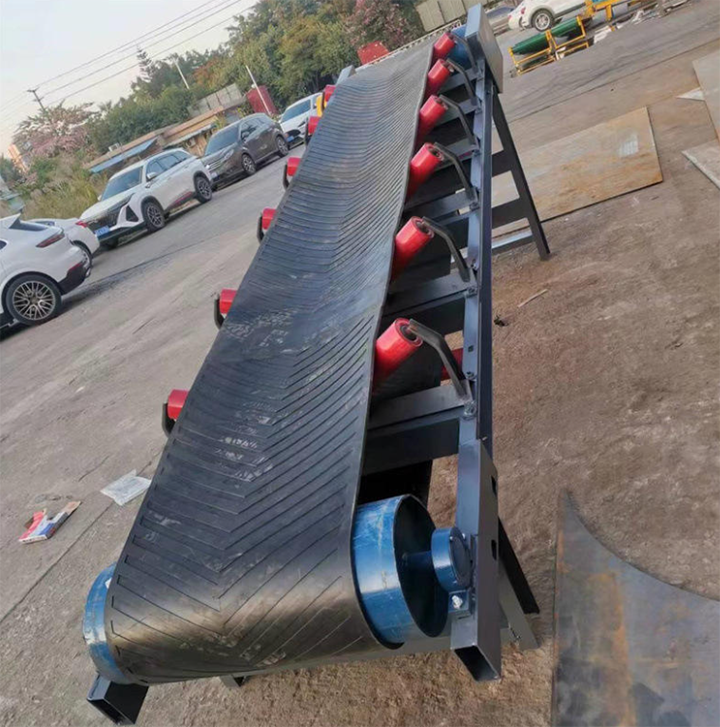
Belt conveyors use a motor to drive a reducer, which in turn drives the drums to rotate. The conveying capacity ranges widely, from 2 tons to 10,000 tons per hour. Materials include rubber, PVC, PU, steel wire rope core rubber, and metal mesh belts. Frames are available in carbon steel and stainless steel. The standard conveying angle is typically no more than 20°, but special models with large inclination angles can reach 30° to 90°. Suitable for long-distance, high-capacity horizontal or slightly inclined conveying, but not suitable for applications requiring frequent path changes, extremely confined spaces, or conveying viscous or high-temperature materials.
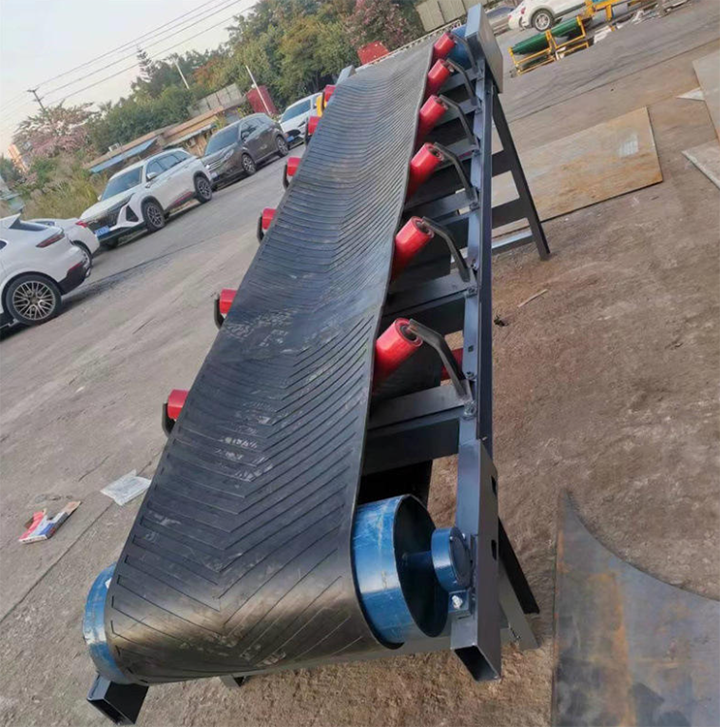
Bucket elevators typically have a conveying capacity between 5 and 800 cubic meters per hour. Materials are mostly carbon steel or stainless steel, and traction components include high-strength rubber belts and forged chains. With a 90° vertical lifting design, they have a small footprint and good sealing, making them ideal for lifting powdery or granular materials from a low point to a high point in confined spaces. This equipment has a compact structure and is almost entirely driven by an electric motor.
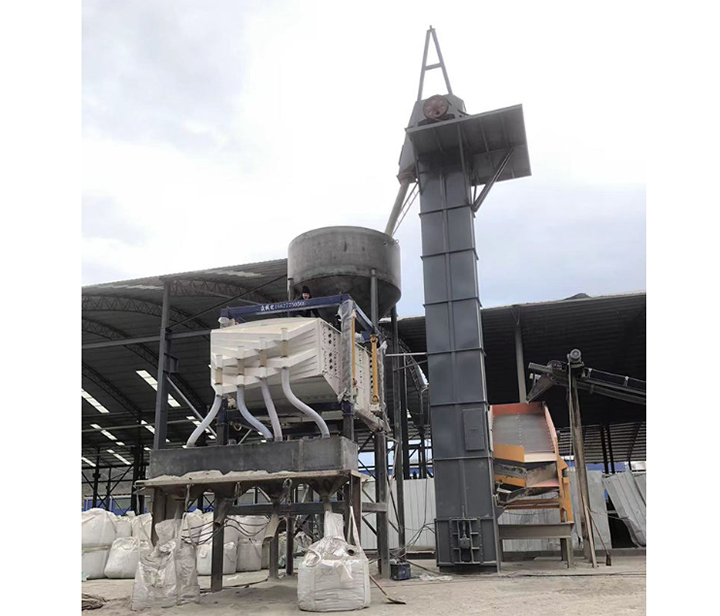
Screw conveyors typically have a conveying capacity of less than 100 cubic meters per hour. The screw blades and shafts are made of materials such as carbon steel, stainless steel, wear-resistant steel, and various alloy coatings. It can achieve conveying from 0° to 90°, but the greater the inclination angle, the lower the efficiency. Therefore, it is most commonly used for short-distance horizontal or small-angle conveying. Its simple structure and excellent sealing make it suitable for processes requiring mixing, heating, or dust control during conveying. The power source is mostly electric motors.
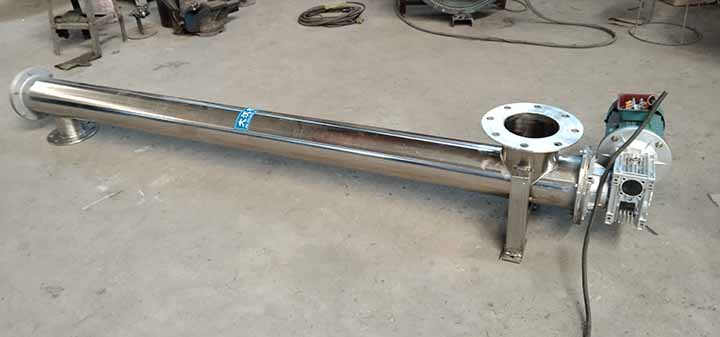
Chain conveyors have a conveying capacity ranging from 2 tons to over 2,000 tons per hour, and are made of high-strength, wear-resistant alloy steel. They can adapt to horizontal, inclined (up to 40°), and even curved conveying, and are designed for harsh working conditions involving heavy, abrasive materials and temperatures up to 800°C. Electric motors are the primary power source; in places like underground coal mines with explosion-proof requirements and no power grid, explosion-proof diesel engines may be used.
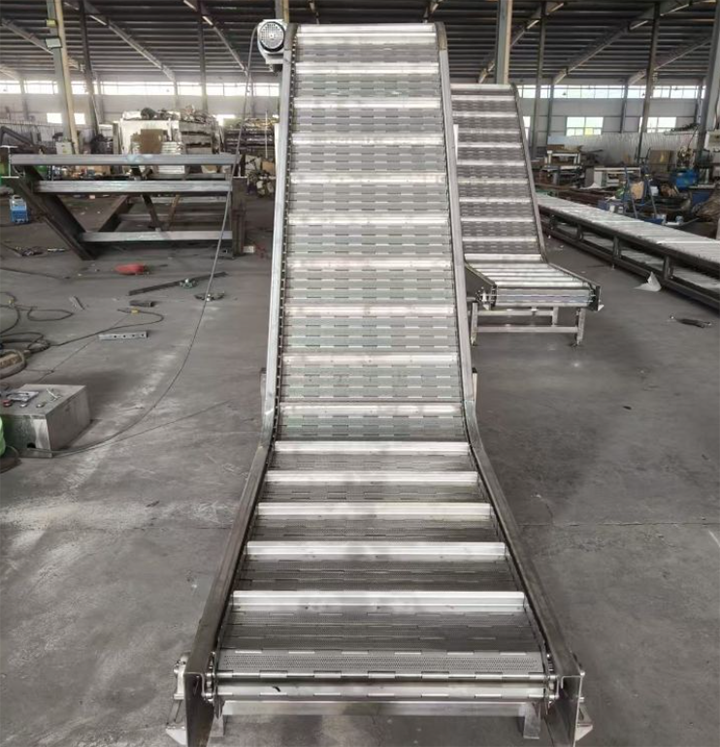
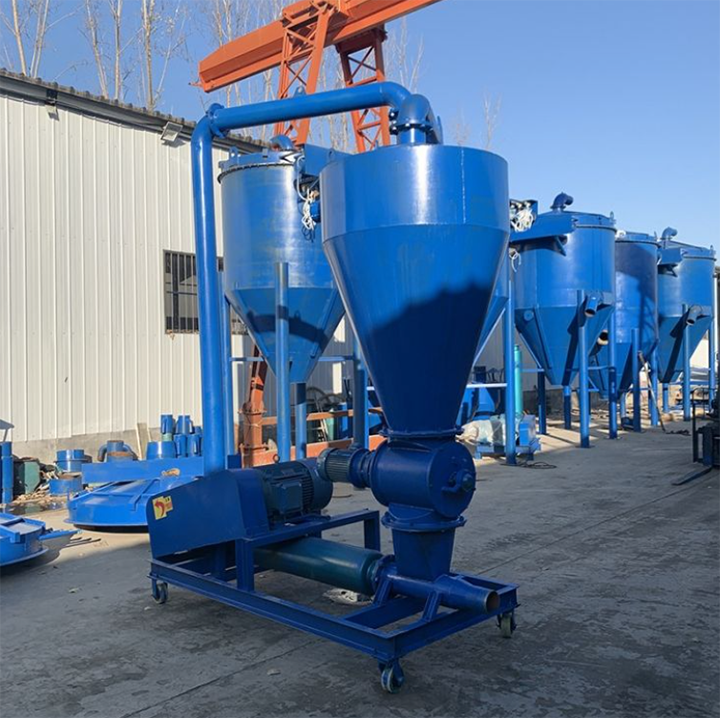
Pneumatic conveying systems typically have a conveying capacity of less than 100 tons per hour, using carbon steel, stainless steel, or wear-resistant pipes. Their pipe layout is completely flexible, allowing for conveying at any angle from 0° to 90°. They are best suited for conveying powdery materials and for use in complex layouts requiring complete sealing and dust-free environments. The system is powered by airflow, mostly generated by electric motors driving fans or air compressors.
Bulk Material Conveyor Types Comparison Table
| Conveyor Type | Main Function | Common Materials | Typical Industry Uses | Space Need | Load Suitability |
| Belt Conveyors | Continuous transport | Cartons, grains, fragile items | Packaging, storage, feeding | Flexible | Light to medium |
| Chain Conveyors | Pull by chains | Pallets, crates | Heavy goods, machinery, shipping | Large | Heavy |
| Screw Conveyors | Spiral movement | Powders, grains, sludge | Food, cement, recycling | Compact | Bulk materials |
| Pneumatic Conveyors | Air pressure flow | Powders, granules | Food, pharma, multi-floor | Flexible | Light bulk |
| Bucket Elevator | Vertical Lifting | Powder, Pellet, Grain | Grain Processing, Feed Mills, Cement Plants | Requires Significant Height Space | Medium to Heavy Lifting |
How to Choose Bulk Material Conveyor Types?
Choosing the right bulk material conveyor types requires comprehensive consideration from multiple perspectives. If space is limited, chain conveyors, screw conveyors, or bucket elevators can be chosen. If space is ample, belt conveyors can be selected, and corner devices can be used with belt conveyors. Lightweight materials can be conveyed pneumatically or with screw conveyors; heavy materials can be conveyed using plate chain conveyors or belt conveyors. For large conveying volumes and long-distance transport, belt conveyors are preferable; for medium conveying volumes and significant changes in inclination angle, bucket elevators or plate chain conveyors can be chosen; for small conveying volumes and short distances, screw conveyors can be used.
Bulk Material Conveyor Application Cases
Different types of bulk material conveyors have different roles in specific scenarios. The following are examples of the roles of different types of conveying systems in practical applications such as cement plants, grain mills, and cargo terminals.
In cement plant raw material conveying systems, long-distance belt conveyors can be used to transport limestone from the crushing station to the raw material silo, and then bucket elevators can vertically lift the material to the feed inlet of the raw material mill. This system can increase conveying capacity and meet the needs of continuous production.
In grain processing plants, screw conveyors are often used for short-distance, enclosed conveying, such as feeding corn flour from the mixing silo to the packaging machine inlet. The screw structure avoids dust and maintains a clean environment.
At port bulk cargo terminals, belt conveyor systems, in conjunction with stacker-reclaimers, can achieve long-distance, high-efficiency transportation of coal or ore from ships to the stockpile, often exceeding 1000 meters, reducing manual loading and unloading costs and improving operational efficiency.
Bulk material conveyors come in a variety of types, each with its own advantages in conveying capacity, lifting height, applicable materials, and spatial arrangement. In practical engineering, multiple conveying devices are often used in combination to achieve a more efficient and stable continuous conveying system. Dahan Machinery can provide customized solutions for different materials such as sand, dust, and granules; its product line covers various types such as belts, chains, and screw conveyors; its conveying systems can be integrated with PLCs, sensors, and other systems; and it is competitive in terms of delivery time, cost control, and energy efficiency optimization.