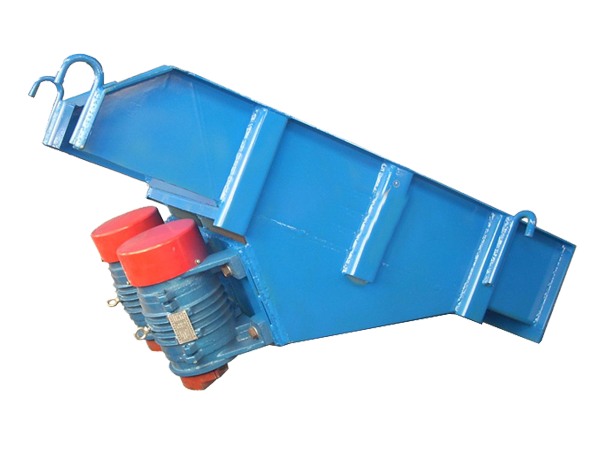
Vibrating Feeder
Vibrating feeders are used for continuous and uniform feeding of bulk, granular and block materials before primary crushing, stably conveying stone, ore and aggregates in crushing and screening lines. Prices typically range from $2,800 to $45,000.
Feed size: ≤500mm
Production capacity: 10-800 tons/hour
Vibration frequency: 12-25 Hz
Amplitude: 1.5-4.5mm
Motor power: 2.2-30kW
Introduction of Vibrating Feeder
As a critical piece of bulk material handling equipment, this Vibrating feeder is designed to transport and feed bulk materials into a production process. It utilizes vibration to move materials along a designated path, typically into hoppers, chutes, or other equipment.
It utilizes electromagnetic or electromechanical drives to generate controlled vibrations. This motion helps to move materials smoothly and consistently, and the feed rate can usually be adjusted by varying the amplitude and frequency of the vibrations to precisely control the flow of material.
Types of Vibrating Feeder
There are primarily two types :
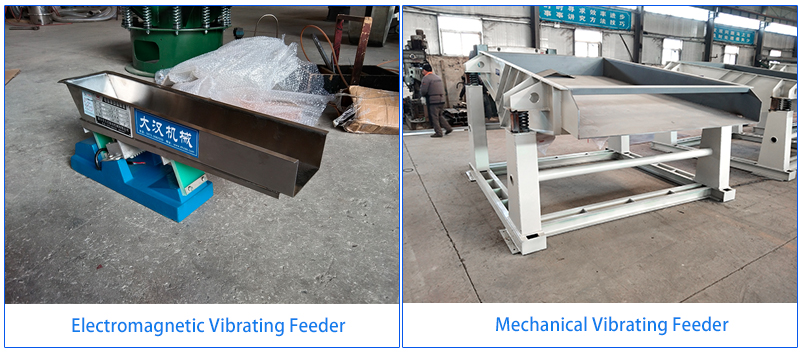
Electromagnetic Vibrating Feeders: They use electromagnetic coils to generate vibrations. The vibration frequency and amplitude are precisely controlled. They are very suitable for handling delicate materials and are often used in the pharmaceutical and food industries.
Mechanical Vibrating Feeders: They use eccentric motors to generate vibrations. They are used to separate and screen materials before they enter the primary crusher. They are designed to handle large pieces of material with high impact loads. They are more rugged than electromagnetic feeders and are very suitable for heavy-duty applications. They are often used in the mining and construction industries.
These are two common vibrating feeding equipments, they have some differences in working principle, structure, performance and so on.
Mechanical vs Electromagnetic type
| Working principle | Motor eccentric force | Electromagnetic force |
| Structure | Simple | Complex |
| Vibration frequency | Fixed | Adjustable |
| Vibration amplitude | Large | Small |
| Control accuracy | Low | High |
| Maintenance cost | Low | High |
| Scope of application | Large flow, coarse-grained materials | Fine materials, high-precision control |
Tips: For high-capacity, coarse materials with low precision requirements, the motor type is recommended; for fine materials, the electromagnetic type offers better control.
Technical parameters
All models listed above are available with customized options including different trough materials (mild steel, stainless steel 304/316L, and abrasion-resistant steel).
| Model | Width(mm) | Power(KW) | Angle(°) | Capacity(T/H) | Weight(kg) |
| DZC30250 | 300 | 0.75 | 0~5 | 15-30 | 325 |
| DZC30300 | 300 | 0.75 | 15-25 | 390 | |
| DZC50350 | 500 | 1.5 | 30-50 | 515 | |
| DZC50400 | 500 | 1.5 | 30-40 | 590 | |
| DZC50450 | 500 | 1.5 | 25-30 | 665 | |
| DZC50500 | 500 | 3 | 50-80 | 820 | |
| DZC50550 | 500 | 3 | 40-70 | 900 | |
| DZC50600 | 500 | 3 | 30-60 | 980 | |
| DZC50650 | 500 | 3 | 30-50 | 1060 | |
| DZC50700 | 500 | 3 | 30-40 | 1140 | |
| DZC50750 | 500 | 3 | 20-30 | 1220 | |
| DZC70800 | 700 | 4.4 | 80-140 | 1800 | |
| DZC70850 | 700 | 4.4 | 80-130 | 1920 | |
| DZC70900 | 700 | 4.4 | 80-120 | 2040 | |
| DZC70950 | 700 | 4.4 | 70-110 | 2160 | |
| DZC701000 | 700 | 4.4 | 60-100 | 2280 |
For models not listed or custom specifications, please contact our engineering team for a tailored solution.
Special design
| Type | Image | Application |
| Basic Vibrating Feeders |
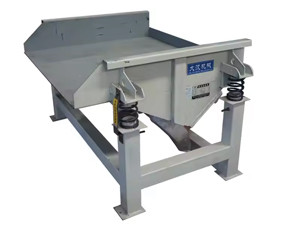 |
Feeding materials without special requirements |
| Hanging Vibrating Feeders |
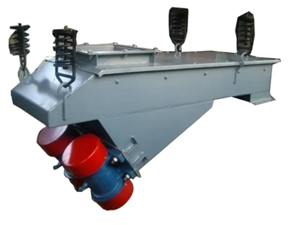 |
Suitable for occasions where space is limited or flexible layout is required, and it is usually suspended from the structure to work. |
| Enclosed Vibrating Feeders |
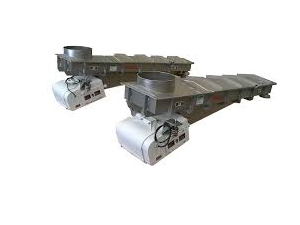 |
Feeding fragile particles, large dust and volatile materials |
| Open Vibrating Feeders |
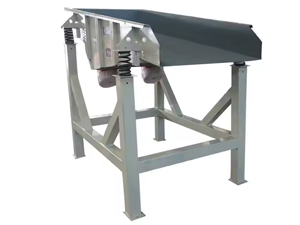 |
Used for coal preparation, and can also be used for feeding screening equipment |
| Heightened Vibrating Feeders |
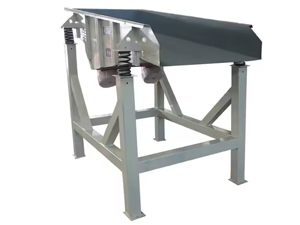 |
It is mainly used for feeding bulk materials and is suitable for applications at high places or with large inclination angles. |
| Vibrating Tube Feeders |
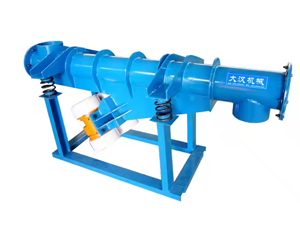 |
Used for conveying particles or powdered materials over a long distance |
Features and Benefits
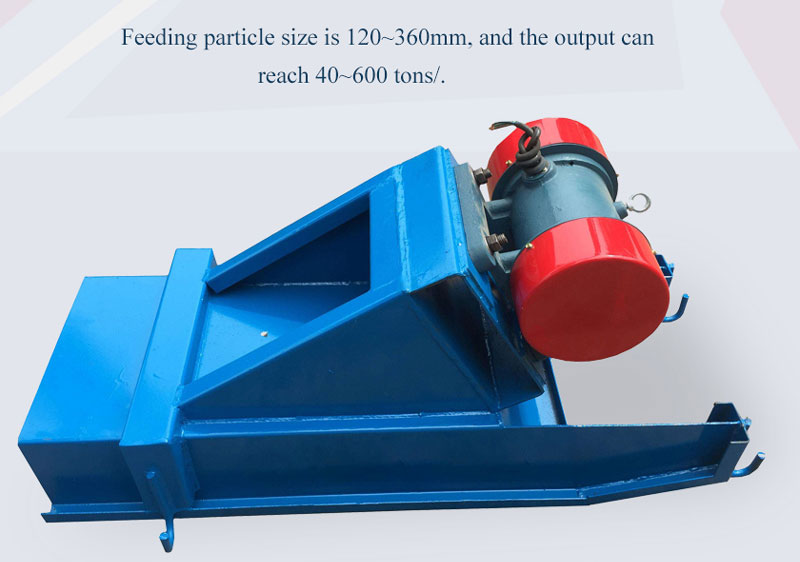
Built around the self-synchronizing principle of a vibrating motor, this equipment delivers smooth start/stop cycles, low noise, and reduced energy consumption. Suitable for handling bulk, granular, or powdered materials with feed sizes ranging from 120 to 360 mm, it can achieve a daily output of 40 to 600 tons. The material continuously bounces along a parabolic trajectory, minimizing wear on the feed chute. The excitation force is adjustable, allowing for easy and stable flow control. The enclosed structure prevents dust contamination. This series of motor type is not suitable for applications requiring explosion-proof performance.
Videos
Structure of Vibrating Feeder
This equipment typically consists of five main components: the trough, the vibrator unit, the support frame, the spring system, and the control panel.
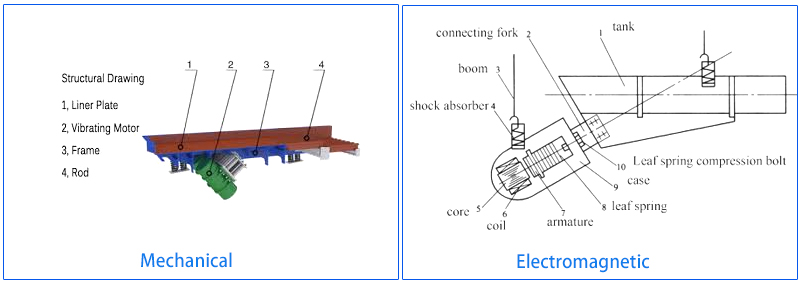
Chutes are used to carry and convey materials. They are typically made of wear-resistant materials and can be flat or V-shaped.
There are two types of vibrating devices: electromagnetic vibrators, which use electromagnetic force to generate vibration and are suitable for small and medium-sized feeders; and electric vibrators, which use an electric motor to drive an eccentric wheel to generate vibration and are suitable for most applications.
The support frame, typically made of steel, provides stable support and prevents displacement during vibration. Springs are used to isolate vibrations, reduce impact on the support structure, and ensure equipment stability.
The control system adjusts the vibration frequency and amplitude to achieve precise control of material flow.
Vibrating Feeder Working Principle
The operation cycle of this feeder follows four main stages: material loading, vibration activation, material flow along the trough, and metered discharge.
Material preparation: The material is conveyed from the storage device (such as a silo or bucket) to the feed port of it.
Vibration drive: The equipment generates vibrations through electromagnetic or electric vibrators. This vibration causes the material to move in a certain direction in the trough of the feeder.
Material flow: Due to the effect of vibration, the material is pushed in the feed trough to form a uniform flow. The frequency and amplitude of the vibration can be adjusted to control the flow rate of the material.
Quantitative feeding: It can achieve quantitative feeding of materials by adjusting the intensity and frequency of vibration to ensure a stable material supply to downstream equipment.
Applications of Vibrating Feeders in Various Industries
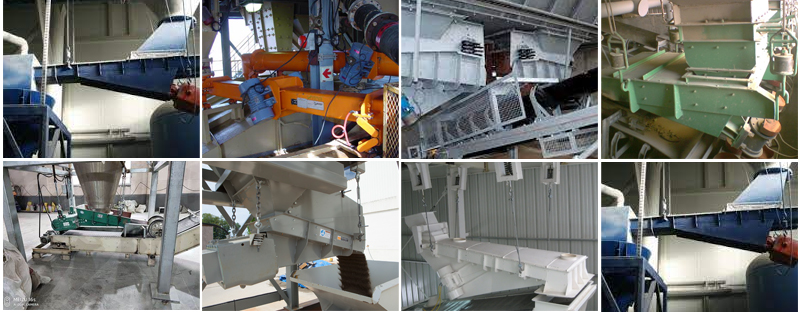
In industrial production lines, these feeders are responsible for conveying bulk materials from storage silos to subsequent processes. Compared to simple conveyor belts, they can control the material feed speed through frequency regulation.
Mining and Stone Processing
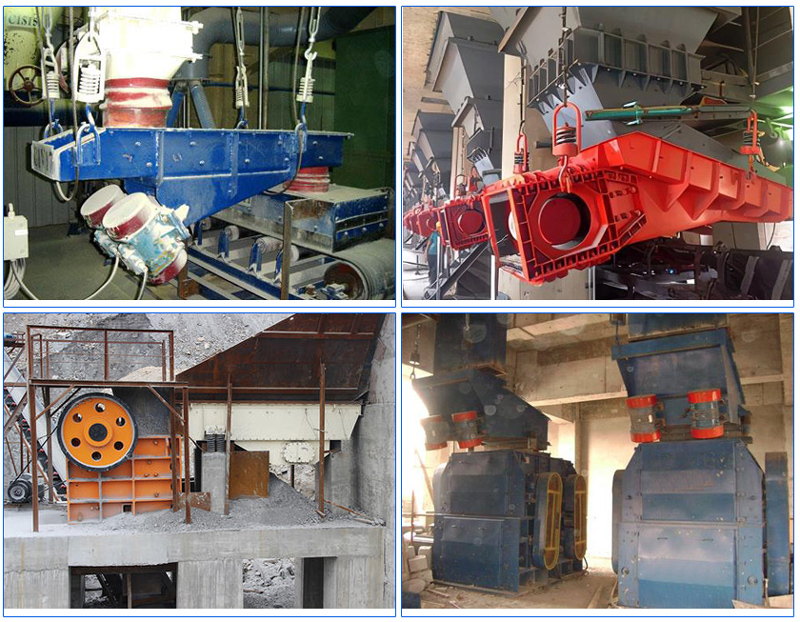
When processing freshly mined ore, this equipment is typically installed before the crusher. Because the raw ore blocks are large and highly abrasive, the feeder's vibration helps to evenly spread the stones, preventing large pieces from directly impacting the mill and reducing the burden on subsequent equipment.For example, we supplied 10 units of DZC70800 feeders to a copper mine in Zambia, processing 500 tons of ore per hour with less than 5% downtime in the first year.
Construction Materials Production
In concrete mixing plants or brick factories, sand, gravel, and cement need to be continuously fed into the mixing tanks. This equipment performs reliably in outdoor environments; even if the material contains a little moisture, the vibration can loosen it at the hopper opening, preventing material accumulation and blockage.For example, a ready-mix concrete plant in Singapore uses our DZC50500 feeder to handle 200 tons of aggregates per hour, maintaining stable operation even during the rainy season.
Food and Pharmaceutical Industries
In these industries with higher environmental requirements, stainless steel models are typically used. Before filling or mixing, granular sugars, grains, and even pharmaceutical powders must be conveyed through this equipment to the packaging stage. Its advantages lie in its simple structure and minimal gaps, significantly reducing the hassle of daily cleaning after work.For example, a dairy plant in the Netherlands uses our stainless steel electromagnetic type to convey milk powder with ±1.5% feeding accuracy, meeting strict hygiene standards.
Chemical and Electronic Manufacturing
Whether it's drying chemical granules or assembling precision electronic components, this equipment can adjust the conveying volume according to the production rhythm. Especially in circuit board assembly or cable processing, it can queue small parts and deliver them to the workstations one by one, replacing some of the tedious manual handling work.For example, a chemical factory in Thailand uses our enclosed vibrating tube feeder to convey PVC pellets, eliminating dust emission and improving workshop air quality.
Agricultural Livestock
In large-scale farms, feed distribution is also indispensable. It delivers compound feed into the feeding troughs, ensuring livestock receive evenly distributed food. This mechanized approach reduces human intervention, making the entire feeding process more orderly.For example, a poultry farm in the United States installed our equipment to automate feed distribution for 50,000 chickens, reducing labor costs by 30%.
Solutions by Industry
Mining and Quarrying — the equipment for ore feeding
Construction — feeder for aggregates and sand
Food and Beverage — stainless steel the equipment
Chemical — precise feeding for powders and granule
How to Choose Vibrating Feeder?
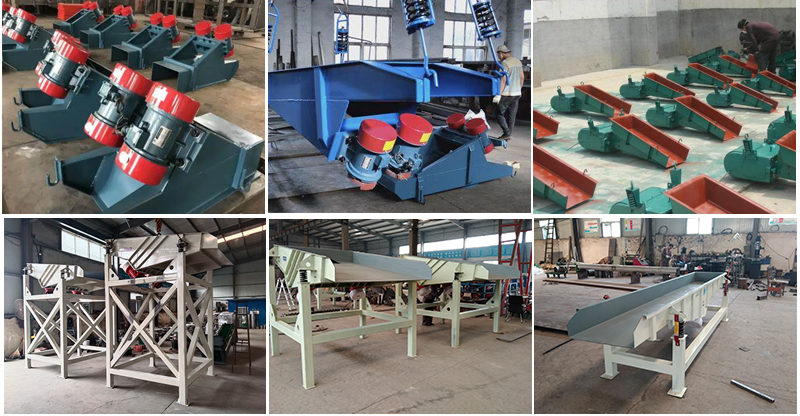
Material characteristics: The particle size, density, moisture content, and flowability of the material directly affect the selection of the feeder. The particle size determines the width and depth of the feeder trough.For materials with moisture content above 15%, we recommend choosing a motor type with higher amplitude or using a trough with anti-stick coating to prevent material buildup. Materials that are easily broken need to choose a feeder with a smaller vibration amplitude.
Conveying capacity: According to the needs of the production line, determine the processing capacity required per hour to ensure that the feeder can meet the production requirements.As a rule of thumb, choose a model with capacity 20% higher than your current requirement to allow for future production expansion and handle peak loads.
Feeding accuracy: For production processes with higher requirements for material flow, such as batching systems, select a feeder with higher feeding accuracy.For applications requiring ±1% to ±2% accuracy, electromagnetic type is recommended as they offer precise flow control through frequency adjustment.
Working environment: High or low temperature environments, humidity, dust, and other factors will affect the normal operation of the feeder, and it is necessary to select appropriate materials and sealing measures.For outdoor installations in cold climates or high-temperature environments (up to 300°C), we offer optional trough heating systems and heat-resistant linings. For dusty environments, choose enclosed models to prevent dust emission.
Installation space: The size and layout of the installation site determine the installation size and location of the feeder, ensuring that the equipment can be smoothly installed and maintained.If space is limited, we recommend our hanging it or tube type design, which requires minimal floor space while maintaining stable feeding performance.
FAQ
Q: What is the difference between motor vibrating feeder and electromagnetic vibrating feeder?
A: Motor type suits high-capacity coarse materials; electromagnetic type offers precise control for fine powders.
Q: How to choose the right vibrating feeder model for my material?
A: Consider capacity, particle size, and environment—choose a model 20% above your current needs.
Q: What is the lead time for a custom vibrating feeder?
A: Standard models ship in 15 days; custom orders take 4-8 weeks.
Sugested Products
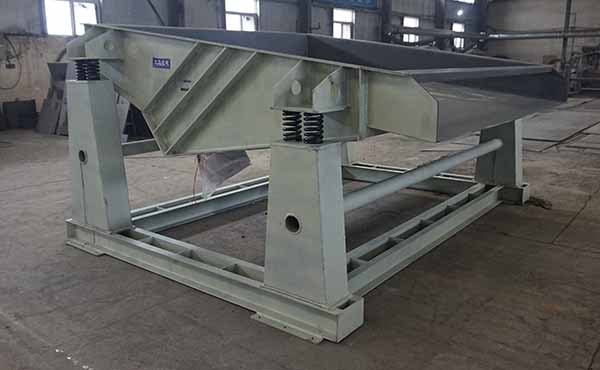
Iron ore vibrating feeder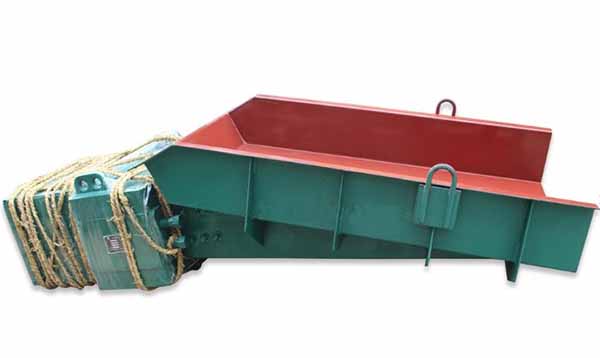
Industrial vibrating feeder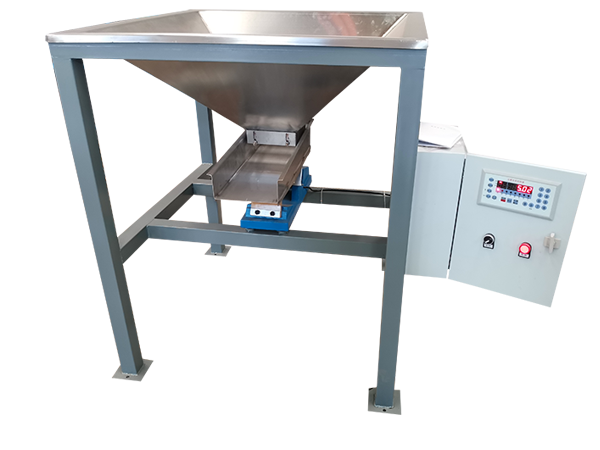
Magnetic Vibrating Feeder For Packing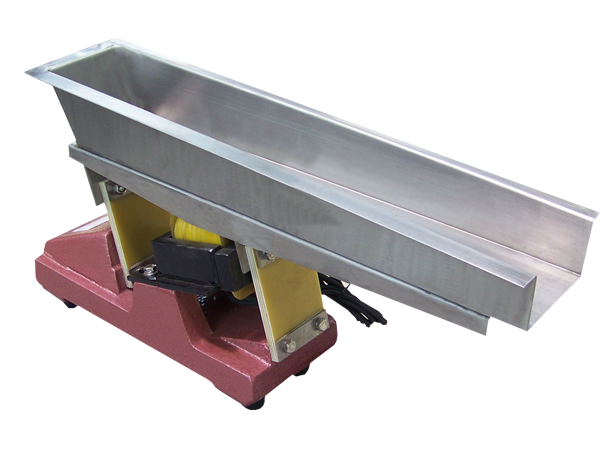
Micro Vibrating Feeder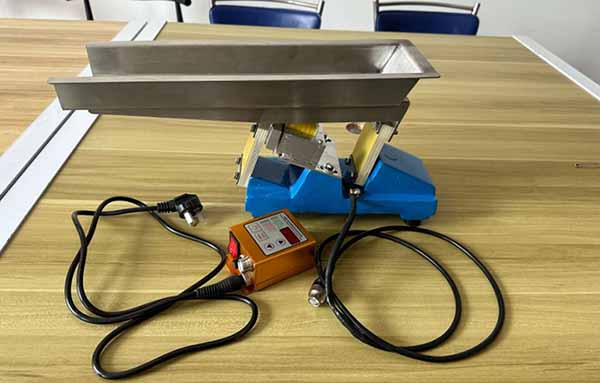
Electromagnetic Vibratory Feeder Machine Manufacturer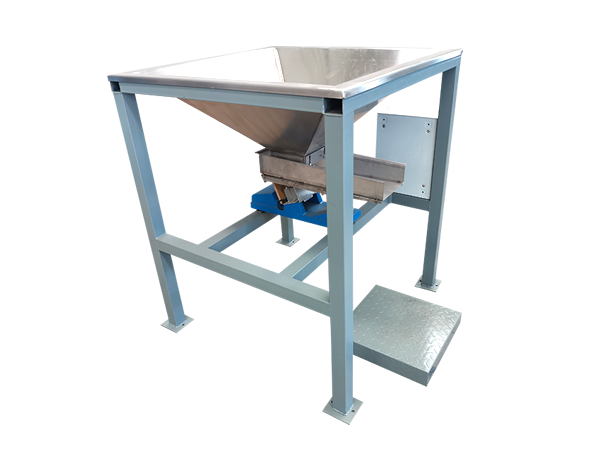
Auto Packing Electromagnetic Vibrating Feeder