Vibrating Feeder Buying Guide: 5 Key Factors to Select the Right Model
Thursday October-15 2026 14:31:39
Why does the same Vibrating Feeder run smoothly at one site but frequently experience material jamming and throughput drop at another?
Here is what you will learn in this article: what working conditions suit electromagnetic and electromechanical Vibrating Feeders respectively; how a high-deflection model solves the fluidization problem of fine powders; and the actual cost difference between carbon steel and stainless steel units in real-world applications.
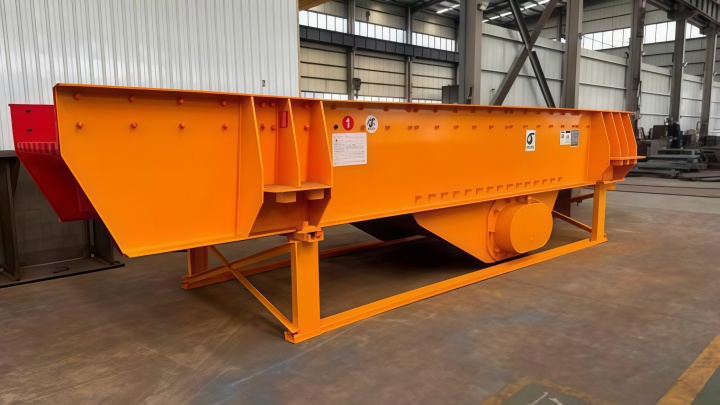
The equipment uses exciting force to vibrate the trough, causing material to be continuously thrown forward and moved along the trough to achieve uniform feeding. Unstable feeding speed, insufficient throughput, material blockage, or premature equipment failure are mostly caused by misjudgment in four areas: drive type, amplitude characteristics, material compatibility, and material selection.
Drive Type and Material Compatibility: The Foundation of Vibrating Feeder Selection
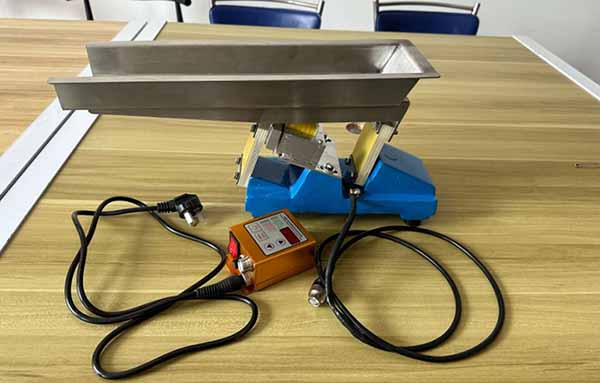
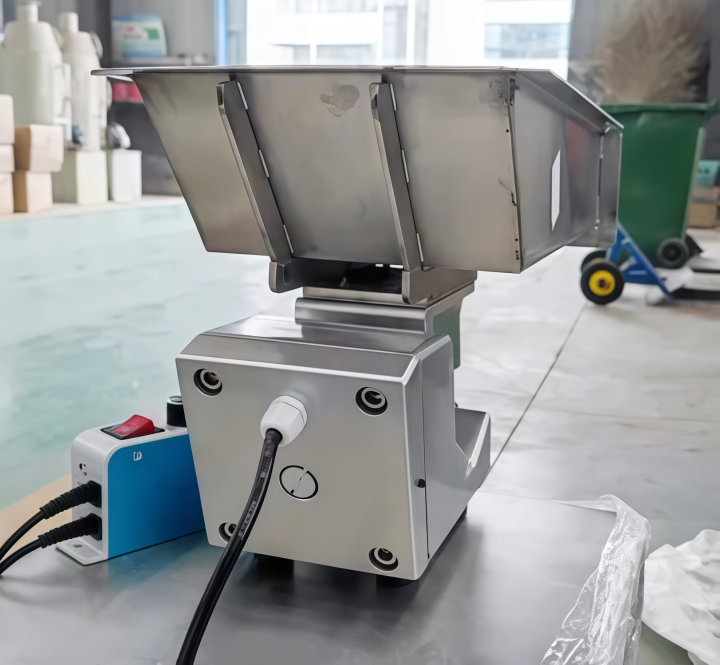
An electromagnetic unit relies on an electromagnetic coil to generate pulsed magnetic force, with a fixed vibration frequency of 3600 cycles per minute. It starts and stops quickly, and the controller enables stepless adjustment of feed rate with high control precision—steady-state accuracy can reach ±2 percent. However, it is sensitive to voltage fluctuations and ambient temperature, making it unsuitable for explosive or flammable environments.
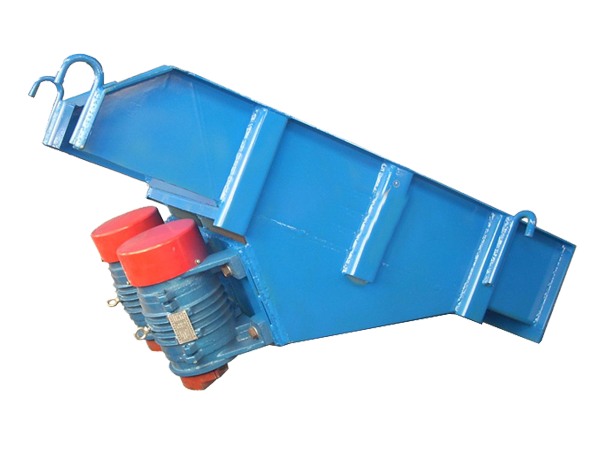
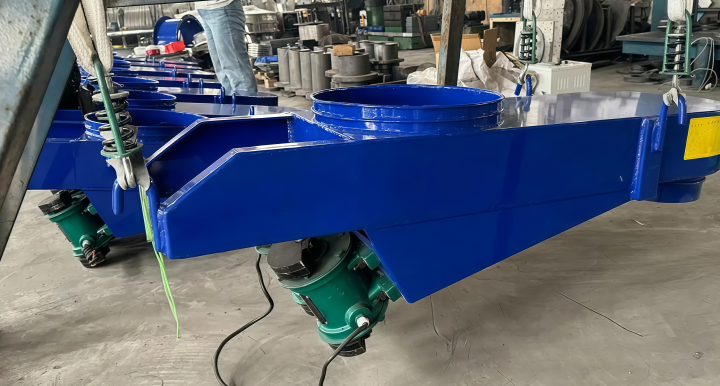
An electromechanical unit uses twin eccentric vibrating motors. When paired with a variable frequency drive, it offers flexible adjustment of amplitude and frequency combinations, with a typical frequency range of 900 to 1800 RPM. Its rugged structure makes it suitable for heavy loads and high-capacity applications. Material properties directly determine whether the equipment can perform properly. Material with a lump size exceeding 200 mm requires a sufficiently wide and deep trough to prevent clogging—a general industry rule is that the maximum lump size should not exceed one-third to one-half of the trough width. Low-density materials below 20 lb/ft³ perform better with high-amplitude, low-frequency feeding, while denser materials are better suited to low-amplitude, high-frequency electromagnetic models.
Sticky materials tend to accumulate on the trough bottom, so a model with anti-stick coating or self-cleaning capability is recommended. For fine powders that generate serious dust, a closed trough design is a necessary configuration.
High-Deflection vs. Standard-Deflection: Another Dimension in Vibrating Feeder Selection
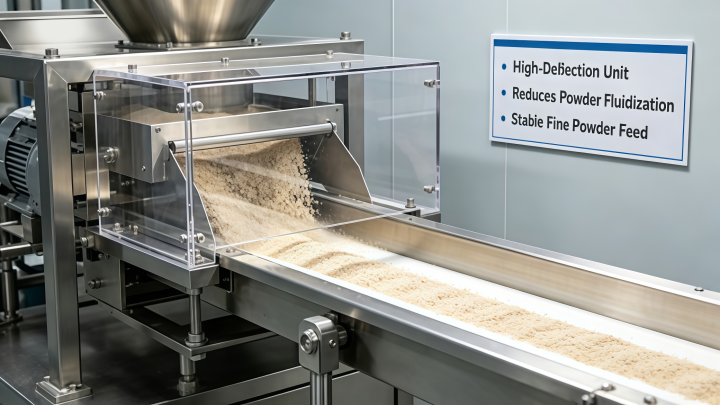
Amplitude characteristics are a frequently overlooked but critical parameter. A high-deflection model uses larger amplitude and lower frequency, with a frequency range of 10 to 25 Hz and an amplitude of 2 to 8 mm, specifically designed for materials that are difficult to feed. Fine powders tend to fluidize and surge on traditional electromagnetic units, whereas high-deflection models do not cause powder fluidization due to their low-frequency operation.
For lightweight materials with high air content, such as wood shavings or sawdust, high-deflection models also perform well. Standard-deflection models have amplitudes in the 0.5 to 1.5 mm range at approximately 50 Hz, and are suitable for conventional materials with good flowability and high bulk density. The Eriez technical white paper points out that in fine limestone feeding applications, a standard-deflection electromagnetic feeder tends to cause material to scatter on the trough surface, failing to achieve stable feeding, and the problem was resolved after switching to a high-deflection unit.
In terms of capacity matching, the theoretical processing capacity should be kept at a certain margin above the maximum capacity of downstream equipment—industry practice suggests 20 to 50 percent. The normal operating range for amplitude is 1 to 12 mm, and for frequency is 13 to 60 Hz. During selection, it is recommended to request the supplier to provide the capacity curves under different parameter combinations. Installation angle also affects feeding efficiency—measured data shows that a 10-degree downward tilt of the trough can increase conveying capacity by 30 to 40 percent, while a 15-degree downward tilt can increase it by 50 to 100 percent.
Material Selection and Maintenance Cost: Long-Term Considerations for Vibrating Feeders
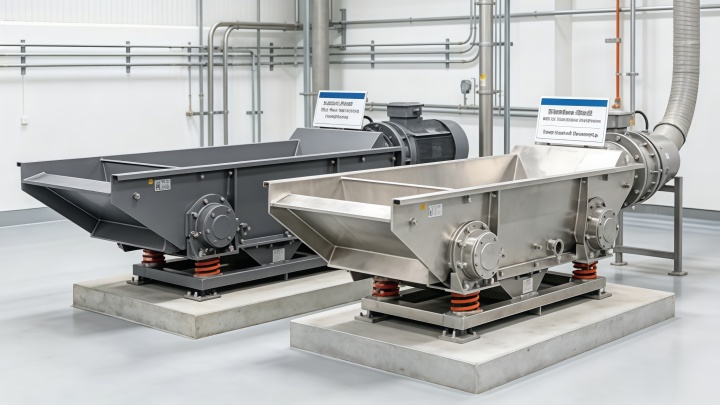
The construction material determines the service life and maintenance cost. Carbon steel is the standard economical material—it has lower cost and high structural strength, making it suitable for dry, non-corrosive conditions, but it tends to rust in humid environments. Stainless steel, typically 304 or 316L, offers corrosion resistance and easy cleaning, with a smooth surface that meets hygiene standards for food and pharmaceutical industries.
Although the initial purchase cost of a stainless steel model is higher—using similar specifications as an example, the price difference between carbon steel and stainless steel units can be around 50 percent—the long-term overall cost is actually lower in applications that require frequent washing or handling of corrosive materials. Electromagnetic units have fewer wearing parts, and maintenance requirements are relatively small.
Regularly checking whether anchor bolts are loose, whether vibration springs are broken, and whether voltage is stable are key to ensuring stable equipment operation. According to the Eriez technical white paper, improper throat dimensions can create excessive head load pressure, directly weakening the amplitude and throughput capacity. Abnormally increased noise often indicates the early signs of component failure and should be investigated promptly.
Vibrating Feeder Selection Quick Checklist
| Checklist Item | Judgment Basis |
|---|---|
| Does the maximum material lump size exceed 200 mm? | If yes, the trough width needs to be increased accordingly. The maximum lump size should not exceed one-third to one-half of the trough width. |
| Does the material belong to fine powder or lightweight category? | If yes, prioritize a high-deflection model. A unit with 2 to 8 mm amplitude and 10 to 25 Hz frequency is more suitable. |
| Are there explosion-proof or sanitary grade requirements on site? | If yes, electromagnetic type should be excluded, and the material needs to be confirmed as stainless steel or explosion-proof design. |
| Has the capacity margin of 20 to 50 percent been reserved? | Avoid long-term full-load operation. |
| Has the upstream hopper outlet size been calculated? | Head load pressure will weaken amplitude. The throat opening should not exceed 30 percent of the trough length. |
Closing Remarks
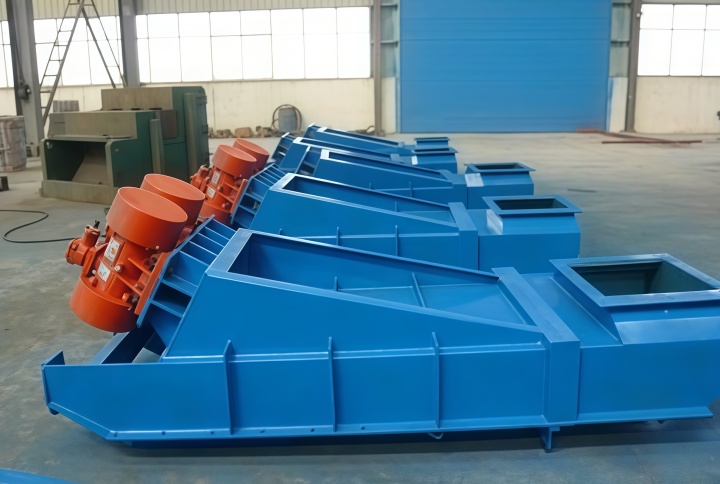
Selecting the right Vibrating Feeder is a comprehensive trade-off across five dimensions: drive type, amplitude characteristics, material compatibility, capacity matching, and material selection.
Electromagnetic models excel at precise control and frequent start-stop operations, making them suitable for dry, free-flowing materials. Electromechanical models are known for their rugged structure and high throughput capacity. High-deflection units provide a proven solution for fine powders and lightweight materials. The global vibrating feeder market is expected to reach USD 2.1 to 2.5 billion by 2025, with a compound annual growth rate of 5 to 7 percent, and the Asia-Pacific region is leading the world with a growth rate of 6 to 8 percent.
If you are selecting a Vibrating Feeder for a specific application, you can list the material parameters and site conditions and check them against the checklist—many problems become much clearer when you have a checklist to work through.
FAQ
Why are some Vibrating Feeders much more expensive while others are much cheaper?
The price difference comes from the core component materials of the drive system and the control system precision. A slightly more expensive unit that can run two to three years longer under high-frequency conditions actually has a lower overall cost of ownership.
How do I choose between carbon steel and stainless steel Vibrating Feeders?
For dry, non-corrosive conditions, carbon steel is more cost-effective. For wet conditions requiring frequent washing or handling corrosive materials, stainless steel is the better choice—it costs more but lasts longer.
What causes a Vibrating Feeder to clog and fail to discharge immediately after installation?
In most cases, the upstream hopper outlet is undersized, causing material to be overly compacted on the trough. The throat opening should not exceed 30 percent of the trough length.
Is it normal for a Vibrating Feeder to generate unusually loud noise during operation?
No. Excessive noise usually indicates loose anchor bolts, broken vibration springs, or unstable voltage. Regularly tightening bolts, inspecting springs, and stabilizing voltage can help resolve the issue.