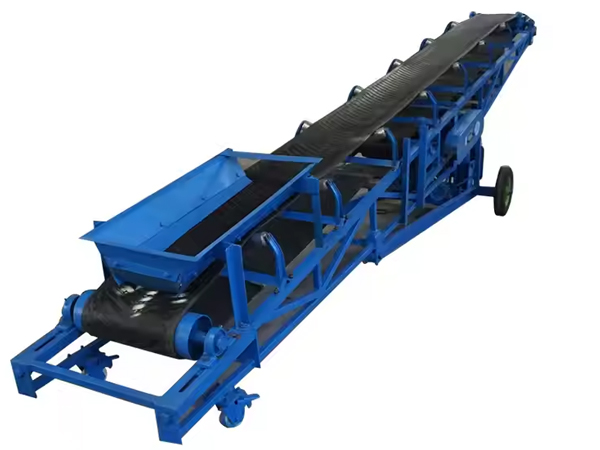
Conveyors Belt
Belt conveyors are continuous conveying equipment for bulk materials, widely used in mines, crushing plants, construction and building materials industries to transport marble, stone, gravel and other materials stably. Prices typically range from $2,000 to $150,000.
Belt width: ≤2400mm
Production capacity: 10-3000 tons/hour
Conveying length: 1-800m
Conveying speed: 0.8-4.0 m/s
Motor power: 3-315kW
Introduction of Conveyors Belt
Conveyor belts are continuous loops of material that rotate around pulleys to transport goods from one location to another. This page covers Dahan's standard belt conveyor series, with belt widths ranging from 400mm to 2400mm and conveying capacities up to 1280 m³/h.
Unlike portable or specialized belt conveyors, the standard series covered here is designed for fixed installation in mining, metallurgy, and bulk material processing plants, with support structures available in both stationary and mobile configurations. Key advantages include multi-point feeding and discharging capability, as well as on-site maintenance of small components without extensive downtime, resulting in low overall maintenance costs.
Below is a detailed breakdown of types, technical specifications, customization options, and application scenarios to help you select the right belt conveyor for your operation.
Product Display
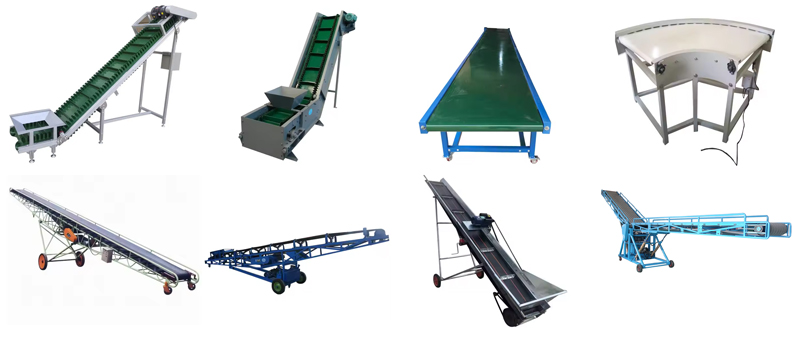
Types of Conveyor Belt
Belt conveyors come in various configurations, each designed for specific conveying scenarios. Below are the most common types, with explanations of their working principles, typical applications, and key selection considerations.
1、Cleated Belt Conveyor
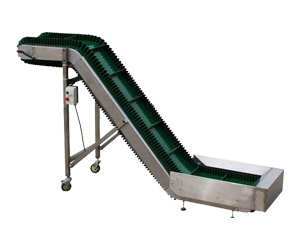
Cleated belt conveyors feature vertical baffles (cleats) attached to the belt surface at regular intervals. These cleats prevent material from sliding backward during inclined conveying, making them ideal for angles up to 45 degrees. Common applications include transporting grain, recycled materials, and packaged goods where maintaining product position is critical. Dahan offers cleat heights from 20mm to 100mm, customizable based on material type and incline angle.
2、Mobile Conveyor Belt
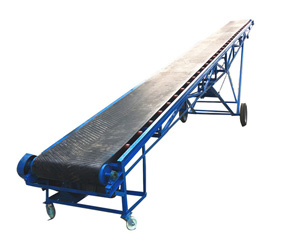
Mobile belt conveyors are equipped with swivel casters and locking brakes, allowing operators to reposition the unit as production layouts change. They are particularly useful in warehouses, construction sites, and temporary worksites where fixed conveyors are impractical. Dahan's mobile series includes models with manual push, electric drive, and hydraulic lift options.
3、Z Type Belt Conveyor
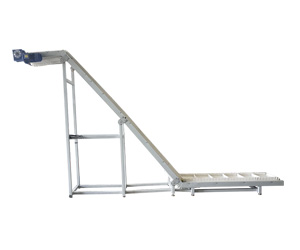
Z-type belt conveyors feature a Z-shaped configuration with baffles and both upper and lower horizontal sections. This design allows materials to be lifted vertically while maintaining horizontal infeed and discharge points, making it easy to integrate with other conveying equipment such as packaging machines, crushers, or sorters. Ideal for applications requiring height changes within limited floor space.
4、Retractable Belt Conveyor
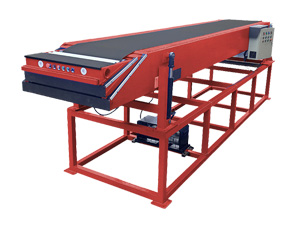
Retractable belt conveyors consist of multiple telescopic sections that can be extended or retracted as needed, allowing flexible length adjustment to accommodate different working distances. They are widely used in loading and unloading trucks, warehouses, and distribution centers where the conveyor needs to reach different depths inside a trailer or storage area. Standard extension ranges from 5m to 15m, with custom lengths available upon request.
Features and Benefits
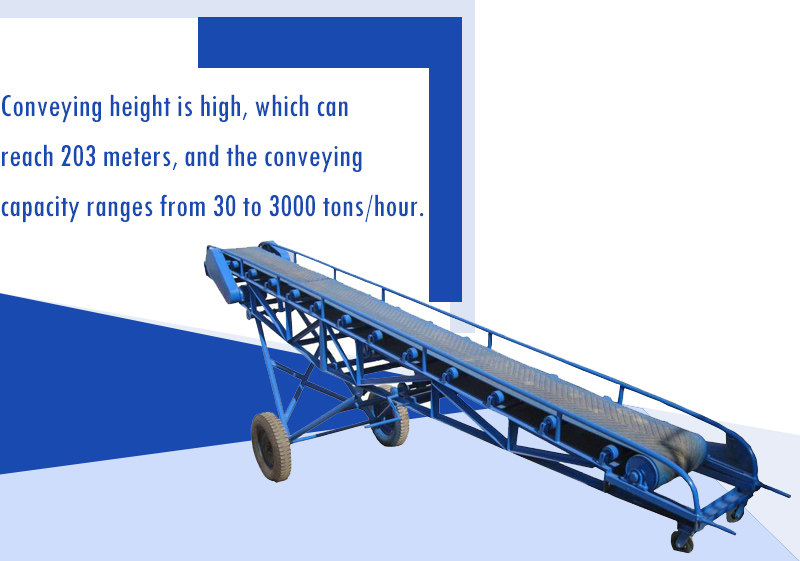
Belt Conveyor can transport materials at inclines between 0 and 90 degrees, with a standard conveying distance of up to 15 meters, and can also be customized to meet specific needs, with a conveying capacity of up to 1280 cubic meters per hour. Its support structure is available in both fixed and mobile styles to adapt to different conveying sites. The conveyor belt is also selected based on the material being conveyed, using rubber belts, plastic belts, or steel core belts. Materials can be fed from one or more locations or discharged in sections at multiple points. Accessories such as ribs and skirts can be added according to user requirements to meet different usage scenarios. Furthermore, maintenance and replacement of small parts can be quickly completed on-site without extensive procedures, resulting in low overall maintenance costs.
Data references: The conveying capacity of 1280 m³/h is measured under standard bulk material testing conditions at Dahan's manufacturing facility. The 15-meter standard conveying distance is based on the DY series standard specifications. For applications requiring different parameters, Dahan's engineering team provides customized solutions based on material density, particle size, and throughput requirements.
Video
Technical Parameters
How to read this table: The table below lists standard specifications for Dahan's DY series belt conveyors. Model numbers indicate belt length in meters (e.g., DY5051 = 5m length, 500mm bandwidth). All models feature a standard belt speed of 1.6 m/s and are available with optional speed controllers. Delivery capacity is shown in both m³/h and tons/h (assuming average material density of 0.9 t/m³). For custom requirements beyond these specifications, please contact our engineering team for a tailored solution.
| Project | DY5051 | DY5071 | DY50101 | DY50102 | DY50102A | DY50151 | DY50152 | DY50152A | |
| Captain(m) | 5 | 7 | 10 | 10 | 10 | 15 | 15 | 15 | |
| Bandwidth(mm) | 500 | 500 | 500 | 500 | 500 | 500 | 500 | 500 | |
| Belt speed(m/s) | 1.6 | 1.6 | 1.6 | 1.6 | 1.6 | 1.6 | 1.6 | 1.6 | |
| Max. Conveying Height(m) | 1.63 | 1.59 | 1.77 | 4.52 | 4.52 | 1.61 | 6.32 | 6.32 | |
| Delivery capacity | m³/h | 160 | 160 | 160 | 125 | 125 | 160 | 125 | 125 |
| /h | 145 | 145 | 145 | 112 | 112 | 145 | 112 | 112 | |
| Tilt angle (degrees) | 13°59′ | 9°16′ | 6.5° | 10°~>22° | 10°~22° | 3.81° | 10°~22° | 10°~22° | |
| Electric drum | Model | DY1.4 | DY1.4 | DY1.4 | DY1.5 | DY1.3 | DY1.4 | DY1.6 | DY1.3 |
| Power KW | 2.2 | 2.2 | 2.2 | 3.0 | 1.1 | 2.2 | 4.0 | 1.1 | |
| Gross weight(kg) | 518 | 604 | 892 | 1126 | 1071 | 1225 | 1491 | 1491 | |
The conveyors belt produced by Dahan Company are available in various models, and we can also customize them according to your needs.
Structure of the Conveyors Belt
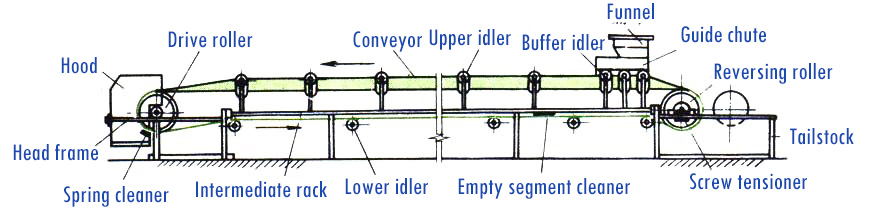
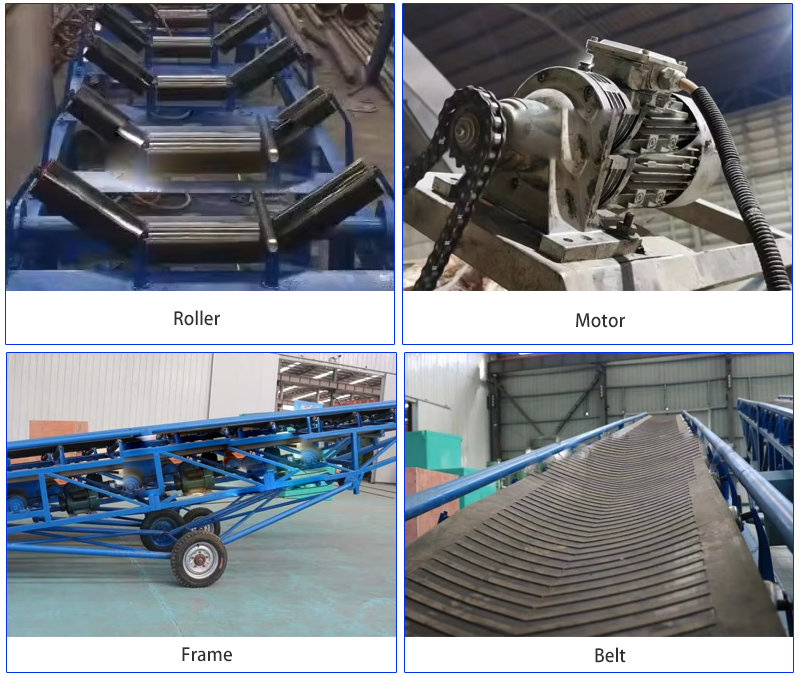
The Conveyors Belt is a continuous loop of material that carries goods, with pulleys on either side driving its rotation. Idler pulleys support the belt, ensuring smoother operation and reducing friction. The entire unit is mounted on a frame for support. A drive motor provides power to move the system, while a belt tensioning system maintains the appropriate belt tension for proper operation.
Key components of a standard belt conveyor system:
Belt – The continuous carrying surface, available in rubber, PVC, PU, nylon, or metal
Drive pulleys – Powered pulleys that drive belt rotation
Idler pulleys – Support the belt and reduce friction during operation
Frame – Structural support that holds all components in alignment
Drive motor – Provides the power to move the system
Tensioning system – Maintains proper belt tension for optimal operation
| Product | PVC belt |
| Model | B-500 |
| Material | Polyvinyl Chloride |
| Color | Green, white, black, blue & red |
| Thickness | 1mm-8mm |
| Pattern | Smooth, matt |
Special Customization of Conveyors Belt
Conveyor belt systems can be customized into six different special configurations, each designed for specific material handling challenges. Below are detailed descriptions, application scenarios, and selection tips for each type.
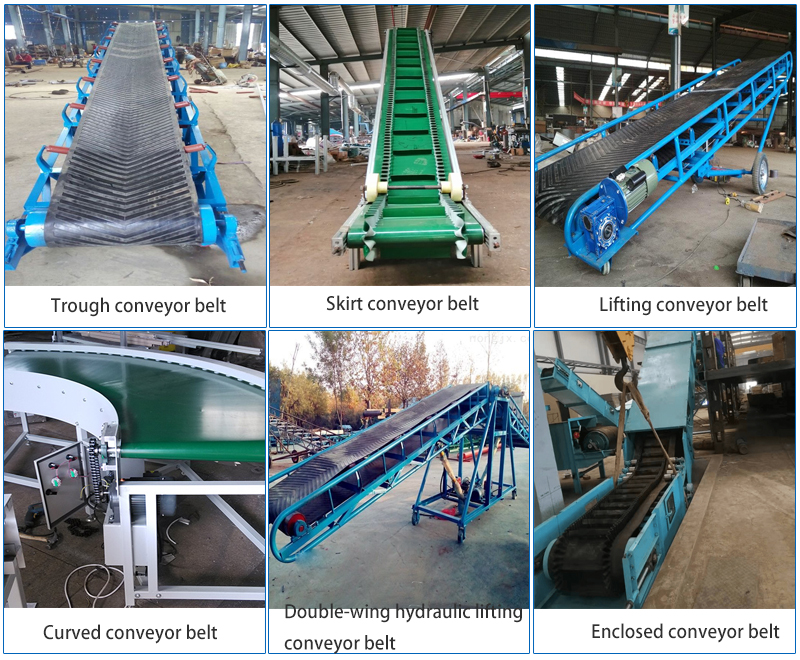
1. Trough conveyor belt: Uses 2-3 upper rollers to form a V-shaped trough, with guide guards on both sides to prevent bulk materials from spilling during transport. The trough angle typically ranges from 20° to 45°, depending on material flowability. This design is ideal for horizontal or inclined transport of bulk materials such as municipal waste, kitchen waste, scrap plastics, chemicals, and food products.
Selection tip: Choose a deeper trough angle for fine, free-flowing materials; use a shallower angle for larger, lumpy materials to reduce belt wear.
2. Skirt conveyor belt: Adds baffles and rubber skirts along the edges of a standard belt to create a sealed conveying channel. This design prevents fine particles, powders, or granular materials from spilling off the sides during inclined or high-speed transport. Commonly used in chemical, pharmaceutical, and food processing industries where material containment is critical.
Selection tip: Choose skirt height based on material flow characteristics — higher skirts for fine powders, lower skirts for granules to reduce friction drag.
3. Lifting conveyor belt: Combines horizontal transport with a hydraulic or mechanical lifting mechanism that raises or lowers the entire conveyor frame. This allows materials to be delivered to different floor levels or machine infeed heights. Widely used in multi-level production lines, truck loading docks, and applications where material needs to be fed to equipment at varying heights.
Selection tip: Consider the lifting range and frequency of height changes — hydraulic systems offer smoother operation for frequent adjustments.
4. Curved conveyor belt: Features a belt that follows an arc path rather than a straight line, enabling materials to change direction within the horizontal plane. Available in 45°, 90°, and 180° configurations. This type is essential for production line layouts with space constraints or where material flow needs to navigate around obstacles.
Selection tip: Consider the minimum curve radius, which depends on belt width and material type — wider belts and larger materials require larger radii to prevent jamming.
5. Double-wing hydraulic lifting conveyor belt:Features a split-frame design with dual hydraulic cylinders that independently adjust the height of both the infeed and discharge ends. This allows the conveyor to adapt to multiple loading/unloading points at different elevations without repositioning the entire unit. Commonly used in shipping docks, recycling facilities, and mobile crushing plants.
Selection tip: Verify the hydraulic system's lift capacity against the combined weight of the belt, frame, and material load during operation.
6. Enclosed conveyor belt: Features a fully enclosed housing that seals the entire conveying path, preventing material leakage, dust emissions, and noise propagation. This design is ideal for transporting fine powders, hazardous materials, or food products where contamination control is essential. Also helps facilities comply with environmental and workplace safety regulations.
Selection tip: Choose stainless steel housing for food/pharmaceutical applications; carbon steel with anti-corrosion coating is sufficient for general industrial use.
Conveyors Belt Material
Conveyor belts are made from a variety of materials, and the choice of material depends on the specific requirements of the application. Here are some common materials used when manufacturing conveyor belts:
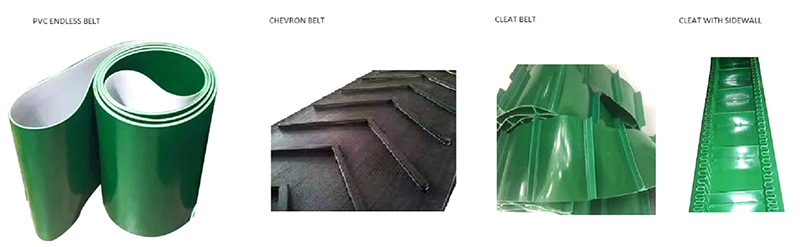
Rubber: Abrasion resistance, flexibility, and durability make it suitable for a variety of applications from general material handling to heavy industrial use.
PVC (Polyvinyl Chloride): Resistant to chemicals, oils, and abrasion, it is often used in industries where hygiene and cleanliness are important, such as food processing and pharmaceuticals.
PU (Polyurethane): It has strong resistance to oils, greases, and abrasion, and is often used in applications that require resistance to cuts and tears, such as the recycling and wood industries.
Nylon: High strength and durability, suitable for heavy-duty applications in industries such as mining, construction, and agriculture.
Metal: Made of stainless steel, it is used in high-temperature applications such as ovens, industrial furnaces, and cooling and freezing processes in the food industry.
Cotton or fabric: Lightweight and flexible, suitable for conveying lightweight materials. They are often used in industries such as packaging and textiles.
Material comparison table for quick reference:
| Material | Key Property | Best For | Temperature Range |
|---|---|---|---|
| Rubber | Abrasion resistance, flexibility | General industry, heavy-duty mining | -20°C to 80°C |
| PVC | Chemical resistance, easy to clean | Food processing, pharmaceuticals | -10°C to 60°C |
| PU | Oil/grease resistance, tear resistance | Recycling, wood industry | -30°C to 80°C |
| Nylon | High strength, durability | Mining, construction, agriculture | -20°C to 100°C |
| Metal (Stainless Steel) | Heat resistance, corrosion resistance | Ovens, furnaces, freezing processes | Up to 400°C |
| Cotton/Fabric | Lightweight, flexible | Packaging, textiles | -10°C to 50°C |
Common Applications of Dahan Belt Conveyors
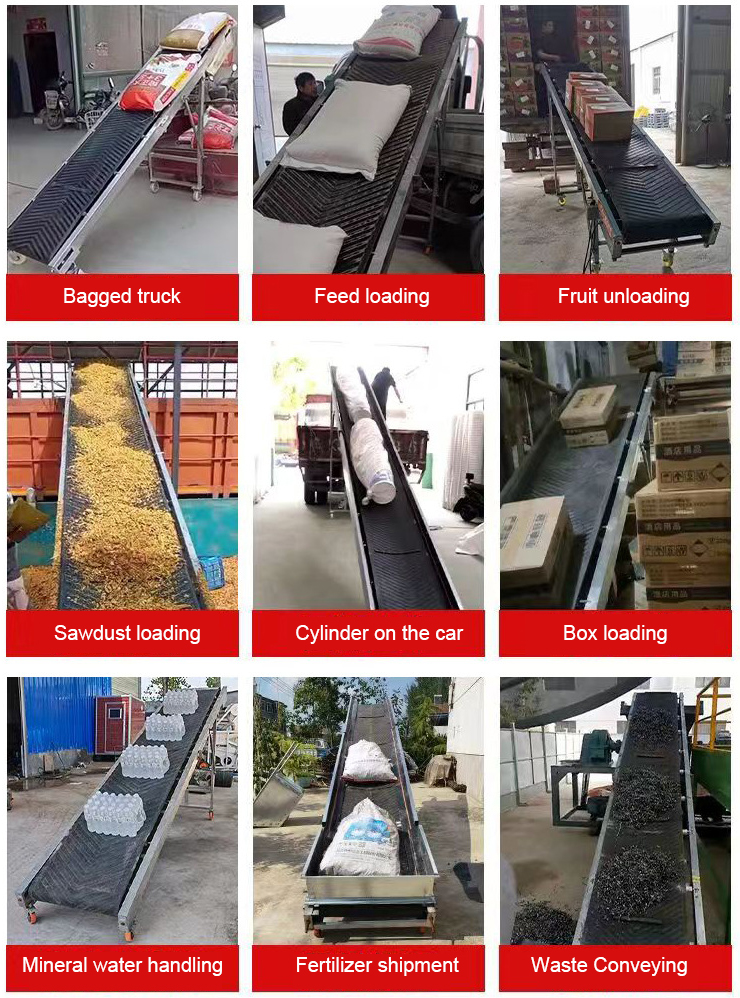
Dahan belt conveyors are deployed across multiple industries for reliable material transport. Below are the primary application areas:
Logistics & Distribution – Moving parcels, packages, and cartons through sorting lines and loading/unloading areas. Belt conveyors integrate with sorting systems to automate package routing and reduce manual handling.
Mining & Quarrying – Transporting ore, coal, sand, and aggregates over long distances and inclines. Heavy-duty rubber and steel-core belts handle abrasive materials with minimal wear.
Agriculture – Conveying hay, straw, grain, and agricultural products during harvest and processing. Mobile belt conveyors allow flexible positioning in fields and storage facilities.
Food Processing – Moving beverages, snacks, fruits, and packaged food through production lines. PVC and PU belts with food-grade certification ensure hygiene and easy cleaning.
Airports – Transporting luggage through security screening and baggage handling systems. Reliable, high-speed belt conveyors ensure smooth passenger flow and baggage tracking.
In addition, Dahan conveyors can be integrated with pallet conveyors, roller conveyors, and packaging machines to form complete factory production lines tailored to specific operational needs.
Solutions by Industry
Here are three customer cases of conveyor belts:
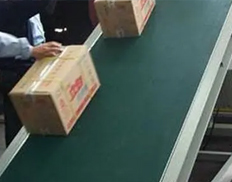
A manufacturing company producing auto parts needed to increase efficiency and reduce manual labor in the production process. They installed a conveyor belt system that automatically transports parts between different stages of the production process, reducing the need for manual handling and increasing productivity. The conveyor belt system is customized to meet the specific requirements of the production process and is equipped with sensors to monitor belt tension, speed and alignment.
Results: Manual handling reduced by approximately 40%, production throughput increased by 25%, and the system has been operating continuously for over 18 months with zero unplanned downtime.
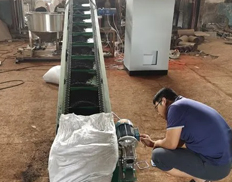
A mining company that produces coal and other minerals that require material to be transported over long distances and on steep slopes. They installed an inclined belt conveyor system to transport the coal from the bottom of the mine to the top of the hill. The conveyor system is customized to handle the weight and size of the coal and is equipped with skid plates to prevent the coal from slipping during transport.
Results: The system handles up to 200 tons per hour over a 150-meter inclined distance at a 22° incline, with skid plates effectively eliminating material slippage during wet conditions.
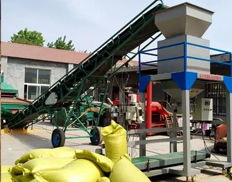
A retail company's distribution center needed to increase the efficiency of warehouse operations and reduce manual labor. They installed a conveyor belt system that automatically transports boxes and pallets between different areas of the facility, reducing the need for manual handling and increasing productivity. Conveyor belt systems are customized to meet the specific requirements of your facility and are equipped with safety features such as emergency stop switches and guardrails.
Results: Manual handling reduced by 35%, order processing time decreased by 20%, and the system operates 16 hours daily with minimal maintenance requirements.
Conveyors Belt Manufacturers
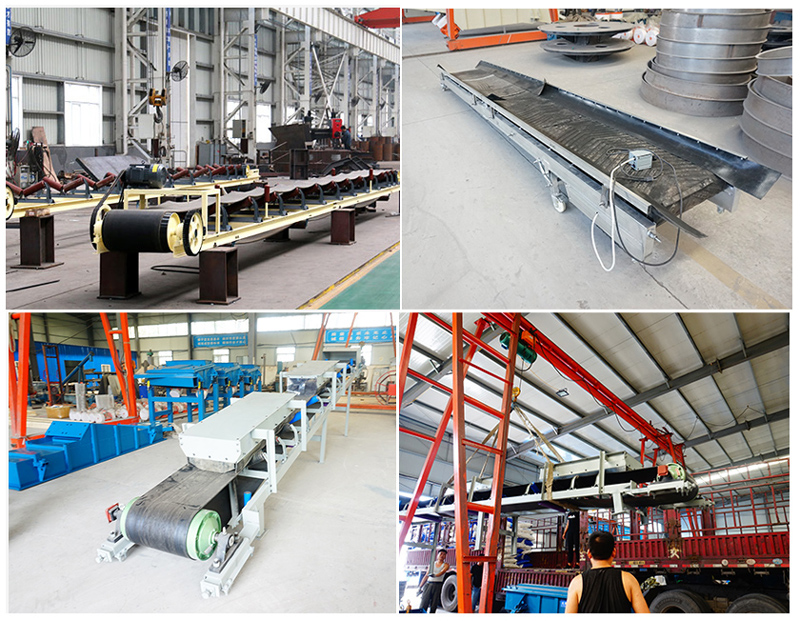
Dahan conveyor belt manufacturer produces TD conveyor belt, tilt conveyor belt, mobile conveyor belt, telescopic conveyor belt, lifting conveyor belt, climbing conveyor belt, conveyor belt for mining and other equipment, with models of 500mm, 650mm, 800mm, 1000mm, 1200mm, 1400mm, etc., and can be specially designed according to user needs. The product stock is sufficient, and conventional models can be shipped within 7 days, with perfect pre-sales, in-sales and after-sales services.
FAQ
How do I choose the right belt conveyor for my specific material?
Choose based on your material's size, weight, moisture, and abrasiveness—Dahan offers customized solutions tailored to your application.
What causes belt misalignment and how can I prevent it?
Improper loading, uneven tension, or misaligned pulleys cause most tracking issues, which can be prevented through regular maintenance and proper loading practices.
What is the typical lifespan of a conveyor belt?
Most industrial belts last 3 to 7 years, depending on material, load, and operating conditions—edge wear and cracking indicate it's time for replacement.
Can a belt conveyor handle steep inclines?
Yes, belt conveyors can handle inclines up to 90 degrees with cleated or Z-type designs that prevent material from sliding backward.
Sugested Products
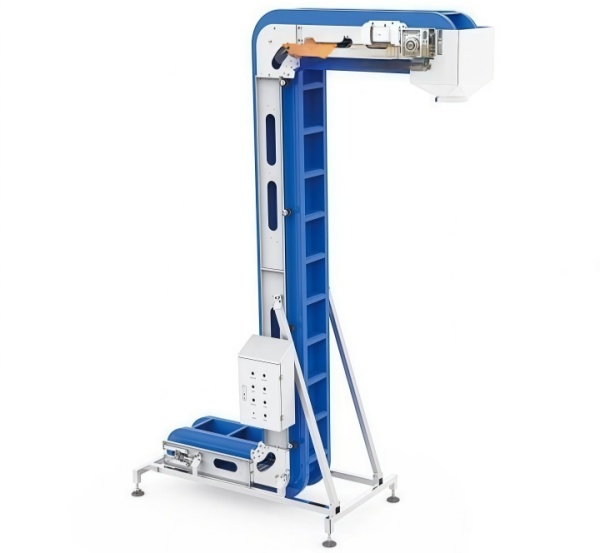
Vertical Belt Conveyor System | 90° Space-Saving Lifting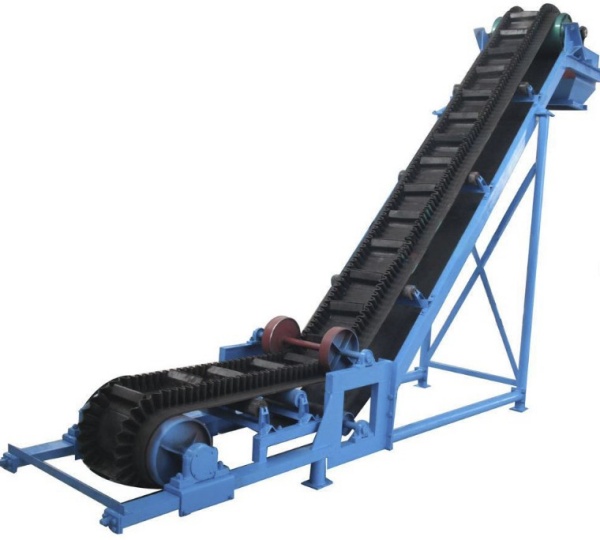
Corrugated Sidewall Belt Conveyor for Aggregate | Heavy-Duty Incline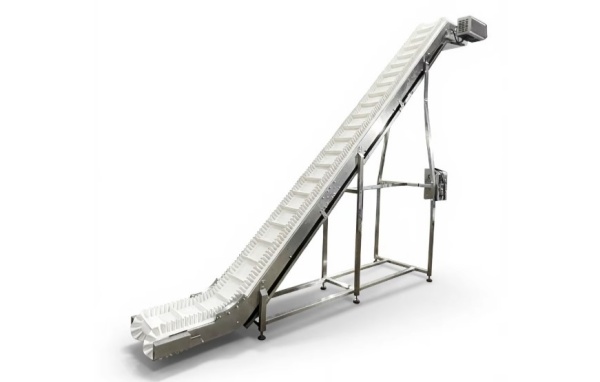
Cleated Belt Conveyor Machine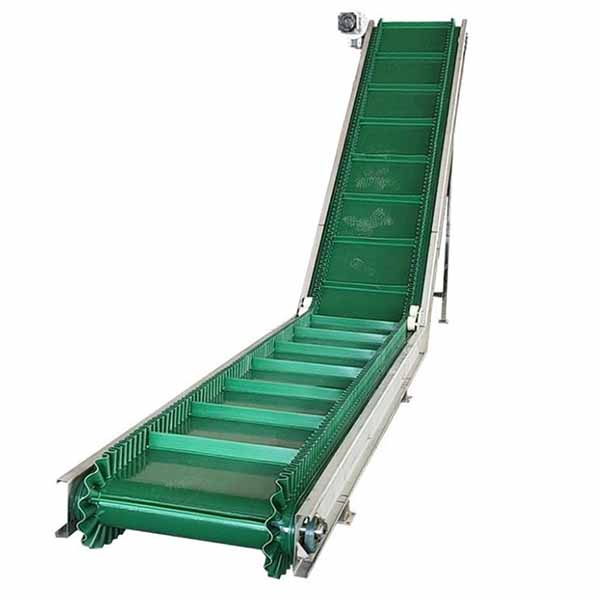
High Incline Sidewall Belt Conveyor Manufacturer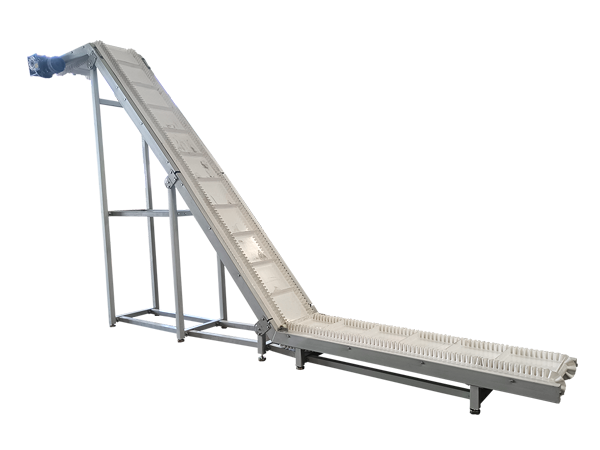
PVC Belt Conveyor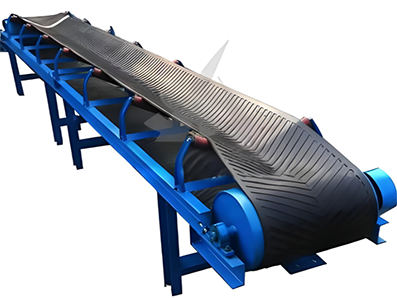
Heavy duty conveyor belt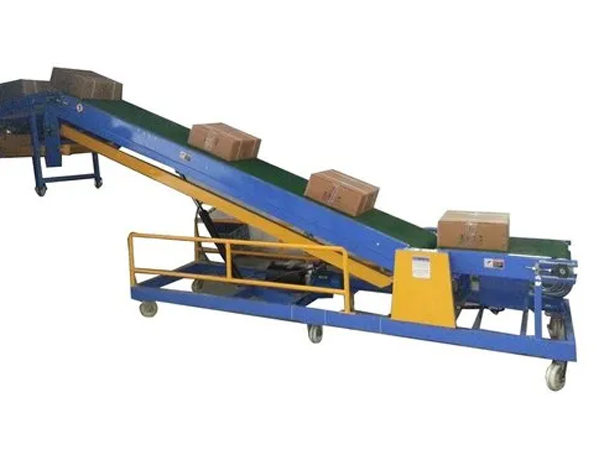
Loading belt conveyor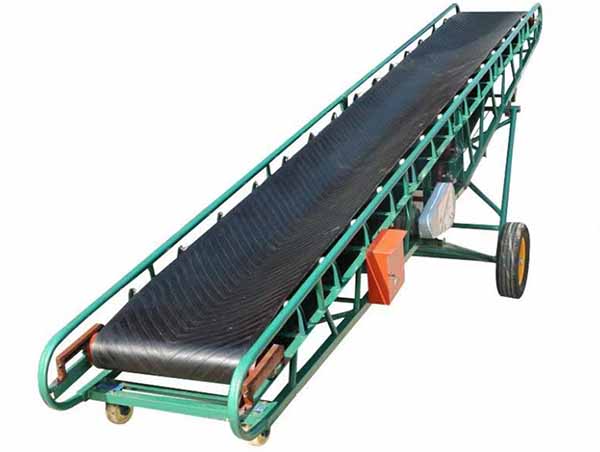
Portable belt conveyor system