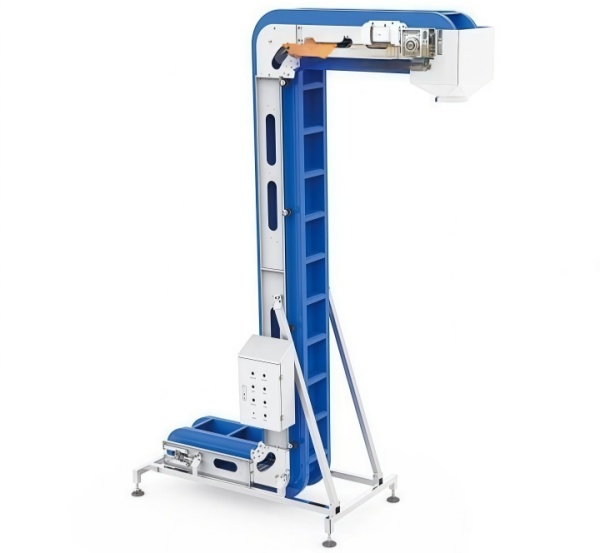
Vertical Belt Conveyor System | 90° Space-Saving Lifting
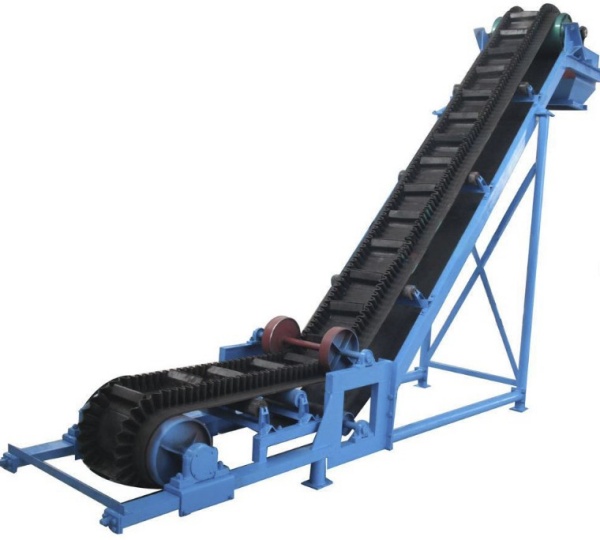
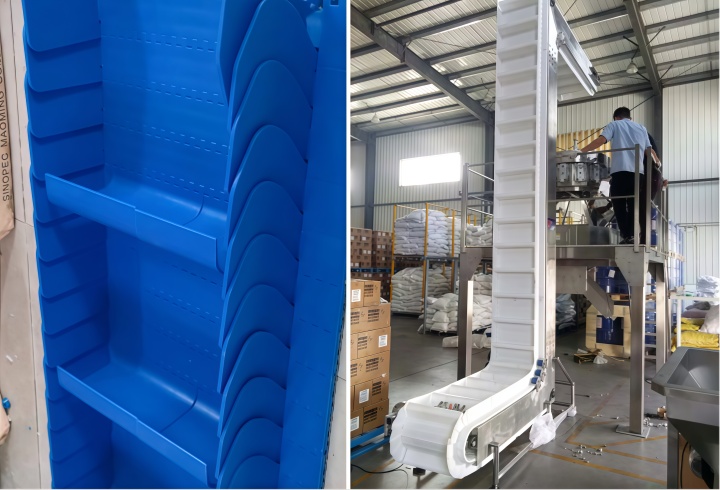
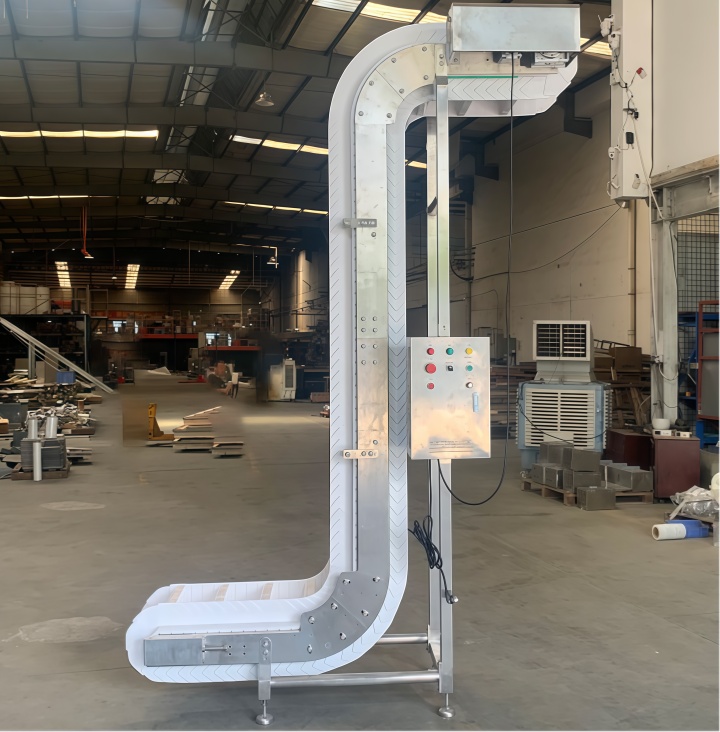
A Vertical Belt Conveyor System is a continuous material handling equipment that utilizes a cross-rigid base belt, flexible corrugated sidewalls, and transverse cleats to form enclosed pockets, enabling vertical elevation of bulk materials and boxed goods at a 90° angle.
• Lift Angle: 90° (Vertical Transport)
• Max Lift Height: 50 m
• Capacity Range: 50 m³/h – 1500 m³/h
• Belt Width: 500 mm – 1600 mm
• Handling Types: Bulk Solids & Box/Unit Goods
Continuous Vertical Conveyor Systems vs. Traditional Bucket Elevators
| Comparison Dimension | Continuous Vertical Belt Conveyor System | Traditional Bucket Elevator |
| Material Degradation | Particles drop into soft pockets and move along with the belt without biting or digging, resulting in a degradation rate under 0.5%. | Relies on buckets digging into materials at high speed, causing severe particle collisions and high crushing rates. |
| Noise & Vibration | Flexible rubber engagement operation keeps rotation friction noise below 65 dB. | Hard metal collisions between chains and buckets typically generate operating noise exceeding 85 dB. |
| Maintenance & Wear | No metal articulated wear nodes; rubber components offer corrosion resistance and long maintenance intervals. | Rapid wear on chain links, pins, and bucket edges requires frequent replacement of wearing parts. |
| Footprint | Vertical structure ascends directly to the designated height, reducing equipment projection area by 75%. | Requires extra horizontal footprint for a wide bottom boot pit and top drive platform space. |
Mechanical Architecture & Belt Pocket Design
The mechanical architecture of the Vertical Belt Conveyor System relies on a transition routing of "0° horizontal loading → 90° vertical lifting → 0° horizontal discharge." The cross-rigid base belt incorporates transverse steel cords or high-strength polyester fabric layers internally to prevent the belt from transverse bending or sagging under longitudinal tension. Flexible corrugated rubber sidewalls are bonded to both sides of the base belt via thermal vulcanization, while T-type or TCS-type transverse cleats are installed at fixed intervals along the center. The sidewalls and cleats form independent volumetric pockets on the base belt surface. In bend transition areas, deflection wheel assemblies press on the borderless edges of the base belt to guide the belt smoothly into the vertical track, preventing the belt body from lifting off the guide rails.
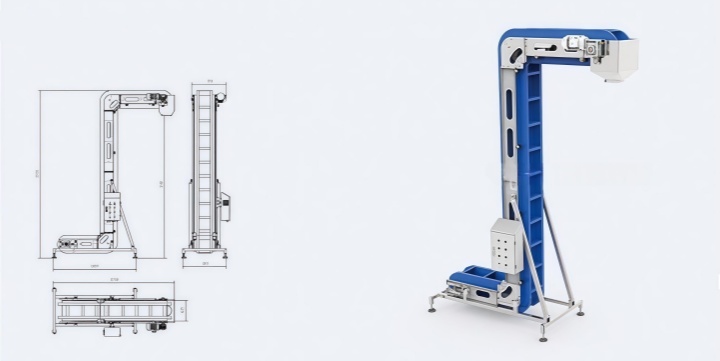
Material Handling Versatility: Bulk Solids & Box/Unit Lifting
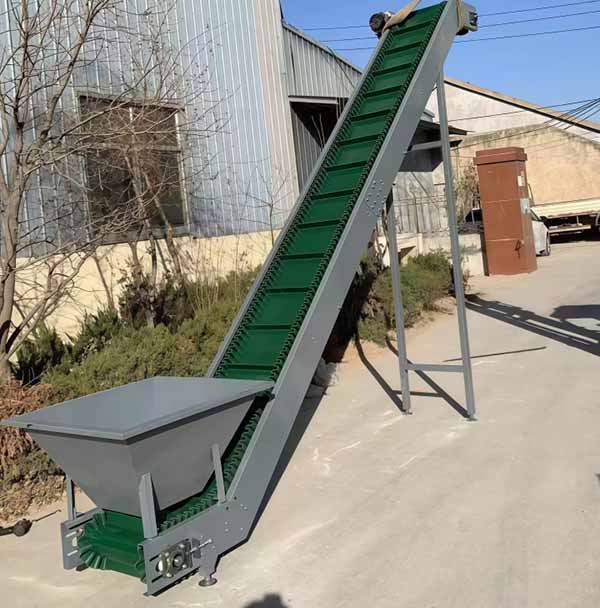
• Bulk Solids Handling: Suitable for ores, crushed stones, sand, synthetic powders, and agricultural grains. Materials drop from the feed hopper into pockets on the bottom horizontal segment. Transverse cleats and corrugated sidewalls lock materials inside the pockets, traveling smoothly along the 90° vertical shaft without slippage or side leakage.
• Box/Unit Lifting: For cardboard boxes, tote bins, or palletized goods in warehousing logistics, the system replaces standard cleats with flat supporting cleats or anti-slip rubber surfaces to support boxes upright on cleat platforms. During vertical ascension, boxes move continuously along with the pockets, achieving continuous transportation between high-density building floors.
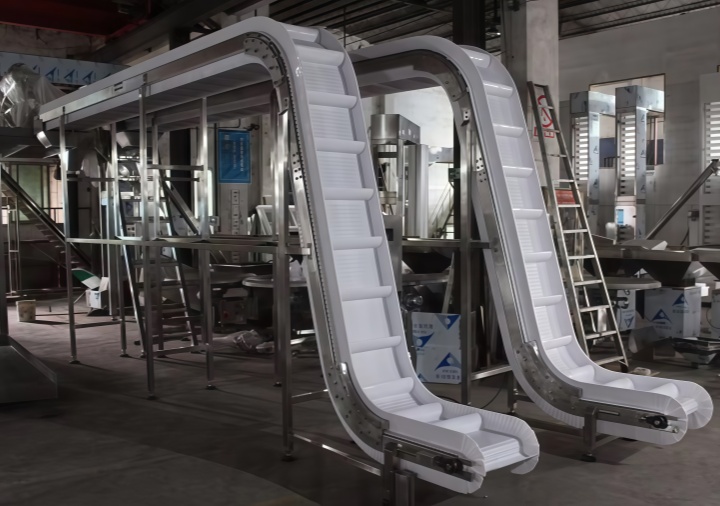
Engineering Guidelines: Height, Tension & Belt Capacity Calculation
Capacity calculations for vertical conveyor systems require correcting the filling degree under vertical conditions. The theoretical volumetric capacity calculation formula is as follows:
Q_v = 3600 · A_pocket · v · ρ · k_v
• Q_v: Theoretical mass conveying capacity (t/h)
• A_pocket: Cross-sectional area of a single pocket (m²)
• v: Belt speed (m/s, typically set between 1.2 – 2.2 m/s)
• ρ: Bulk material density (t/m³)
• k_v: Vertical filling correction factor (set to 0.60 – 0.75 under 90° vertical working conditions due to gravity settling)
When the lifting height exceeds 30 meters, belt self-weight and material gravity in the vertical section combine to generate high tension. Motor power and tension calculations must incorporate base belt weight per meter (m_b) and material weight per meter (m_m). Bottom tension in the vertical section must be maintained above 5 kN to prevent belt slippage on the drive pulley caused by downward sliding.
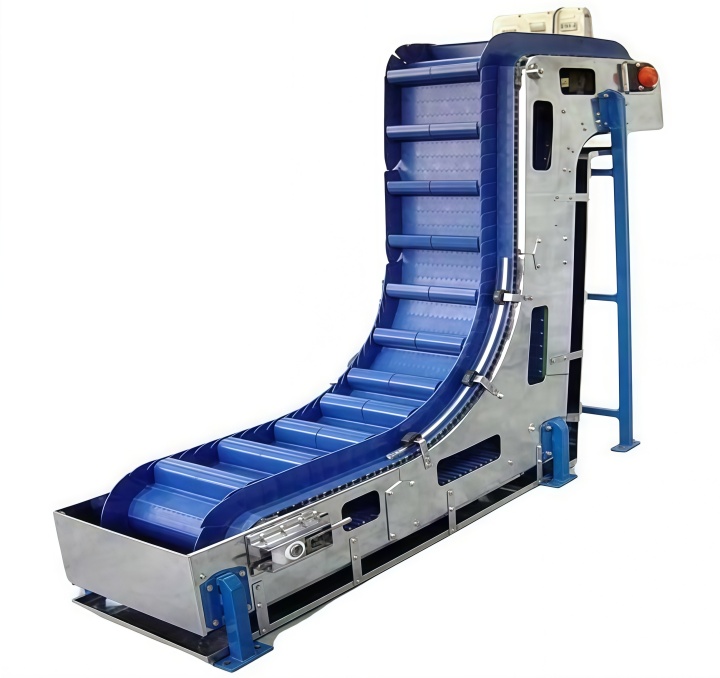
Technical Specifications & Vertical Capacity Matrix
| Belt Width (mm) | Sidewall Height (mm) | Cleat Profile | Max Lump Size (mm) | 90° Vertical Bulk Capacity (m³/h) | Max Unit Load Limit (kg/m) | Recommended Motor Power (kW, H=20m) |
| 500 | 120 – 160 | Type T / Type C | ≤ 40 | 80 | 100 | 7.5 – 11 |
| 800 | 160 – 250 | Type TC / Type TCS | ≤ 80 | 250 | 250 | 15 – 22 |
| 1000 | 250 – 350 | Type TCS | ≤ 120 | 600 | 450 | 30 – 45 |
| 1200 | 350 – 450 | Type TCS (with Inclined Support) | ≤ 180 | 950 | 650 | 55 – 75 |
| 1600 | 450 – 600 | Heavy TCS Type | ≤ 250 | 1500 | 900 | 90 – 132 |
Solving Vertical Transport Pain Points: Material Degradation & Belt Sag
• Material Degradation & Slippage: Traditional bucket elevators rely on digging impact to load materials, which breaks crystalline particles. Vertical belt conveyors feature zero-impact loading into pockets, combined with rubber pocket materials matching particle friction properties to eliminate relative displacement during ascension and prevent particle grinding or crushing.
• Belt Stretching & Sag Under High Tension: In 50-meter-high vertical sections, standard fabric core belts undergo longitudinal stretch deformation. The system uses base belts with internal steel cord cross-rigid layers to withstand vertical tension along with lateral press wheels, preventing base belt sagging.
• Bottom Accumulation & Cleaning Difficulties: The tail pulley includes a self-cleaning cage design and scraper blades. Dropped fine particles are pushed away from the pulley surface, preventing particles from being trapped between the belt and pulley to cause surface scratches.
Frequently Asked Questions
Q1: How does a continuous vertical belt conveyor differ from a bucket elevator?
A: A continuous vertical belt conveyor uses flexible rubber sidewalls and cleats to create pockets that gently carry materials without digging actions, resulting in low operating noise and minimal material degradation. A bucket elevator uses chain-driven metal buckets to dig materials at the boot, relying on hard impacts that cause mechanical wear and particle crushing.
Q2: What is the height limit for a 90-degree vertical belt conveyor system?
A: In engineering applications, the height limit for a single vertical belt conveyor system typically ranges from 50 to 80 meters. When lift heights exceed 30 meters, the base belt must feature steel cord cross-rigid structures to withstand high tension and prevent belt elongation.
Q3: Can vertical belt conveyors handle both bulk materials and boxed goods?
A: Yes. For bulk materials, the belt is fitted with high corrugated sidewalls and deep pocket cleats. For boxed or packaged goods, the belt can be equipped with flat support cleats or anti-slip rubber linings, allowing boxes to stand upright on cleat platforms for continuous vertical elevation.
Summary
The Vertical Belt Conveyor System constructs carrying pockets using cross-rigid base belts, flexible corrugated sidewalls, and transverse cleats to achieve continuous transport at 90° vertical angles. This equipment overcomes challenges associated with bucket elevators, such as high degradation rates from digging and rapid wear on metal nodes, while eliminating transfer drops and dust emission. By calculating the vertical filling correction factor k_v and configuring steel cord base belts with self-cleaning tail pulleys, the system reliably handles high-elevation transport of ores, powders, and boxed goods while significantly reducing plant ground footprint requirements.