Conveyors belt type
Tuesday September-01 2026 12:09:36
Choosing the right Conveyors belt type directly affects material transport efficiency, equipment maintenance frequency, and product integrity. Different materials and conveying paths place completely different demands on the belt. Mining operations may need to transport thousands of tons of ore over several kilometers, while food processing plants only need to move lightweight cartons across flat floors.
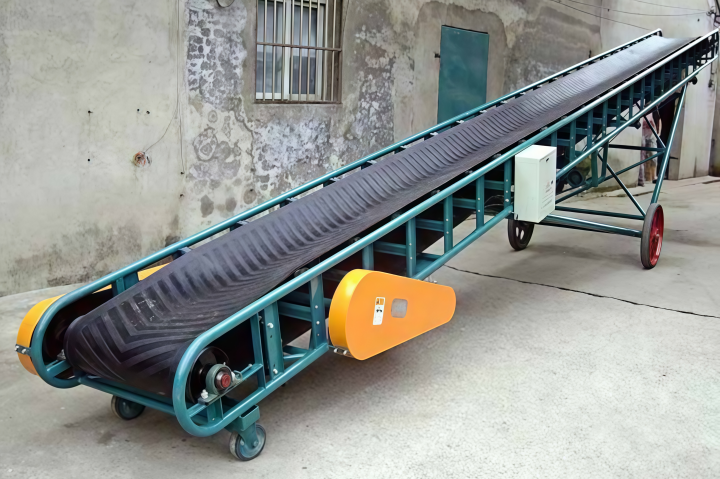
Choosing the wrong belt can lead to material spillage, belt misalignment, premature wear, and production interruptions. This guide examines five common types—flat belt, sidewall belt, steel cord belt, enclosed belt, and modular belt—based on actual project cases and our factory's selection experience. It explains what each belt handles best, where each falls short, and how to match each type to specific operating conditions. This article references GB/T 7984-2013 "General purpose fabric core conveyor belts" and GB/T 9770-2013 "General purpose steel cord conveyor belts" for classification and description.
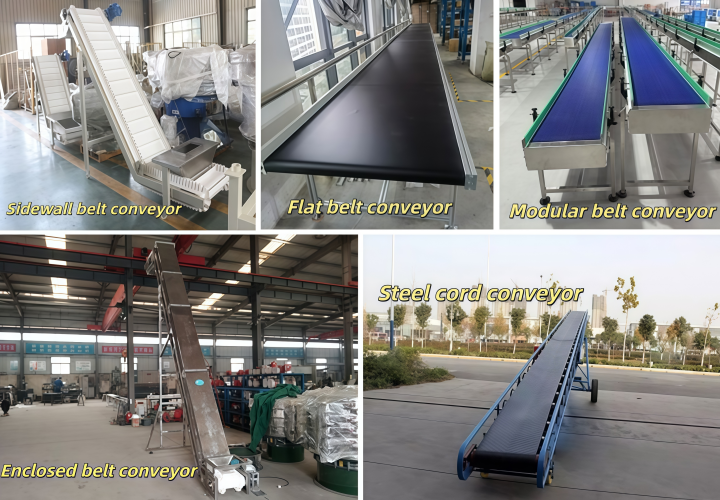
Flat Belt Conveyors belt type for General Material Handling
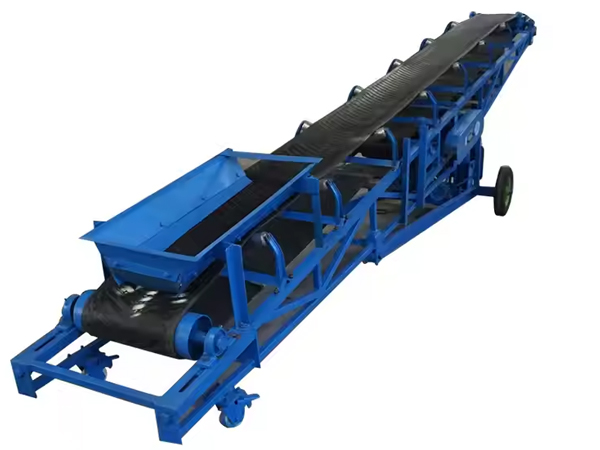
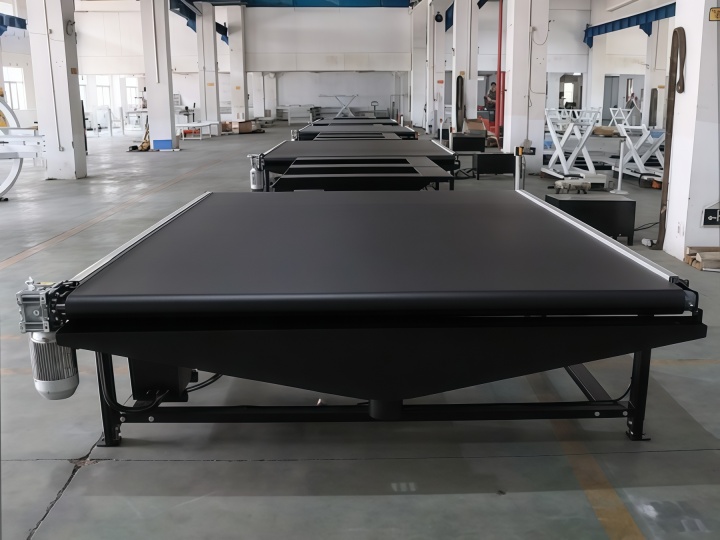
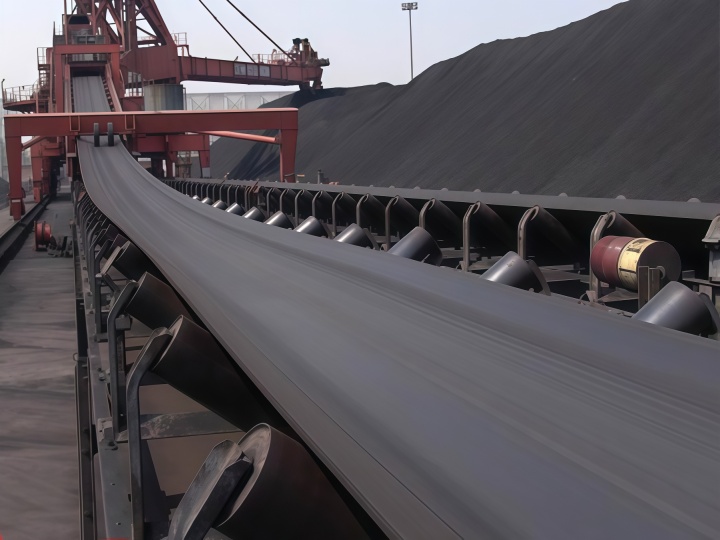
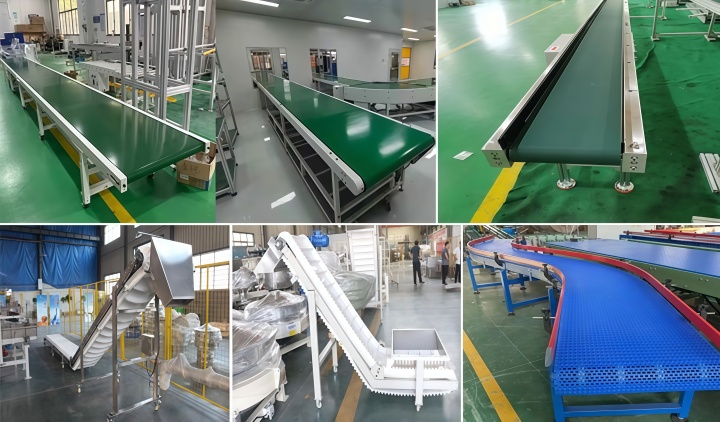
The flat belt is one of the most common options in factories, warehouses, and distribution centers. This belt consists of a continuous loop made of PVC, polyurethane, or rubber, with operating speeds typically ranging from 0.5 to 2 meters per second. The flat belt is suitable for horizontal or gentle incline conveying up to 18 degrees for light to medium-weight items such as packaged goods, electronic components, and corrugated boxes. Based on our factory's observations, when the incline exceeds 18 degrees, the risk of material slippage increases noticeably, and a sidewall belt should be considered.
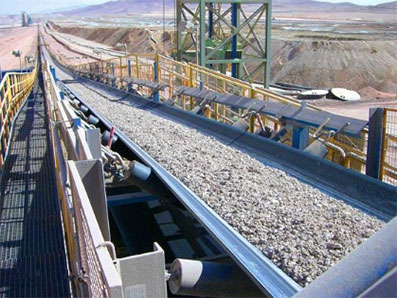
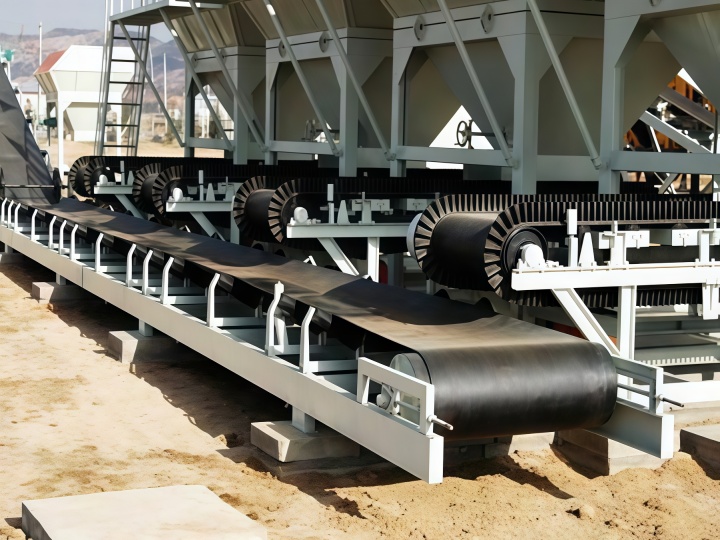
At a large iron ore mine in Australia's Pilbara region, the flat belt serves as the main equipment for transfer stations and in-plant conveying. According to technical data released by the mine, its conveying system handles several thousand tons of iron ore per hour. Our factory's technical staff documented operating data before and after roller replacement at the site. By replacing standard steel rollers with polymer impact rollers, the mine extended its belt service life, and the replacement cycle for rollers and stands was also prolonged.
Sidewall Belt Conveyors belt type for Steep Incline Conveying
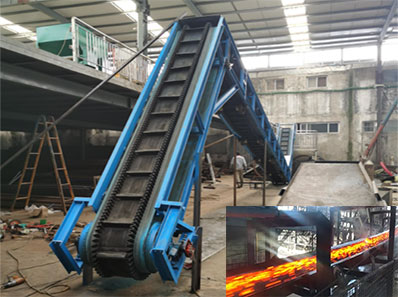
When floor space is limited and materials need to be elevated to higher positions, the sidewall belt becomes a suitable choice. This belt features corrugated sidewalls on both edges, with heights reaching 40 to 200 millimeters, combined with transverse cleats that prevent material from sliding backward at steep angles. Our factory's selection practice shows that for applications requiring significant lift height in confined spaces, the sidewall belt offers clear space-saving advantages.
Several cement manufacturers in China have adopted the sidewall belt for aggregate lifting and transfer operations, achieving steep-angle continuous conveying within limited space and helping reduce civil construction costs and equipment footprint.
Steel Cord Belt Conveyors belt type for Long-Distance Transport
For applications requiring high tensile strength and long-distance conveying, the steel cord belt is a commonly specified option. This belt uses longitudinal steel cables as the tension member embedded in rubber, with tensile strength reaching up to 4,000 Newtons per millimeter and belt widths typically ranging from 800 to 2,200 millimeters. According to our factory's production and tracking data, under the same operating conditions, the elongation of steel cord belts is typically 10% to 15% of fabric belts, meaning less tension maintenance is required. Single conveyor lengths can exceed 5 kilometers, with capacities ranging from 500 to 12,000 tons per hour.
The Roy Hill iron ore project in Australia signed a multi-year supply contract with Fenner Conveyors for steel cord belts, with Fenner supplying steel cord and multiply conveyor belts and splice kits. In another large iron ore project, the engineering team completed replacement of a 23.8-kilometer long, 1500mm wide, ST4000 grade steel cord belt, with belt moving completed in 85 hours, ahead of schedule, adding approximately 396,000 tons of saleable ore to the mine.
Enclosed Belt Conveyors belt type for Dust Control
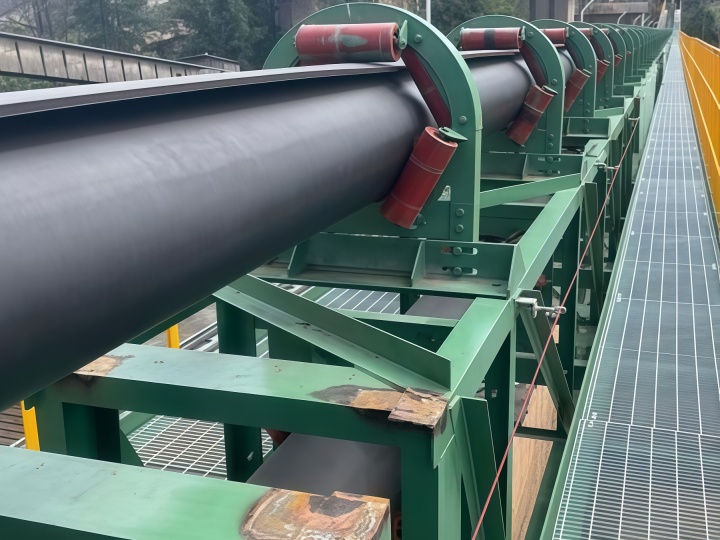
When materials generate significant dust during transport, the enclosed belt provides a practical solution for environmental requirements. This belt is implemented as a pipe conveyor, where the belt rolls into a tubular shape during operation, fully enclosing the material, with diameters typically ranging from 150 to 850 millimeters.
The AES Maritza East 1 power plant in Bulgaria is a notable example of the enclosed belt. The plant is one of Bulgaria's cleaner fossil fuel facilities and meets World Bank environmental standards. Metso Outotec completed installation of a 9,250-meter long FLEXOPIPE enclosed belt for the plant. The belt is 1,500 millimeters wide with a 400-millimeter pipe diameter, operating at 4.8 meters per second with a capacity of 1,400 tons per hour. The belt remains enclosed for almost its entire length, and dust suppression systems were installed at transfer points to help control dust emissions.
Modular Belt Conveyors belt type for Flexible Layouts
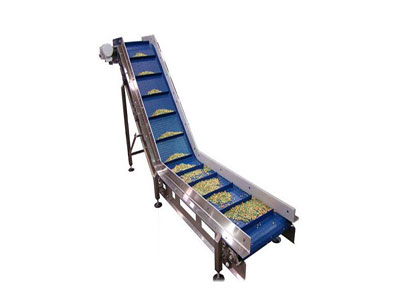
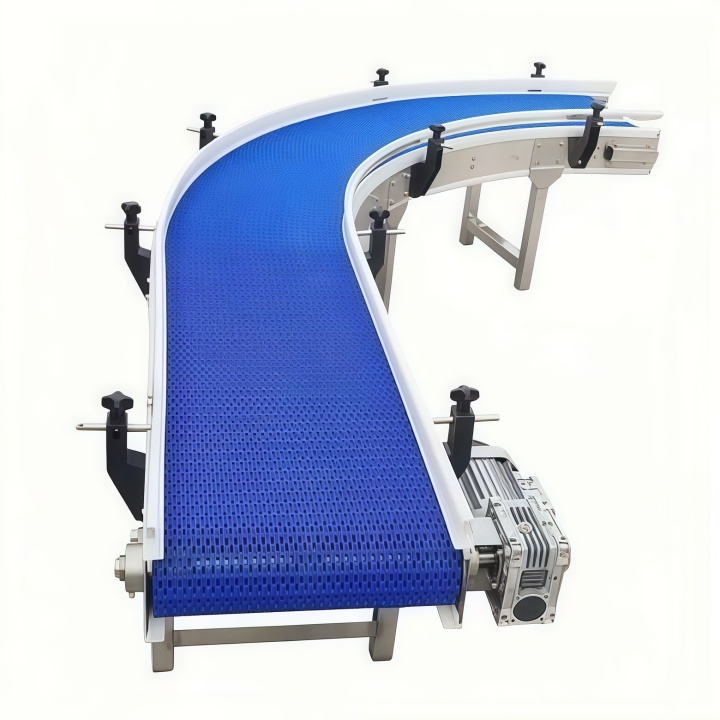
The modular belt represents a different approach to conveyor design. This belt consists of interlocking plastic modules. When a section becomes worn, only the damaged modules need replacement, which can typically be completed in a short time. According to our factory's service records, modular belt local repair time is generally less than full belt replacement time.
In food and beverage production, the modular belt is used for curved conveying of bottled and canned products. Side-flexing modular belts allow conveyor lines to navigate multiple curves, helping reduce factory floor space requirements. This belt is made from food-safe materials and complies with FDA and EU regulations, with an operating temperature range of -20 to 80 degrees Celsius.
How to Select the Right Conveyors belt type
Selecting the right conveyor belt requires comprehensive consideration of material characteristics, conveying path, and operating environment. Material factors to evaluate include size, weight, temperature, abrasiveness, and moisture content. The conveying path should be assessed for horizontal, inclined, or steep-angle operation. The operating environment should consider temperature, dust, and humidity levels.
Horizontal conveying calls for the flat belt. Space-constrained applications requiring steeper incline angles call for the sidewall belt. Longer distances or higher capacities favor the steel cord belt. Dust control requirements point to the enclosed belt. Complex layouts requiring frequent adjustments benefit from the modular belt.
Based on our factory's tracking of multiple industry projects, proper selection has contributed to reductions in equipment failure rates and annual maintenance costs.
Conclusion
The five belt types—flat, sidewall, steel cord, enclosed, and modular—each serve distinct purposes and perform under specific conditions. From the steel cord belt at Australia's Roy Hill mine to the enclosed belt at Bulgaria's AES power plant, global projects validate the value of each type in its specific application. Understanding the characteristics of each belt and matching it to material, route, and environment helps reduce spillage, prevent misalignment, shorten downtime, and support reliable equipment operation.
Quick selection reference: horizontal conveying—flat belt; steep incline lifting—sidewall belt; long-distance high-capacity—steel cord belt; dust control requirements—enclosed belt; flexible complex layouts—modular belt.
FAQ
What factors should be considered when selecting a Conveyors belt type?
Material type, load weight, conveying distance, incline angle, and environmental conditions such as temperature and dust exposure should all be considered. Material abrasiveness and moisture content directly affect belt selection and expected service life.
How do I determine which Conveyors belt type suits my application?
Identify your material's size, weight, temperature, and abrasiveness, then determine whether steep incline lifting or dust sealing is required. Compare these parameters against the five belt types' applicable scenarios for an initial assessment.
What is the typical service life of a Conveyors belt type in different environments?
Based on actual operating data from multiple industry projects worldwide, steel cord belts in abrasive mining environments have an average service life of 5 to 8 years. Flat belts and modular belts in clean indoor environments with proper maintenance can reach 10 to 15 years.
How much does a Conveyors belt type typically cost?
Fabric belts typically range from $5 to $50 per foot, while steel cord and modular belts are priced higher due to more complex manufacturing processes. Specific pricing depends on belt width, length, and technical requirements.