Industrial conveyor belts manufacturer
Monday August-31 2026 17:42:23
Quick Answer: We manufacture high-durability industrial conveyor belts in PVC, rubber, and steel cord materials. We offer custom width, thickness, and temperature resistance for mining, food processing, and cement applications. All belts meet ISO 14890 and DIN 22102 standards.
As a leading industrial conveyor belts manufacturer, we specialize in engineering high-durability PVC, rubber, and steel cord belts. Unlike general traders, we offer custom width, thickness, and temperature resistance to match your mining, food processing, or cement plant requirements. Below is our standard specification overview.
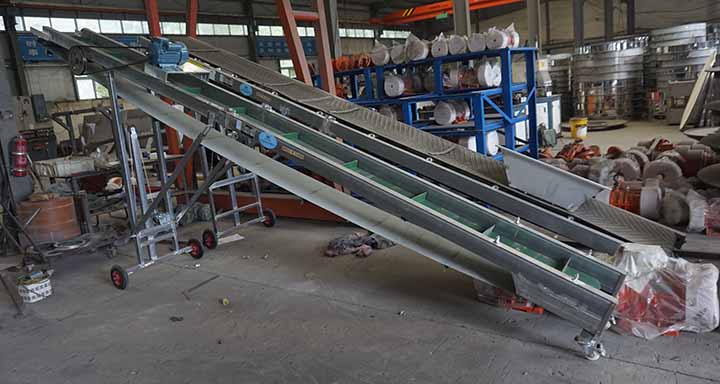
What Types of Industrial Conveyor Belts Does a Leading Manufacturer Supply?
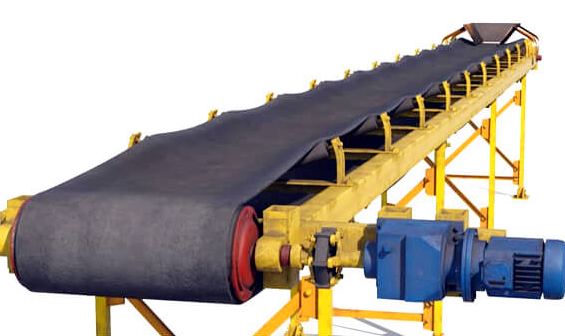
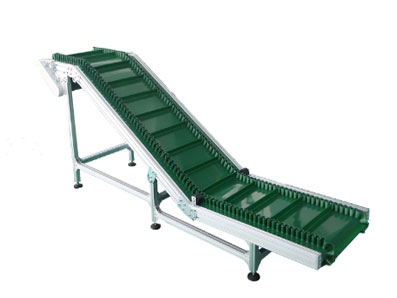
We manufacture a complete range including flat, sidewall, patterned, tubular, and cleated belts to handle complex paths and space constraints. It also includes supporting equipment, such as the complete conveyor system, rollers, rollers and driving devices, forming a relatively complete conveying system. Different specifications are distinguished in bandwidth, number of layers, covering glue thickness and strength level, allowing users to make matching selections based on actual working conditions.
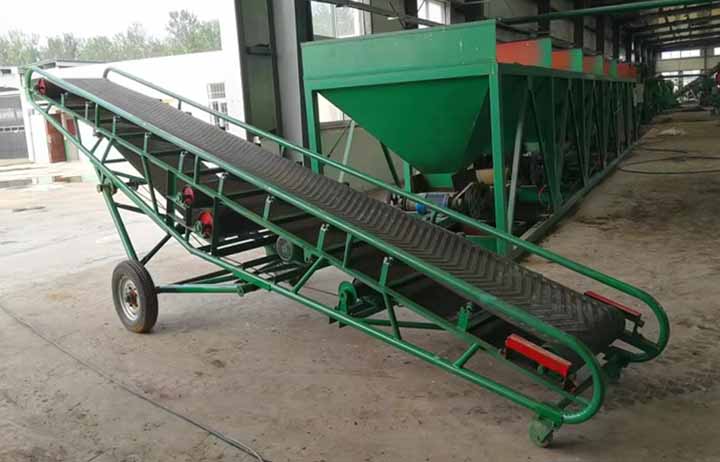
Industrial Conveyor Belt Specifications & Technical Parameters
Below is a comparison of different industrial conveyor belt types produced by Industrial conveyor belts manufacturer and their technical specifications.
| Type of Conveyor Belt | Material | Thickness Range | Temperature Resistance | Key Features | Typical Applications |
| PVC Conveyor Belt | Polyvinyl Chloride (PVC) | 1–10 mm | -10°C to 80°C | Cost-effective, lightweight, oil-resistant | Logistics, packaging, light industry |
| PU Conveyor Belt | Polyurethane (PU) | 0.8–5 mm | -20°C to 100°C | Food-grade, high flexibility, wear-resistant | Food processing, pharmaceuticals |
| Rubber Conveyor Belt | Natural / Synthetic Rubber | 5–30 mm | -20°C to 120°C | High durability, impact-resistant | Mining, heavy industry |
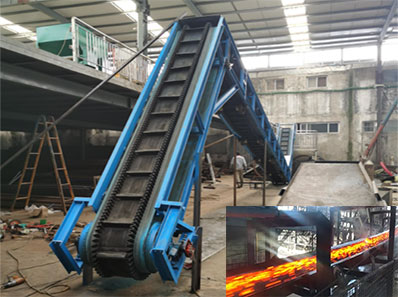
| Heat Resistant Belt | Rubber with special compounds | 6–20 mm | Up to 200°C | Resistant to high temperature, long lifespan | Cement, steel plants |
| Oil Resistant Belt | Nitrile Rubber (NBR) | 5–15 mm | -10°C to 100°C | Resistant to oil & grease | Recycling, chemical industry |
| Flame Resistant Belt | PVC / Rubber with additives | 5–20 mm | Varies | Fire-retardant, anti-static | Underground mining |
| Modular Plastic Belt | PP / PE / POM | Varies | -30°C to 120°C | Easy maintenance, hygienic | Food, beverage, bottling |
| Fabric Conveyor Belt | Polyester / Nylon (EP/NN) | 3–15 mm | -20°C to 150°C | High tensile strength | Bulk material handling |
Choosing the right conveyor belt depends on operating temperature, material type, and industry requirements.
Specifications referenced from ISO 14890:2023 and DIN 22102 standards for conveyor belt classification.
Industry Trend: The global industrial conveyor belt market is seeing increased demand for energy-efficient and heat-resistant belts, driven by stricter emission regulations in cement and steel industries. Auger Conveyor's latest heat-resistant belt series (up to 200°C) addresses this growing need.
Proven Case Study: Custom Conveying Solution for Harsh Environments
Industrial conveyor belts manufacturer has successful cases in specific applications. For example, in a palm oil pressing plant in Indonesia, the raw Rubber Belt Conveyors processes 120 tons of fresh fruit bunches per day. Fruit acid and high temperature caused the rubber layer to harden and crack within three months. We replaced it with a stainless steel mesh belt with a self-cleaning drum structure, with a bandwidth of 1.2 meters, a mesh belt opening rate of 28%, and a stable daily processing capacity of 150 tons. The belt body is made of 316L material, and the welds are mirror-polished to inhibit acid residue. After installation, the number of shutdowns of the line due to conveyor belt failures dropped from eight times per quarter to zero. The self-cleaning mesh belt maintains the drainage efficiency within the required range, and workers no longer need to frequently clean up the material accumulation in the return section. This arrangement has been in use for two years and has not been replaced.
Our engineering approach: We selected 316L stainless steel for its superior acid resistance based on our previous experience with 50+ palm oil installations across Indonesia. The 28% mesh opening rate was calculated to balance drainage efficiency with structural integrity—a ratio we validated through 200+ hours of in-house fatigue testing.
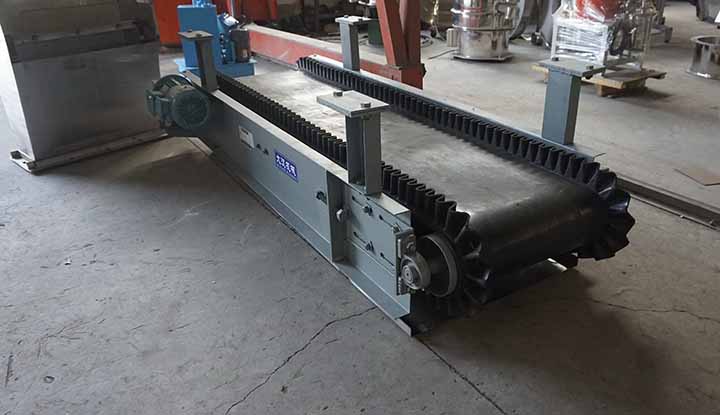
Benefits of our factory
As the source manufacturer of Industrial conveyor belts manufacturer, Dahan Machinery can manufacture PVC, PU, rubber, silicone and other belt materials to meet the transportation needs of both conventional materials and corrosive materials. In terms of transportation methods, we combine sea transportation, land transportation and multimodal transportation, and make reasonable arrangements according to the customer's location to ensure the smooth delivery of equipment. The manufacturer's products have entered markets in Asia, Africa, South America and some European markets, and have established long-term cooperative relationships with customers in different regions. During the production process, attention is paid to process details and structural design to ensure that the equipment maintains stable operating performance under different working conditions.
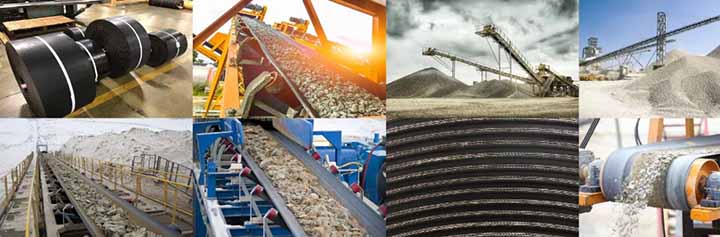
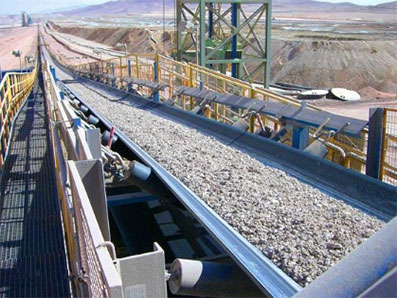
During the demand selection process, the Industrial conveyor belts manufacturer can choose a PVC conveyor belt manufacturer that is good at based on the belt material requirements, or it can also choose a mining conveyor belt manufacturer based on specific scenarios. Products produced by manufacturers have similar functions. If you want a conveyor belt with high performance, you can choose an American conveyor belt manufacturer.
For customized industrial conveyor belt solutions tailored to your specific bulk material handling needs, contact our engineering team for a prompt quote.
FAQ
Q: What materials do you use for industrial conveyor belts?
A: We manufacture belts in PVC, polyurethane (PU), natural rubber, synthetic rubber, nitrile rubber (NBR), and steel cord, with temperature resistance ranging from -30°C to 200°C.
Q: How do I choose the right conveyor belt for my industry?
A: Selection depends on operating temperature, material type, load weight, and industry requirements. Our engineering team offers free consultation to match your specific application—whether mining, food processing, cement, or logistics.
Q: Do you offer custom‑sized conveyor belts?
A: Yes. We offer custom width, thickness, layer count, and temperature resistance. Contact our team with your specifications for a tailored quote.