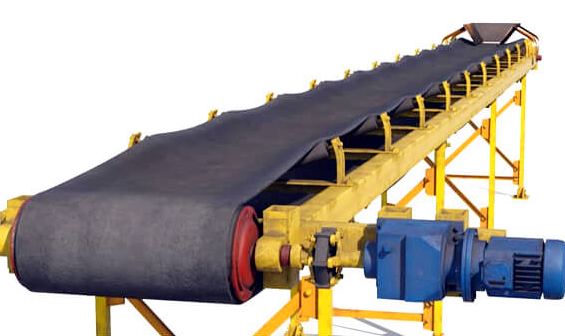
Industrial conveyor belts
Tube Screw Conveyors are used for continuous conveying of powder, granular and small block materials, realizing sealed material transportation for use in mining, chemical industry, food, building materials and environmental protection industries. Prices typically range from $1,800 to $45,000.
Conveying diameter: ≤300mm
Production capacity: 2-120 tons/hour
Conveying length: 1-60m
Rotating speed: ≤120 rpm
Motor power: 1.5-55kW
Industrial conveyor belts are devices used to efficiently move materials during production, manufacturing and logistics processes. They are widely used in a variety of industries such as mining, manufacturing, food processing, packaging, and airport baggage handling. Conveyor belt systems can be designed in many different configurations to suit specific tasks and environmental requirements.
What Makes a Quality Industrial Conveyor Belt?
The carcass provides tensile strength and dimensional stability, the cover compound protects against wear and environmental factors, and the splice ensures joint integrity—together, they determine the belt's overall durability and performance.
The Carcass (Skeleton Layer)
This is the structural core that provides tensile strength and dimensional stability. Options include EP (polyester-nylon) fabric for general applications, NN (nylon-nylon) fabric for high-impact environments, and steel cord for ultra-high tension long-distance conveying.
The Cover Compound
The top and bottom rubber or polymer layers that protect the carcass and directly contact the conveyed material. Cover compounds are formulated for specific conditions—abrasion-resistant for sharp ores, heat-resistant for hot clinker, oil-resistant for chemical applications, and FDA-grade for food contact.
The Splice (Joint)
The connection point where the belt ends are joined. Mechanical splices offer quick installation for light to medium applications; vulcanized splices provide a seamless, durable joint for heavy-duty, high-tension operations.

What are the different types of industrial conveyor belts?
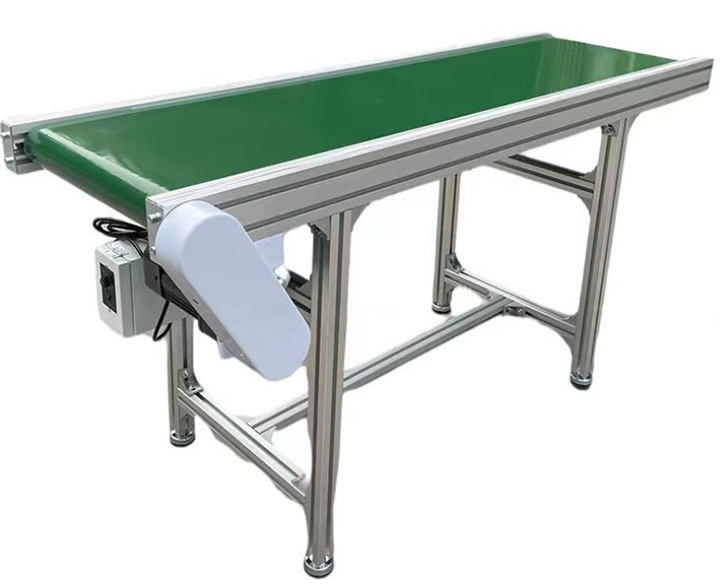
Light-Duty Conveyor Belts – Engineered for Precision and Hygiene
Light-duty belts are defined by working tensions below 160 PIW (pounds per inch of width). They are designed for controlled environments handling uniform, lightweight materials where hygiene, precision, and cleanability are paramount.
| Sub-Type | Material | Thickness | Key Applications | Critical Features |
|---|---|---|---|---|
| PVC Belt | PVC | 1.0 – 8.0mm | Food packaging, electronics assembly, logistics sorting | Lightweight, cost-effective, easy to clean |
| PU Belt | Polyurethane | 0.5 – 5.0mm | Food processing, pharmaceuticals, cleanrooms | FDA-compliant, highly wear-resistant, flexible |
| Modular Plastic Belt | Plastic modules | Custom assembled | Seafood processing, cold storage, wash-down environments | Removable sections, water-resistant, low maintenance |
| Teflon/PTFE Belt | PTFE-coated fiberglass | 0.25 – 1.0mm | Heat sealing, baking lines, drying ovens | Heat-resistant up to 260°C, non-stick surface |
Light-duty belts are ideal for industries where product quality and sanitation standards are critical. All food-contact materials are available with FDA and EU-compliant certifications.
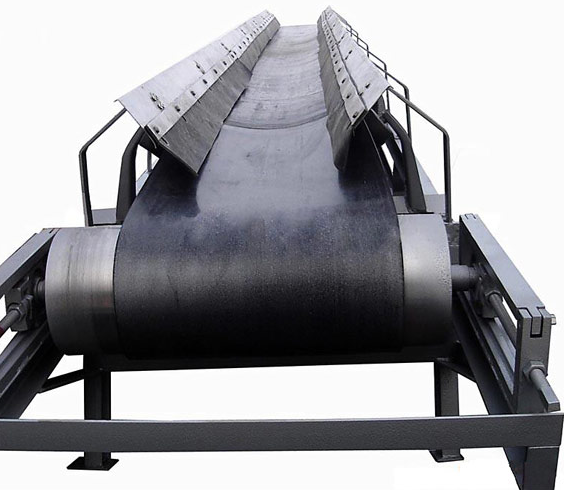
Heavy-Duty Conveyor Belts – Built to Withstand Extreme Conditions
Heavy-duty belts operate at working tensions above 160 PIW and are engineered for coarse, abrasive bulk materials, high impact energy at loading points, and continuous operation in harsh environments such as mines, quarries, cement plants, and ports.
| Sub-Type | Carcass Material | Thickness | Key Applications | Critical Features |
|---|---|---|---|---|
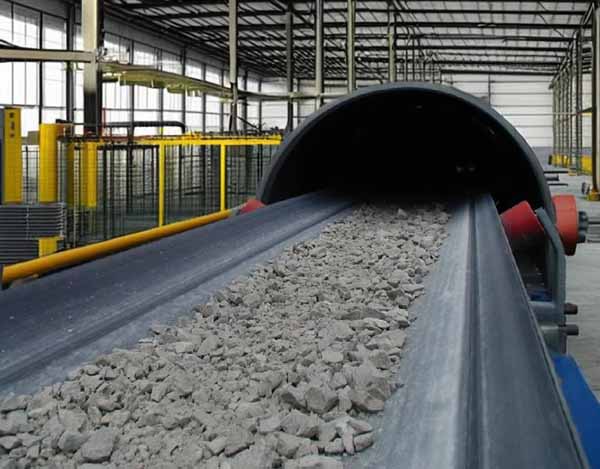
| EP Fabric Belt | Polyester fabric | 6 – 20mm | Coal mines, building materials, cement plants | High tensile strength, impact-resistant, wear-resistant |
| NN Fabric Belt | Nylon fabric | 8 – 16mm | Fertilizer plants, ore handling, docks | Excellent flexibility, heat and humidity resistance |
| Steel Cord Belt | Steel wire rope core | 10 – 30mm | Long-distance mining conveyors, ports | Ultra-high strength, minimal stretch, long service life |
| Heat-Resistant Belt | EP fabric + heat-resistant rubber | 8 – 14mm | Cement kilns, coking lines, sinter plants | Withstands up to 250°C, crack-resistant |
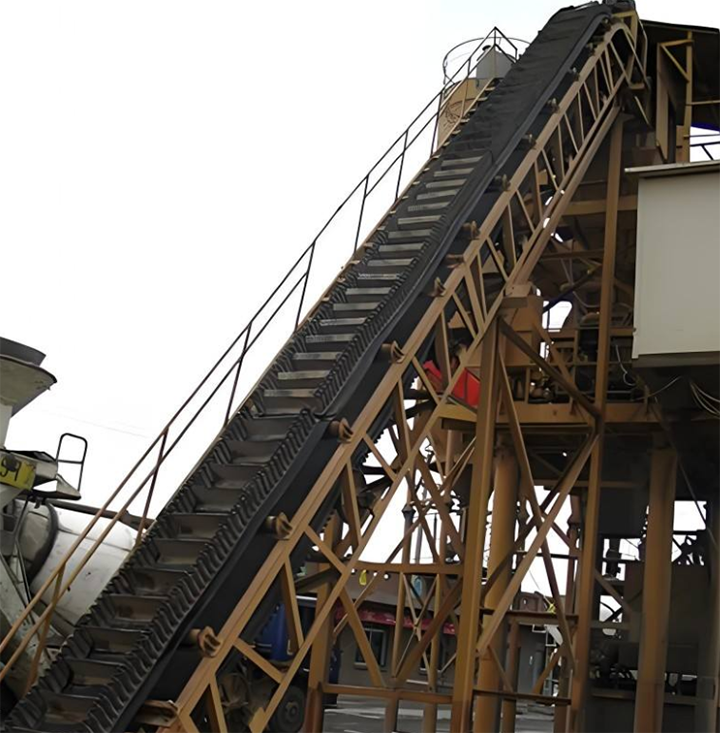
| Chevron/Pattern Belt | EP fabric + patterned rubber cover | 6 – 12mm | Inclined bulk material handling, grain transport | Non-slip surface, suitable for angles up to 30° |
Heavy-duty belts from Dahan are engineered with reinforced edges and impact-resistant covers to deliver extended service life in the most punishing environments.
What is the working principle of industrial conveyor belts?
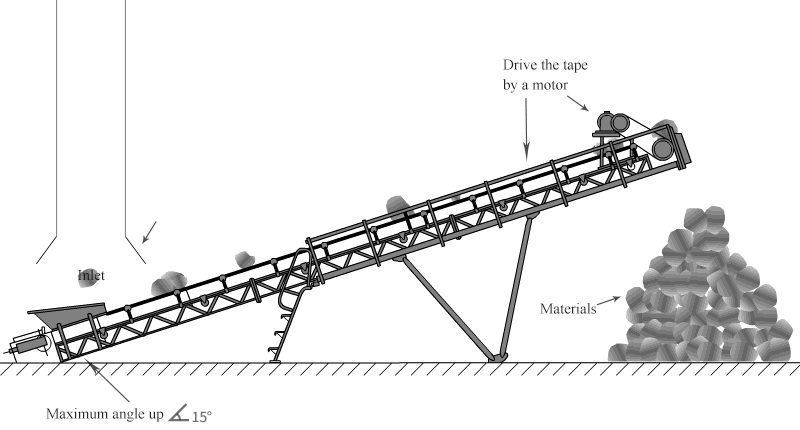
The conveyor belt is wound around the transmission roller and the tail roller to form an endless endless belt. The conveyor belt is supported by the support roller to limit the deflection sag, and the tensioning device provides the required tension for the normal operation of the conveyor belt. When working, the motor drives the transmission roller through the reducer, and the friction between the transmission roller and the conveyor belt makes the conveyor belt move continuously. The conveyed items are transported to the unloading location by the friction between it and the conveyor belt.
What are the structural components of industrial conveyor belts?
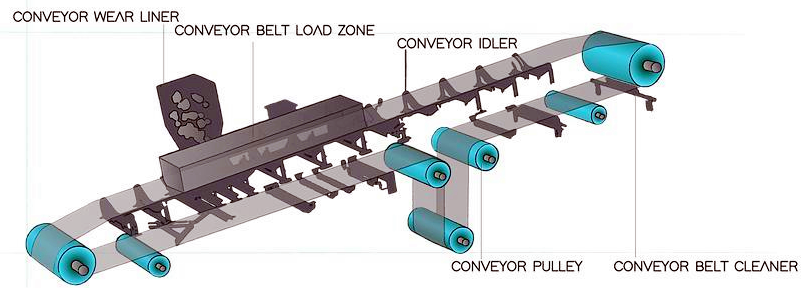
Generally consists of a covering layer, a skeleton layer and a bottom layer. The covering layer usually has the characteristics of wear resistance, oil resistance, acid and alkali resistance, etc., which is used to protect the skeleton layer and carry materials; the skeleton layer is the main supporting structure of the conveyor belt, providing strength and flexibility, and common materials include canvas, nylon, polyester, wire rope, etc.; the bottom layer is in contact with the driving roller and the roller, and is required to have good wear resistance and tear resistance.
Technical parameters of industrial conveyor belts
The tables below show our standard industrial conveyor belt specifications. To select the right belt for your application, identify your required throughput (tons per hour) and material characteristics in the first table, then cross-reference with the second table to confirm the correct belt width and speed combination. For non-standard requirements, contact our engineering team for custom specifications.
|
Category |
Model example |
Belt width (mm) |
Thickness (mm) |
Number of layers/skeleton material |
Features |
Applicable scenarios |
|
Light conveyor belt |
PVC-3.0MM-G |
300~2000 |
3.0 |
2-layer polyester cloth |
Anti-slip, green, food grade |
Food, electronics, logistics sorting |
|
PU-1.5MM-W |
200~1500 |
1.5 |
1-layer polyester cloth |
Food grade, oil resistant, cut resistant |
Pastry , meat processing line |
|
|
Modular plastic belt-MD50 |
Modular assembly |
≥300 |
- |
Removable, water-resistant, impact-resistant |
Aquatic products, refrigeration, filling line |
|
|
Teflon belt-TF260 |
100~1500 |
0.25~1.0 |
Glass fiber coated PTFE |
High temperature resistant, anti-sticking, breathable |
Heat sealing, baking line |
|
|
Heavy conveyor belt |
EP200-4800×6 |
400~2000 |
6~12 |
4 layers of EP cloth, 200N/ mm |
wear-resistant, high strength, impact resistance |
coal mines, building materials, cement plants |
|
NN300-51000×8 |
500~2200 |
8~16 |
5-layer NN cloth, 300N/mm |
high tensile strength, heat and humidity resistance |
fertilizer, ore, dock |
|
|
ST10001200×10 |
800~2400 |
10~20 |
wire core, 1000N/mm |
long distance, large load, high strength |
long line of mines and ports Transportation |
|
|
Heat-resistant HR-T41000×8 |
500~1800 |
8~14 |
EP cloth + high temperature resistant rubber |
Ablation resistance, crack resistance |
Cement kiln, coking line |
|
|
Pattern belt-Chevron |
400~1600 |
6~12 |
EP cloth + embossed rubber |
Non-slip, suitable for climbing |
Bulk material lifting, grain transportation |
What are the applications of conveyor belts in the industrial field?
Our industrial conveyor belts are engineered to perform across diverse industries, each with unique material characteristics, environmental conditions, and throughput demands. We match the right belt construction—whether rubber, PVC, PU, steel cord, or chevron pattern—to your specific application.
Mining & Quarrying: Steel cord and EP fabric belts transport ore, coal, and aggregates with daily throughput exceeding 10,000 tons.
Food Processing & Packaging: FDA-compliant PU and PVC belts handle everything from raw ingredients to finished packaged goods in sanitary environments.
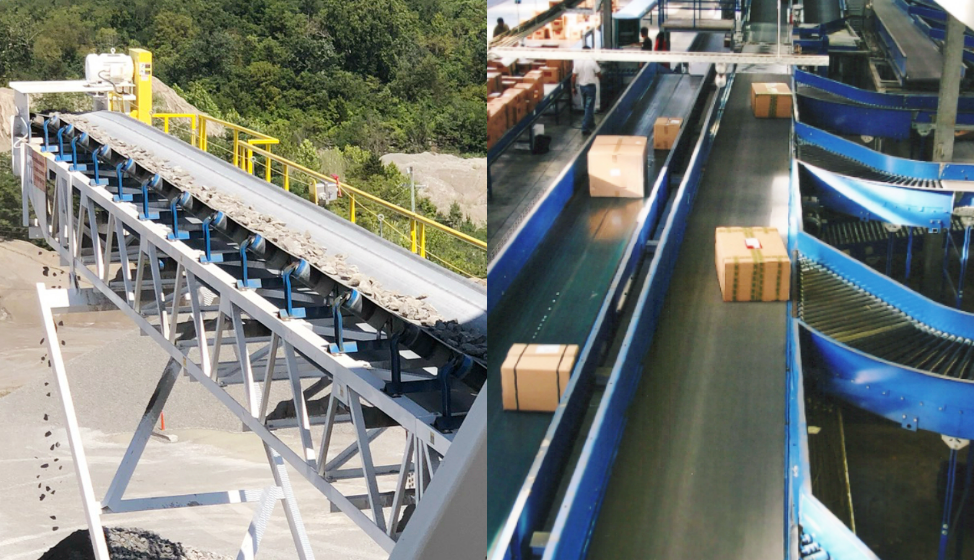
Automotive Manufacturing:Heavy-duty rubber belts and lightweight PU belts move components through assembly lines.
Logistics & Warehousing:Modular plastic and PVC belts power high-speed sorting systems handling tens of thousands of packages per hour.
Agriculture & Grain Handling:Chevron belts with non-slip surfaces effectively convey grain and seeds on inclined systems.
Industrial conveyor belts price
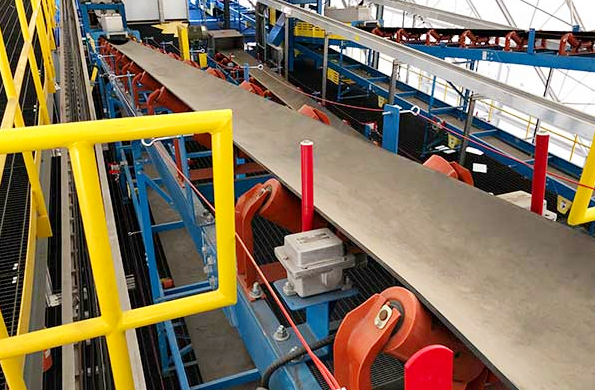
Standard PVC or lightweight PU conveyor belts typically cost between $10 and $50 per meter. However, rubber or silicone belts requiring high temperature resistance, abrasion resistance, chemical corrosion resistance, or food-grade standards can jump to $50 to $300 per meter. Sidewall conveyor belts, with the addition of sidewalls and partitions, are generally $100 to $400 per meter; the more complex the structure, the higher the price. Steel cord conveyor belts, used for heavy-duty long-distance transport in mines and ports, are the most expensive, reaching over $300 per meter. The price depends on the number of canvas layers, cover rubber thickness, tensile strength, steel cord diameter, and rubber grade.
What is the general carrying capacity of belt conveyors?
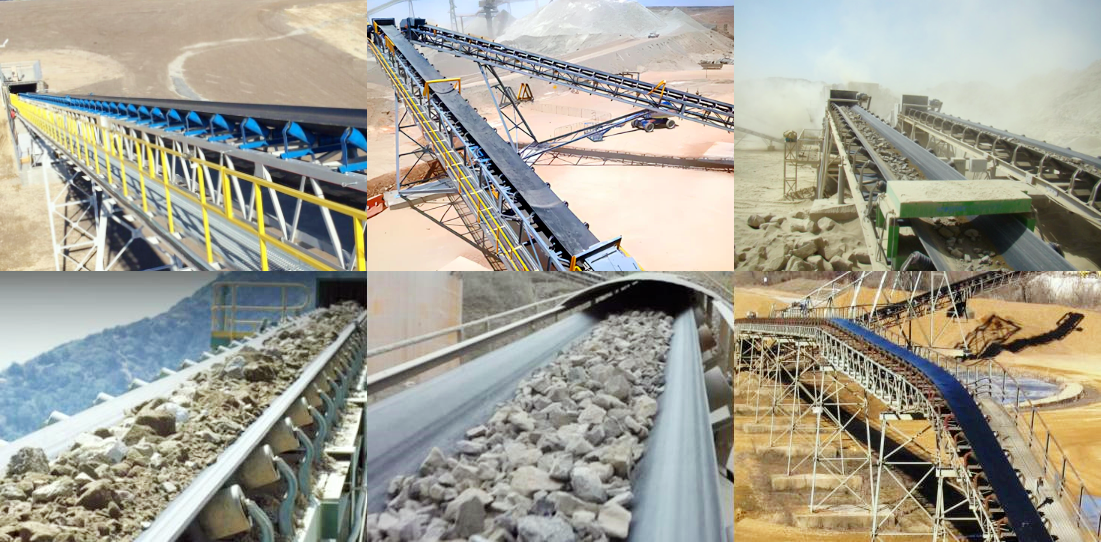
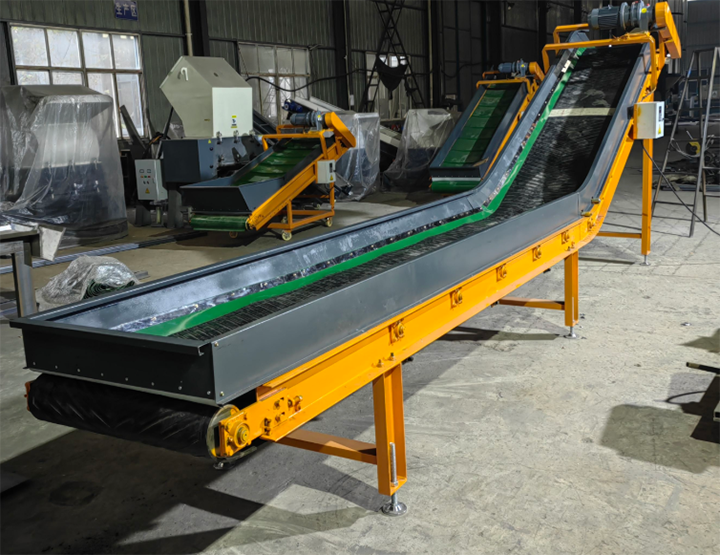
The conveying capacity of belt conveyors varies depending on their design, application, and working environment, ranging from light to heavy loads. Light-load conveyors are mostly used in light industries such as food and electronics, typically conveying materials weighing between 10 and 200 kg. Medium-load conveyors are suitable for industrial assembly lines and similar scenarios, transporting materials weighing between 200 and 500 kg. Heavy-load conveyors are used in mines, ports, and other locations handling bulk materials, with a single unit capable of carrying a weight of over 1 ton. Some specially designed heavy-load models can even withstand weights of tens of tons, adapting to various complex industrial applications.
The following are the theoretical load capacity ranges under some common specifications (horizontal conveying, uniform loading):
|
Bandwidth (mm) |
Conveying speed (m/s) |
Conveying capacity (t/h, estimated based on a bulk density of 1.0t/m³) |
|
500 |
1.0 |
100~150 |
|
650 |
1.25 |
150~300 |
|
800 |
1.6 |
300~500 |
|
1000 |
2.0 |
500~800 |
|
1200 |
2.5 |
800~1200 |
|
1400 |
3.15 |
1000~1800 |
Industrial conveyor belt supplier
Dahan Machinery is an industrial conveyor belt supplier, offering various industrial conveyor belts and conveyor systems covering both light and heavy-duty applications. These belts are suitable for material handling in diverse industries such as mining, construction, ports, agriculture, food processing, chemicals, and waste treatment. The products are robust and durable, and specifications can be adjusted to meet specific site requirements. Light-duty conveyors have a load capacity of 50 to 100 kg per square meter and a conveying capacity of 10 to 200 tons per hour, suitable for short-distance, lightweight material handling. Heavy-duty conveyors have a load capacity of 500 to 5000 kg per square meter and a conveying capacity of 30 to 3000 tons per hour, meeting the needs of long-distance, heavy-weight material handling.
All belts are manufactured in ISO 9001-certified facilities with FDA-compliant materials available for food-grade applications. Custom specifications and fast delivery within 15 working days.
Frequently Asked Questions
How long do industrial conveyor belts typically last?
Service life depends on material abrasiveness, impact frequency, and operating environment—typically 3-5 years in mining, 10+ years in indoor light-duty applications.
What's more important—belt thickness or rubber quality?
Rubber quality matters more than thickness. A high-quality compound outlasts a thicker belt made with low-grade materials.
How do I prevent belt mistracking?
Check for misaligned idlers, off-center loading, or improper splicing. Adjust idlers against the mistracking direction; if persistent, conduct a site survey.
Should I choose mechanical or vulcanized splices?
Mechanical splices suit light to medium-duty applications; vulcanized splices are essential for heavy-duty, high-tension, or abrasive environments.
What does "EP" and "NN" mean in belt specifications?
EP (Polyester-Nylon) offers good strength with low stretch for general use; NN (Nylon-Nylon) provides higher tensile strength and flexibility for high-impact applications.
Sugested Products
Heavy-duty Rubber Industrial Conveyor Belts | Price & Specs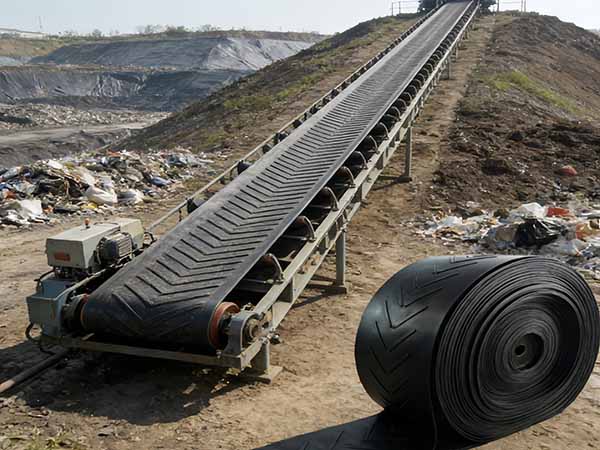
Chevron Industrial Conveyor Belt Manufacturer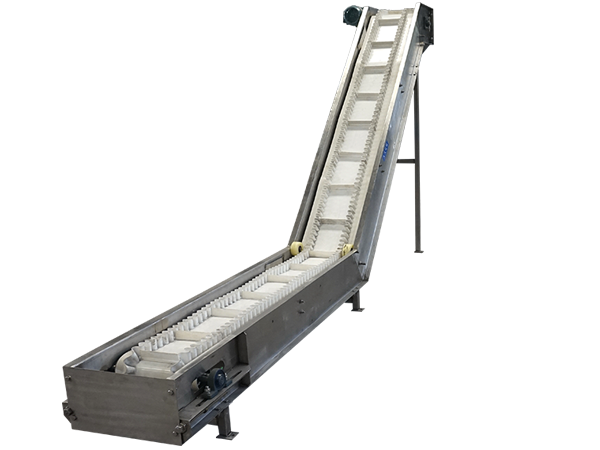
Inclined Belt Conveyor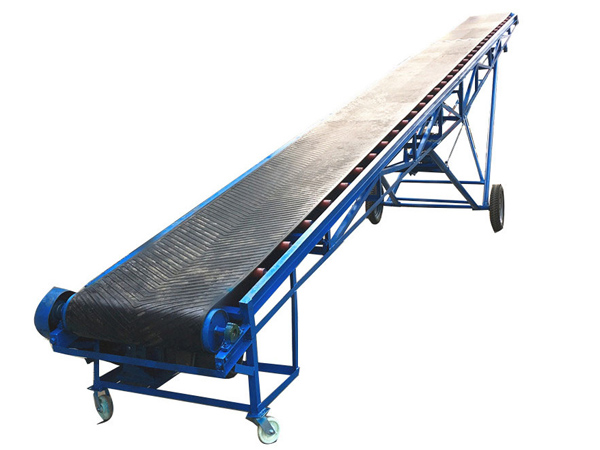
Mobile Conveyor Belt