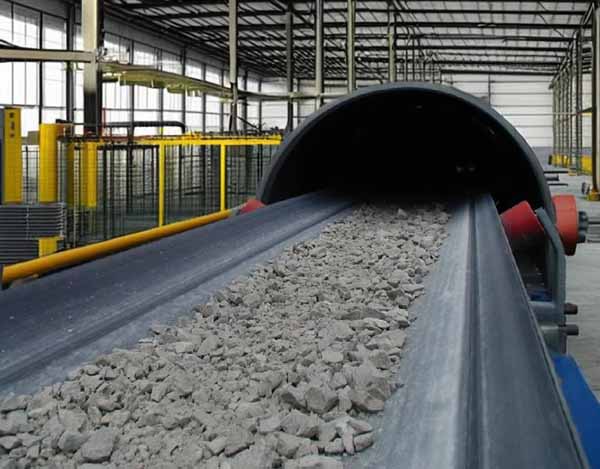
Heavy-duty Rubber Industrial Conveyor Belts | Price & Specs
Bandwidth range: 800mm to 2400mm, flexible customization available.
Cover thickness: 4.5/1.5mm to 12/6mm
Skeleton structure: 3-6 layers of EP polyester canvas or steel cord core
Tensile strength: 500 N/mm to 3150 N/mm
Operating temperature: Standard -30℃ to 100℃, high-temperature resistant models up to 200℃.
Overview of Heavy-duty rubber industrial conveyor belts
In quarries, building material factories, and other similar settings, production stoppages due to conveyor belt breakage result in lost output and economic losses. Heavy-duty rubber industrial conveyor belts can solve the problem of high-intensity wear. These machines continuously transport large quantities of heavy, hard, or abrasive blocky or powdery materials over long distances. The belt width is selectable from 800mm to 2400mm, and different rigidity skeleton materials are matched according to the characteristics of the conveyed materials and the production environment, thereby improving the impact resistance of the entire conveyor line.
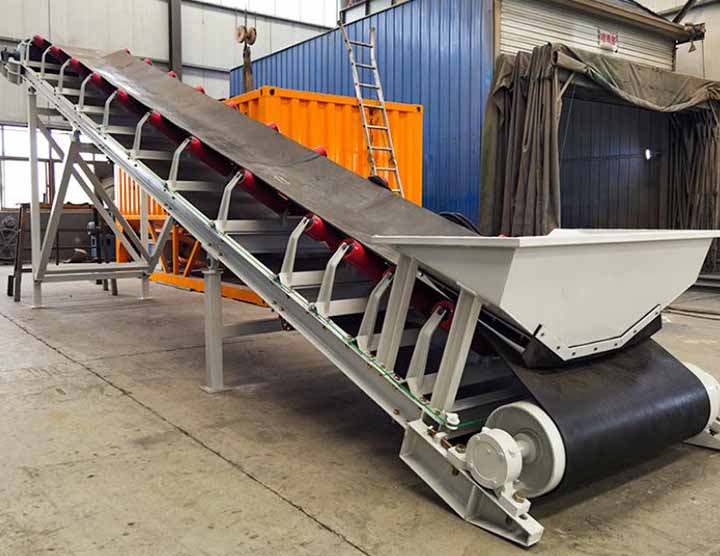
Video demonstration of heavy-duty rubber industrial conveyor belts
International Standards & Rubber Grades We Follow
Our heavy-duty industrial conveyor belts are manufactured in strict accordance with international standards. We supply various rubber cover grades including DIN-X (Excellent cut and gouge resistance), DIN-Y (Standard abrasion resistant), and DIN-W (Severe abrasion resistance for fine materials).
Classification of Heavy-Duty Rubber Industrial Conveyor Belts
Different applications require different conveyor belts; some require high-temperature resistance, while others require impact resistance. Below are the types of heavy-duty rubber industrial conveyor belts used in different industries.
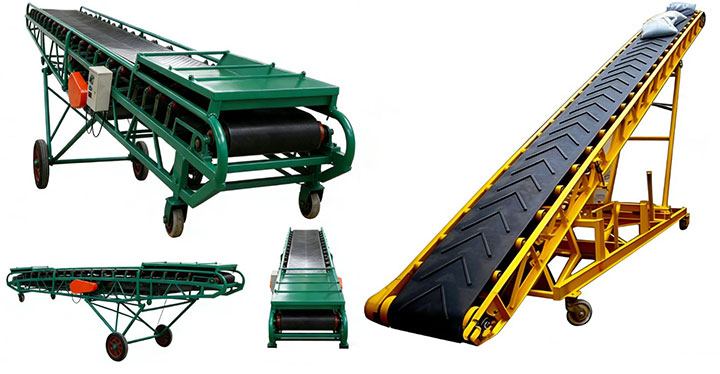
Cut-resistant conveyor belts can be used to handle large, hard ores or granite. Their rubber outer layer is extremely wear-resistant and scratch-resistant, and they are not easily damaged even when dropped from a height by hard objects. The internal frame is made of high-strength polyester canvas or steel wire rope, providing extremely high tensile strength. The cover rubber thickness is typically customized with a thick top layer and a medium bottom layer, such as 6mm+2mm or 8mm+3mm.
High-temperature resistant conveyor belts are used to transport hot materials such as cement clinker and coke, preventing premature hardening, cracking, or peeling. They are made of special heat-resistant rubber and come in different temperature resistance grades: T1, T2, and T3. T1 indicates a temperature resistance of 125℃, T2 150℃, and T3 can withstand continuous operating temperatures up to 200℃.
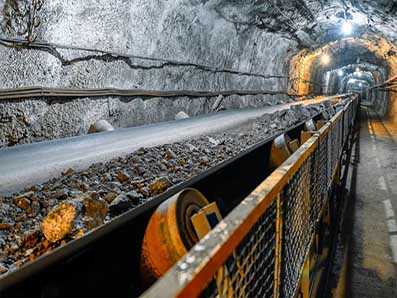
Some materials contain vegetable oils, mineral oils, or acidic/alkaline components, which can easily corrode and swell ordinary rubber. Oil-resistant and antistatic conveyor belts easily handle these conditions. Furthermore, in flammable and explosive environments such as enclosed spaces or underground locations, they possess mandatory flame-retardant and antistatic properties, preventing dust-induced explosions and ensuring safety.
Selection Recommendations
How to choose the right heavy-duty conveyor belt from a wide variety of technical specifications? Specifically, this can be considered from three aspects: analyzing the characteristics of the material to be conveyed, calculating the operating tension, and assessing environmental factors.
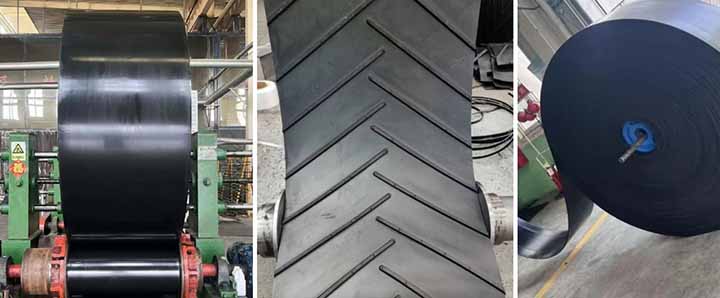
Analyzing Material Characteristics: Please confirm the vertical drop of the material from the funnel (over 2 meters) and its sharp, blocky shape. For such hard object impacts, it is recommended to choose a top cover rubber thickness of 6mm or more and install transverse tear-resistant mesh to absorb kinetic energy and prevent puncture of the internal skeleton layer. When purchasing, please request specific abrasion data such as DIN-X grade from the manufacturer.
Calculating Operating Tension: Tension is affected by the conveyor length, inclination angle, and load. For short-distance, low-slope conveying (less than 500 meters), 3 or 4 layers of polyester canvas are sufficient; for projects spanning several kilometers across mountains and mines, steel wire rope cores with low elongation must be used as the load-bearing skeleton to prevent belt elongation under heavy loads.
Assessing Environmental Factors: Consider the external climate of the conveyor line's location. For outdoor operations in extremely cold regions (minus 40 degrees Celsius), a customized formula with added low-temperature resistant additives is required. In environments with strong sunlight or high ozone levels, antioxidants are needed to delay rubber aging and cracking.
Product Advantages
Heavy-duty rubber industrial conveyor belts offer various advantages, including impact resistance, wear resistance, chemical corrosion resistance, high temperature resistance, and high tensile strength.
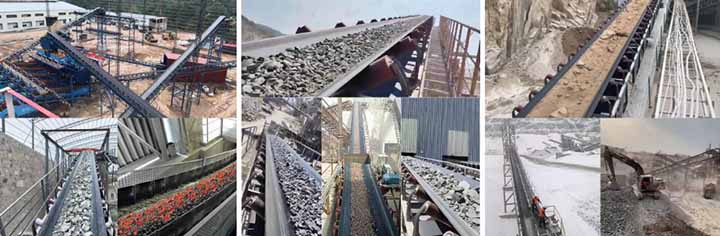
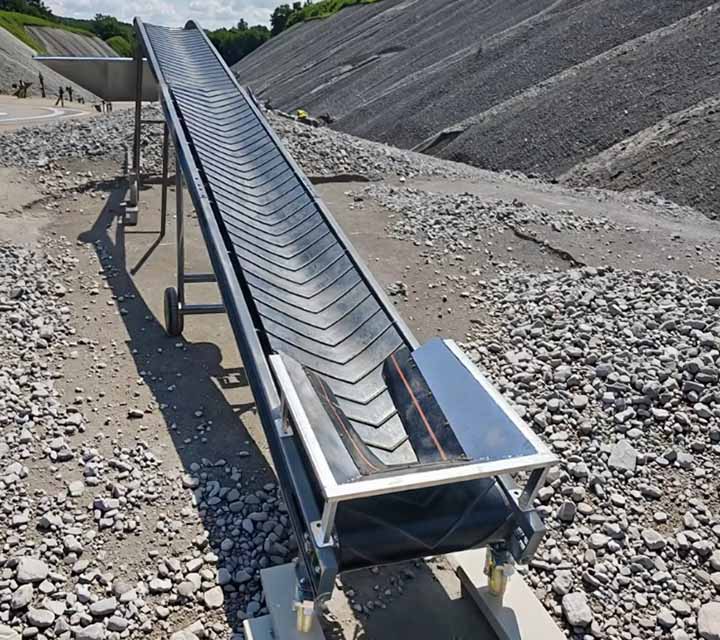
The belt's transverse design is flexible, allowing it to concave into a U-shaped groove when passing over 35-degree or 45-degree idler sets. This effectively prevents leakage of bulk coal or sand during high-speed operation (4 meters per second) and cornering.
The equipment manufacturing process incorporates an improved impregnation and bonding process between the rubber and the EP canvas or steel wire rope. The skeleton layer and rubber layer are tightly bonded, maintaining tension and preventing peeling under long-term external shear and impact, thus avoiding belt cracking.
Anti-ozone agents are added to the rubber cover rubber. Operating in environments with intense UV exposure, temperatures as low as -30 degrees Celsius, or heavy rainfall, the belt surface is less prone to cracking, reducing the probability of tearing at joints.
When transporting large blocks of granite under heavy loads, the internal steel wire rope skeleton maintains minimal deformation. The entire long-distance conveyor line does not require frequent stops to adjust belt tension, reducing routine maintenance.
Technical Specifications of Heavy-duty Rubber Belts
| Model | Belt Width (mm) | Cover Thickness (Top/Bottom, mm) | Carcass Structure | Tensile Strength (N/mm) | Applicable Materials | Working Temperature |
|---|---|---|---|---|---|---|
| EP500/3 | 500 | 4.5 / 1.5 | 3-ply EP Polyester Canvas | 500 | Coal, Sand & Stone | -20℃ ~ 80℃ |
| EP630/4 | 650 | 6 / 2 | 4-ply EP Polyester Canvas | 630 | Ore, Cement Clinker | -20℃ ~ 80℃ |
| EP800/5 | 800 | 6 / 2 | 5-ply EP Polyester Canvas | 800 | Crushed Stone, Slag | -20℃ ~ 80℃ |
| EP1000/5 | 1000 | 8 / 3 | 5-ply EP Polyester Canvas | 1000 | Iron Ore, Copper Ore | -25℃ ~ 80℃ |
| EP1250/6 | 1200 | 8 / 3 | 6-ply EP Polyester Canvas | 1250 | Heavy-duty Mine Conveying | -25℃ ~ 80℃ |
| ST1250 | 1000 | 8 / 4 | Steel Cord Core | 1250 | Long-distance Conveying | -30℃ ~ 100℃ |
| ST1600 | 1200 | 8 / 4 | Steel Cord Core | 1600 | Bulk Cargo for Port | -30℃ ~ 100℃ |
| ST2000 | 1400 | 10 / 5 | Steel Cord Core | 2000 | Large-scale Mine | -30℃ ~ 100℃ |
| ST2500 | 1600 | 10 / 6 | Steel Cord Core | 2500 | Ultra-heavy Load Conveying | -30℃ ~ 100℃ |
| ST3150 | 1800 | 12 / 6 | Steel Cord Core | 3150 | Ultra-long Distance Ore Conveying | -30℃ ~ 100℃ |
How much do heavy-duty rubber industrial conveyor belts cost?
Heavy-duty industrial conveyor belts are customized mechanical components, and prices range from $15.00 to $180.00 per meter depending on the specific configuration. Factors determining this price fluctuation include the skeleton material, the purity of the cover rubber formulation, the actual thickness of the rubber layer, and the belt width.
Due to raw material costs and the requirement for high-precision tension control equipment, the price per meter of steel wire rope core belts is generally higher than that of polyester canvas belts of the same width.
High-temperature resistant or oil-resistant conveyor belts made from a combination of pure natural rubber and special synthetic rubber have a significantly higher unit price per meter than conventional wear-resistant belts due to their expensive formulation.
For example, a heavy-duty mining conveyor belt with a width of 1400mm and a rubber thickness of 8+3mm consumes nearly three times the volume of rubber material compared to a belt with a width of 800mm and a rubber thickness of 4.5+1.5mm, naturally resulting in a significantly higher price.
Frequently Asked Questions
Q1: How to measure the thickness of a heavy-duty rubber conveyor belt?
Factory Answer: Use calipers to measure several points on a flat surface more than 50mm from the edge of the belt to determine the total thickness. To check the rubber layer thickness, cut open the cross-section of the belt and use a magnifying glass or ruler to read the net values for the top rubber, bottom rubber, and reinforcing layers.
Q2: What causes a conveyor belt to tear, and how to prevent it?
Factory Answer: Tearing is often caused by sharp ore or iron objects getting stuck in the funnel and cutting through the belt, or by the belt running off-center and being squeezed. Iron blocks can be removed by installing a magnetic separator at the discharge port. Tear-resistant belts with transverse steel wire mesh should be selected, and anti-deviation switches should be installed to prevent tearing.
Q3: What is the storage life of a rubber conveyor belt?
Factory Answer: Under ideal storage conditions, avoiding direct sunlight, the storage life of heavy-duty rubber conveyor belts is typically 3 to 5 years. When storing, they should be rolled vertically and placed on shelves, not laid flat or stacked. The belt rolls should be rotated every six months to prevent localized deformation due to prolonged pressure.
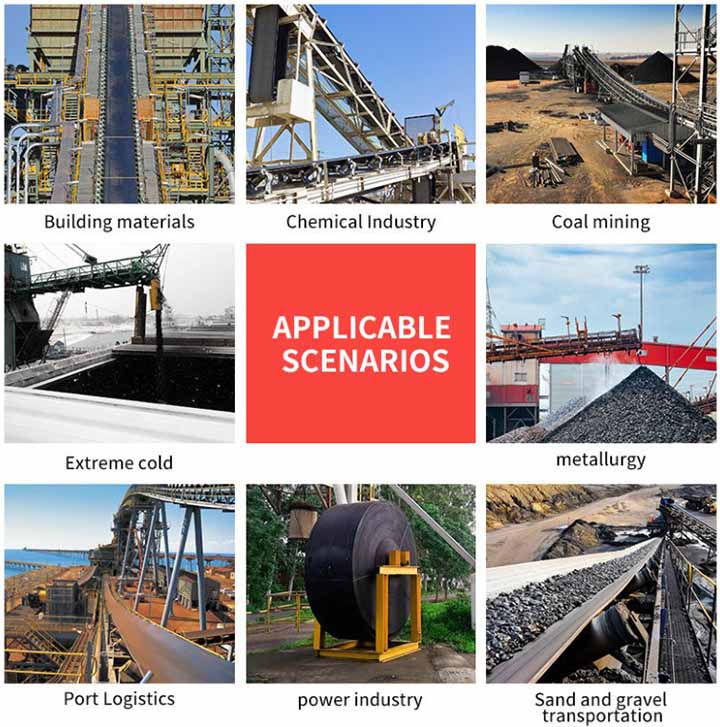
Heavy-duty rubber industrial conveyor belts can be used in quarries, building material plants, metallurgical plants, docks, thermal power plants, and other scenarios to transport materials such as iron ore, crushed stone, clinker, clay, high-temperature sintered ore, scrap steel, mineral powder, and coal. As a manufacturer deeply involved in the rubber machinery conveying field, Dahan Machinery not only provides high-strength, low-elongation, and long-life belt products, but also dedicates itself to providing comprehensive technical selection support based on discharge height, material characteristics, and conveying distance.
Sugested Products
Mining conveyor belts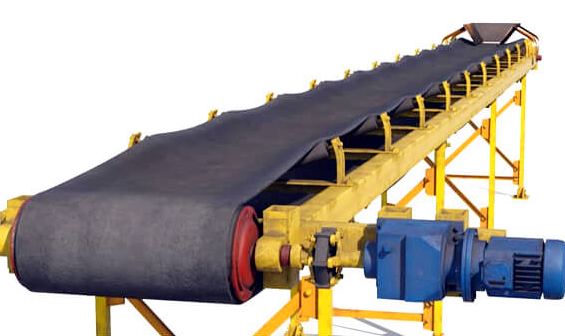
Industrial conveyor belts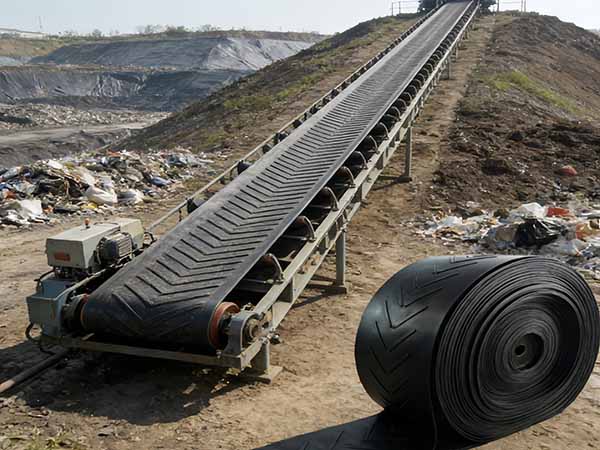
Chevron industrial conveyor belts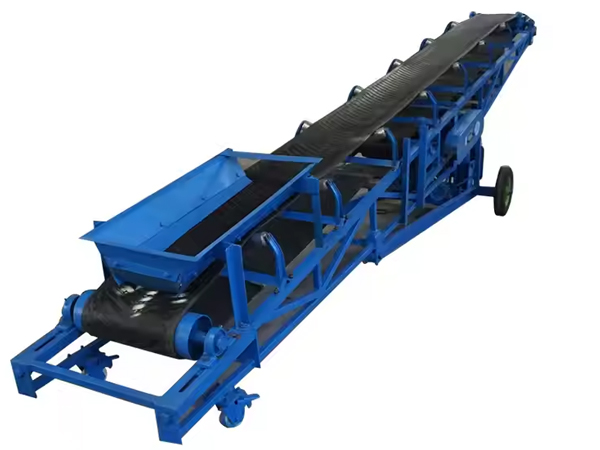
conveyors belt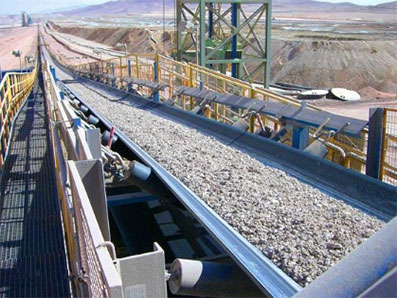
Steel cord conveyor belt