Corrugated Sidewall Belt Conveyor for Aggregate | Heavy-Duty Incline
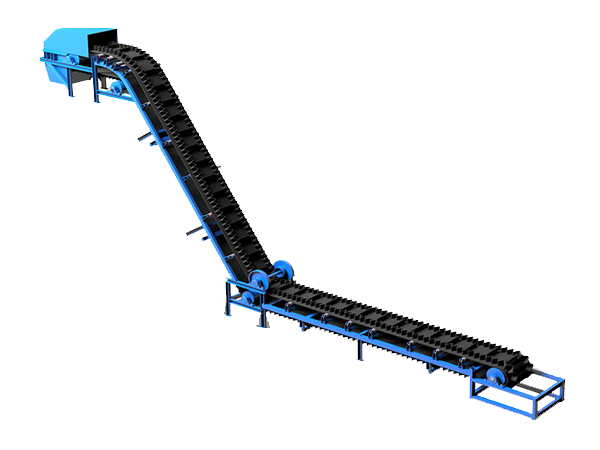
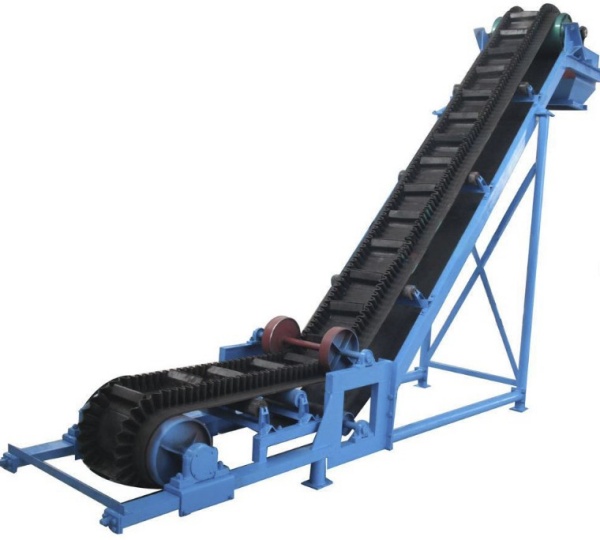
A corrugated sidewall belt conveyor is a type of continuous conveying equipment that utilizes flexible corrugated sidewalls and transverse cleats to transport bulk materials like aggregates, gravel, granite, and basalt at inclination angles ranging from 0° to 90°.
• Inclination Angle: 0°–90°
• Conveying Capacity: 50 m³/h–2500 m³/h
• Nominal Belt Width: 500 mm–2000 mm
• Sidewall Height: 120 mm–630 mm
• Applicable Particle Size: 0 mm–400 mm
Role of Corrugated Sidewall Belt Conveyor for Aggregate
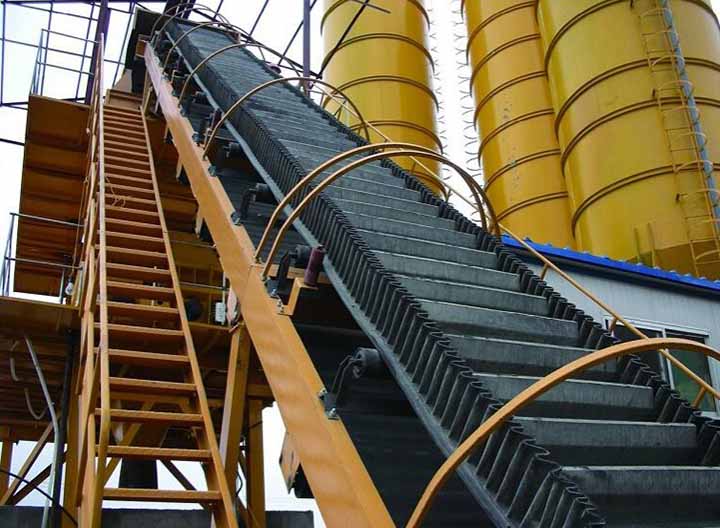
In aggregate production lines, the corrugated sidewall belt conveyor lifts crushed stones directly from lower screening units to elevated silos. The enclosed pocket space formed by corrugated sidewalls and transverse cleats securely holds materials during steep or vertical elevates, preventing slippage down the slope or dropping into machinery below. This design achieves vertical height transitions within limited plant footprints, reduces drop impacts and dust generation during transfer, and builds an expedited transport channel between stone crushing and finished storage.
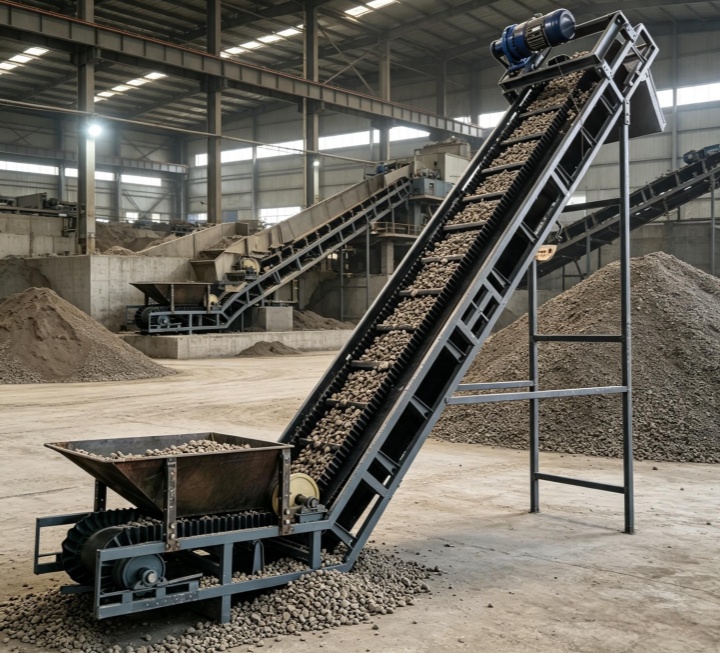
Anatomy of Heavy-Duty Aggregate Sidewall Conveyors
• Cross-Rigid Base Belt: Embedded with steel cords or high-strength fabric layers to resist transverse deformation during steep bending and maintain smooth operation.
• Corrugated Sidewalls: Utilizes high-rubber-content corrugated vertical edges with high tear resistance, allowing two sides to open without strain when flexing around drive drums.
• Transverse Cleats: Mounted between sidewalls to form carrying pockets. Aggregates rest directly above cleats, which support the vertical weight load.
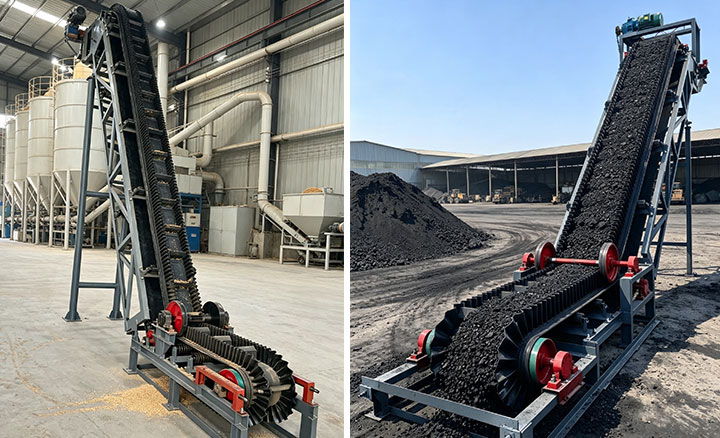
• Deflection Wheels & Transition Idlers: In bend zones transitioning from flat to steep angles, deflection wheels press against base belt edges to prevent belt derailment.
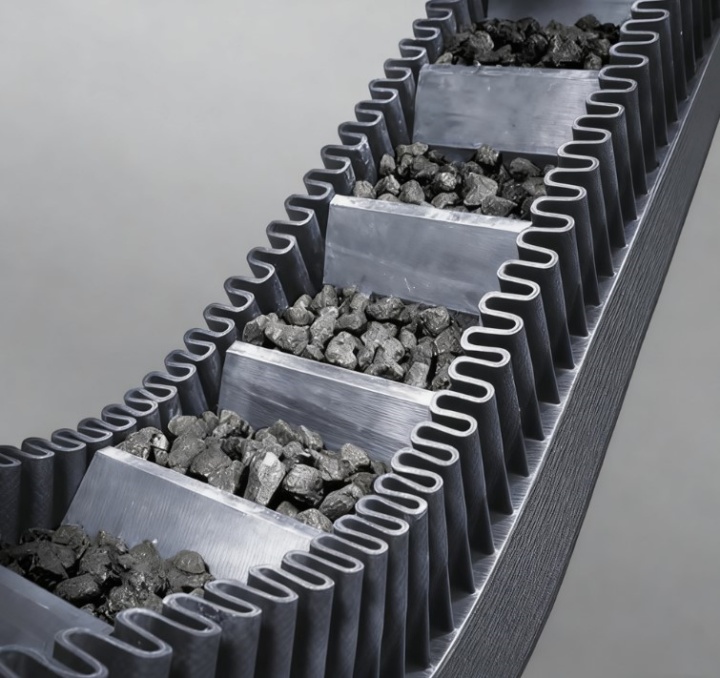
Solving Aggregate Handling Pain Points: Wear, Spillage & Space Constraints
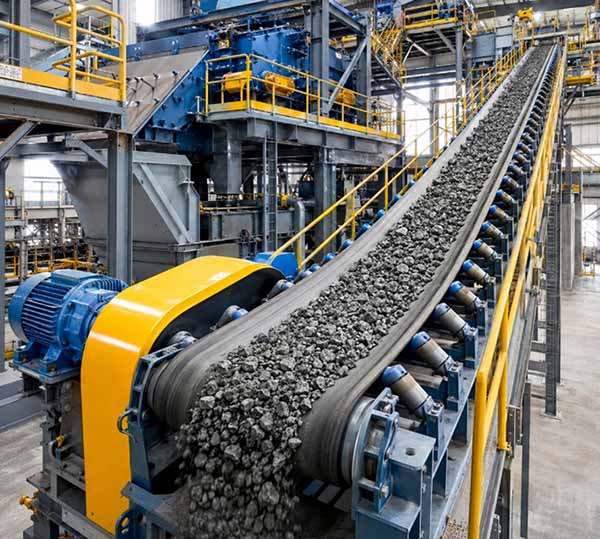
• Wear Impact: Coarse aggregate impact damages standard belts. Corrugated sidewall units use impact beds and wear-resistant liners at feed inlets to dissipate kinetic energy, paired with wear-grade rubber covers to reduce abrasion on base belt surfaces and cleats.
• Spillage & Material Loss: Standard flat belts risk stone rollback at angles above 18°. Interlocking corrugated sidewalls and cleats lock materials inside pockets, preventing outward scattering even under changing operating inclines.
• Space Constraints: Traditional flat belt incline transport requires extensive ground footprints. The 90° vertical lifting structure reduces horizontal layout length by 70%, significantly compacting overall layout space in quarries or batching plants.
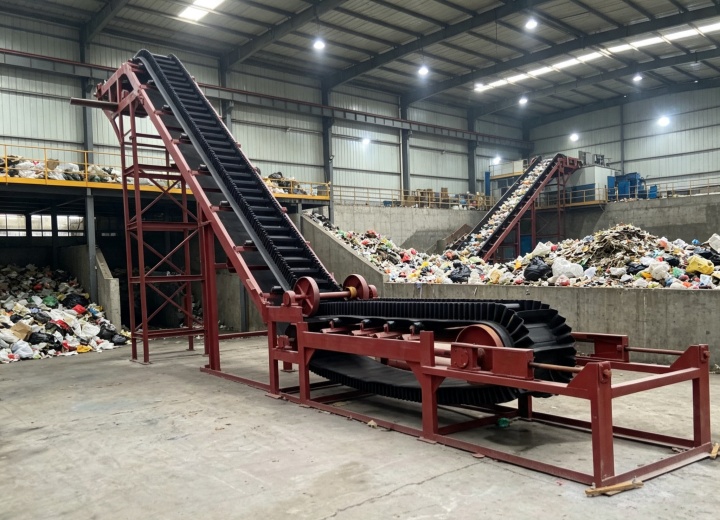
Aggregate Industry Applications
• Quarries & Crushing Plants: Connects jaw crushers, cone crushers, and vibrating screens to lift large-grained stones to secondary crushing hoppers.
• Concrete Batching Plants: Elevates sand and varied-size gravel to top batching bins within space-restricted urban batching facilities.
• Sand Washing & Recycling Plants: Transports moist sand and fine aggregates with high moisture content; high borders prevent water leakage and material loss.
• Mines & Dock Bulk Loading: Enables continuous steep-slope loading operations in underground mine shafts or ship loaders.
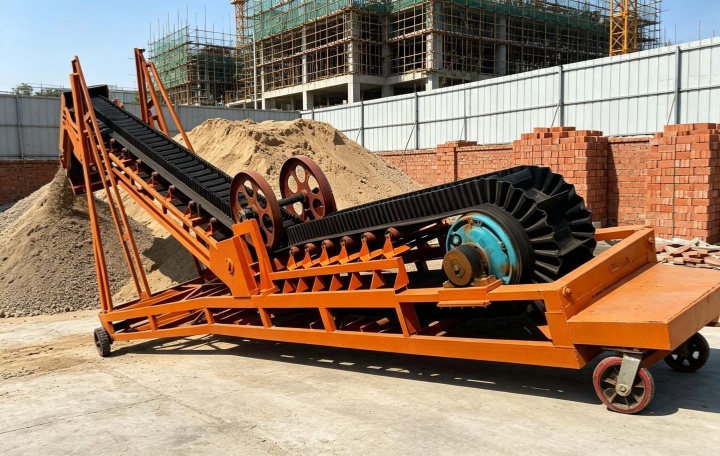
Technical Specifications & Bulk Capacity Chart for Aggregates
| Belt Width (mm) | Sidewall Height (mm) | Cleat Type | Max Particle Size (mm) | Conveying Capacity (m³/h) |
| 500 | 120 - 160 | Type T / Type C | ≤ 50 | 50 - 120 |
| 800 | 160 - 200 | Type TC / Type TCS | ≤ 100 | 150 - 350 |
| 1000 | 200 - 300 | Type TC / Type TCS | ≤ 160 | 300 - 650 |
| 1200 | 300 - 400 | Type TCS | ≤ 220 | 600 - 1100 |
| 1600 | 400 - 500 | Type TCS (Reinforced) | ≤ 300 | 1000 - 2000 |
6. Engineering Design Guidelines: Calculating Angle, Cleat Pitch & Capacity
1. Inclination Selection: Transport angles from 0° to 30° can use lower sidewalls; angles exceeding 45° up to 90° require higher sidewalls paired with transverse cleats reinforced by bolt fastenings.
2. Cleat Pitch Calculation: Cleat spacing is usually set as an integer multiple of corrugated sidewall pitch, commonly 250 mm, 330 mm, or 400 mm. Spacing must exceed 2 times the maximum aggregate particle size to prevent large stones from jamming between adjacent cleats.
3. Capacity Calculation: Capacity formula: Q = 3600 · A · v · ρ (where A represents pocket cross-sectional area after filling coefficient correction in m², v is belt speed in m/s, and ρ is aggregate bulk density in t/m³). Under steep inclines, pocket filling rates decrease as angles increase, requiring a filling correction factor of 0.7–0.85.
Belt Construction & Rubber Material Selection Guide
1. Base Belt Structure: Base belts are divided into cross-rigid fabric cores (EP layers) and steel cord cores. EP200–EP400 fabric cores suit lift heights under 30 meters with lower tension; steel cord base belts with cross-rigid reinforcement are selected for high lift heights or heavy-duty conditions.
2. Cover Rubber Grades:
• DIN-Y Grade: Suitable for standard moderate abrasion aggregate and gravel transport with good tear resistance.
• DIN-X Grade: Geared for highly abrasive granite, basalt, or large hard ores, with rubber abrasion index below 120 mm³.
3. Sidewall & Cleat Bonding Process: Secondary thermal vulcanization molding is preferred over cold bonding, providing significantly higher peel strength under heavy loads.
Frequently Asked Questions about Aggregate Sidewall Conveyors
Q1: What is the maximum inclination angle for a corrugated sidewall belt conveyor handling aggregate?
A: The allowable limit inclination angle when conveying aggregate with a corrugated sidewall belt conveyor is 90° (vertical). Operations function anywhere within 0° to 90°, with 45° to 75° being the high-frequency selection range in practical engineering.
Q2: How do you choose between T-type and TC-type cleats for crushed stone?
A: T-type cleats suit angles under 40° with smaller crushed stone sizes. For larger stone sizes (particle size over 80 mm) or heavy-duty conditions with inclines exceeding 45°, choose TC or TCS cleats with supporting incline skirts. The inclined base structure absorbs pushing forces from sliding stone loads, preventing fracture at cleat roots.
Q3: How to prevent premature wear on sidewall belts when conveying abrasive gravel?
A: To prevent premature wear from highly abrasive pebbles and crushed stones, implement three measures: First, install heavy impact beds and drop chutes at feed points to reduce direct impact; second, choose vulcanized rubber matching DIN-X wear ratings; third, control belt speeds within 1.5–2.5 m/s to prevent frequent scuffing between materials and corrugated borders caused by excessive speeds.
Summary
The corrugated sidewall belt conveyor combines cross-rigid base belts, corrugated vertical edges, and high-strength cleats to form a system solution for steep-incline and vertical aggregate transport. This equipment breaks traditional belt conveyor angle limitations, resolving challenges regarding massive footprints and material spillage. Through proper selection of DIN-X wear-resistant rubber grades, TC/TCS cleat profiles, and matched cleat spacing, it reliably handles heavy-load impacts from granite, basalt, and gravel, enhancing material turnover efficiency in quarries and batching plants.