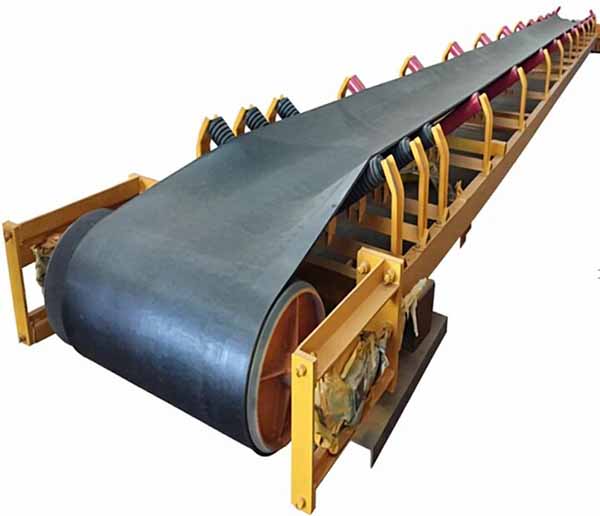
heavy duty belt conveyor
✔ Conveying Capacity: 20–3000 T/H
✔ Conveyor Length: 5–2000 m
✔ Belt Width: 400–2000 mm
✔ Belt Speed: 0.8–4.5 m/s
✔ Inclination Angle: 0°–30°
Why Heavy Duty Belt Conveyors Matter in Modern Industry
Heavy Duty Belt Conveyors are widely used in aggregate plants, mining sites, ports, construction projects, and other bulk material handling systems. They are designed for the continuous transportation of materials such as ore, coal, gravel, soil, limestone, and grain. The conveyor can also be integrated with crushers, vibrating screens, stackers, hoppers, and packaging equipment to create a complete material handling line.
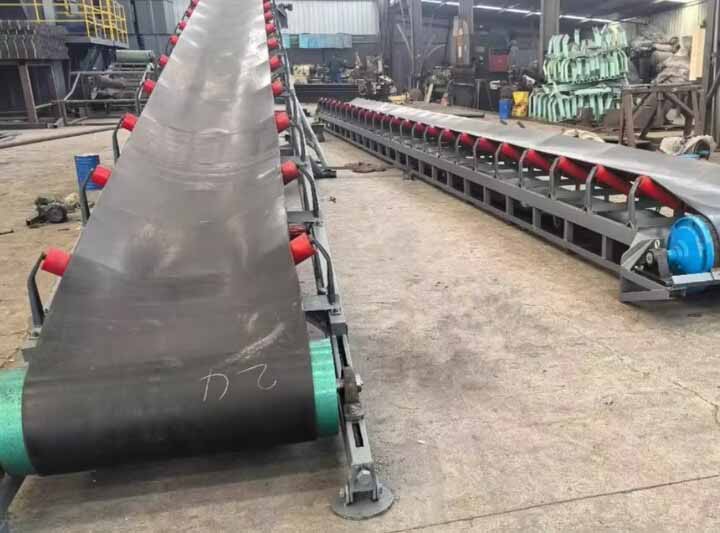
Depending on the application, conveying capacity typically ranges from 20–3000 T/H, conveyor length from 5–2000 m, belt width from 400–2000 mm, and belt speed from 0.8–4.5 m/s. The final configuration is selected according to the material characteristics, conveying distance, plant layout, and production requirements, allowing the conveyor system to match different operating conditions.
Key Performance Overview
When selecting a Heavy Duty Belt Conveyor, engineers typically evaluate the material characteristics, plant layout, and production capacity instead of focusing only on the machine size. Since materials differ in particle size, moisture content, bulk density, and conveying angle, all conveyor parameters should be matched to the operating conditions.
Common Performance Configurations
Typical performance configurations include:
| Item | Typical Range |
| Conveying Capacity | 20–3000 T/H |
| Conveying Distance | 5–2000 m (Sectional Design Available) |
| Belt Width | 400–2000 mm |
| Belt Speed | 0.8–4.5 m/s |
| Inclination Angle | 0°–30° (Depends on Belt Type) |
| Drive Arrangement | Single Drive, Multi-Drive, Intermediate Drive |
| Belt Material | Rubber, PVC, Sidewall Belt, Chevron Belt |
| Operating Mode | Continuous or Intermittent Operation |
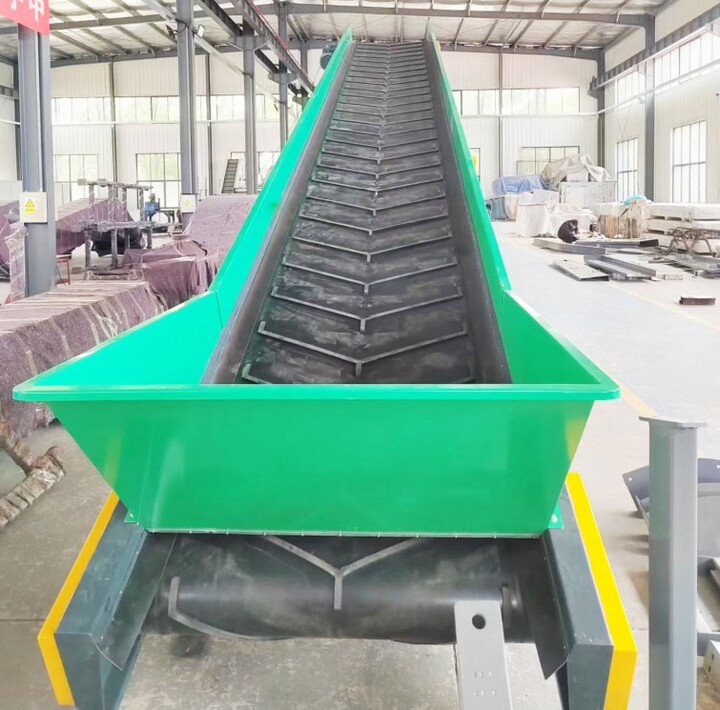
For conveyor belt for moving dirt and dirt moving conveyor systems, the conveyor belt type is usually selected according to the moisture content and particle size of the soil. When materials are likely to slide on inclined sections, chevron belts or sidewall belts can be used. For long-distance conveying systems, the drive arrangement and belt tensioning method can be adjusted to reduce stress on the conveyor belt during continuous operation.
For ore, coal, gravel, and aggregate handling, conveying capacity is only one part of the design process. Roller spacing, pulley diameter, belt thickness, and impact protection devices also influence conveyor performance. During the engineering stage, these parameters are calculated according to the operating conditions rather than using a standard configuration for every project.
What Materials Can It Convey?
Heavy Duty Belt Conveyors are suitable for transporting a wide range of bulk and lump materials across different production processes. Based on the material characteristics, different belt types, belt widths, and conveying angles can be selected to achieve continuous material handling.
| Material | Typical Industry | Recommended Belt Type |
| Sand | Sand Plant | Rubber Belt |
| Gravel | Quarry | Rubber Belt |
| Crushed Stone | Aggregate Plant | Heavy Duty Rubber Belt |
| Coal | Mining | Abrasion Resistant Belt |
| Iron Ore | Mining | Heavy Duty Rubber Belt |
| Limestone | Cement Plant | Rubber Belt |
| Cement Clinker | Cement Industry | Heat Resistant Belt |
| Grain | Grain Storage | PVC Belt |
| Fertilizer Granules | Bulk Material Handling | Rubber Belt |
| Wood Chips | Biomass Plant | Chevron Belt |
| Recycled Aggregate | Recycling Plant | Heavy Duty Belt |
| Soil & Dirt | Construction | Chevron Belt |
| Clay | Brick Plant | Sidewall Belt |
| Salt | Bulk Storage | Rubber Belt |
Different materials place different demands on the conveying system. For example, aggregates generate high impact loads at the loading point, so impact rollers are commonly installed beneath the loading area. Soil conveying projects may require belt cleaners to reduce material buildup. Wood chips and lightweight granular materials often require belt speed adjustments to maintain stable conveying. When handling powders or fine granular materials, dust covers can also be added according to site conditions to reduce the influence of the surrounding environment.
During the engineering design process, material type is only one of the factors considered. Particle size, moisture content, bulk density, conveying distance, discharge height, and available installation space are also evaluated to configure a conveyor system that matches the overall production line.
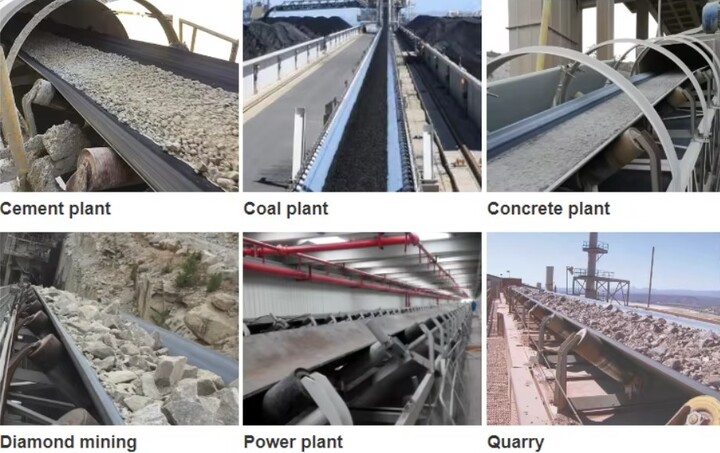
Typical Applications
Heavy Duty Belt Conveyors are commonly used in continuous material handling systems. Since each industry has different requirements for conveying capacity, installation methods, and operating conditions, the conveyor configuration is designed according to the specific application.
Mining
Mining operations often require the transportation of iron ore, copper ore, coal, and other large bulk materials. Due to the large particle size and high impact force during loading, conveyor systems are typically equipped with reinforced steel frames, abrasion-resistant conveyor belts, impact rollers, and wear liners to support long-term operation.
Quarry & Aggregate
Aggregate production lines transport crushed stone, gravel, and screened materials between crushers, vibrating screens, and stockpiling equipment. Depending on the plant layout, conveyors can be designed as horizontal or inclined systems. Sidewall cleated belt conveyors are often selected for applications requiring larger conveying angles.
Construction
In construction and earthmoving projects, conveyor belt for moving dirt and dirt moving conveyor systems are used to transport soil, sand, backfill materials, and construction waste. Mobile or modular conveyor designs are suitable for projects where the installation location needs to be changed frequently.
Cement Plant
Cement production involves conveying limestone, clinker, and powdered materials throughout different processing stages. Conveyor belt selection is based on conveying distance, operating temperature, and material wear characteristics. Multiple loading or discharge points can also be incorporated into the system according to the production layout.
Port & Bulk Terminal
Bulk terminals and ports require continuous transportation of materials between ships, storage silos, conveyor galleries, and stockyards. Long-distance conveying systems often use multiple drive units or intermediate drives to distribute the load along the conveyor line.
Grain & Agricultural Products
Grain, corn, soybeans, and granular fertilizers require stable conveying to reduce material damage during transportation. Conveyor speed and discharge methods can be adjusted according to the flow characteristics of different agricultural products.
Conveyor Configurations Available
Heavy Duty Belt Conveyors are available in several structural configurations. The appropriate design depends on the installation environment, conveying distance, material characteristics, and production line layout.
Straight Belt Conveyor
Straight belt conveyors are designed for horizontal material transportation. Their simple structure allows easy integration with packaging lines, warehouses, and material transfer systems.
Inclined Belt Conveyor
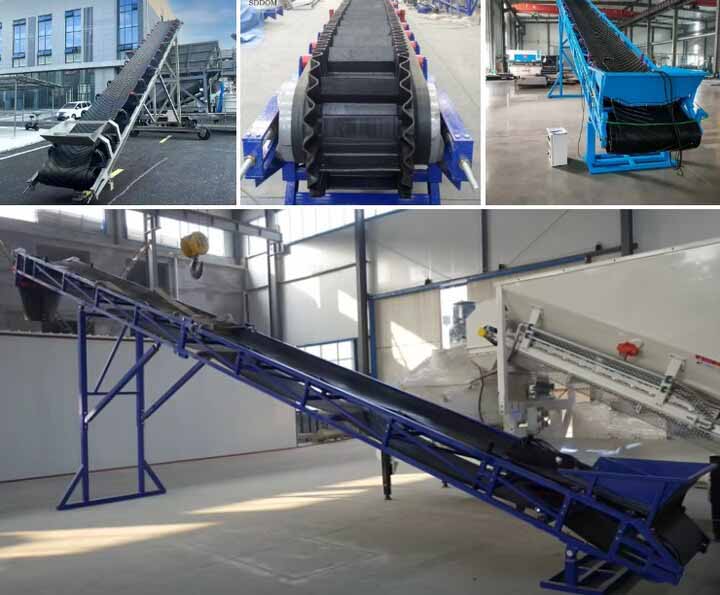
Inclined belt conveyors are suitable for applications requiring elevation changes. Chevron belts or sidewall belts can be selected to improve material retention when conveying at inclined angles.
Sidewall Belt Conveyor
Sidewall belt conveyors feature corrugated sidewalls and cleats, allowing bulk materials, powders, and lump materials to be conveyed at steeper angles while reducing material spillage.
Cleated Belt Conveyor
Cleated belt conveyors are suitable for transporting soil, gravel, wood chips, and granular materials. The cleats help prevent materials from sliding backward, making this design widely used in construction conveyor belt for sale applications.
Troughed Belt Conveyor
Troughed belt conveyors use carrying rollers to form a trough shape, allowing bulk materials to remain centered on the belt. They are commonly used in belt conveyors for bulk materials and long-distance conveying systems.
Portable Belt Conveyor
Portable belt conveyors are suitable for temporary construction sites, warehouses, and loading operations. Their movable structure allows the conveyor to be repositioned easily as project requirements change.
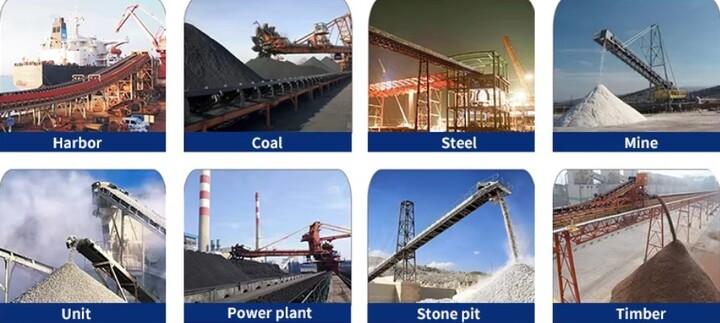
Designed Around Your Project
Every material handling project has different conveying requirements, so the conveyor design starts with the operating conditions rather than selecting a standard model. During the planning stage, engineers evaluate the project requirements to develop a conveyor system that matches the production process and installation environment.
The following information is typically collected before the design begins:
- Material type
- Particle size
- Bulk density
- Moisture content
- Required conveying capacity (T/H)
- Conveying distance
- Lifting height
- Inclination angle
- Operating environment
- Power supply
For example, conveying sand and gravel over a distance of 20 meters requires a different drive arrangement, belt tensioning system, and pulley configuration than a conveyor designed for a 300-meter production line.
If the conveying line includes multiple transfer points, impact chutes, loading hoppers, and impact rollers can be incorporated to reduce material impact. For outdoor installations, rain covers or enclosed conveyor galleries can be added to minimize the influence of weather conditions.
Production lines planned for future expansion can also reserve connection points, allowing additional conveyor sections to be integrated with the existing system without replacing the original equipment.
Engineering Highlights
In addition to conveying capacity, the design of a Heavy Duty Belt Conveyor also considers structural strength, operating conditions, maintenance accessibility, and long-term reliability.
Reinforced Frame Structure
The conveyor frame is fabricated from structural steel sections. Reinforcing beams can be added for longer spans to increase frame rigidity. The support arrangement can also be adjusted according to the conveyor length and support spacing.
Wear-Resistant Conveyor Belt
Different conveyor belts are selected according to the material characteristics, including abrasion-resistant rubber belts, chevron belts, sidewall belts, and heat-resistant belts for different conveying conditions.
Impact Protection
Impact rollers or impact beds can be installed beneath the loading zone to reduce the impact generated when large materials enter the conveyor, helping to reduce belt wear during operation.
Stable Belt Tracking
The positions of pulleys, carrying rollers, and the tensioning system are arranged during the design stage to reduce belt misalignment during continuous operation. For long-distance conveyor systems, belt tracking devices can also be incorporated to maintain stable belt travel.
Flexible Drive Arrangement
Drive systems can be configured as head drive, tail drive, or intermediate drive according to the conveying length and material load. For long conveying distances, multiple drive units help distribute belt tension more evenly across the conveyor.
Convenient Maintenance
Rollers, belt cleaners, and tensioning components are arranged in a modular configuration, allowing individual components to be replaced without dismantling the complete conveyor system. For large installations, maintenance platforms and walkways can also be included to simplify routine inspection and servicing.
Conveyor Selection Guide
Different operating conditions require different conveyor configurations. The following table can be used as a general reference when selecting a Heavy Duty Belt Conveyor.
| Project Requirement | Recommended Conveyor Type |
| Long-distance Bulk Material Conveying | Troughed Belt Conveyor |
| Steep Angle Conveying | Sidewall Belt Conveyor |
| Soil and Dirt Transportation | Cleated Belt Conveyor |
| Aggregate Production Line | Heavy Duty Rubber Belt Conveyor |
| Portable Construction Project | Portable Belt Conveyor |
| Warehouse Material Transfer | Straight Belt Conveyor |
| Large Conveying Capacity | Wide Belt Heavy Duty Conveyor |
| Multiple Loading Points | Modular Belt Conveyor System |
| Outdoor Installation | Covered Belt Conveyor |
| Limited Installation Space | Inclined Belt Conveyor |
Technical Specifications
The specifications of a Heavy Duty Belt Conveyor are determined according to the material characteristics, installation conditions, and required production capacity. The following technical data can be used as a general selection reference.
| Item | Specification Range |
| Belt Width | 400–2000 mm |
| Conveyor Length | 5–2000 m |
| Conveying Capacity | 20–3000 T/H |
| Belt Speed | 0.8–4.5 m/s |
| Inclination Angle | 0°–30° |
| Drive Power | According to Project Requirements |
| Belt Type | Rubber, Chevron, Sidewall, PVC |
| Frame Material | Carbon Steel / Stainless Steel |
| Roller Type | Carrying Roller, Impact Roller, Return Roller |
| Drive Method | Head Drive, Tail Drive, Multi-Drive |
| Tension System | Screw Type / Gravity Type |
| Installation | Fixed or Portable |
If the project includes multiple transfer points, the discharge height, loading chute dimensions, and discharge locations are also considered during the design process. For long-distance conveying systems, pulley lagging, carrying roller spacing, and conveyor belt strength are selected according to engineering calculations so that the conveyor system matches the site layout and operating conditions.
How It Works
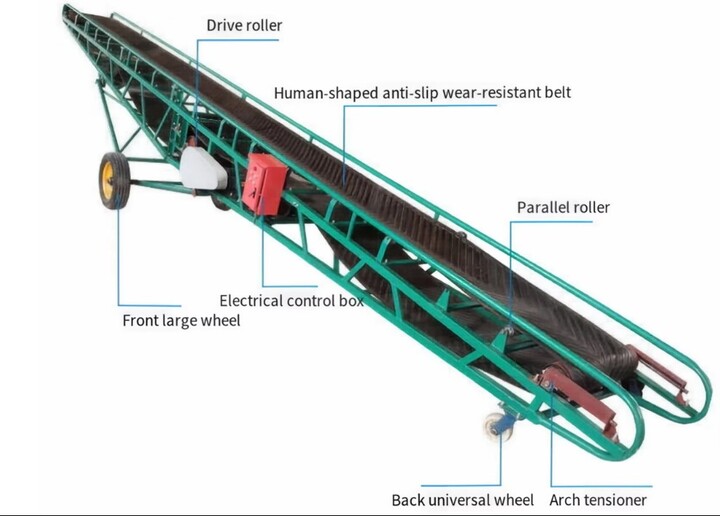
A Heavy Duty Belt Conveyor transports materials by driving the conveyor belt with a powered pulley. Materials are loaded onto the belt at the feed point and move forward with the belt through friction. When the materials reach the discharge end, they are released by gravity into the next process or storage equipment.
A typical conveying process includes the following steps:
- Materials enter the loading section.
- The drive unit moves the conveyor belt continuously.
- Carrying rollers support both the belt and the material load.
- The tensioning system maintains proper belt tension.
- Materials are discharged at the end of the conveyor.
- The empty belt returns to the drive end on the return rollers, completing the conveying cycle.
For systems requiring multiple loading points, additional feed hoppers can be installed along the conveyor. For projects with multiple discharge locations, traveling trippers or intermediate discharge devices can be incorporated, allowing a single conveyor line to transport materials to different processing areas.
Optional Components
Various optional components can be added to a Heavy Duty Belt Conveyor to match different operating conditions and project requirements.
- Belt Cleaner
- Impact Bed
- Impact Roller
- Self-Aligning Roller
- Belt Scale
- Metal Detector
- Dust Cover
- Skirt Board
- Walkway
- Maintenance Platform
- Emergency Pull Cord Switch
- Speed Monitoring Device
- Misalignment Switch
- Material Chute
For outdoor installations, rain covers and wind protection systems can be added to help protect the conveying line. When transporting abrasive materials such as ore or aggregates, wear liners and rubber-lagged pulleys can be incorporated to reduce component wear and extend replacement intervals for wear parts.
Frequently Asked Questions
1. What materials can a Heavy Duty Belt Conveyor transport?
Heavy Duty Belt Conveyors can handle aggregates, ore, coal, limestone, soil, wood chips, grain, granular materials, and many other bulk or lump materials. The conveyor configuration is selected according to the material characteristics and operating conditions.
2. Can the conveyor length be customized?
Yes. Conveyor length can be designed according to the project layout. Short conveyors are commonly used for equipment connection, while long-distance conveying systems may use multiple conveyor sections or intermediate drive arrangements.
3. What belt width should I choose?
Belt width depends on the required conveying capacity, material particle size, bulk density, and belt speed. During the engineering stage, these factors are evaluated to determine the appropriate belt width for the application.
4. How much does a Heavy Duty Belt Conveyor cost?
The price depends on several factors, including conveyor length, belt width, conveying capacity, drive arrangement, belt type, installation method, and optional components. After receiving information such as the material type, required capacity, conveying distance, lifting height, and site layout, an engineering proposal and quotation can be prepared.
5. Do you provide installation drawings?
Yes. General arrangement drawings, foundation drawings, installation drawings, and related technical documents can be supplied to support equipment installation and commissioning.
6. How often should the conveyor be maintained?
Maintenance intervals depend on operating hours and working conditions. Routine inspection normally includes checking belt tension, roller rotation, pulley wear, fasteners, and other moving components according to the maintenance schedule.
Why Choose a Heavy Duty Belt Conveyor Instead of Other Conveying Systems?
Different conveying equipment is suitable for different material handling tasks. The selection should be based on material characteristics, conveying distance, plant layout, and production requirements.
| Conveyor Type | Suitable Material | Conveying Distance | Inclined Conveying | Typical Application |
| Heavy Duty Belt Conveyor | Bulk Materials, Aggregates, Soil, Coal | Long | Yes | Mining, Quarry, Ports, Construction |
| Screw Conveyor | Powder, Granules | Short | Limited | Powder Conveying |
| Roller Conveyor | Boxes, Cartons | Short | No | Warehousing |
| Chain Conveyor | Heavy Products | Medium | Limited | Manufacturing Lines |
| Bucket Elevator | Powder, Granules | Vertical | Vertical Only | Grain and Powder Lifting |
For projects that require continuous transportation of large volumes of bulk materials over long conveying distances or between multiple processing stations, a Heavy Duty Belt Conveyor is often a practical solution. For vertical lifting, carton handling, or short-distance powder conveying, other conveying equipment can also be integrated into the material handling system according to the production process.
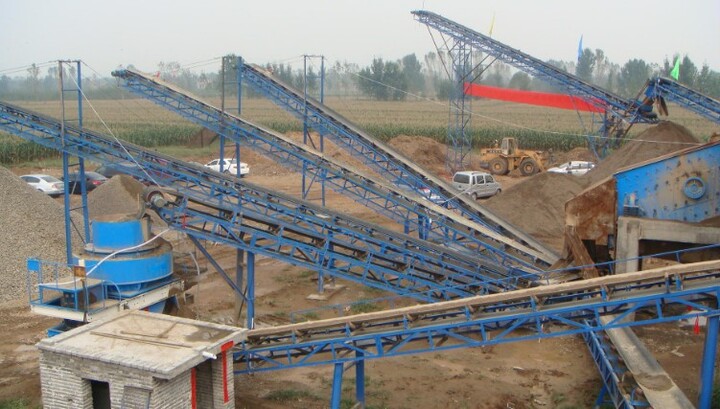
Heavy Duty Belt Conveyors are widely used in mining, aggregate production, cement plants, ports, construction projects, and other bulk material handling applications. Each conveyor is configured according to the material properties, required conveying capacity, available installation space, and production process. Belt width, conveying distance, drive arrangement, and conveyor belt type are selected based on the operating conditions of each project.
If you are planning a new conveying system or upgrading an existing production line, you can provide information such as the material type, particle size, required conveying capacity, conveying distance, lifting height, and site layout. Based on these project details, an appropriate conveyor solution, equipment configuration, and engineering proposal can be developed to support installation and future operation.
Sugested Products
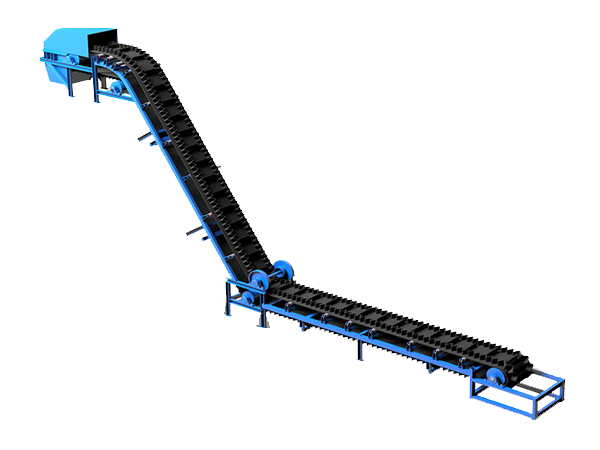
inclined belt conveyor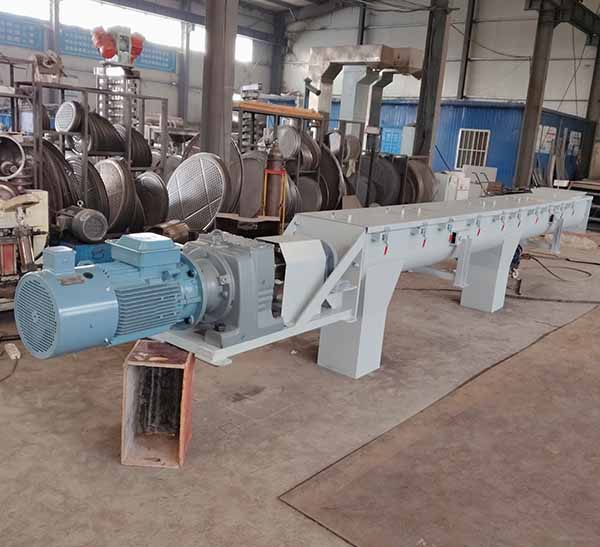
Poultry Litter Auger Conveyor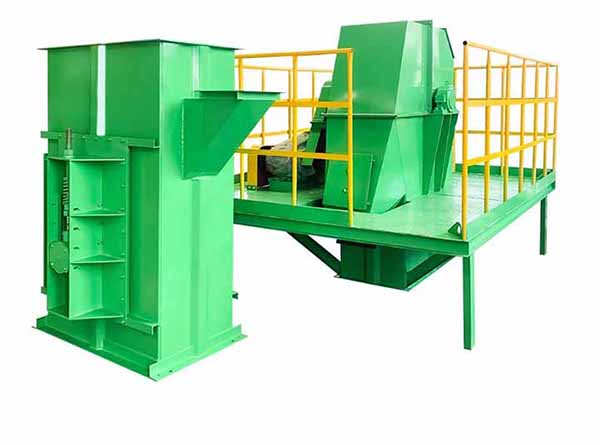
Sulfur bucket elevator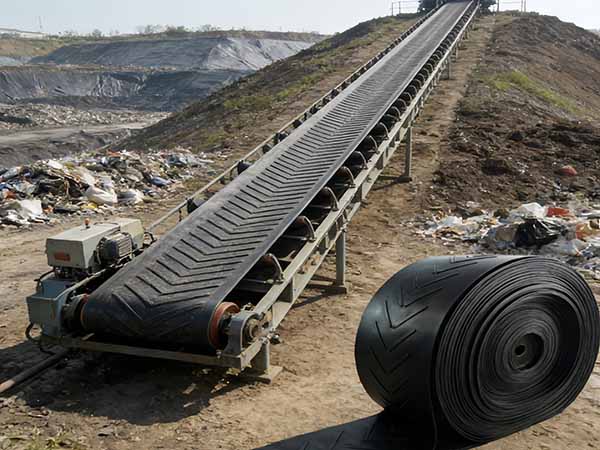
Chevron industrial conveyor belts