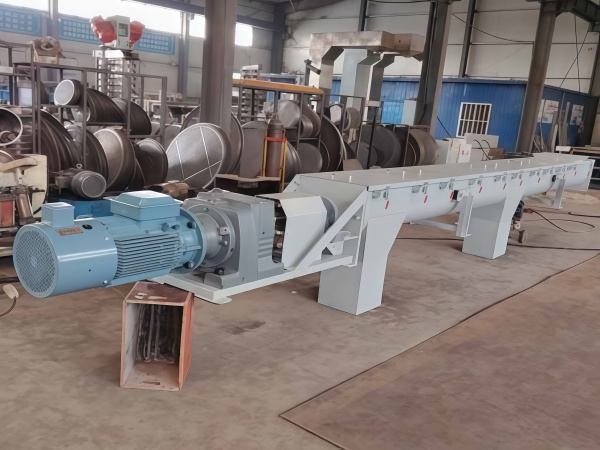
Poultry Litter Auger Conveyor
Conveying capacity: 1 - 50 tons/hour
Pipe diameter range: 165 - 325 mm
Conveying distance: 3 - 20 meters (single stage)
Motor power: 2.2 - 7.5 kW
Operating speed: 60 - 75 RPM
Poultry Litter Auger Conveyor Overview
In poultry farming, broiler manure mixed with rice husks or sawdust presents significant challenges to cleaning due to its high moisture content and ammonia concentration. Poultry Litter Auger Conveyor and livestock manure are mechanical devices used to remove this corrosive waste from chicken houses. These devices offer conveying capacities ranging from 1 to 50 tons per hour and utilize pipe diameters from Φ165 mm to Φ325 mm to suit farms of varying sizes. Depending on the farm's layout, single-stage conveying distances can range from 3 to 20 meters, reducing manual labor during manure removal cycles.
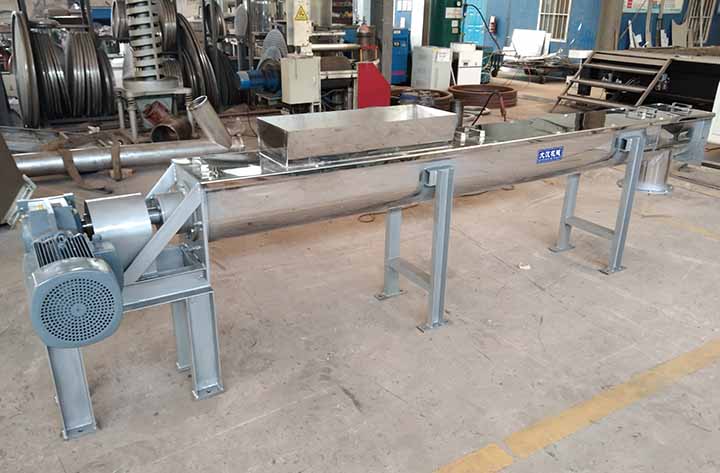
Why choose a screw conveyor for poultry and livestock manure?
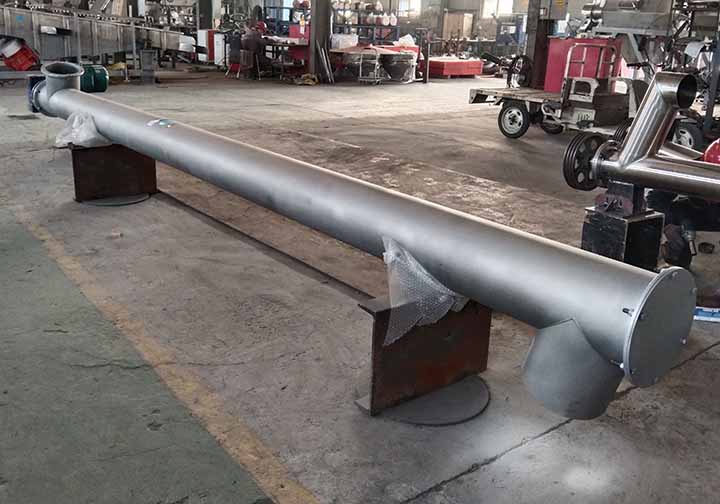
Choosing this screw system offers specific structural and operational advantages for intensive livestock farms.
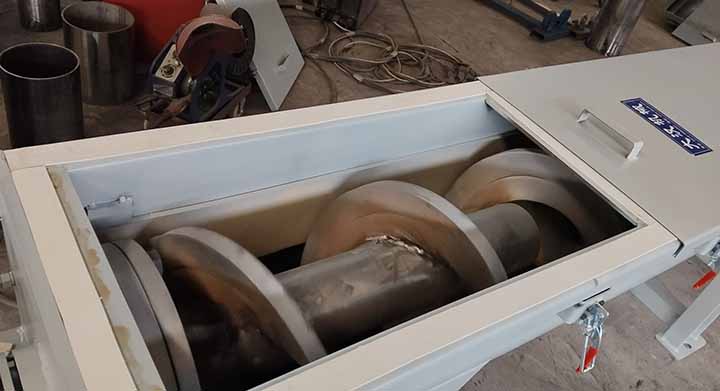
The equipment uses thick-walled steel pipes and thickened screw blades, enabling it to push high-density, clump-like manure without causing internal components to bend or deform. The fully enclosed tubular structure seals waste inside during transport, preventing wild birds or rodents from accessing the feces and reducing the risk of virus transmission between different chicken houses. Continuous mechanical rotation replaces manual shoveling, allowing a single operator to manage waste removal throughout the entire chicken house directly via a control panel. The steel structure employs a hot-dip galvanizing process with a zinc coating thickness exceeding 85μm to prevent rust caused by the highly acidic uric acid in chicken manure.
Poultry Manure Cleaning Challenges vs. Mechanical Solutions
| Your Breeding Challenges | How Our Auger Conveyor Solves It |
| High humidity causes manure to stick to the central shaft, causing blockages. | A shaftless screw design provides an open flow path, allowing sticky bedding to pass without wrapping. |
| Corrosive liquid seeps into bearings, destroying the internal balls within months. | An outboard bearing design separates the mechanical seals from the material trough, preventing liquid contact. |
| Long straw and feathers wedge into the clearance between the flight and the casing. | Adjustable bronze or nylon wear liners maintain a tight 3 mm clearance to shear through soft debris. |
Poultry Manure Screw Conveyor Application Scenarios
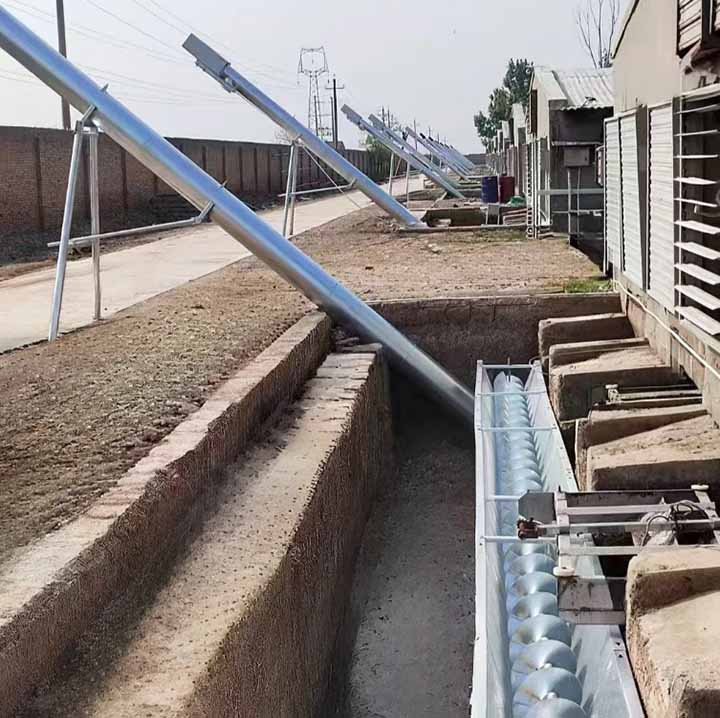
This conveyor can be integrated into multiple areas of modern poultry farms. For example, in the manure collection area at the end of the chicken house, the equipment is installed laterally at the end of the chicken house, receiving manure falling from the longitudinal conveyor belt under the cages and lifting it out of the building. In truck loading and lifting, the equipment is configured at an inclination angle of 30° to 45° to directly transport bedding material from the collection pit to the cargo compartment of a manure truck parked outdoors. In organic fertilizer processing, the system feeds collected waste into fermentation tanks or pellet mills, adjusting the conveyor speed to match the processing capacity of the fertilizer production line.
Poultry Litter Auger Conveyor Design
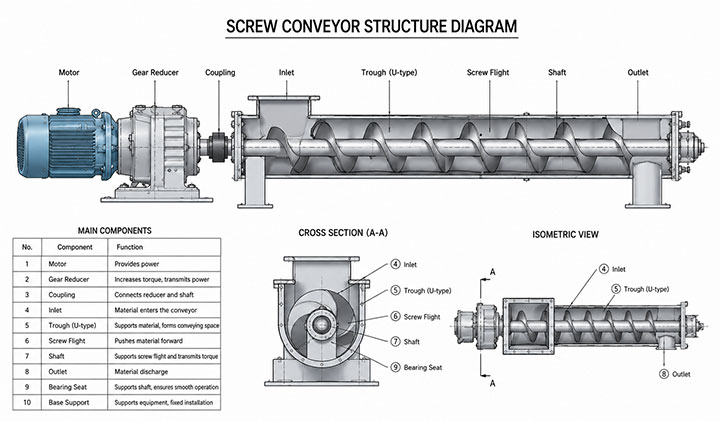
The reliability of the conveyor depends on the design of its mechanical components. The drive motor and reducer are IP55 waterproof motors to withstand high-pressure water jet washing during chicken house disinfection. The helical gear reducer outputs high torque at low speeds (60-90 RPM) to propel heavy, wet materials. The drive bearings are mounted on external supports away from the inlet and outlet. A combination of packing seals and lip seals prevents moisture leakage from the feed trough. The blades are machined from 6 mm or 8 mm carbon steel plates using a continuous welding process to maintain a uniform pitch and prevent material accumulation at joints.
Poultry Manure Screw Conveyor Model Parameter Table
| Model | Screw Diameter (mm) | Max Capacity (t/h) | Motor Power (kW) | Speed (RPM) |
| LS165 | 165 | 5 | 2.2 | 75 |
| LS219 | 219 | 12 | 4.0 | 75 |
| LS273 | 273 | 25 | 5.5 | 60 |
| LS325 | 325 | 50 | 7.5 | 60 |
How much does a Poultry Litter Auger Conveyor cost?
The price of a standard poultry manure screw conveyor typically ranges from $1,500 to $9,000. Price is determined by factors such as material, total conveyor length, and motor power.
Carbon steel is cheaper but requires regular painting and maintenance; hot-dip galvanized steel increases initial costs by about 20%, while 304 stainless steel doubles the base price. For longer conveying distances, a thicker inner shaft or additional intermediate hanger bearings are needed to prevent the main shaft from sagging, increasing material costs. Choosing an internationally branded motor incurs a premium but provides standardized parts replacement services globally.
Frequently Asked Questions
Question 1: What is the maximum tilt angle for conveying poultry manure?
Answer: For standard shafted screw conveyors, conveying efficiency decreases as the tilt angle increases. The practically limiting angle is 45°. Beyond this angle, material tends to fall back from the center position. If a steeper lifting angle is required, the screw pitch must be modified and the motor horsepower increased.
Question 2: How often does this system require maintenance?
Answer: The external bearings require grease injection every 200 hours of operation. The gearbox oil needs to be changed after the first 500 hours of use, and thereafter every 2,000 hours of operation.
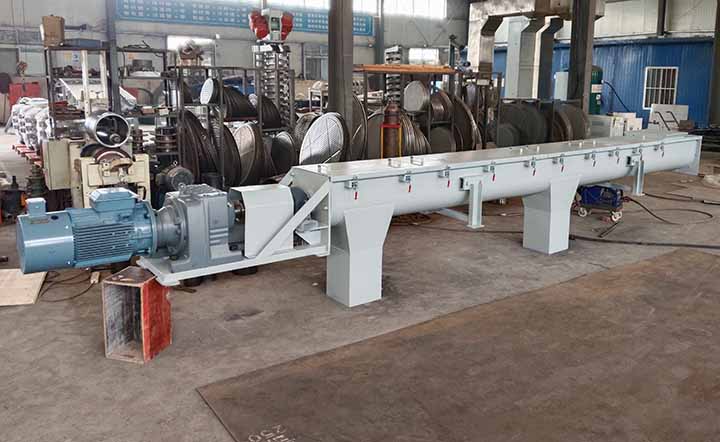
The livestock manure screw conveyor provides a mechanized method for removing moist manure and bedding from livestock and poultry houses. By selecting appropriate pipe diameters, hot-dip galvanized coatings, and shaftless technology, poultry farmers can maintain biosecurity boundaries on their farms while managing waste distribution.
Sugested Products
Rubber Powder Screw Conveyor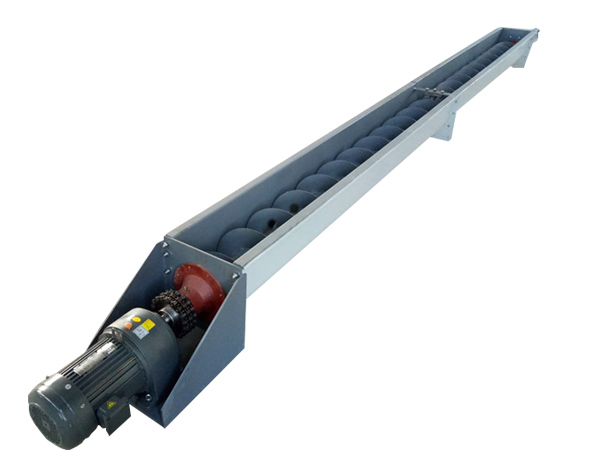
shaftless screw conveyor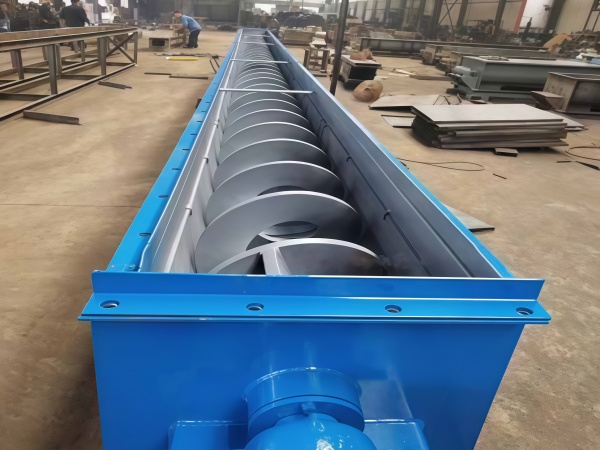
Heavy Duty U-Trough Screw Conveyor for Bulk Material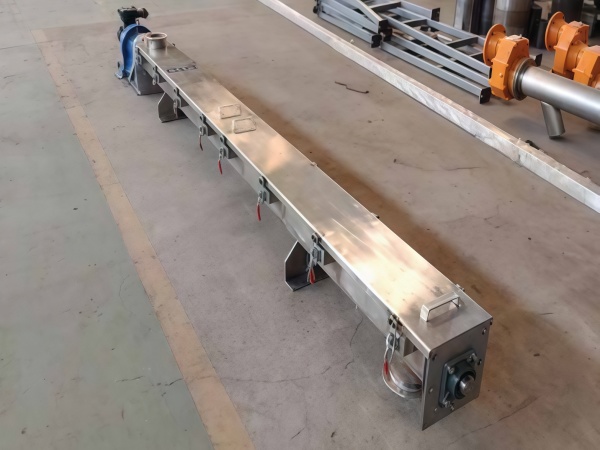
Fish Meal Screw Conveyor