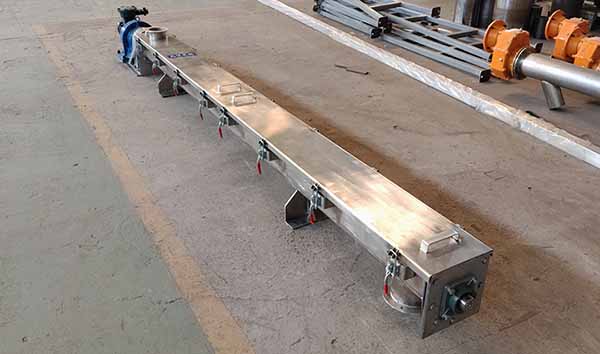
Fish Meal Screw Conveyor
Conveying capacity: 1–15 t/h
Screw diameter: 200mm–400mm
Material: SUS304 / SUS316L stainless steel
Screw type: Shafted / Shaftless (optional)
Motor power: 2.2 kW–7.5 kW
What is a Fish Meal Screw Conveyor?
The Fish Meal Screw Conveyor plays a crucial role in the closed-loop transport of fishmeal across different production stages. Through a continuously rotating mechanical structure, the machine smoothly pushes fish paste containing moisture and oil, or dried fishmeal, from the cooking machine and press to the drying and packaging unit.
To match the production pace of factories of different sizes, the machine's designed conveying capacity ranges from 1 ton to 15 tons per hour. Its internal screw diameter typically varies between 200mm and 400mm, determining the physical volume of each feed. Because fishmeal contains sea salt, the entire machine is cold-worked and welded from industrial-grade SUS304 or SUS316L stainless steel, relying on the metal's inherent physical resistance to the corrosive effects of high-salinity steam.
Why Choose a Fish Meal Screw Conveyor?
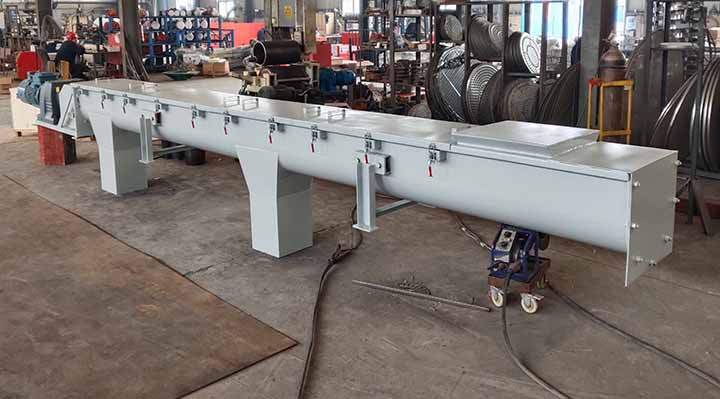
Due to the high moisture content, high oil content, easy adhesion, and strong odor of fishmeal, the fishmeal screw conveyor incorporates designs that prevent clogging, are corrosion-resistant, provide a sealed environment, and are easy to clean.
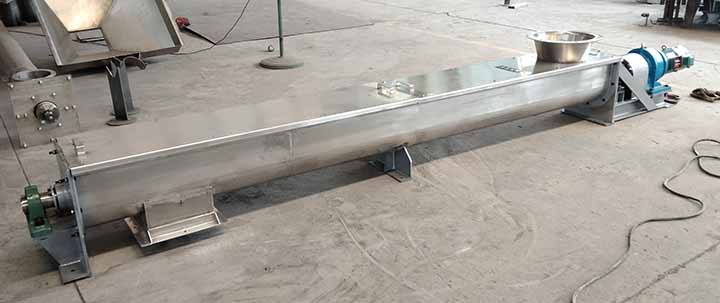
Anti-clogging design: Undehydrated fish residue and viscous fish paste contain a large amount of fish oil, which easily adheres to the drive shaft. The machine adopts a shaftless spiral structure, eliminating the central solid shaft and fundamentally eliminating the space for material entanglement and accumulation.
Corrosion resistance: Marine fish body fluids have a high salt content and release acidic gases during processing. The surfaces of the screw conveyor in contact with the material are treated with acid pickling and passivation. The passivation film can block the electrochemical pitting corrosion of the base metal by chloride ions.
Strict sealing and odor prevention: Volatile organic sulfur compounds released during fishmeal processing have a strong ammonia odor. High-temperature resistant silicone sealing strips are installed between the tank cover plates, combined with pressure-pressurized quick-opening buckles, to lock the odorous gases inside the conveying pipeline.
Easy cleaning: A threaded drain valve is welded to the bottom of the screw conveyor, and the top of the tank is designed with a segmented hinged cover. At the end of production, the operator can directly rinse the inside with a high-pressure water gun, and the remaining fish cake waste is discharged directly from the bottom with the wastewater.
How does the screw conveyor transport fishmeal?
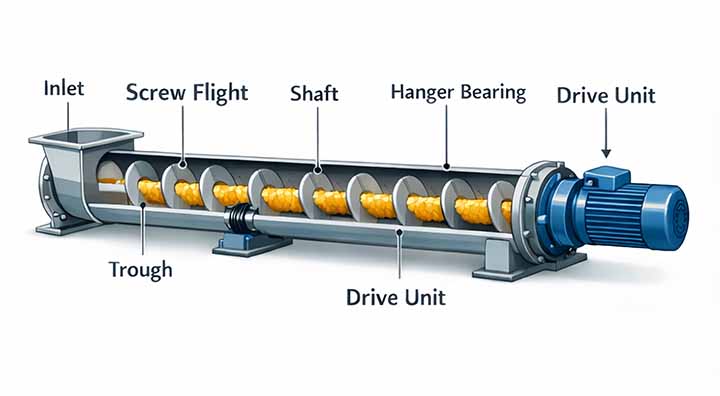
The Fish Meal Screw Conveyor is powered by an electric motor, which reduces the speed and amplifies the torque through a speed reducer, driving the main bearing at one end to rotate. When the screw blades begin to rotate, the fishmeal falling to the bottom of the trough is pushed by the sides of the blades. Due to the fishmeal's own weight and friction with the trough wall, the fishmeal does not rotate with the screw, but slides axially forward along the bottom of the trough, eventually exiting from the screw conveyor's outlet.
Model Parameter Table
| Specification / Model | AC-FM200 | AC-FM300 | AC-FM400 | Custom Options |
| Screw Diameter | 200 mm | 300 mm | 400 mm | 100mm – 600mm |
| Throughput Capacity | 1–3 t/h | 3–8 t/h | 8–15 t/h | Designed per request |
| Material | SUS304 | SUS304 / SUS316L | SUS316L | Carbon Steel Optional |
| Screw Type | Shafted / Shaftless | Shaftless Preferred | Shaftless Preferred | Tailored to viscosity |
| Motor Power | 2.2 kW | 4.0 kW | 7.5 kW | SEW / Nord / Siemens |
How much does a Fish Meal Screw Conveyor cost?
A standard fishmeal screw conveyor typically costs between $1,650 and $7,500. The price difference is not determined by a single factor, but by a combination of several customized technical specifications.
Material Grade: The raw material cost of using SUS316L stainless steel is approximately 25%-35% higher than that of SUS304, directly increasing the overall price of the machine.
Geometric Dimensions: For every meter increase in conveying distance, or an increase in pipe diameter from 200mm to 400mm, the time and material consumption for bending and welding stainless steel sheets will increase exponentially.
Drive System Brand: Configuring a German SEW or Siemens geared motor will cost $450 to $1,450 more than conventional domestic brands.
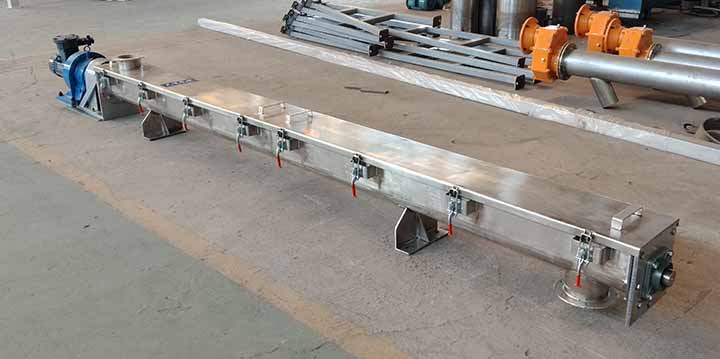
Tailored Customization Options
When selecting a fishmeal screw conveyor, it can be customized according to requirements, including shafted, shaftless, or based on tilt angle, drive unit, discharge port position, and other components.
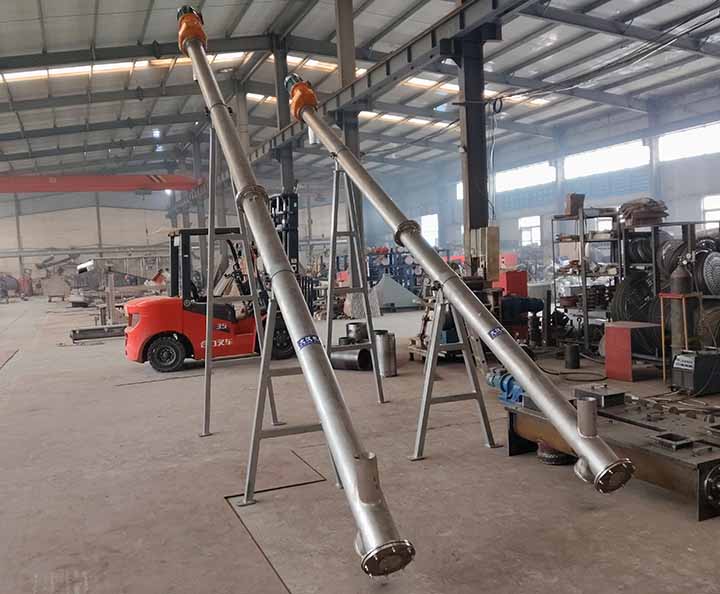
Tilt Angle Customization: Adapts to the space constraints of fishing boat decks or narrow workshops. The equipment supports conveying at large tilt angles from 0° horizontal to 60°. For operating conditions greater than 30°, the screw pitch will be shortened to prevent material backflow.
Drive Configuration: Utilizes an IP55-rated protected motor, with the option to add a frequency converter to adjust the speed and achieve quantitative and uniform feeding to the downstream dryer. For dusty environments, an explosion-proof motor option is available.
Discharge Port Design: A pneumatic slide gate valve or electric gate valve can be added, along with a logic control system, to achieve a single-point feed and multi-point sequential discharge function.
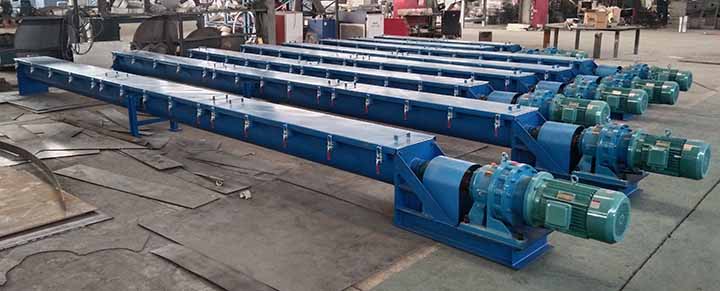
Fish Meal Screw Conveyor Application
The Fish Meal Screw Conveyor is suitable for conveying fish meal at different processing stages, from wet to dry. Examples include wet fish scraps, fish paste, pressing residue, and dried finished fish meal.
| Processing Stage | Material Condition | Recommended Configuration |
| Raw Fish Conveying & Discharging | Whole sea fish, with seawater, containing silt and gravel | Shaftless screw + thickened high wear-resistant nylon lining + SUS304 trough |
| Transition after Cooking & Pressing | Wet fish residue, high viscosity, temperature 80℃-90℃ | Large pitch shaftless screw + high-temperature fluororubber seals |
| Drying, Grinding & Packaging | Dry powder, particle size <5mm, easy to raise dust | Shafted standard screw + variable frequency motor + sealed tubular casing |
Real-World Case Study
In a 50,000-ton-per-year fish meal processing plant in Chimbote, Peru, traditional belt conveyors were long plagued by material adhesion and odor dispersion. The plant later introduced our shaftless Fish Meal Screw Conveyor to connect the press and the rotary dryer. The equipment is 6.5 meters long and installed at a 25° angle. Operational data shows that when continuously processing wet fish scraps with a moisture content of 65%, no motor overload shutdowns due to entanglement occurred. The enclosed U-shaped trough structure reduces the hydrogen sulfide gas concentration in the workshop to within safe standards, and the quick-opening washing port at the bottom of the machine shortens daily routine cleaning time by 40 minutes.
Frequently Asked Questions
Question 1: Should I choose a shafted or shaftless screw conveyor for wet fish residue and dried fishmeal?
Answer: Wet fish residue, containing oil and stickiness before pressing, is prone to tangling, so a shaftless screw conveyor is necessary to prevent blockage. Dried fishmeal has good flowability, so a shafted screw conveyor offers higher conveying efficiency and supports longer distances.
Question 2: Is SUS304 sufficient for the strong corrosiveness of seawater, or is SUS316L necessary?
Answer: For ordinary land-based fishmeal plants, SUS304 is sufficient with regular water rinsing. However, if installed on a deep-sea fishing vessel, due to prolonged exposure to high concentrations of seawater and salt spray, it needs to be upgraded to the more corrosion-resistant SUS316L.
Question 3: How can the equipment prevent the leakage of odorous gases?
The tank edge features a tongue-and-groove design, embedding a solid EPDM sealing strip, and is secured with heavy-duty adjustable bolts to block airflow.
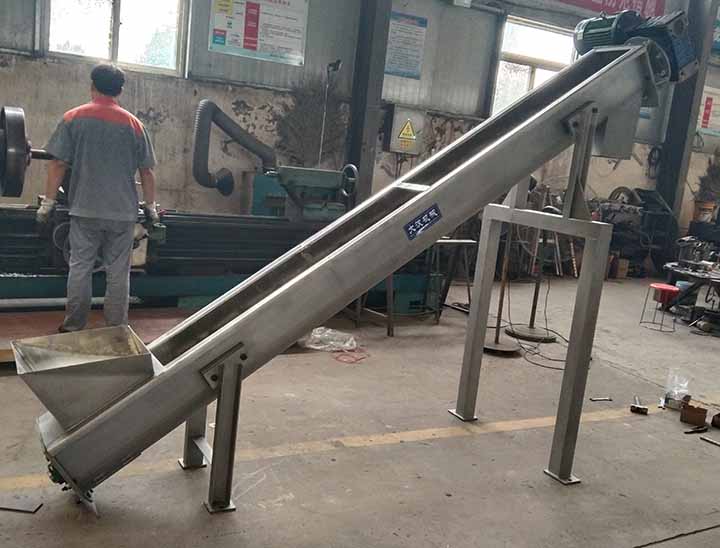
The Fish Meal Screw Conveyor, with its stainless steel structure, shaftless anti-stick design, and mechanical sealing technology, solves the systemic process challenges of adhesion, corrosion, and odor leakage in fishmeal processing. By rationally adjusting the conveying parameters and material specifications, it can be used for various conveying needs, such as closed conveying, multi-stage connection, and uniform feeding of fishmeal.
Sugested Products
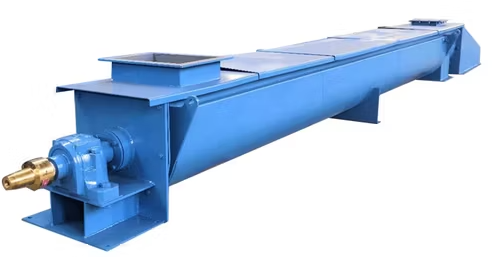
High Temperature Screw Conveyor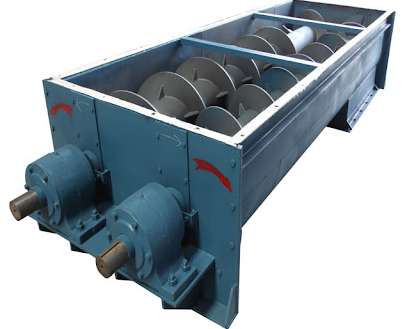
Twin Screw Mixer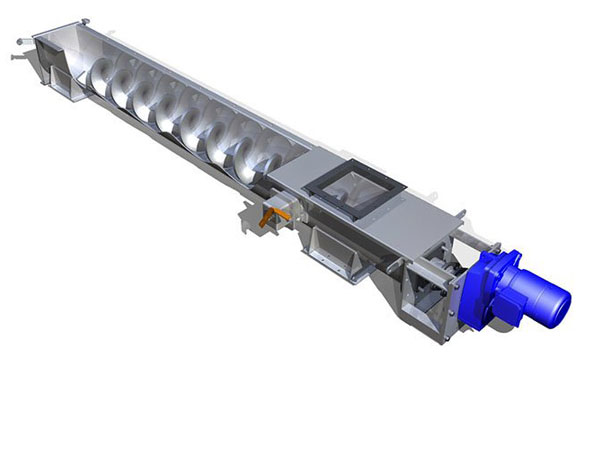
Sludge Screw Conveyor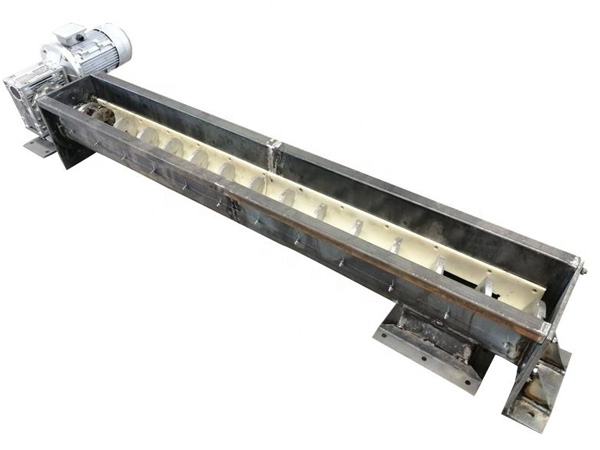
Garbage screw conveyor