Electromagnetic Vibrating Feeder Selection Guide: How to Choose the Right Model for Your Material
Thursday October-15 2026 14:59:39
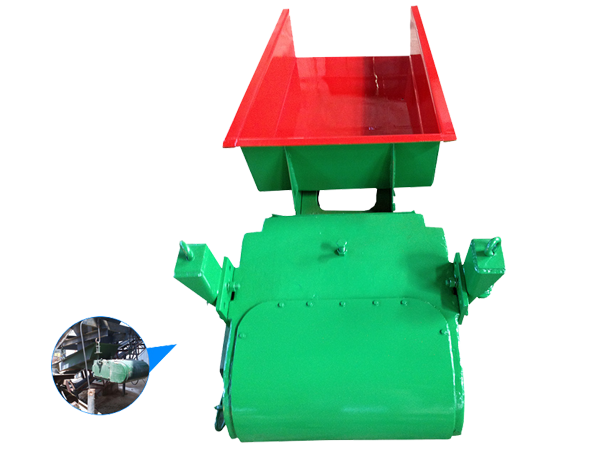
Electromagnetic Vibrating Feeder uses electromagnetic excitation force to drive the trough in high-frequency, low-amplitude vibration, enabling uniform and continuous material conveying. Its core mechanism lies in the periodic attractive force generated by pulsed current between the electromagnet and armature, driving the trough to vibrate at approximately 3000 cycles per minute. Materials move forward in a micro-throw sliding state along the trough surface, a conveying method that causes minimal wear on the trough, making it suitable for long-term handling of abrasive materials.
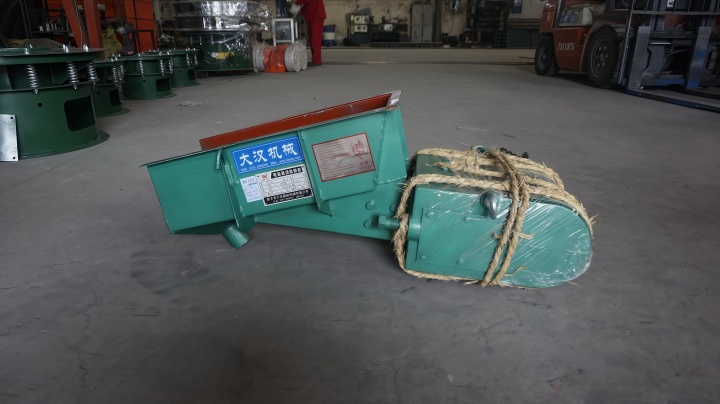
Compared to traditional mechanical feeders, the primary difference of this equipment lies in the absence of rotating parts and lubrication systems, which translates to longer maintenance intervals and no oil contamination risk, while also supporting instant start-stop and online stepless speed adjustment. In industries such as food processing, chemical manufacturing, and mining, these characteristics make it a viable solution for precise feeding and frequent start-stop applications.
However, improper selection can lead to specific problems. For example, when trough amplitude does not match material density, lightweight materials may slip and stagnate on the trough, while heavy materials may overload the trough and prevent it from starting. Additionally, undersized models result in insufficient capacity, while oversized models increase unnecessary equipment investment and energy consumption. This article examines selection considerations from four dimensions: material characteristics, feeding capacity, installation environment, and control accuracy.
Starting from Material Characteristics to Determine the Amplitude and Frequency of the Electromagnetic Vibrating Feeder
Material physical properties are the primary consideration in selection. The amplitude of this equipment typically ranges from 0.030 inches to 0.60 inches, with standard models operating at 3600 cycles per minute when driven by 60Hz AC power. Lightweight, fluffy materials such as grains and potato chips, with bulk densities below 20 lbs/ft³, require higher amplitudes to be effectively conveyed. Materials with higher bulk densities that flow freely can achieve ideal conveying results at lower amplitudes.
For friable materials prone to breakage or fine powders prone to fluidization such as talc and flour, a high-deflection design feeder is required. Eriez's HD Series high-deflection feeders employ a combination of 3/16 inch (4.8mm) amplitude and 30 cps low frequency, reducing material breakage and dust generation by increasing amplitude while lowering frequency. Such materials tend to fluidize and surge on standard electromagnetic feeders, whereas the low-frequency, high-deflection design prevents powder fluidization and prevents high amplitude from being absorbed by the material. Sticky materials require increased frequency and the addition of liners to prevent adhesion. For high-temperature materials, heat-resistant electromagnets and water-cooling structures can be fitted; Eriez offers high-temperature models rated for 130°F to 300°F (54°C to 150°C).

For corrosive or food-grade applications, trough material requires careful consideration:
Select 304 or 316L stainless steel to meet food safety standards including SQF, GMP, HACCP, and FSMA
Employ dead-end-free design with smooth interior surfaces and no complex geometries for rapid cleaning
Grind and polish welded joints to prevent material residue and bacterial growth
Proper amplitude-frequency matching improves conveying efficiency and prevents material buildup or empty vibration in the trough.
Starting from Feeding Capacity to Determine the Specifications of the Electromagnetic Vibrating Feeder
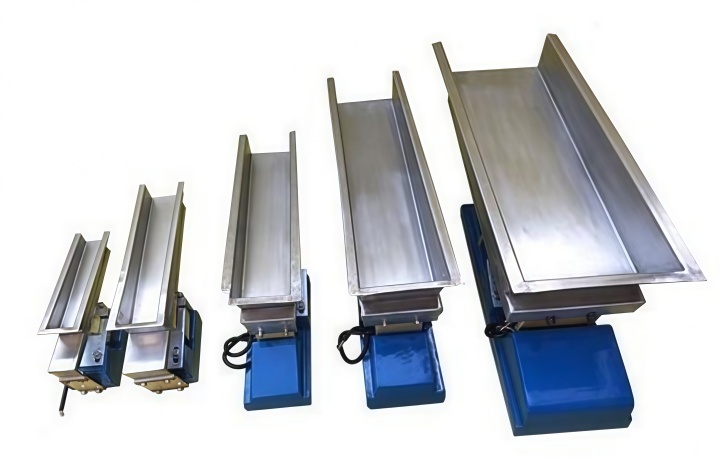
Feeding capacity is the key factor determining whether the equipment can meet production requirements. Rated capacities are typically calculated based on standard test materials and are significantly affected by bulk density, particle size, and moisture content in actual applications. Taking Eriez's HS Series as an example, this series includes 10 models with feed rates ranging from 40 cubic feet to 600 cubic feet per hour. Eriez's C Series medium-duty feeders offer handling capacities from 727 kg/hour to 39 metric tons/hour (approximately 43 tons/hour). When selecting, calculate the required capacity based on daily production targets, and consider selecting one size grade larger than the calculated value, though long-term overload operation is not advisable.
Compared to traditional motor-driven feeders, the energy efficiency advantage of this equipment is notable. Eriez official data shows that AC-driven electromagnetic feeders are 60% more energy-efficient than DC drives. Industry sources indicate that electromagnetic feeder energy consumption can be reduced by as much as 80% compared to conventional control systems. Conveying efficiency decreases with materials having higher moisture content; in such conditions, the rated capacity should be appropriately increased during selection. When moisture content is excessively high, materials become difficult to fluidize and require dewatering pretreatment. The appropriate model should balance current requirements with future expansion plans.
Starting from Installation Environment to Select the Structure and Mounting of the Electromagnetic Vibrating Feeder
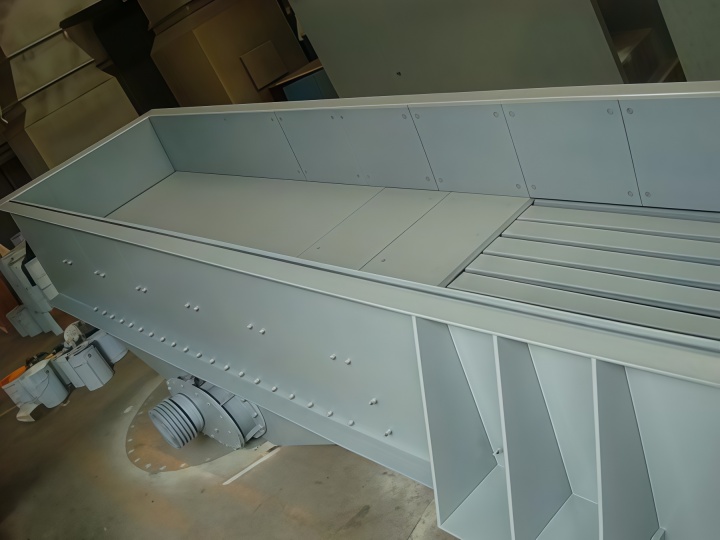
The installation environment directly affects whether the equipment can operate stably. Voltage fluctuations can cause amplitude abnormalities, requiring voltage regulators; hazardous areas require explosion-proof models, and Eriez offers explosion-proof models meeting Class II, Division 1, Group F and G standards. Suspended mounting saves floor space and provides better vibration isolation, suitable for overhead positioning; base mounting is straightforward and suitable for floor-level operations.
Trough options include open, enclosed, and tubular designs. Enclosed designs suppress dust emissions and meet environmental compliance requirements. Trough shapes can be customized based on material characteristics: flat troughs suit lightweight materials, V-shaped troughs are suitable for granular materials, and tubular troughs are appropriate for enclosed conveying applications. Eriez HS Series trough widths range from 2 inches to 16 inches and lengths from 16 inches to 60 inches; HD Series trough widths range from 4 inches to 16 inches and lengths from 24 inches to 60 inches. For frequent start-stop or precision batching applications, the rapid response advantage of this equipment is evident; the HS Series can achieve up to 100 start-stop cycles per minute. At lower ambient temperatures, the low-temperature starting performance of electromagnet coils requires attention, and preheating devices may be installed as needed.
Starting from Control Accuracy to Configure the Control System of the Electromagnetic Vibrating Feeder
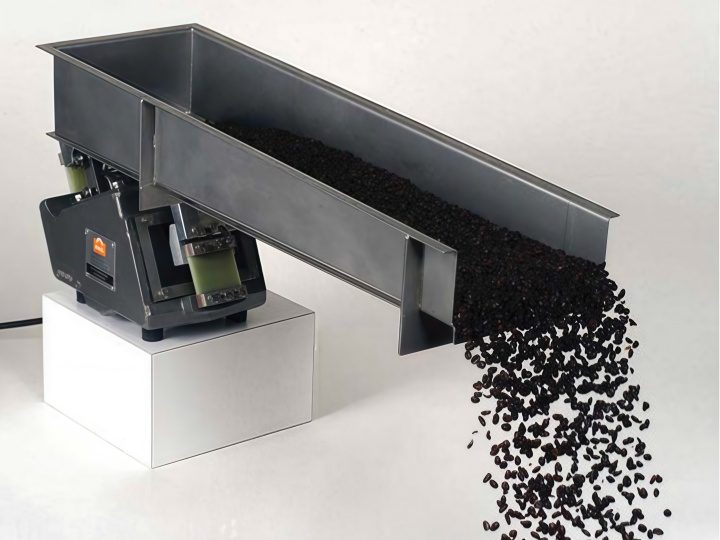
Control accuracy is an important indicator of equipment performance. Stepless speed adjustment is achieved by regulating current or frequency, with fast response and good accuracy. When used in conjunction with electronic belt scales, feeding accuracy can reach 1% to 2%. In operations requiring high accuracy such as batching, weighing, and packaging, the equipment allows feeding rate adjustment during operation without requiring shutdown.
When material moisture content is high, the feeding rate decreases considerably; in such conditions, the rated capacity should be appropriately increased during selection. The specific accuracy requirements of upstream and downstream equipment should be clearly defined to determine whether a closed-loop control system is necessary. For high-accuracy batching applications, closed-loop control is the recommended choice, while open-loop control is sufficient for general feeding applications. Regular inspection of the air gap between the electromagnet and armature is also necessary to ensure continuous and stable operation.
Comprehensive Comparison of the Four Selection Dimensions for the Electromagnetic Vibrating Feeder
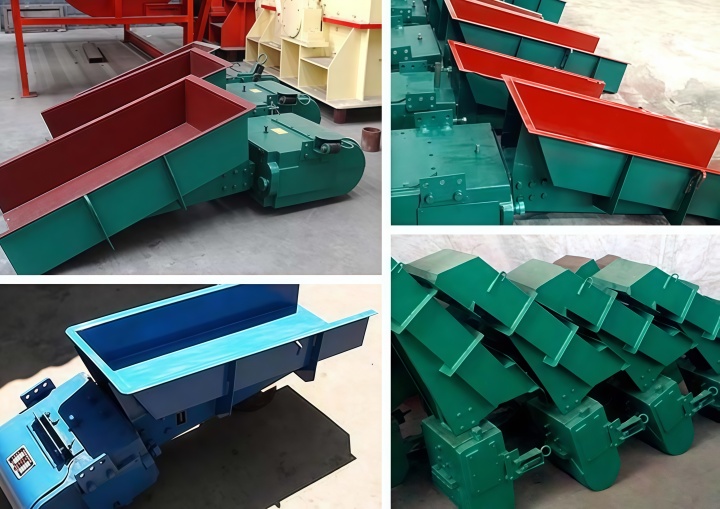
Considering all four selection dimensions, material characteristics determine the basic operating parameters of the equipment and serve as the starting point of selection. Feeding capacity is directly related to specification selection and must be based on actual production requirements while fully accounting for moisture content effects. The installation environment determines structural form and mounting method, with voltage stability and explosion-proof ratings being critical factors requiring attention. Control accuracy relates to adjustment methods and control system configuration. These four dimensions are interrelated and mutually constraining; selection should be evaluated comprehensively.
Selection can be advanced through the following steps: first, determine the bulk density, moisture content, and viscosity of the material to establish the amplitude-frequency range; second, calculate the required capacity based on daily production and consider selecting one grade larger than the calculated value; third, confirm on-site voltage stability, explosion-proof rating, and spatial dimensions to select structural form and mounting method; finally, choose the control system configuration based on batching accuracy requirements. Following this process systematically narrows the selection range.
Electromagnetic Vibrating Feeder Frequently Asked Questions
The Electromagnetic Vibrating Feeder does not vibrate at all after power is connected. What causes this?
This is typically caused by a blown fuse or open coil circuit. Inspect the fuse, wiring, and control box solder joints.
The Electromagnetic Vibrating Feeder suddenly produces increased noise with impact sounds during operation. How should this be addressed?
This is often caused by broken leaf springs, loose exciter connection bolts, or an excessively small air gap between the iron core and armature causing collision. Shut down for inspection, replace springs, tighten bolts, or appropriately increase the air gap.
The Electromagnetic Vibrating Feeder frequently experiences material blockage, and each cleaning takes considerable time. How can this be improved?
Blockage is mostly caused by sticky material caking or large foreign matter jamming the trough. Consider variable amplitude adjustment and curved trough design to reduce the risk.
The feeding capacity of the Electromagnetic Vibrating Feeder decreases noticeably after a period of use. What causes this?
This is typically caused by air gap imbalance, leaf spring fatigue, or material accumulation on the trough surface. Regularly inspect air gap uniformity and clean accumulated dust.
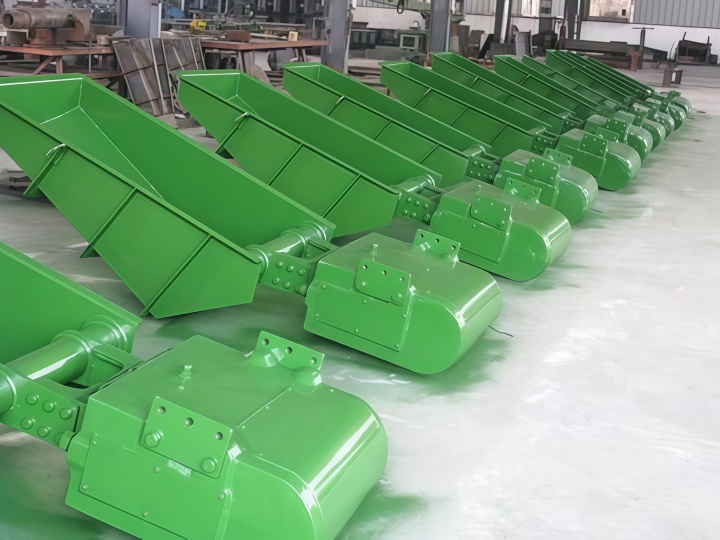
Selection is essentially a process of matching the four variables of material characteristics, production requirements, site conditions, and control accuracy to specific operating conditions. Material states, spatial constraints, and process requirements vary across different facilities, and no single set of parameters applies to all scenarios.
The four selection dimensions and five-step selection process outlined above can serve as a quick reference for equipment selection. Checking specific conditions against each dimension will help identify the appropriate configuration direction.