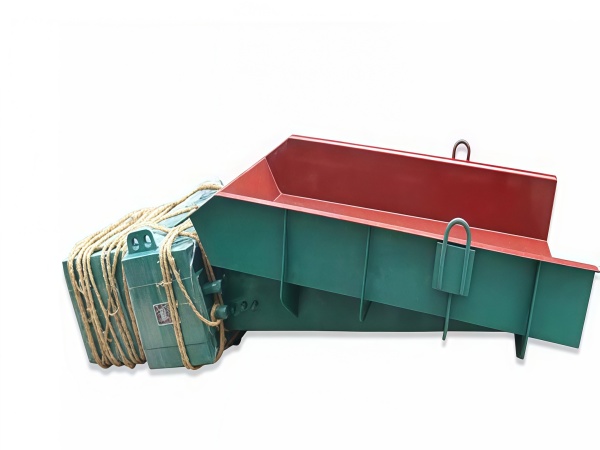
Industrial vibrating feeder
Production Capacity: 30 – 800 t/h
Max Feeding Size: 100 mm – 1200 mm
Tank Size (W × L): 750 × 2500 mm – 1500 × 6000 mm
Motor Power: 3.0 kW – 30 kW (Dual vibrating motors / Exciter drive)
Pre-screening Gap: Custom grizzly bars (Optional for mud/fine material separation)
What is an Industrial Vibrating Feeder?
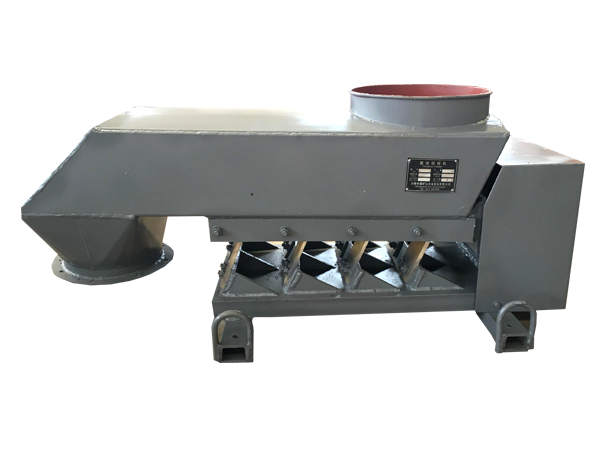
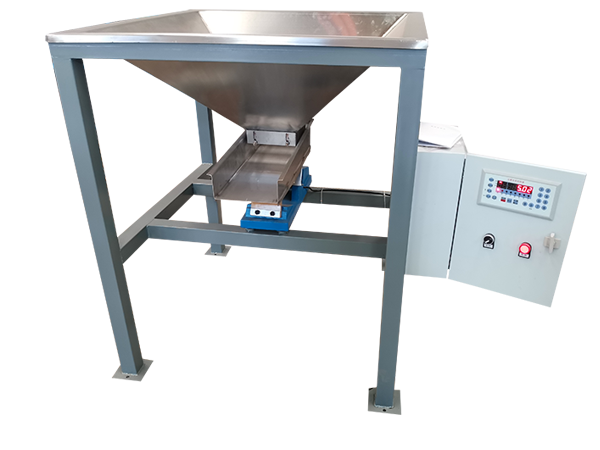
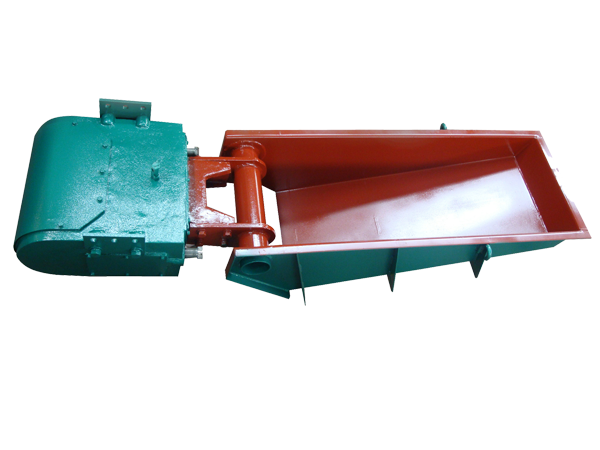
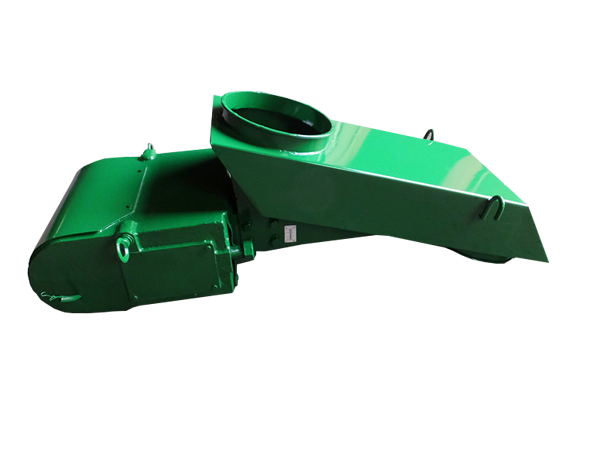
An Industrial vibrating feeder is a heavy-duty material handling system installed below storage hoppers to continuously and uniformly feed bulk materials into downstream crushers or conveyors.
In mining crushing, coal conveying, and bulk material processing lines, uneven feeding often leads to downstream crusher jamming, belt misalignment, or even complete line shutdown. Bulk materials can easily bridge and clog at the bin opening, or surge out and damage equipment. An industrial vibrating feeder can overcome this bottleneck.
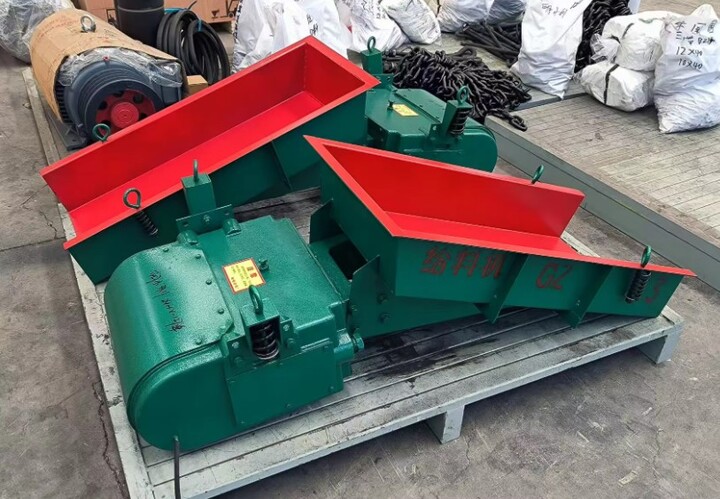
Industrial vibrating feeders are installed below storage bins and can convert accumulated lumpy and granular materials into a continuous, quantitative flow. Their feeding capacity ranges from 30 t/h to 800 t/h, and the permissible feed particle size is between 100 mm and 1200 mm.
What are the benefits of an industrial vibrating feeder?
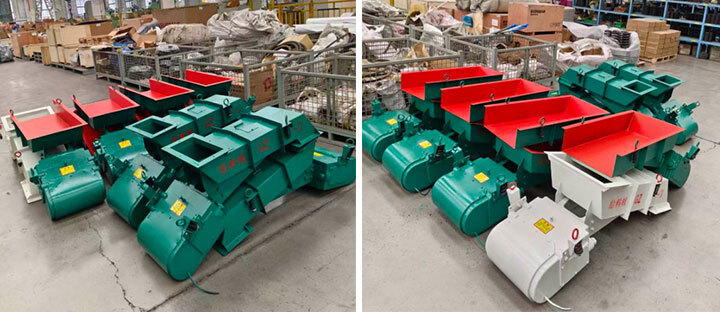
Industrial vibrating feeders have very few mechanical transmission components and no complex gear chains. They are driven solely by a vibrator or vibrating motor, meaning that routine maintenance only requires periodic grease application, significantly reducing downtime and maintenance costs. The machine's feed trough bottom plate is equipped with a removable high-manganese steel wear-resistant liner. When facing long-term, intense friction with high-hardness materials such as granite and basalt, wear only occurs on the replaceable liner, protecting the main channel steel structure from wear. Some models of the vibrating feeder are equipped with robust steel bars at the discharge end. As the material advances, fine mud and sand smaller than the gaps between the bars will leak directly through the gaps, preventing them from entering the crusher. This reduces ineffective crushing and avoids energy consumption from fine materials occupying the crushing chamber.
The Vibrating Feeder Working Principle
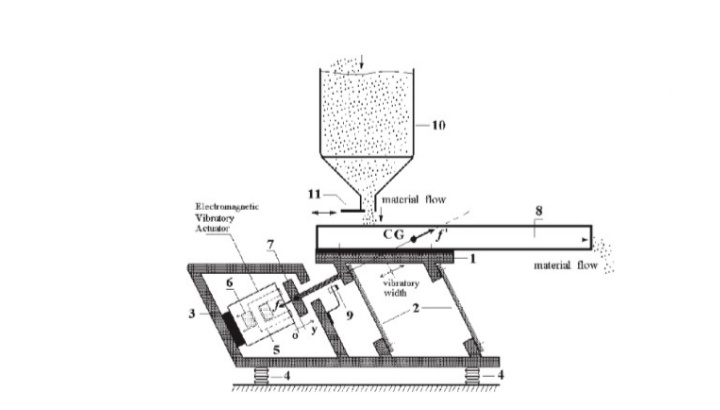
The vibrating feeder design utilizes two sets of eccentric shafts in a twin-shaft vibrator rotating synchronously in opposite directions. The centrifugal forces generated by the eccentric masses are superimposed or canceled out, forcing the entire trough to vibrate linearly along a specific angle.
When the trough vibrates upwards, the material is thrown up and jumps forward; when the trough falls, the material falls back to the moved bottom. This reciprocating motion, thousands of times per minute, promotes the formation of a continuous sliding flow of bulk material. Furthermore, it can be flange-sealed with a downstream auger conveyor, allowing for sealed transport and preventing dust dispersion.
Model Parameter Table
| Model | Max Feeding Particle Size (mm) | Production Capacity (t/h) | Motor Power (kW) | Tank Size (Width × Length, mm) | Equipment Weight (kg) |
| GZD-750×2500 | ≤300 | 30–80 | 2×1.5 | 750×2500 | 1950 |
| GZD-960×3800 | ≤500 | 80–150 | 2×3.0 | 960×3800 | 3280 |
| GZD-1100×4200 | ≤550 | 100–240 | 2×4.5 | 1100×4200 | 4160 |
| GZD-1300×4900 | ≤650 | 180–350 | 2×5.5 | 1300×4900 | 5400 |
| ZSW-380×95 | ≤500 | 80–150 | 11 | 950×3800 | 4100 |
| ZSW-490×110 | ≤580 | 120–280 | 15 | 1100×4900 | 5200 |
| ZSW-600×130 | ≤750 | 200–500 | 22 | 1300×6000 | 6500 |
| ZSW-600×150 | ≤850 | 280–600 | 30 | 1500×6000 | 7800 |
Application Scenarios
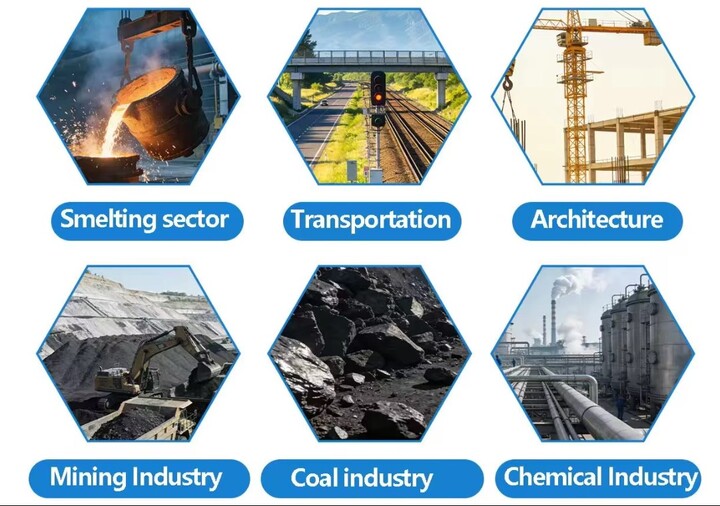
Vibratory feeders are often used as starter machines in coarse crushing processes. In sand and gravel quarries, the feeder is positioned below a large hopper, enduring the static pressure of tens of tons of limestone to evenly feed large stones into the jaw crusher. In coal washing plants, raw coal, after exiting the raw coal bunker, is pushed into the coal washing conveyor via a vibrating feeder. In cement clinker production lines, refractory materials, gypsum, and other ingredients exiting from below the weighing bin also need to pass through this equipment for rectification before entering the downstream auger conveyor system and being sent to the mill for mixing and grinding.
Real-world Case
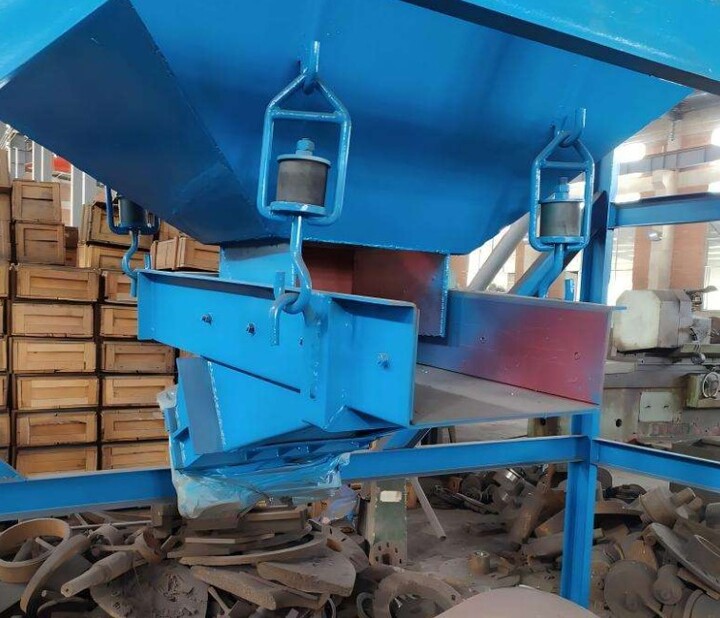
In an iron ore primary processing project in Western Australia, the client previously used a traditional plate feeder. Due to the high hardness of the ore and a moisture content of 7%, fine mineral powder frequently got stuck in the gaps of the plate feeder, resulting in up to 6 hours of downtime per week for cleaning. After on-site surveying, the technical team replaced the original equipment with the VF-1345 model. Due to the adoption of a bar pre-screening design, the water-containing fine mineral powder falls through the 50 mm gap in the bars before contacting the crusher, directly entering the subsequent conveyor belt and no longer participating in compression. After being put into use, the system operated continuously for 9 months without any jamming or shutdown, and the hourly ore throughput remained stable at around 240 tons.
Frequently Asked Questions
Q: The feed rate slows down during equipment operation. What should be adjusted?
A: Adjustment can be achieved in two ways. The first is to adjust the angle between the eccentric blocks at both ends of the vibrating motor. Loosening the fixing bolts and changing the overlap of the two eccentric blocks will change the excitation force. The second is to change the input frequency of the motor through a frequency converter, thereby changing the frequency.
Q: What factors influence the price of the industrial vibratory feeder?
A: The price of the vibrating feeder depends on the required capacity, material characteristics, and customized configuration. Please provide your specific requirements, and our manufacturing engineers will provide an accurate factory direct quote within 2 hours.
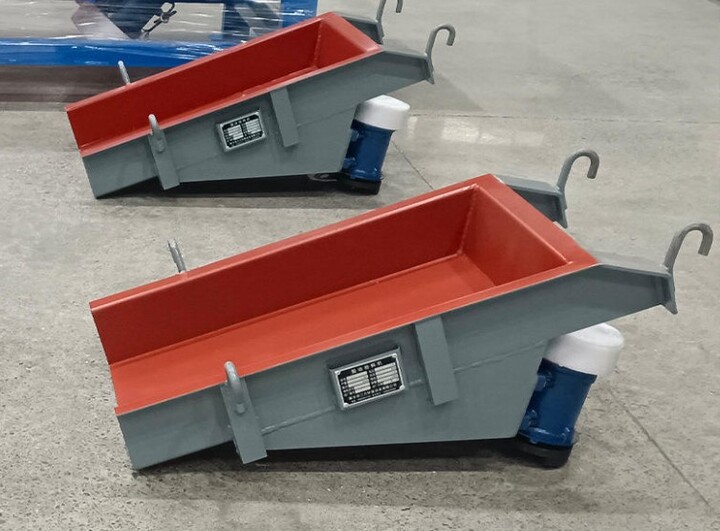
As the front-end link in a bulk material conveying chain, the performance of the industrial vibrating feeder directly affects the subsequent crushing, conveying, and overall production line efficiency. Through linear reciprocating vibration, it solves the production problems of material agglomeration and uncontrolled discharge. Selecting the appropriate model and wear-resistant configuration ensures stable material flow support for subsequent sand and gravel processing or belt conveyor coal systems.