Steel cord conveyor belt price
Tuesday November-25 2025 15:44:33
Steel cord conveyor belt price typically ranges from $50 to $300 per meter, depending on factors such as model, belt width, steel cord strength, and cover rubber material. Using high-strength steel cord as the longitudinal skeleton material, the conveyor belt provides extremely high tensile strength, allowing it to easily transport distances of 500 meters or even over 15 kilometers, far exceeding ordinary fabric-core conveyor belts. The belt body usually consists of an upper cover rubber, a steel cord core, a lower cover rubber, and side rubber. The cover rubber material can be selected according to the characteristics of the conveyed material, such as abrasion-resistant rubber, heat-resistant rubber, flame-retardant rubber, and oil-resistant rubber.simple steel cord conveyor belts typically cost between $40 and $130 per meter and are suitable for basic horizontal conveying. Tear-resistant, more complex conveyor belts, on the other hand, range in price from approximately $180 to $380 per meter.

Different models of steel cord conveyor belt price
Different models of steel cord conveyor belts have different prices due to differences in structure and strength grade. Higher model numbers indicate greater steel cord tensile strength and a higher grade of cover rubber, resulting in a significant increase in cost.
ST500–ST1000: For light to medium load conditions, commonly used for short to medium distance transport, priced between $50–$120 per meter. These models feature smaller wire rope diameters and typically use standard abrasion-resistant cover rubber, suitable for conventional transport systems, and are relatively inexpensive.
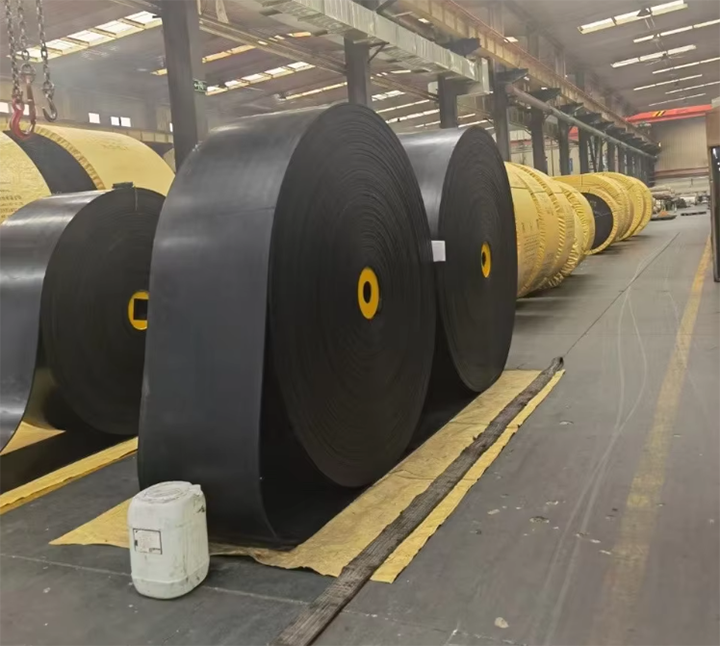
ST1250–ST2000: Suitable for heavy-load conditions in open-pit mines, ore dressing plants, etc., priced between $100–$180 per meter. These wire ropes have higher strength, and the cover rubber is often made of reinforced abrasion-resistant or flame-retardant materials, suitable for continuous high-load operation.
ST2500–ST3150: Meets the needs of ultra-long distances, high drops, and ultra-large transport capacities, priced between $150–$240 per meter. This grade features larger wire rope diameters and significantly enhanced tensile strength, commonly used in main transport lines.
ST3500–ST5400 and above: Used in extreme conditions, such as large coal mine main inclined shaft systems, with prices reaching $220–300 per meter; high manufacturing precision, requiring the highest specifications for both the cover rubber and steel wire rope.
Steel cord conveyor belt price and model analysis
|
NormalBelt Strength (N/mm) |
Max. Steel Cord Dia. (mm) |
Cord Construction |
Min. Cord Breaking Strength (kN/cord) |
Cord Pitch (mm) |
Min. Pulley Diameter (mm) |
Price (USD/m) |
| ST-500 | 3 | 7*7 | 7.6 | 14 | 500 | $45 |
| ST-630 | 3 | 7*7 | 7 | 10 | 500 | $52 |
| ST-800 | 3.5 | 7*7 | 8.9 | 10 | 500 | $60 |
| ST-1000 | 4 | 7*7 | 12.9 | 12 | 630 | $72 |
| ST-1250 | 4.5 | 7*7 | 16.1 | 12 | 800 | $86 |
| ST-1600 | 5 | 7*7 | 20.6 | 12 | 1000 | $102 |
| ST-2000 | 6 | 7*7/7*19 | 25.6 | 12 | 1000 | $118 |
| ST-2500 | 7.2 | 7*7/7*19 | 40 | 15 | 1250 | $145 |
| ST-3150 | 8.1 | 7*7/7*19 | 50.5 | 15 | 1400 | $170 |
| ST-3500 | 8.6 | 7*7/7*19 | 56 | 15 | 1600 | $185 |
| ST-4000 | 8.9 | 7*7/7*19 | 63.5 | 15 | 1600 | $205 |
| ST-4500 | 9.7 | 7*7/7*19 | 76.3 | 16 | 1600 | $230 |
| ST-5000 | 10.9 | 7*7/7*19 | 91 | 17 | 1800 | $260 |
What factors influence Steel cord conveyor belt price?
Steel cord conveyor belt price is not determined by a single parameter, but is the result of the combined effect of multiple technical factors,Steel Wire Rope Diameter and Strength.thicker, stronger steel wire ropes, such as those with diameters from Φ4.0mm to Φ8.1mm, can withstand greater tension, but their raw material costs and production process requirements are also higher, directly driving up the price of the finished product.
Cover Rubber Thickness and Material: The cover rubber is the "protective layer" of the conveyor belt. The thickness of the top cover rubber, such as 6mm, 8mm, 10mm, 12mm, etc., directly determines its wear life. The greater the thickness, the more rubber is used, and the higher the price. Meanwhile, special rubber materials, such as high-temperature resistant, flame-retardant, antistatic, oil-resistant, or acid and alkali-resistant rubber formulations, are far more expensive than ordinary wear-resistant rubber, increasing the total price.
Conveyor Belt Width and Length: Different widths and total lengths, such as 800mm, 1200mm, 1600mm, and 2000mm, form the basis for calculating the total price. Wider and longer conveyor belts consume more raw materials, naturally leading to a linear price increase. When requesting a quote, suppliers typically require specific width and total length in meters to calculate the total cost.
Layer Structure: Although steel cord conveyor belts do not have fabric layers, the density of the steel cords and the bonding structure are crucial. Closer cord spacing and more advanced bonding processes improve the overall performance and impact resistance of the belt, but also increase manufacturing costs.
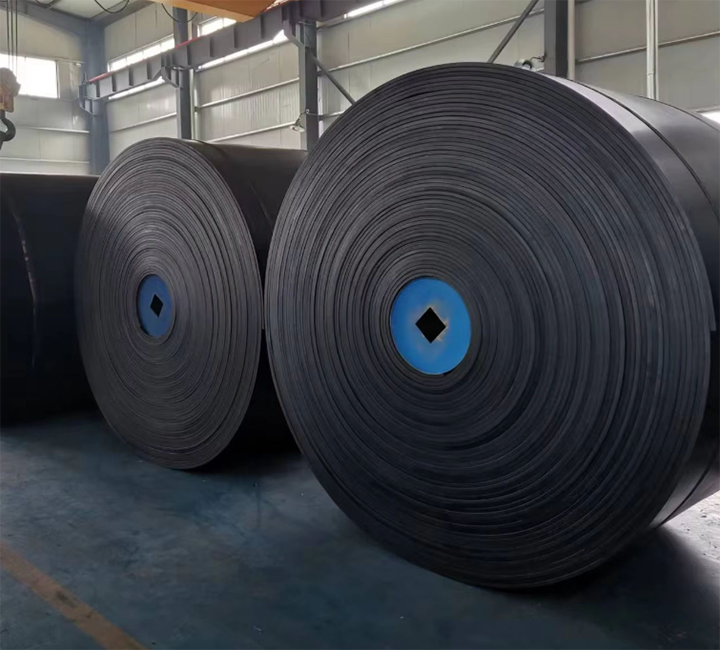
Steel Cord Conveyor Belt Suppliers
Dahan Machinery offers a wide range of products, from the standard ST series to special high-temperature resistant, fire-resistant, flame-retardant, and oil-resistant types. As a source manufacturer, our steel cord conveyor belt prices are competitive. Our products cover all strength grades, offering high cost-effectiveness and controllable delivery times. They are exported to South America, Southeast Asia, the Middle East, Africa, and European and American markets. We provide design selection, installation guidance, joint vulcanization services, and complete conveyor system solutions, making it easier for users to select the appropriate product based on their working conditions.
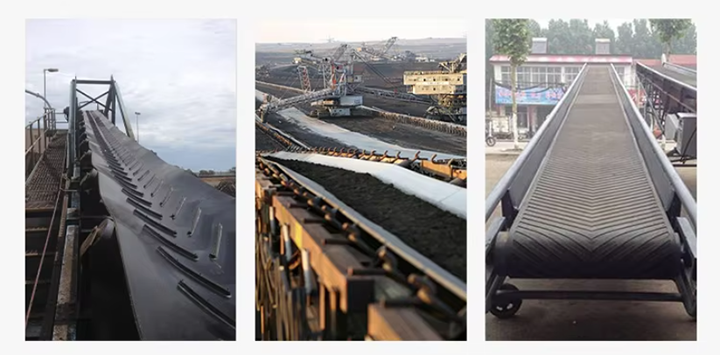
Steel cord conveyor belt price reflects its technical content and performance specifications. The wide range, from $100 to over $500 per square meter, is determined by its tensile strength grade, wire rope specifications, cover rubber configuration, belt width, length, and special functional requirements. Conveyor belts are used in various industries such as mining, power, ports, metallurgy, and cement. Users can provide detailed working parameters and technical requirements to allow suppliers to provide the most accurate quote.