Truck Bulk Material Conveyor
Saturday November-08 2025 09:48:44
What is a Truck Bulk Material Conveyor?
A Truck Bulk Material Conveyor is used for the rapid loading and unloading of bulk materials such as grain, feed, fertilizer, coal, and ore from trucks. Its handling capacity typically ranges from 50 to 500 tons per hour, with conveying distances of 10 to 50 meters and lifting heights of 5 to 20 meters. The system uses an internal combustion engine or electric motor as its power source, boasts a high degree of automation, and can achieve remote control operation, automatic lifting, and oscillation, thereby reducing reliance on manual labor and improving loading and unloading efficiency.

Truck Bulk Material Conveyors are available in five types: boom type, belt type, screw type, chain type, and bucket type, which can be selected according to specific needs.
What types of Truck Bulk Material Conveyors are there?
Truck Bulk Material Conveyors can be divided into the following six product types based on different truck loading requirements or the characteristics of the conveyed materials, adapting to various working conditions and conveying volumes.
Boom-type concrete pumps consist of multiple articulated boom sections, resembling a robotic arm that can flexibly extend, bend, and rotate to deliver materials directly to distant or hard-to-reach unloading points. After a concrete mixer truck unloads material into its hopper, the pumping system delivers the concrete to the pouring point via the boom. Common boom-type concrete pumps have a conveying capacity of approximately 20–160 m³/h and boom lengths ranging from 20–65 m, adaptable to the pouring needs of most construction scenarios.

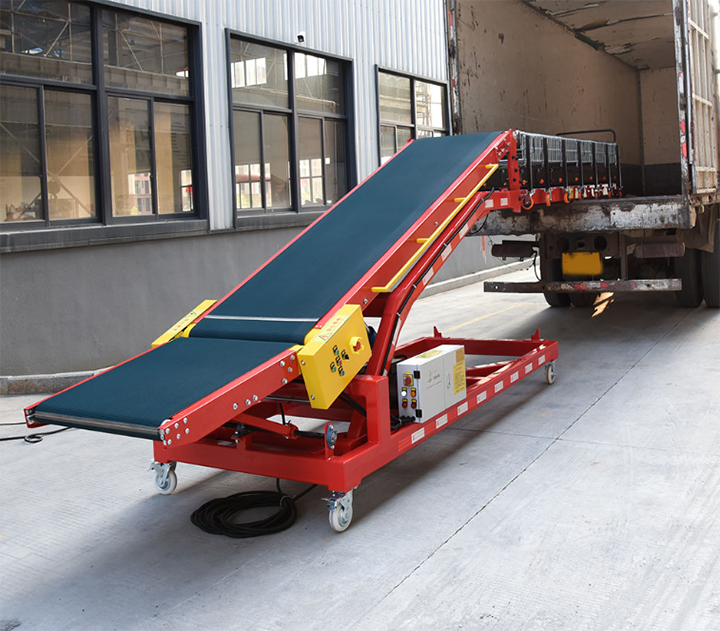
Belt conveyors use an electric roller to drive a circular belt, on which materials are continuously transported. Belt conveyors can be made in stationary, mobile, and telescopic types. Mobile belt conveyors are commonly used to receive bulk materials under truck unloading hatches, while telescopic belt conveyors can penetrate deep into truck beds for rapid transport of packages. Common belt conveyor conveying capacities range from 100–5000 t/h, and their length can be freely configured according to site conditions.
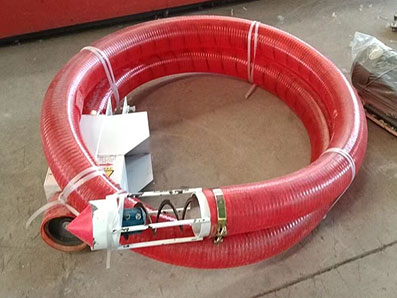
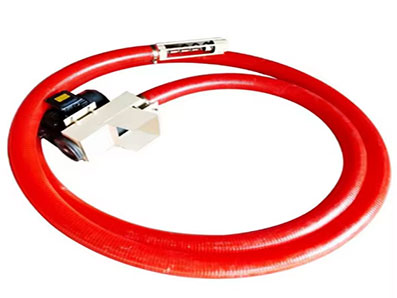
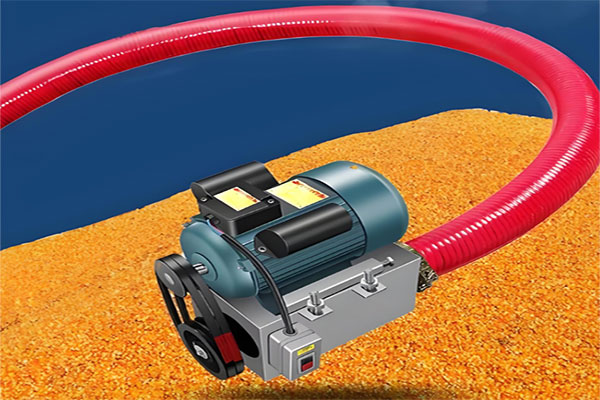
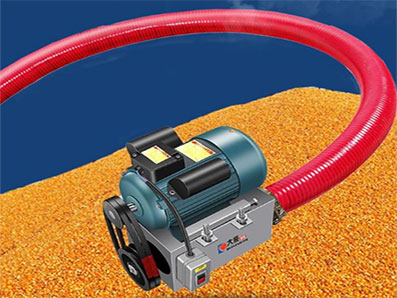
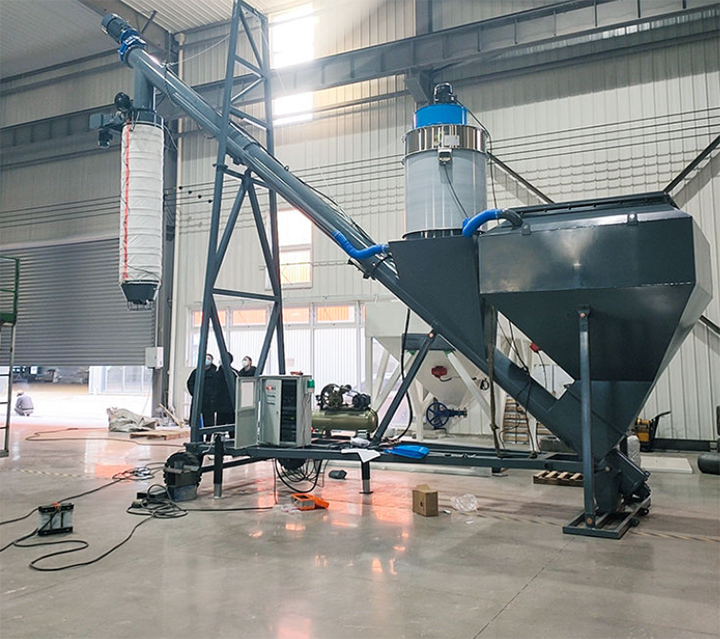
Screw conveyors, operating within a closed U-shaped trough or circular tube, propel materials through rotating helical blades. They connect seamlessly with the unloading ports of tank trucks transporting powders such as cement and flour, achieving dust-free transport. Screw conveyors typically have a conveying capacity of 5–200 t/h and a conveying distance generally between 5 and 50 meters, suitable for short-distance, stable transport of powdery and small granular materials.
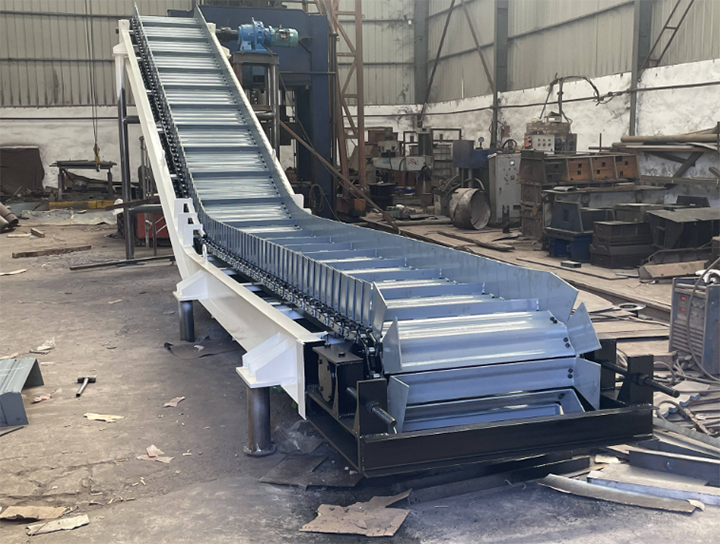
Chain conveyors use a chain to drive scrapers that move within a trough, dragging materials forward. Dump trucks can dump large pieces of ore, coal, or household waste into their robust troughs, where scrapers, driven by the chain, withstand significant impact and stably transport the material. Chain or scraper conveyors commonly have a conveying capacity of 50–800 t/h, which can be further increased depending on the trough width and scraper speed, making them suitable for high-load conditions.
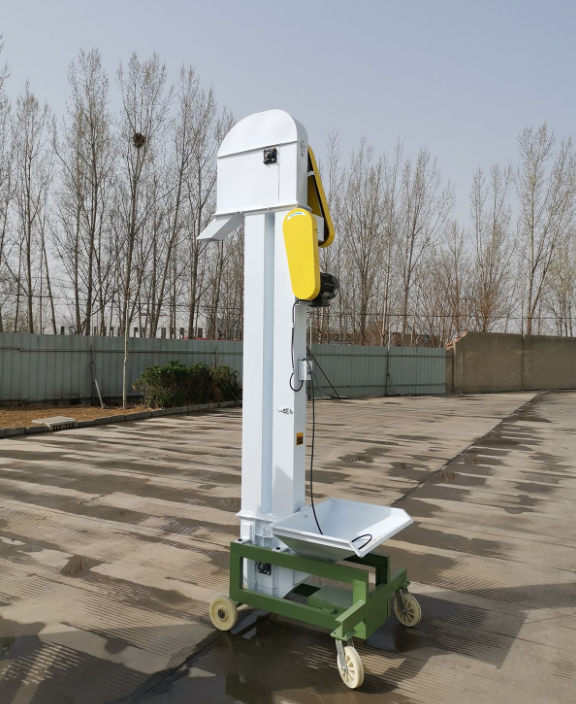
Bucket elevators are used for vertical or steeply inclined material lifting. A bucket belt encircling the head and bottom wheels drives a series of buckets, scooping up material from the bottom and throwing it out at the top. Trucks can unload bulk materials such as grains into the bottom hoppers, which are then vertically conveyed to higher silos by the elevator. The lifting height of a bucket elevator is generally 5–60 m, with some large units reaching over 80 m. The conveying capacity typically ranges from 20 to 500 t/h.
Truck Bulk Material Conveyor Solutions
Different truck bulk material conveyor solutions are available to meet varying conveying needs: For sites requiring flexible material placement and wide-range relocation, boom conveyors are the preferred choice due to their telescopic and swivel booms; for long-distance, high-efficiency horizontal or inclined conveying of bulk materials, belt conveyors dominate due to their large conveying capacity and continuous reliability; when enclosed conveying of powdery, granular, or other easily dusty materials is required, screw conveyors use rotating helical blades within a closed trough to prevent contamination and loss; for conveying heavy, abrasive, or high-temperature materials, chain conveyors utilize robust chains and scrapers for traction within the trough, resulting in a robust and impact-resistant structure; and for applications requiring vertical or steep-angle lifting of granular or blocky materials, bucket elevators utilize a series of buckets in a vertical circulation process to achieve lifting, requiring minimal floor space.
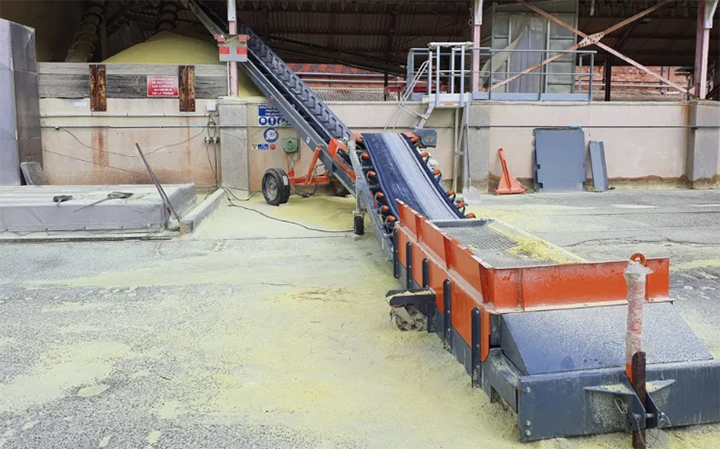
In the bulk material conveying field, our factory not only provides high-performance mobile conveyors and telescopic loaders, but also possesses the capability to provide customized solutions based on the specific conditions of docks, grain silos, building material plants, and other site conditions. The conveyor belt width can be customized from 500mm to 1200mm, with a maximum conveying capacity of 800 tons per hour. For fragile materials such as grains, it is equipped with deep-groove idlers and a soft-start system to prevent spillage and breakage. For highly abrasive materials such as coal and ore, heavy-duty scraper cleaners and anti-deviation devices are used, and a fully enclosed guide chute is optional to suppress dust overflow. The equipment is based on a high-strength steel structure, a high-efficiency conveyor belt, and a stable drive system, ensuring continuous, fast, and low-dust conveying operations during bulk material loading and unloading.