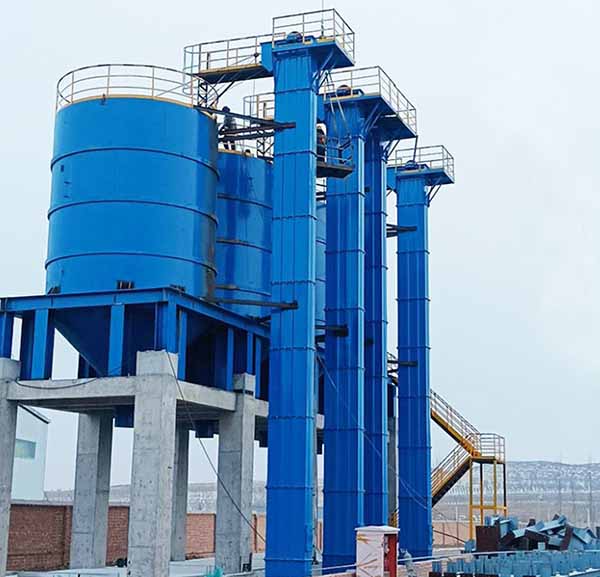
Carbon black bucket elevator
Conveying capacity: 8-85 m³/h
Lifting height: 20-40 m
Low crushing rate: Speed <0.8 m/s
Carbon black bucket elevator overview
Using ordinary bucket elevators to transport carbon black can easily lead to problems. Carbon black has low density, high conductivity, and low abrasiveness. Its fine dust often leaks due to insufficient sealing in traditional systems, not only contaminating the workshop but also infiltrating and seizing standard bearings. High-speed impacts can even shatter fragile granulated carbon black.
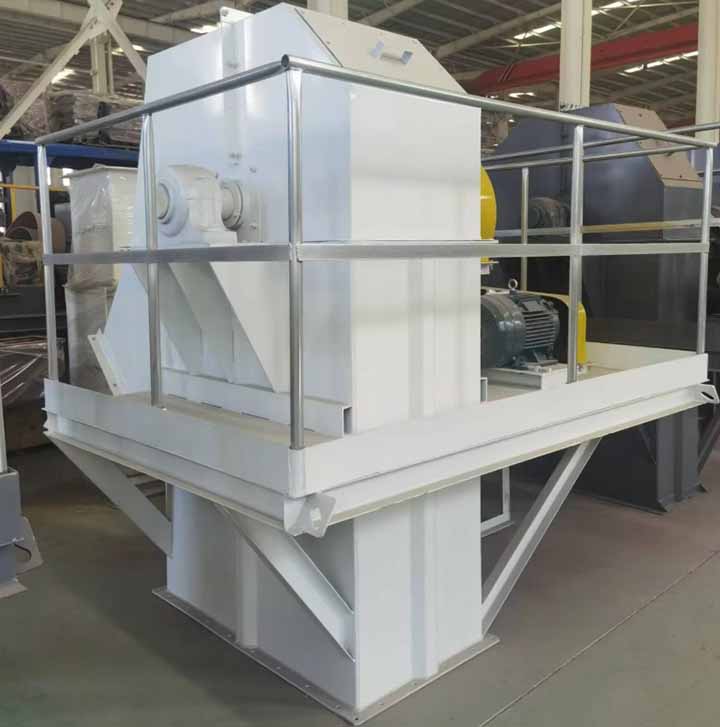
Carbon black bucket elevators employ heavy-duty dustproof casings to achieve fully enclosed conveying and prevent dust dispersion. For lines with a vertical height of 25 meters and a production capacity of 15 tons per hour, it limits the linear velocity to below 0.8 meters per second, using low-speed gravity unloading to prevent carbon black particle breakage, adapting to material characteristics while maintaining plant cleanliness.
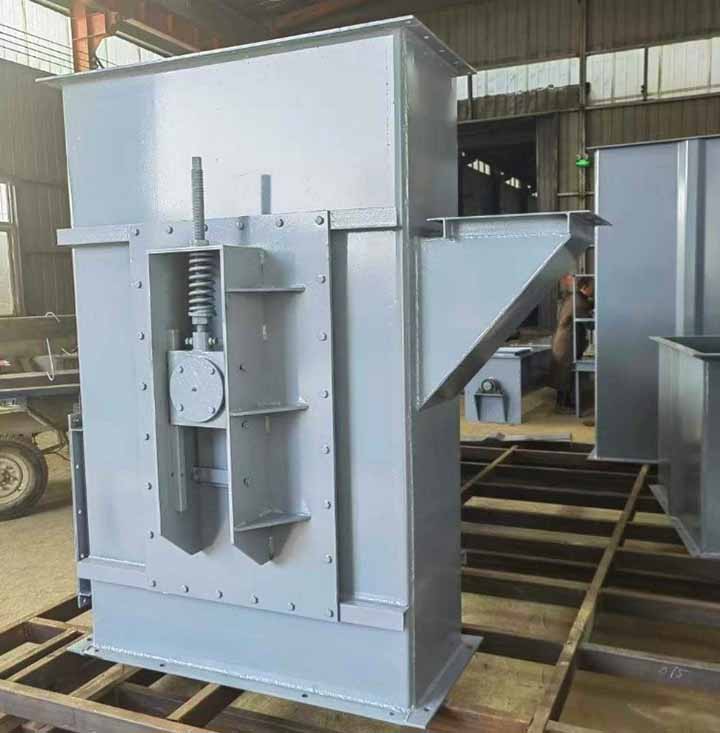
Carbon Black Bucket Elevator Technical Features
The drive bearings of the carbon black bucket elevator are mounted on a structural support outside the casing, using a sealed design combined with low-pressure airflow backflushing to prevent conductive dust infiltration; internally, it uses an anti-static rubber conveyor belt with a resistance of less than 300 MΩ, and a grounded design prevents the accumulation of frictional static charge. Meanwhile, 6mm manganese steel wear-resistant liners, secured with bolts, are installed in high-impact areas such as the unloading hood and feed inlet to protect the casing from scratches by the carbon black flow. The casing also integrates explosion-proof pressure relief plates to guide the deflagration pressure wave; and is equipped with monitoring instruments such as an inductive belt misalignment switch and a tail shaft speed sensor to track conveyor belt displacement in real time and monitor slippage, triggering immediate shutdown protection before frictional heat generation.
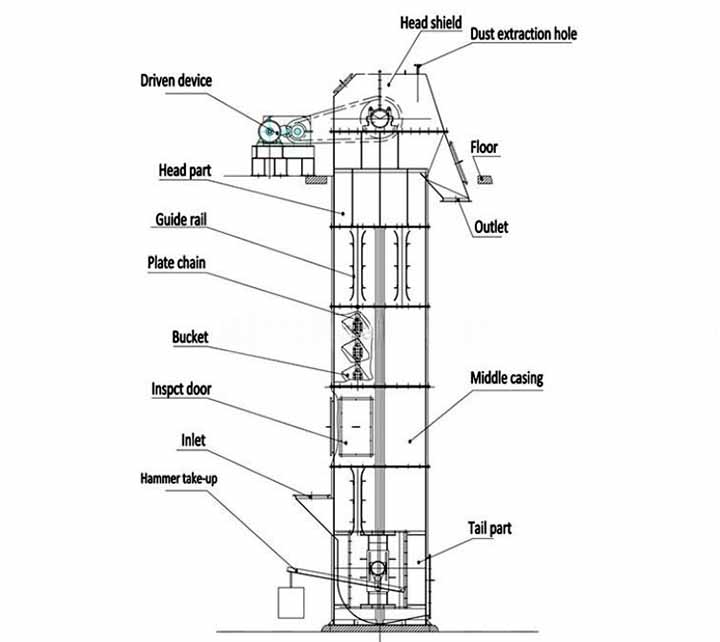
Application Scenarios
This vertical conveying machinery operates in specific process nodes of rubber and chemical manufacturing. In the mixing workshop of a tire factory, the elevator is installed at the front end of the automated batching scale, lifting raw carbon black from the ground-level ton bag unloading station to the high-level storage silo for feeding the mixer. At the end of the production process in the carbon black plant packaging line, the system lifts the granulated material fresh from the drum dryer into the finished product storage hopper above the automatic valve packaging machine. Furthermore, in the rubber batching system, this machinery bridges the height difference between the primary crusher and the downstream distribution hopper, implementing sealed encapsulation of carbon black during the masterbatch compounding process.
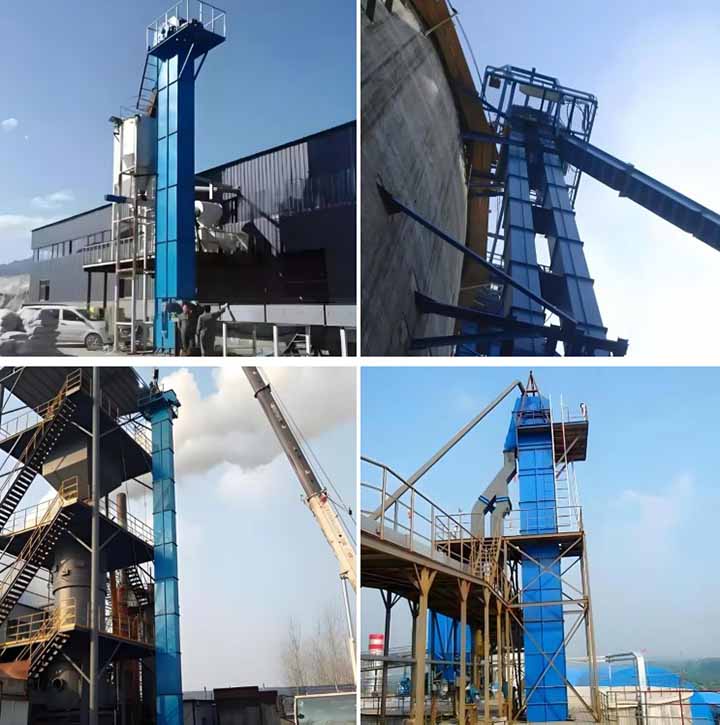
Common Models
System selection depends on the matching of conveying capacity requirements and structural dimensions. The following engineering specifications represent industry standard configurations.
| 型号 | 料斗宽度 (mm) | 输送量范围 (m3/h) | 最大高度 (m) | 驱动功率 (kW) |
| CBE250 | 250 | 8 - 15 | 20 | 5.5 - 7.5 |
| CBE315 | 315 | 14 - 28 | 30 | 7.5 - 11.0 |
| CBE400 | 400 | 25 - 50 | 35 | 11.0 - 15.0 |
| CBE500 | 500 | 45 - 85 | 40 | 15.0 - 22.0 |
Price Range and Influencing Factors
The purchase cost of an industrial-grade carbon black bucket elevator typically ranges from $5,800 to $21,000, with the final commercial quote depending on several technical variables. The base price is based on a standard carbon steel casing, while using 304 or 316 grade stainless steel for chemical contamination protection increases costs by 45% to 70%. Each additional meter of vertical casing introduces more structural steel, belts, and buckets; taller structures also require more powerful drive motors and heavy-duty gearboxes, directly increasing the price. Equipping motors and electrical components with ATEX or NEMA explosion-proof standards incurs a significant cost premium. Choosing thicker polyurethane or ceramic-patch wear-resistant liners increases the initial price but extends maintenance downtime intervals.
Frequently Asked Questions
Q: How to prevent carbon black from accumulating and agglomerating at the bottom of the base?
A: The base uses a rounded self-cleaning sliding plate. The gap between the returning hopper and the bottom arc plate is maintained within 10mm. Mechanical scraping carries away accumulated material upwards, preventing compaction and agglomeration.
Q: Which hopper type can load and unload granulated carbon black without crushing the particles?
A: The system uses a thickened nylon hopper with a rounded leading edge or a continuous steel hopper. This geometry allows the carbon black to slide smoothly out under gravity when the die head rotates, eliminating the violent impact of centrifugal throwing.
Q: How often should the drive shaft seal be inspected?
A: The packing seal and airflow backflushing regulating valve require weekly pressure checks. The maintenance team typically replaces the synthetic packing seal ring after 2,000 to 3,000 hours of equipment operation to maintain dust containment.
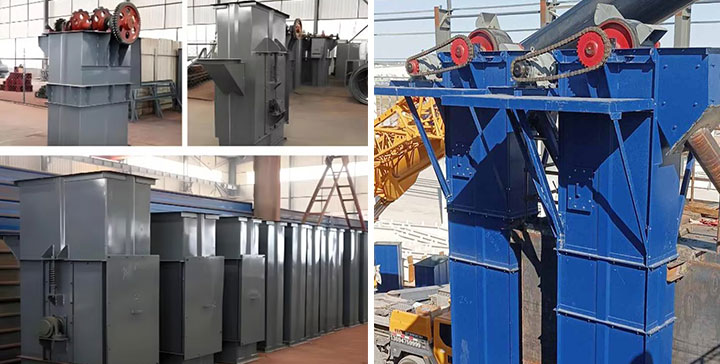
Loading and unloading carbon black requires machinery constructed to contain fine dust and resist abrasion. This vertical bucket elevator isolates the mechanical transmission components from the material flow, preventing premature mechanical failure and maintaining workshop air quality. In addition to the vertical bucket elevator, customized engineering designs can link these units with horizontal screw conveyors to create a sealed, seamless loading and unloading system, allowing carbon black to flow smoothly through every stage of the plant layout.
Sugested Products
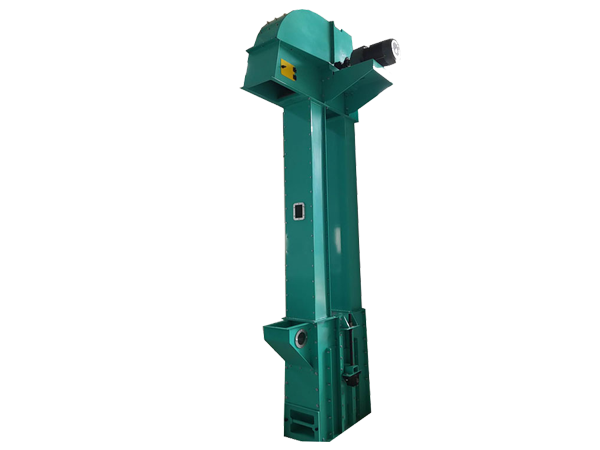
Small Bucket Elevator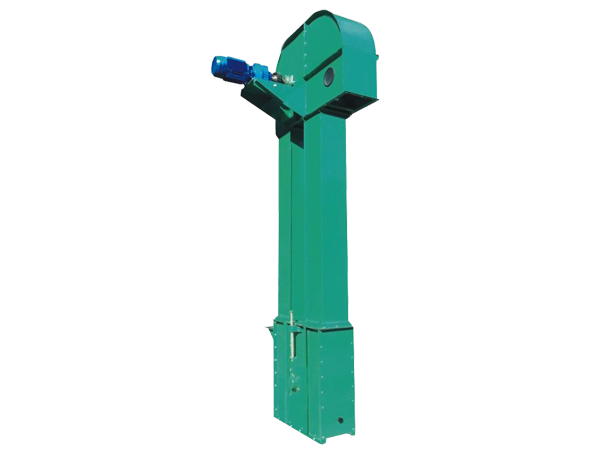
Belt Type Bucket Elevator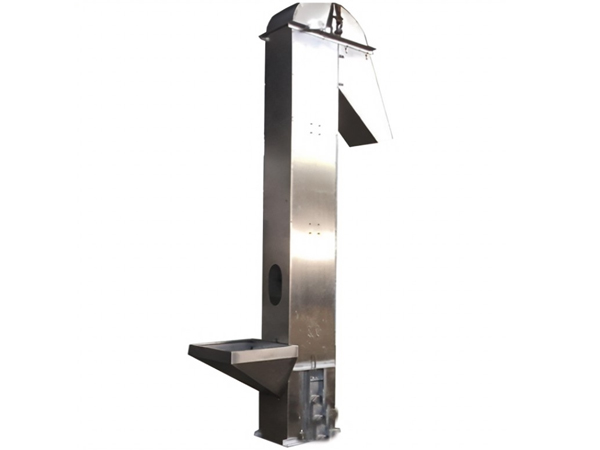
Flour Bucket Elevator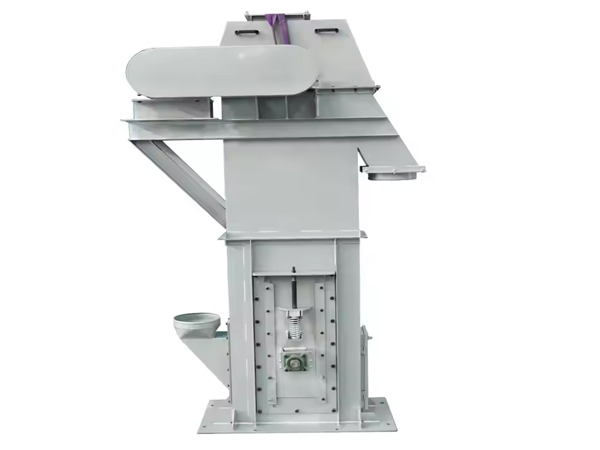
Cement Bucket Elevator