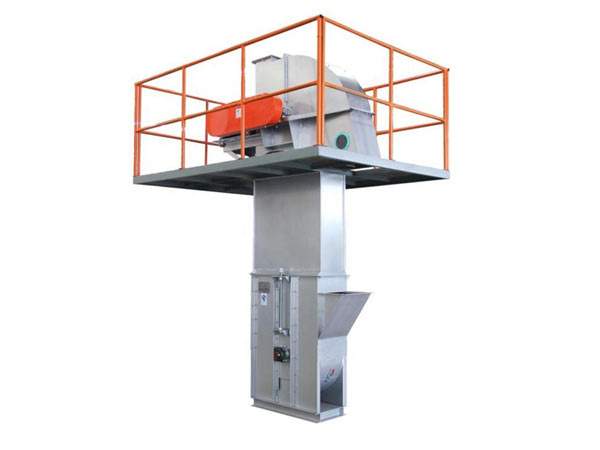
bucket elevator
It consists of a series of buckets attached to a belt or chain that move continuously in a cyclic manner, capable of moving vertically and transporting materials between different heights.
Maximum size of material: 25-45mm
Lifting height: 40 meters
Lifting capacity: 15-800 cubic meters per hour
Application: A wide range of free-flowing materials with different characteristics can be handled. Lightweight, fragile, heavy and abrasive materials can all be transported using bucket elevators.
Product introduction of bucket elevator
Bucket elevator, also called bucket elevator conveyor, is a conveying system that vertically lifts bulk materials such as grain, fertilizer and other granular or powdered materials. It consists of a bucket connected to a chain or belt that rotates around a sprocket or pulley, allowing the bucket to move vertically and transport materials between different heights.
Bucket elevators can handle a variety of materials, from grains and powders to larger bulk items. Capacity varies depending on the design. Buckets are usually made of materials such as plastic, metal or rubber to hold and transport bulk materials.
Types of bucket elevator
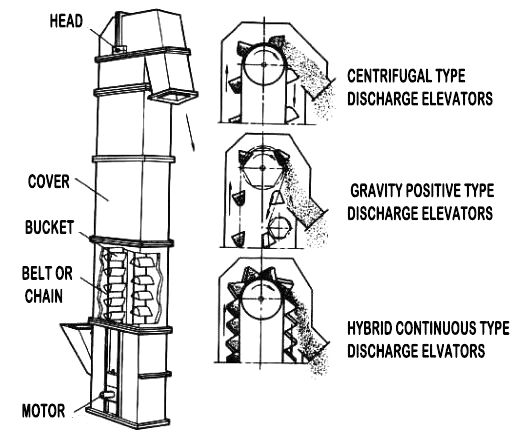
Centrifugal bucket elevator: This is the most common type and is ideal for handling heavy, abrasive materials. Centrifugal force is used to discharge the material from the bucket, making it suitable for smooth and fast processing.
Continuous bucket elevator: This type of elevator is designed for gentle handling of fragile materials. They operate at lower speeds and are often used in the food processing industry where material degradation is a concern.
Positive discharge bucket elevator: Used for materials that tend to stick or are difficult to discharge. They are designed with features to prevent material buildup and ensure smooth discharge.
-
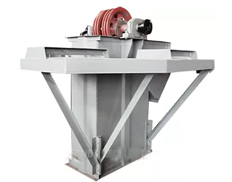
It uses belt as the transmission device, which is suitable for conveying light materials and granular materials, such as grain, feed, etc. It runs smoothly, has low noise and is relatively easy to maintain.
-
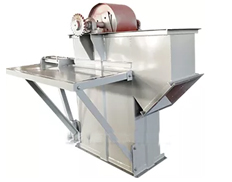
It uses plate chain or chain as the transmission device, which is suitable for conveying heavy materials, high-temperature materials or easily abrasive materials, such as cement, coal, limestone, etc. It has a strong and durable structure and is suitable for harsh environments.
-
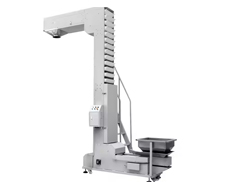
Arranged in a "Z" shape, it can realize horizontal and vertical transportation, with a low product damage rate. It can unload at a single point or multiple points, and is suitable for material supply for weighing/packaging lines/batch/color sorting.
How does the bucket elevator work?
A bucket elevator works on a simple principle of vertical transportation of bulk materials using buckets attached to a rotating chain or belt. Here is how a bucket elevator typically operates:
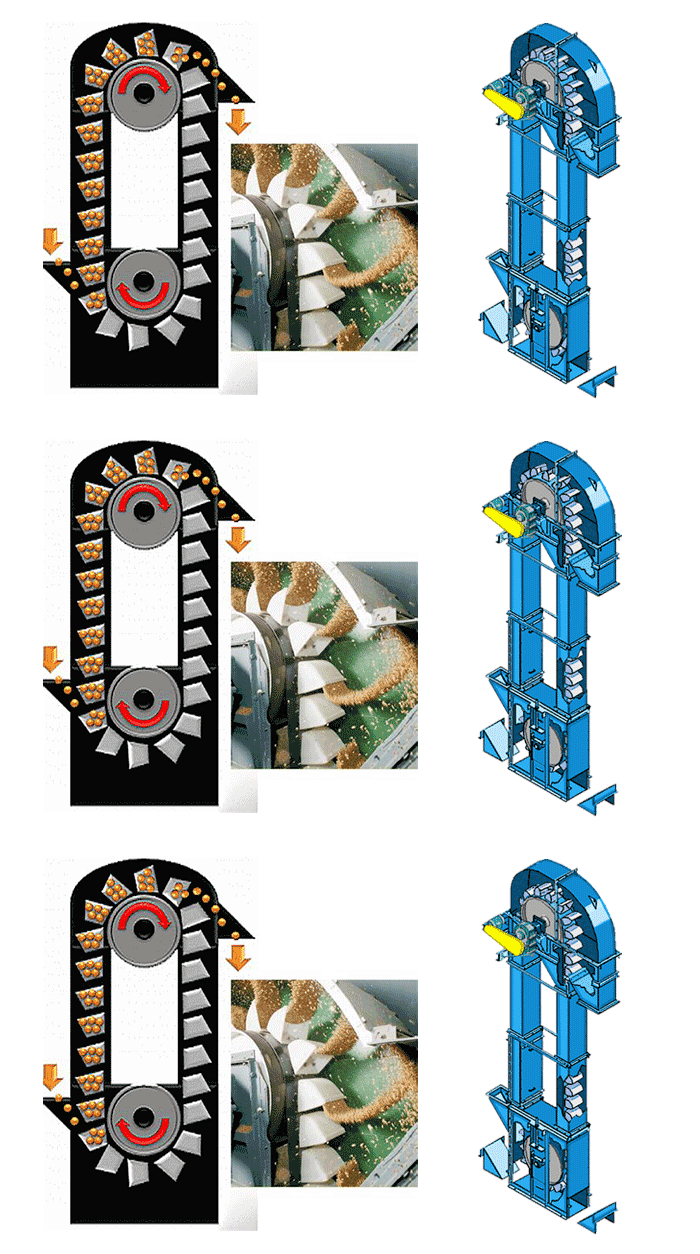
Bulk materials to be transported are fed into hoppers at the bottom of an elevator. The hoppers are connected to a continuously circulating chain or conveyor belt. As the chain or conveyor belt moves, the hoppers are lifted vertically. At the top of the elevator, the hoppers tilt, unloading the material into a chute, conveyor, or other handling system. The material is then transported away for further processing or storage. After unloading, the empty hoppers continue to circulate and descend to the bottom to be loaded with more material.
Video
Advantage
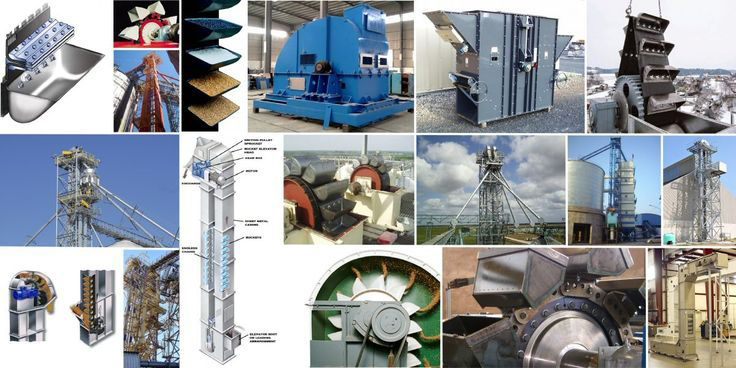
Compared to horizontal conveying equipment such as belt conveyors or chain conveyors, bucket elevators are better suited for handling vertical material conveying needs. Bucket elevators are suitable for various material types, including granules, powders, and lumps. Compared to other conveying equipment, bucket elevators are more flexible in handling different types of materials. Due to their vertical conveying design, bucket elevators save significant space, making them particularly suitable for work environments with limited space. Bucket elevators have a simple and robust structure, stable and reliable operation, and reduced maintenance and failure rates. Elevators can be integrated with automation systems to achieve automatic material conveying and control, improving the automation level of production lines.
| project | Vertical Screw Feeder | Vertical Bucket Elevator | Climbing Belt Conveyor |
| Floor area | the smallest | smaller | maximum |
| Delivery angle | 90° | 90° | Generally used for inclined conveying below 70° |
| Delivery capacity | good | excellent | good |
| Suitable material | granular or powdery material | Dry bulk material, no special requirements | Parcels and other large-volume products or fruit and vegetable foods, etc. |
| Advantage | Small footprint, no dust flying | Capable of substantial vertical lift of 40m | Simple structure, the least cost among similar lifting and conveying products |
| shortcoming | Stricter requirements on the materials to be transported | The price is higher, and high-value or large-volume production can achieve the best cost performance | Not suitable for conveying powder or fine particles, not recommended for vertical conveying |
Technical Parameters
| Model | Max feed size(mm) | Capacity(T/H) | Lifting speed(m/s) | Belt width(mm) | Lifting height(m) |
| TD160 | 25 | 5.4-16 | 1.4 | 200 | <40 |
| TD250 | 35 | 12-35 | 1.6 | 300 | |
| TD315 | 45 | 17-40 | 1.6 | 400 | |
| TD400 | 55 | 24-66 | 1.8 | 500 | |
| TD500 | 60 | 38-92 | 1.8 | 600 | |
| TD600 | 70 | 85-142 | 2 | 700 |
Bucket elevator structure
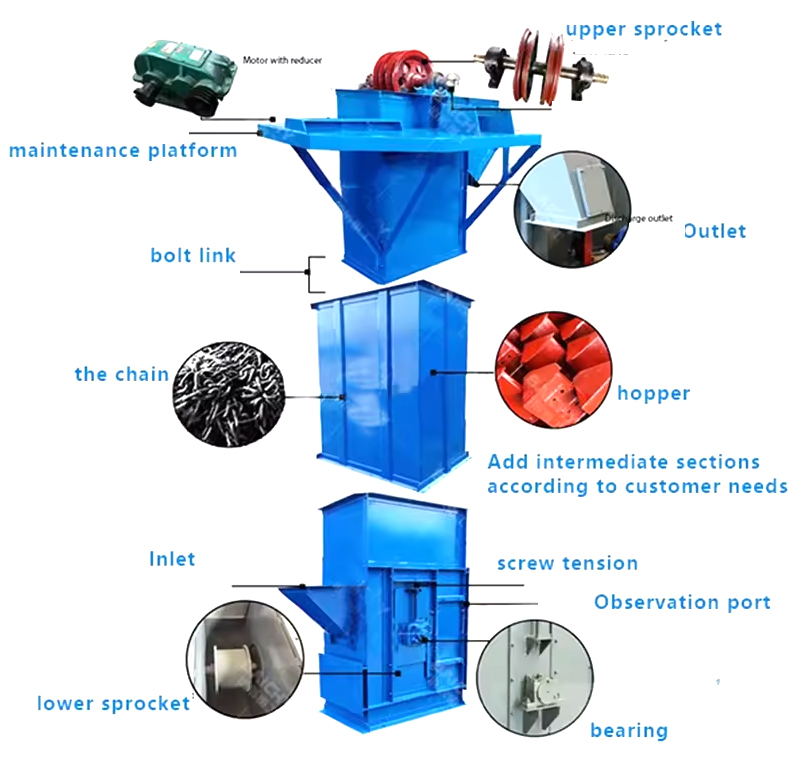
The structure of a bucket elevator includes a chain or belt, a head pulley or sprocket, a bottom pulley or sprocket, a drive motor, a loading shoe, and a discharge port. The chain or belt acts as the drive mechanism, moving the buckets up and down. Chains are typically used for heavy-duty applications, while belts are suitable for light-duty applications. The head pulley or sprocket guides the chain or belt to turn at the top of the elevator, while the bottom pulley or sprocket guides it to turn at the bottom. The drive motor provides power to the chain or belt, thus lifting the material. The loading shoe is where material enters the bottom bucket of the elevator, and the discharge port is for material to exit from the top bucket.
How to choose bucket elevator?
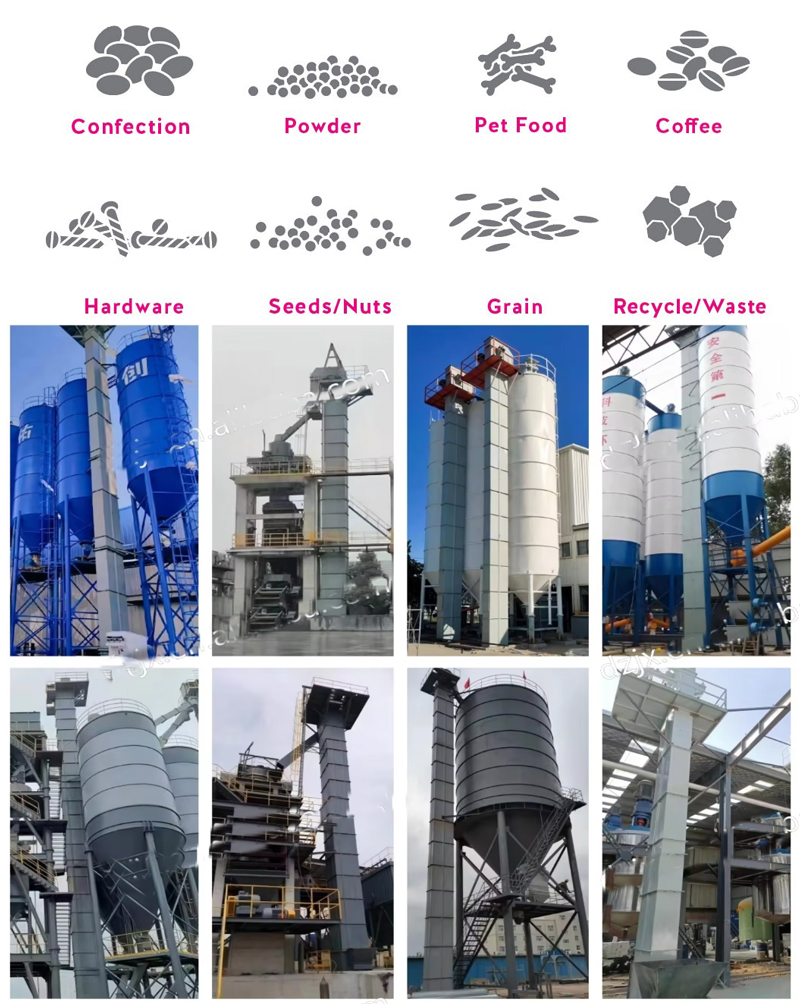
When selecting a bucket elevator, plate chains, ring chains, or belts can be chosen as the traction components based on the temperature, humidity, viscosity, particle size, bulk density, and abrasiveness of the material being conveyed. The lifting height of the equipment is determined in conjunction with the customer's actual foundation conditions and lifting requirements. The total height is the lifting height plus the height of the head and base. The drive unit uses a Y-series motor paired with a reducer with a backstop device. When the motor power is greater than 18.5KW, a hydraulic coupling is required. The bucket running speed is adjusted according to the material characteristics. The bucket speed for high-temperature and abrasive materials is less than 0.3 m/s, and the bucket speed for viscous materials is controlled between 0.5 and 1.2 m/s. The bucket capacity is calculated based on the horizontal bucket capacity, and the lifting capacity is calculated as 0.75% to 0.85% of the horizontal bucket capacity.
Application
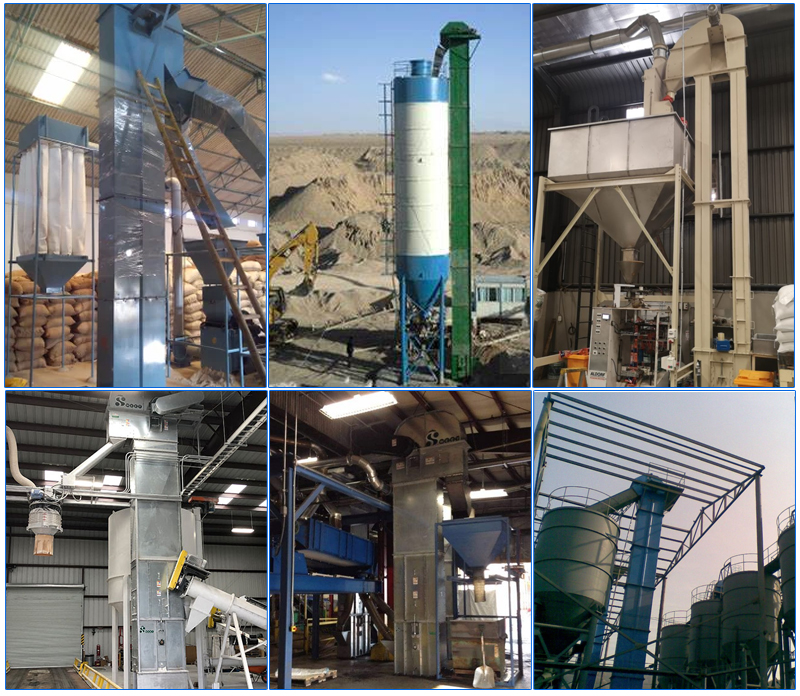
Bucket elevators are used in agriculture to transport grains, seeds, feed pellets, feed powder, and other materials. In the construction materials industry, they are used to transport powdered or lumpy raw materials such as cement and limestone. In the chemical industry, they are used to transport fertilizer raw materials such as urea, amino acids, and plastic granules. In the mining and metallurgical industry, they are used to transport raw materials such as coal, ore, metallic ore, slag, and other raw materials. In the food processing industry, they are used to transport sugar and sugar granules. In the packaging industry, they are used to transport packaging materials and cartons. In warehousing and logistics, they are used to transport goods to warehouses at different levels.
Solutions by Industry
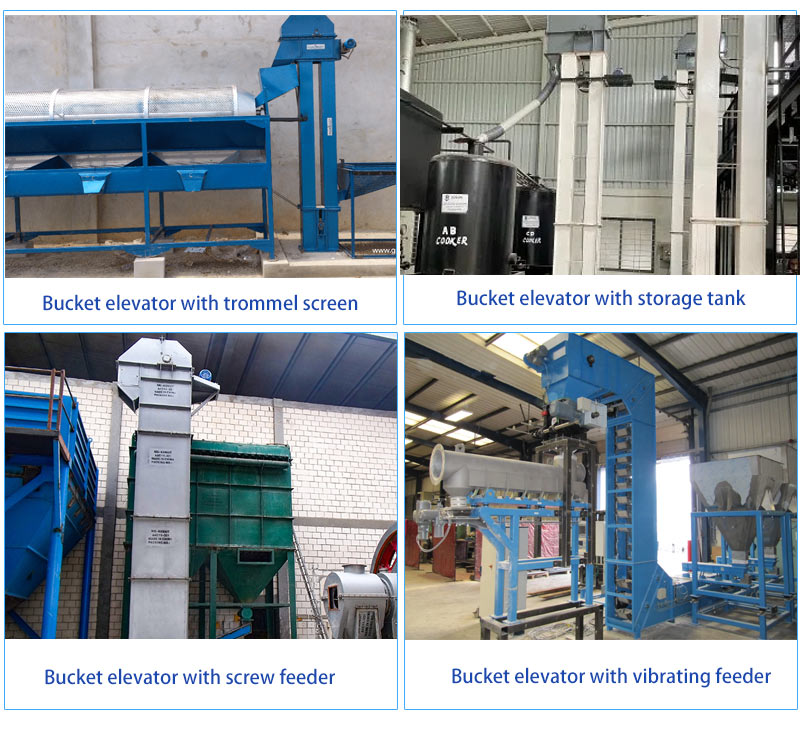
Sugested Products
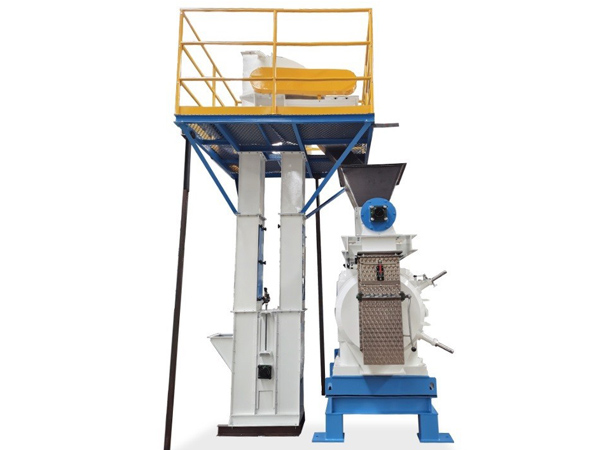
Rice Bucket Elevator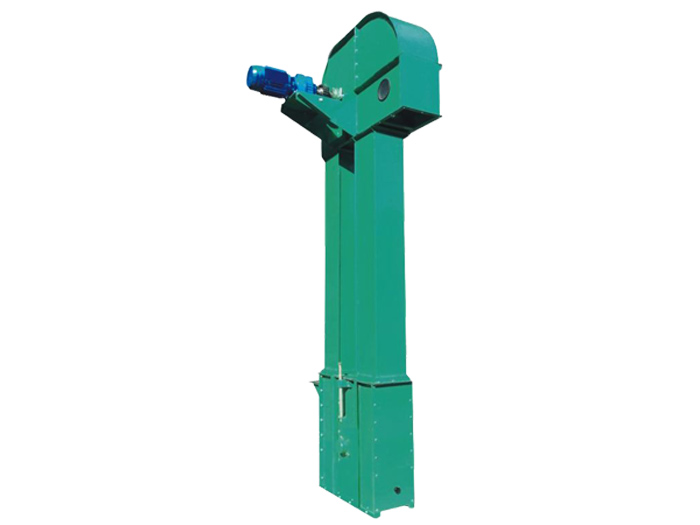
Clinker Bucket Elevator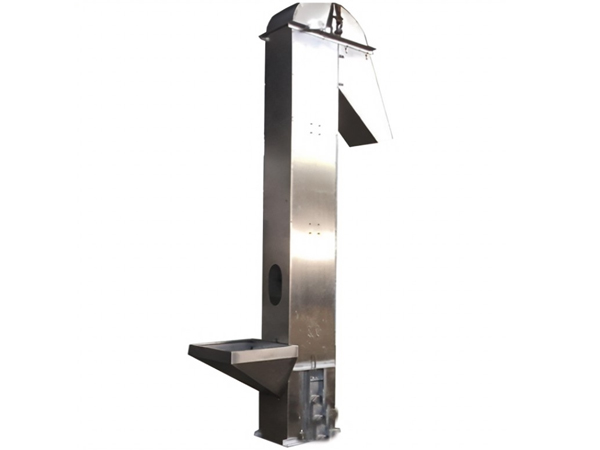
Flour Bucket Elevator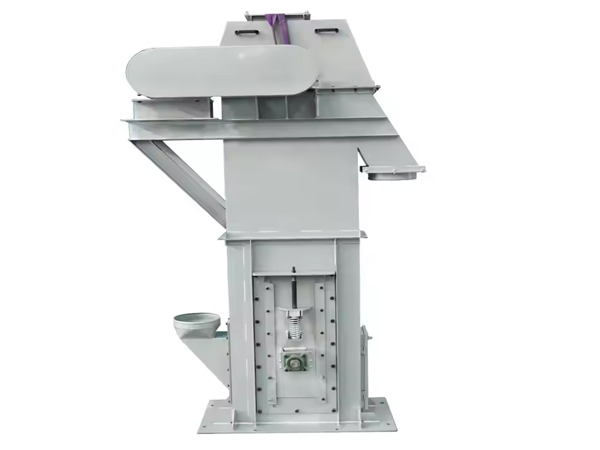
Cement Bucket Elevator