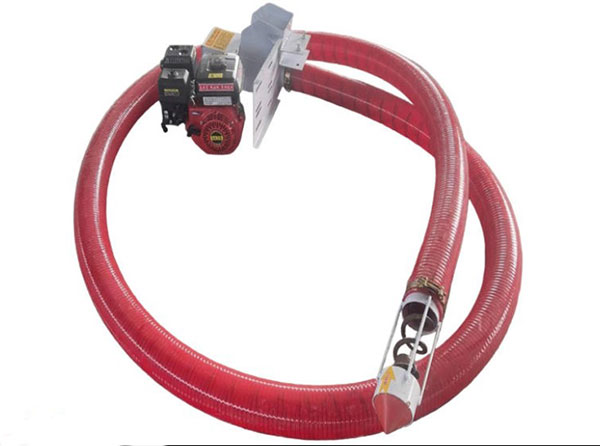
Flexible Screw Loader | Flexible Screw Conveyor Manufacturer
Conveying Capacity: 100–5,000 kg/h
Conveying Length: Up to 20 m
Tube Diameter: Ø50–168 mm
Motor Power: 0.75–7.5 kW
Suitable Materials: Powders, Granules & Pellets
What Is a Flexible Screw Loader?
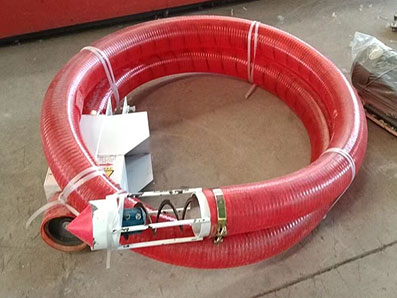
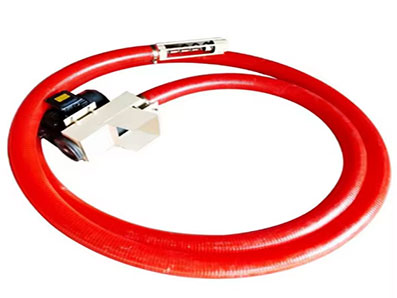
A Flexible Screw Loader is a bulk material handling system designed to transport powders, granules, pellets, and other free-flowing materials through an enclosed tube using a rotating flexible spiral. It is commonly used to transfer materials from a hopper, storage bin, or bag dumping station to mixers, packaging machines, extruders, or other processing equipment.
Depending on the material characteristics and production requirements, conveying capacities typically range from 100 kg/h to 5,000 kg/h, while conveying lengths can be designed from 3 to 20 meters with horizontal, inclined, or combined layouts.
A Flexible Screw Loader helps solve common production challenges such as repetitive manual feeding, unstable material supply, dust generated during handling, and interruptions between processing stages. By delivering materials continuously, it supports a smoother production process and reduces manual handling.
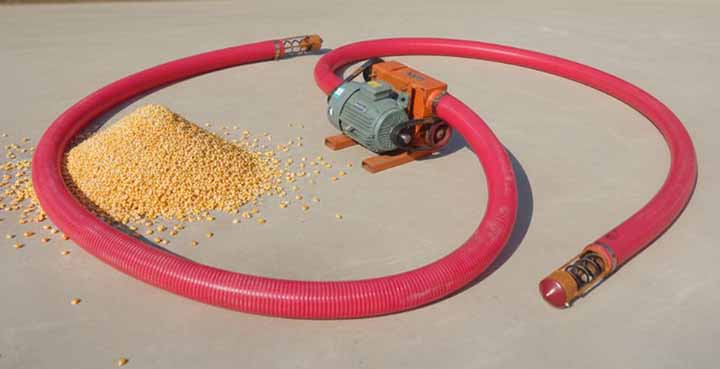
Why Choose a Flexible Screw Loader Instead of Manual Feeding?
Manual material handling may be suitable for small production volumes, but as output increases, frequent lifting and feeding can interrupt production and increase labor requirements. A Flexible Screw Loader provides continuous material transfer and enclosed conveying between processing equipment.
| Comparison | Manual Feeding | Flexible Screw Loader |
|---|---|---|
| Material Transfer | Manual handling | Continuous conveying |
| Labor Requirement | Frequent operator involvement | Routine monitoring |
| Feeding Consistency | May vary | Continuous material flow |
| Dust Control | Material may be exposed | Enclosed conveying |
| Vertical Conveying | Limited by manual handling | Designed for different lifting heights |
| Production Connection | Batch feeding | Continuous equipment connection |
What Materials Can Be Conveyed?
Flexible Screw Loaders are suitable for transporting a wide range of bulk materials, including flour, starch, milk powder, sugar, cocoa powder, coffee powder, seasoning powders, PVC powder, plastic pellets, resin granules, grains, animal feed ingredients, wood chips, mineral powders, and selected flake materials.
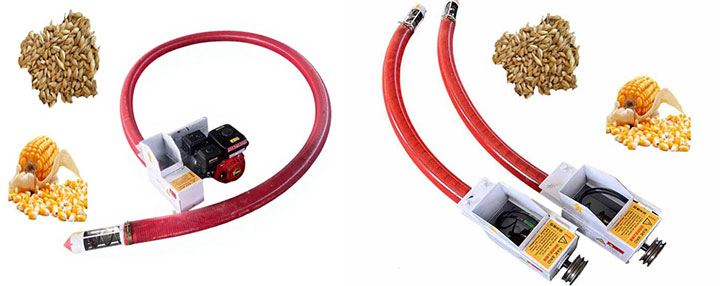
Different screw designs, tube diameters, and rotational speeds can be selected according to the flow characteristics and particle size of the material.
Flexible Screw Loader Types and Configurations
Different production lines require different equipment configurations.
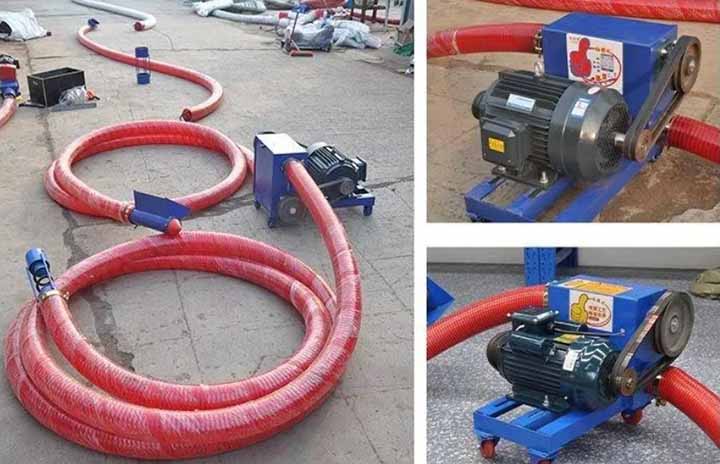
Common options include stationary models, mobile units, single-machine feeding systems, and centralized feeding systems serving multiple machines.
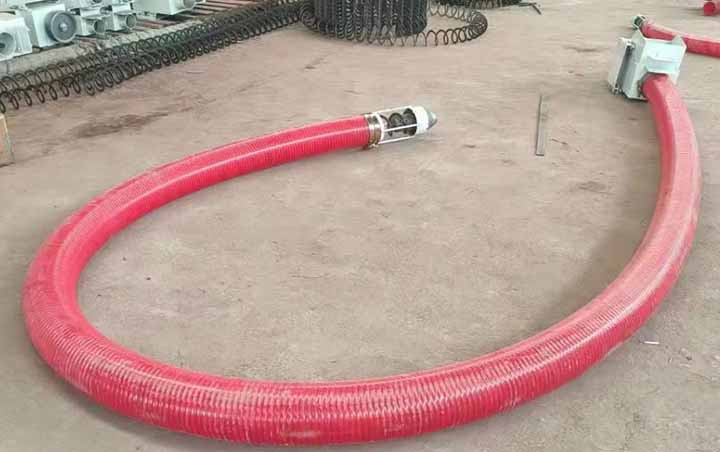
Hoppers are available in round or square designs and may include vibration assistance when handling difficult-flowing materials. Screw types, tube diameters, frame materials, and control systems can also be selected according to project requirements. Available controls include push-button operation, variable frequency drives (VFD), and PLC control.
How Does a Flexible Screw Loader Work?
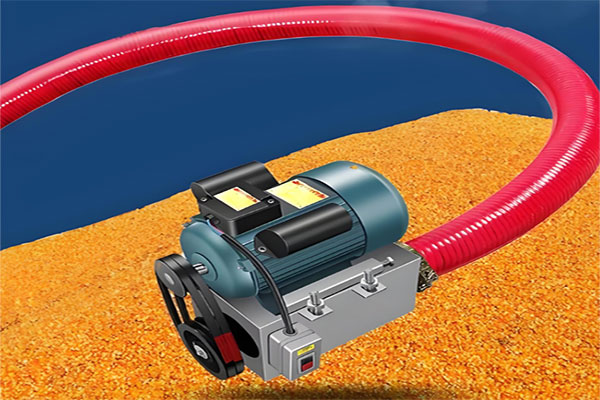
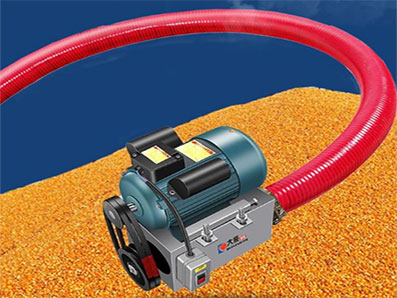
During operation, the motor drives the flexible spiral inside the conveying tube. Material enters the hopper and is continuously pushed through the enclosed tube toward the discharge outlet. The discharged material then feeds directly into downstream equipment such as mixers, storage bins, filling machines, or extruders.
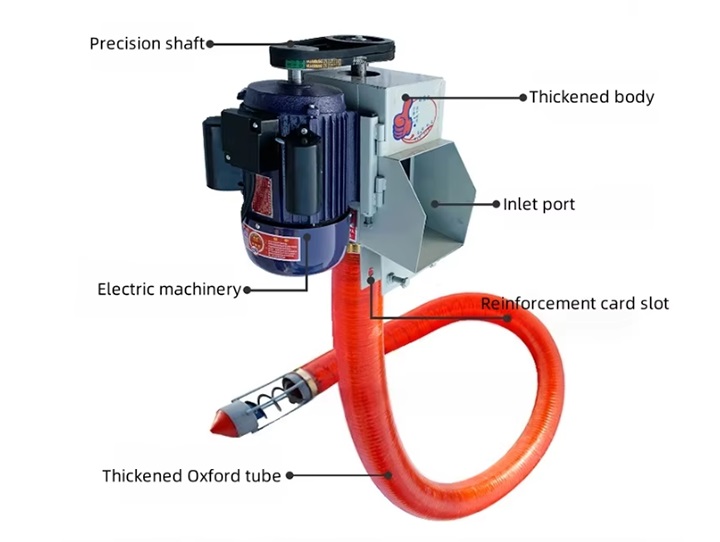
After production, the conveying tube can be cleaned or removed when required. Quick-release designs are also available to reduce maintenance time.
Typical Applications
Production Line Example 1
Bag Dump Station → Flexible Screw Loader → Mixer → Packaging Machine
Production Line Example 2
Storage Hopper → Flexible Screw Loader → Extruder → Cooling Line → Finished Product
Production Line Example 3
Bulk Bag Unloading Station → Flexible Screw Loader → Vibrating Screen → Buffer Hopper → Packing System
Technical Specifications
| Technical Specifications | Details |
| Conveying Capacity | 100–5,000 kg/h |
| Conveying Length | 3–20 m |
| Conveying Direction | Horizontal, Inclined, or Combined |
| Tube Diameter | 50–168 mm |
| Motor Power | 0.75–7.5 kW |
| Voltage | 220V, 380V, or Customized |
| Material of Construction | Carbon Steel, SS304, or SS316 |
| Control System | Push Button, VFD, or PLC |
| Feeding Method | Manual Loading, Hopper Feeding, or Bulk Bag Feeding |
Customization Options
Various optional configurations are available to match different production environments. These include mobile wheels, inspection windows, level sensors, vibration devices, quick-release clamps, dust covers, larger hoppers, magnetic separators, automatic start/stop control, customized support frames, and different inlet or outlet connection sizes.
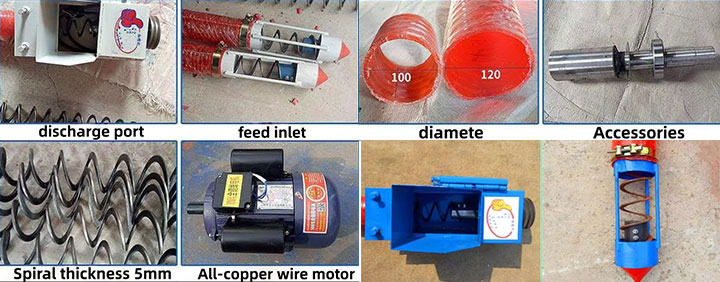
Providing information such as material type, conveying distance, lifting height, and required capacity allows the equipment to be configured according to the application.
Flexible Screw Loader vs Portable Screw Conveyor
| Comparison | Flexible Screw Loader | Portable Screw Conveyor |
|---|---|---|
| Conveying Path | Flexible routing | Straight conveying |
| Installation | Fixed or mobile | Usually mobile |
| Suitable Materials | Powders and granules | Granular materials |
| Layout Flexibility | Can route around obstacles | Straight-line layout |
| Conveyor Tube | Flexible tube | Rigid tube |
A Flexible Screw Loader is often selected when production lines have limited installation space or when materials need to be conveyed around existing equipment or structural columns. It is also suitable for enclosed powder conveying.
A Portable Screw Conveyor is commonly selected for applications where the conveyor needs to be moved between different loading points, especially for handling grains, pellets, or other free-flowing materials in temporary working locations.
How to Choose the Right Flexible Screw Loader for Your Material
Before requesting a quotation, it is helpful to prepare the following information.these details help determine the appropriate screw type, tube diameter, motor size, and overall equipment configuration.
- Material name and particle size
- Required conveying capacity per hour
- Horizontal conveying distance and lifting height
- Moisture content and flow characteristics
- Available power supply
- Continuous or intermittent operation
- Fixed or mobile installation
- Equipment connected before and after the conveyor
Frequently Asked Questions
1. What materials can a Flexible Screw Loader handle?
It can convey powders, granules, pellets, and selected flake materials. Different materials may require different screw designs and conveying speeds.
2. How far can a Flexible Screw Loader convey material?
Standard conveying lengths range from 3 to 20 meters. Longer systems can be designed depending on the installation layout.
3. Will the conveyor damage plastic pellets or granules?
For pellet applications, the screw speed and conveying capacity can be adjusted to reduce material breakage during transport.
4. How much does a Flexible Screw Loader cost?
The price depends on conveying capacity, conveying length, construction material, control system, and optional configurations. Providing your application details allows an accurate quotation to be prepared.
5. What maintenance does a Flexible Screw Loader require?
Routine maintenance includes checking the motor, flexible screw, bearings, and conveying tube for wear. Cleaning intervals depend on the type of material being conveyed and operating frequency.
Conclusion
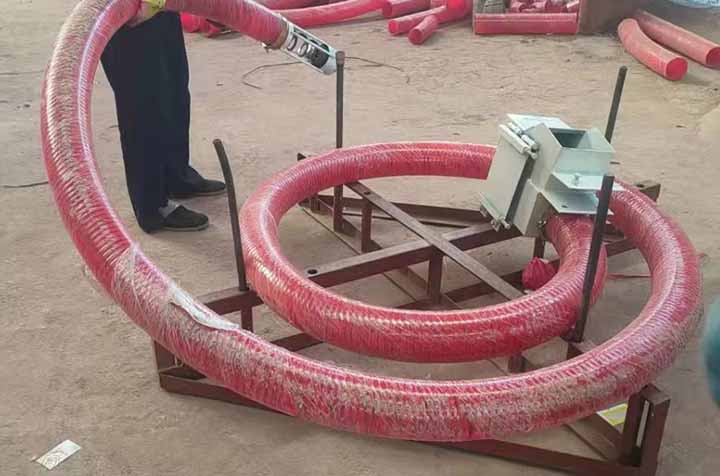
A Flexible Screw Loader provides continuous conveying for powders, granules, and other bulk materials while connecting different stages of a production line. It can be configured according to material characteristics, conveying distance, installation space, and production capacity. Supplying detailed project information allows a suitable conveying solution to be developed for your application.