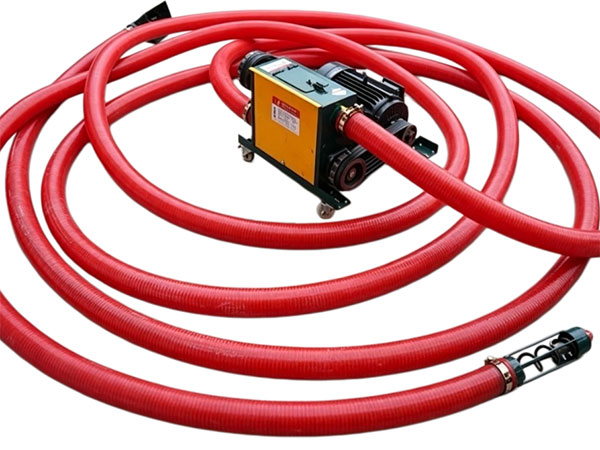
Flexible Spring Conveyor
Flexible spring conveyors are suitable for conveying bulk materials such as flour, sugar, milk powder, coffee beans, rice, seasoning powder, plastic granules, calcium carbonate powder, titanium dioxide, and pet food.
Conveying capacity: 0.5-25 tons/hour
Horizontal conveying distance: 12-15 meters
Vertical conveying distance: 2-6 meters
Voltage: 220V/380V
About Flexible Spring Conveyor
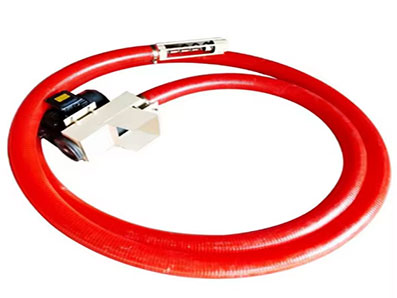
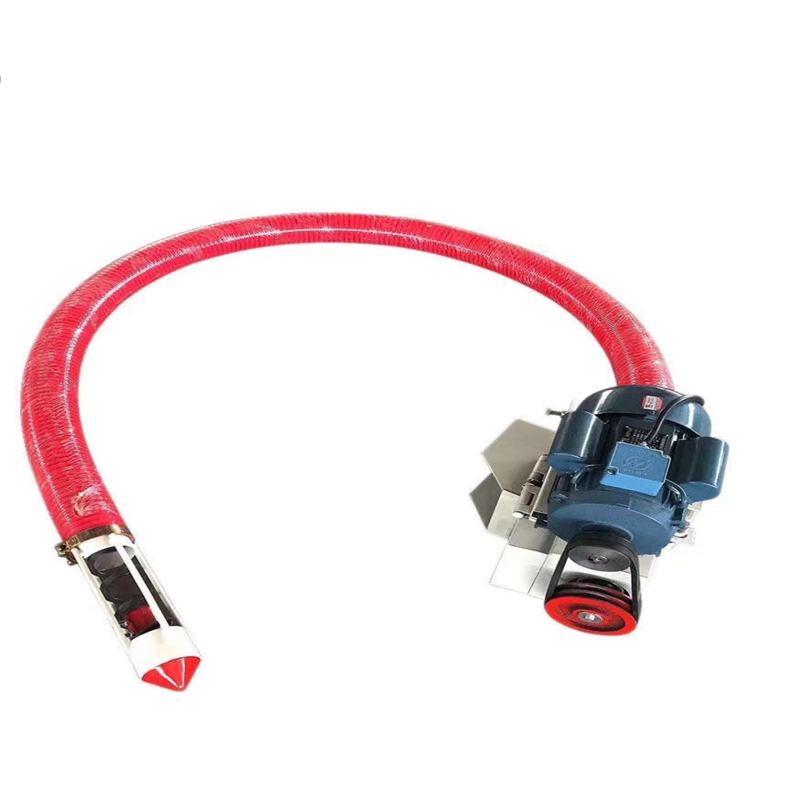
The Flexible Spring Conveyor is a device capable of conveying materials at various angles, including horizontal, inclined, curved, and vertical. The pipe diameter ranges from 2.5 inches to 8 inches (63mm to 220mm). Conveying capacity ranges from 0.5 to 25 t/h, suitable for conveying powdery and granular materials.
-
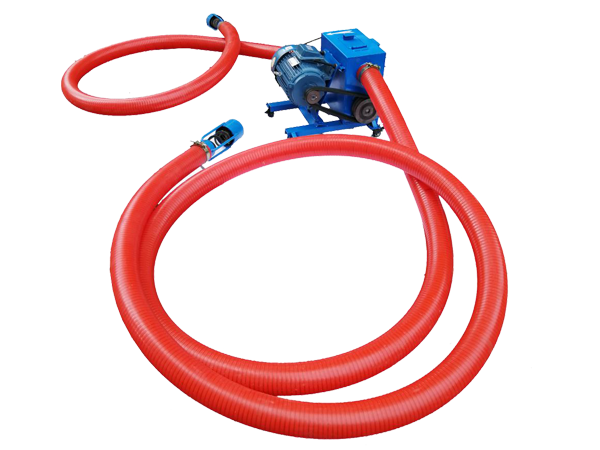
The machine's flexibility allows for versatile use; it can be handheld, mounted on a truck, or placed horizontally on the ground. The horizontal conveying distance is approximately 12 to 15 meters; for longer distances, multiple stages can be connected in series. The vertical lifting height is typically within 6 meters.
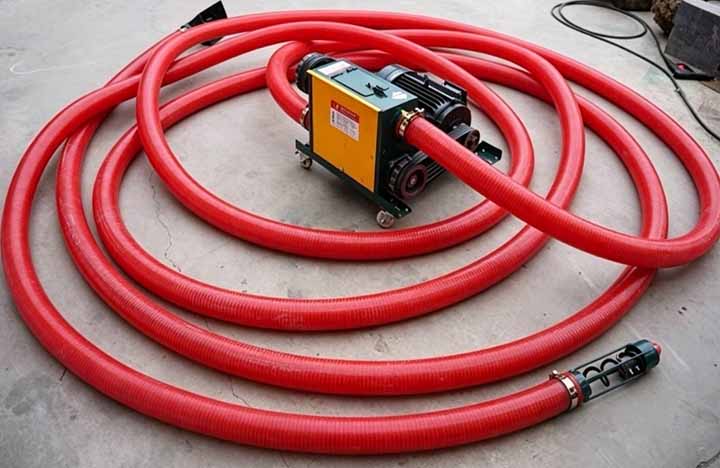
Flexible Spring Conveyor Components
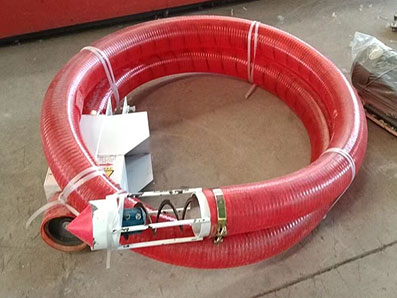
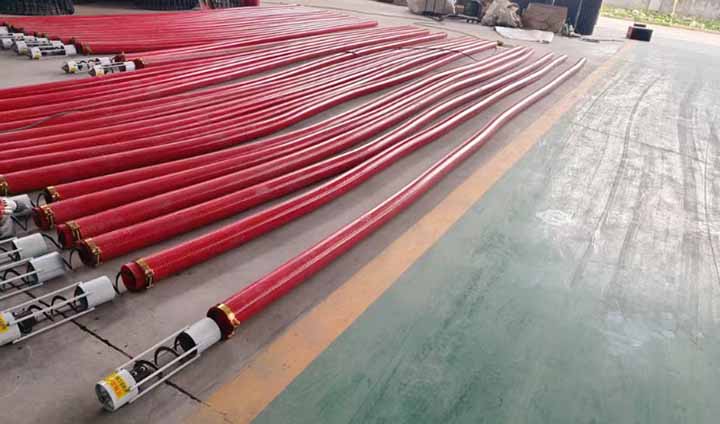
The device is relatively simple in composition, mainly consisting of a motor, conveying hose, and flexible auger. The motor is usually installed at the discharge end, providing power for the entire machine. The built-in flexible rotating spring is typically made of carbon steel or stainless steel, and is available in flat and round types. Flat springs offer greater thrust and are suitable for conveying powders; round springs are suitable for conveying granular materials. The conveying pipe uses polyethylene or PVC plastic pipe, which is wear-resistant and flexible. After pressing the machine's switch, material enters through the inlet. As the flexible spring rotates, it continuously propels the material towards the outlet, where it is finally discharged.
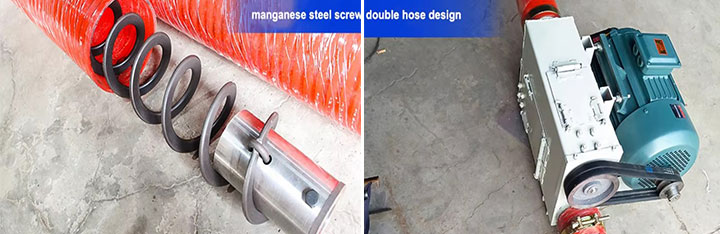
What are the advantages of using a flexible spring conveyor?
During material transport, the flexible piping and built-in spiral allow for bending and bypassing obstacles, adapting to available space. The absence of a central shaft makes it suitable for conveying materials prone to tangling or of varying particle sizes, reducing clogging issues. The conveying process occurs within a fully enclosed pipeline, minimizing material spillage and maintaining a clean factory environment. Cleaning the equipment after use is simple; just remove the flexible spring.
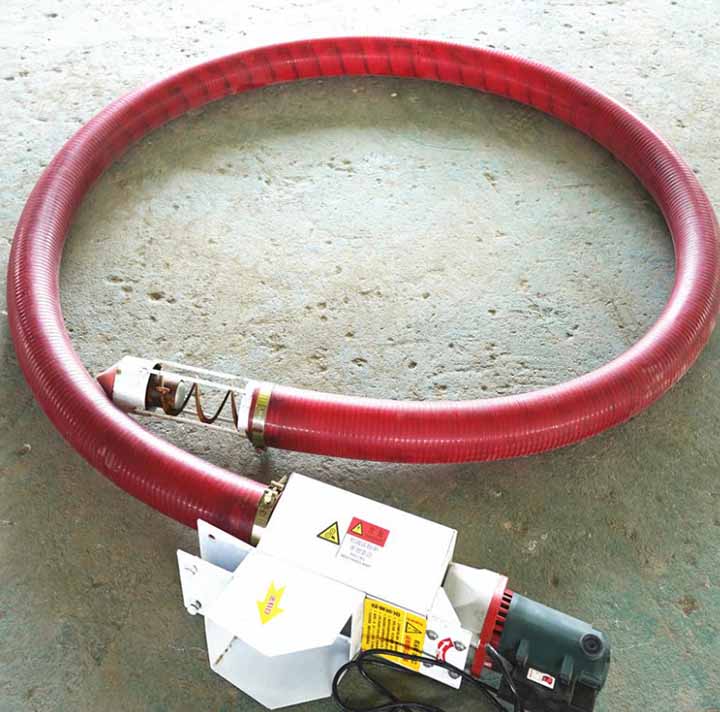
How to Use a Flexible Spring Conveyor
The Flexible Spring Conveyor can perform vertical conveying, such as feeding material from a ground-level hopper and feeding it into packaging machines, injection molding machine hoppers, mixers, or storage silos at higher locations. Due to the need to overcome material gravity during vertical transport, the equipment can only lift up to 6 meters.
This equipment is suitable for transferring materials between two workstations at the same horizontal level, such as allocating materials between two parallel production lines or pushing materials from a warehouse to the production workshop.
If there are concrete pillars or load-bearing walls obstructing the flow of materials in the factory, the equipment can also utilize its bending characteristics to transport materials sideways or overhead around these obstacles.
If the location of the conveyed material is not fixed, the flexible spring conveyor can be mounted on a wheeled trolley. When materials need to be conveyed, simply push the trolley to feed them.
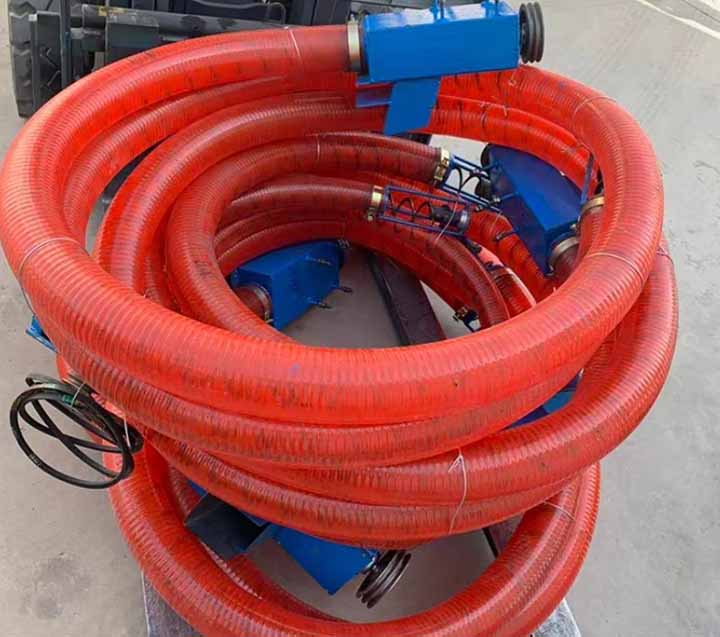
Flexible Spring Conveyor Model Parameter Table
| Tube diameter | length | Voltage | Power | Effectiveness | Weight |
| 100mm | 3 m | 220V | 3KW | 5-6 t | 43kg |
| 100mm | 4m | 220V | 3KW | 5-6t | 47kg |
| 100mm | 5m | 220V | 3KW | 5-6t | 51kg |
| 100mm | 6m | 220V | 3KW | 5-6t | 55kg |
| 100mm | 7m | 220V | 3KW | 5-6t | 62kg |
| 100mm | 8m | 220V | 3KW | 5-6t | 66kg |
| 100mm | 9m | 220V | 3KW | 5-6t | 70kg |
| 100mm | 10m | 220V | 4KW | 5-6t | 74kg |
| 100mm | 11m | 380V | 4KW | 5-6t | 82kg |
| 100mm | 12m | 380V | 4KW | 5-6t | 86kg |
| 120mm | 3m | 220V | 3KW | 7-8t | 48kg |
| 120mm | 4m | 220V | 3KW | 7-8t | 52kg |
| 120mm | 5m | 220V | 3KW | 7-8t | 56kg |
| 120mm | 6m | 220V | 3KW | 7-8t | 60kg |
| 120mm | 7m | 220V | 4KW | 7-8t | 60kg |
| 120mm | 8m | 220V | 4KW | 7-8t | 71kg |
| 120mm | 9m | 220V | 4KW | 7-8t | 75kg |
| 120mm | 10m | 220V | 4KW | 7-8t | 79kg |
| 120mm | 11m | 380V | 4KW | 7-8t | 89kg |
| 120mm | 12m | 380V | 4KW | 7-8t | 93kg |
| 100mm | 20m | 380V | 7.5KW | 5-6t | 150kg |
| 100mm | 25m | 380V | 7.5KW | 5-6t | 170kg |
| 120mm | 20m | 380V | 7.5KW | 6-7t | 180kg |
| 120mm | 22m | 380V | 7.5KW | 6-7t | 200kg |
How to Choose a Flexible Spring Conveyor?
When selecting, if the particle diameter of the conveyed material is <4mm, a small pipe diameter of approximately 75mm can be selected. If the diameter of the conveyed material is <6mm, a pipe diameter of approximately 110mm can be selected. For conveying capacities of 1.5-3 tons/hour, a 100mm pipe can be selected; for conveying capacities of 9-15 tons/hour, a 160mm pipe is required. The specific choice depends on a comprehensive consideration of the material characteristics, conveying capacity, and spatial layout.
How Much Does a Flexible Spring Conveyor Cost?
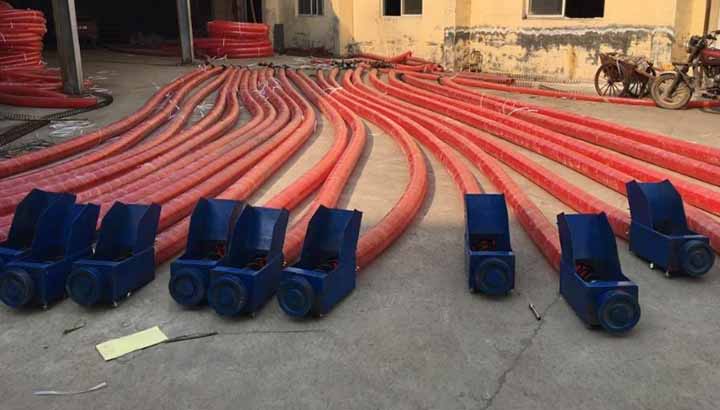
The price of a flexible spring conveyor ranges from $167 USD to $1600 USD. For models with a pipe diameter of 100mm, a conveying length of 3-15 meters, and a conveying capacity of 2-4 t/h, the price is around $167 USD. For models with a pipe diameter of 120mm and a conveying capacity of 8-12 t/h, the price is around $455 USD. When choosing a conveyor, you can compare the options based on five factors: material, conveying length and height, mobility, automation control, and customization.
What materials are suitable for conveying with a flexible spring conveyor?
Flexible spring conveyors can be used in the food, plastics, feed, and chemical industries to convey materials such as coffee beans, rice, resin powder, seeds, grains, poultry feed, urea granules, rubber granules, detergent powder, and sand.
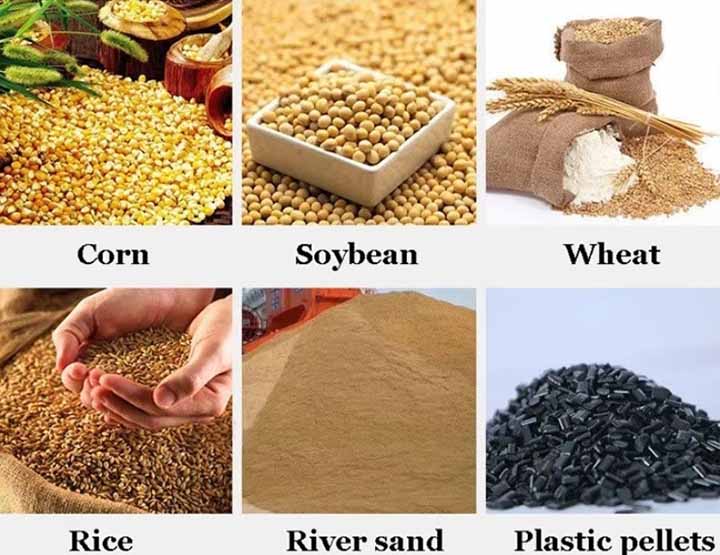
Flexible spring conveyors are suitable for conveying materials with low friction and a relatively soft texture, such as corn. The equipment offers greater flexibility than other conveying equipment and is cost-effective. It is a commonly used conveyor for short-distance material transport.