Classification of High-Angle Belt Conveyors
Tuesday December-16 2025 13:28:13
Classification of High-Angle Belt Conveyors according to the conveying method, conveyor belt structure, material characteristics, and conveying angle. High-angle belt conveyors are used for conveying at angles greater than ordinary horizontal belt conveyors, with angles ranging from 18° to 90°. Based on the conveyor belt structure and material holding method, high-angle belt conveyors are mainly divided into corrugated sidewall belts, patterned belts, pressed belts, and deep-groove high-angle belts.
Classification of High-Angle Belt Conveyors Type
High-Angle Belt Conveyors can be classified into several different types according to the characteristics of the conveyed material and applicable working conditions. The following describes four common types.
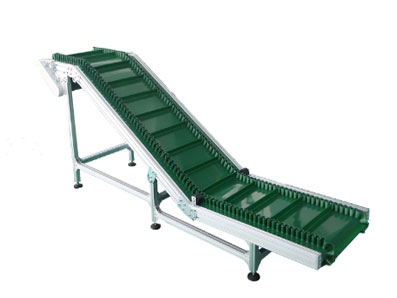
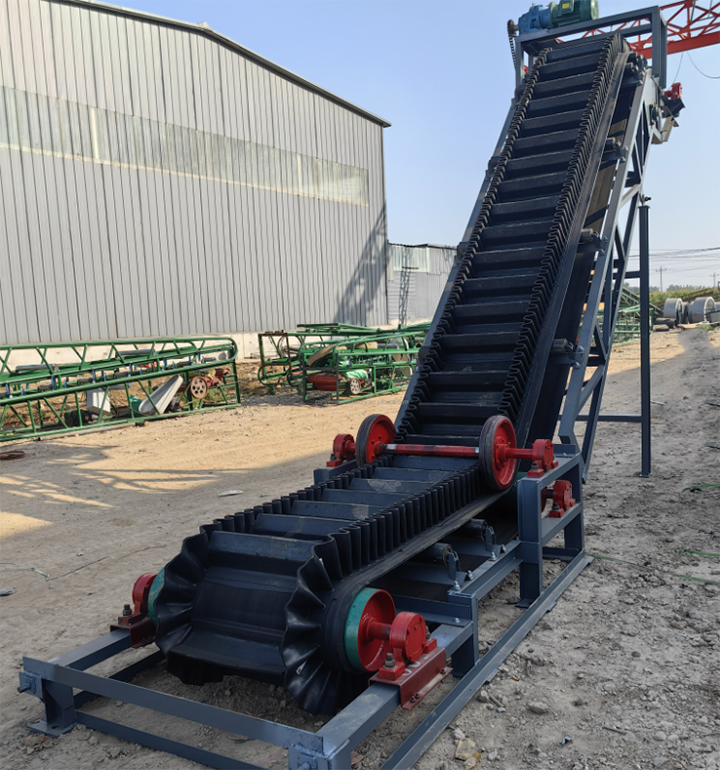
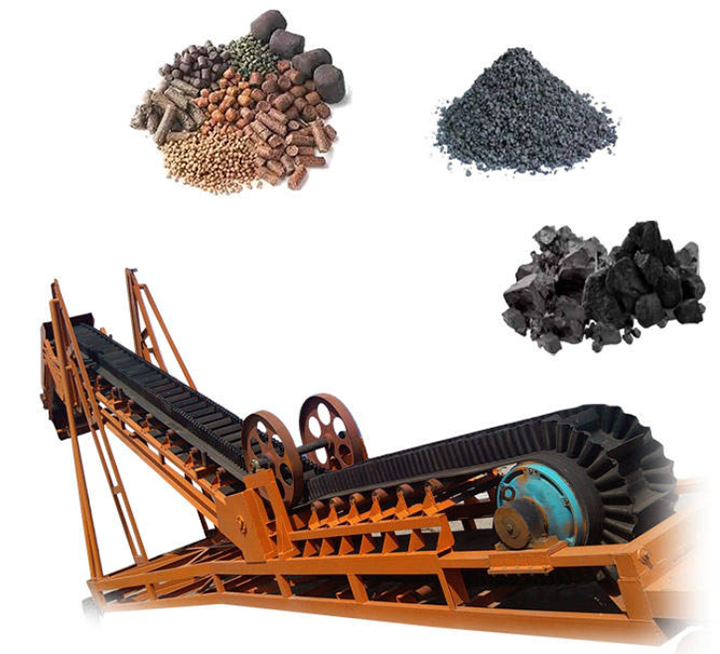
Corrugated Sidewall Belt Conveyors: Flexible corrugated sidewalls are bonded to both sides of a flat base belt, forming a box-shaped space with the central transverse partition, achieving self-support and anti-slip for the material. Compact structure, suitable for powdery, granular, and small lump materials such as ores, coal, and grains. Inclination angle range: 30°-90°. Conveying capacity is affected by diaphragm spacing and belt speed; single-unit conveying capacity can reach 3000 m³/h, conveying height up to 200 meters, and distance up to 3000 meters.
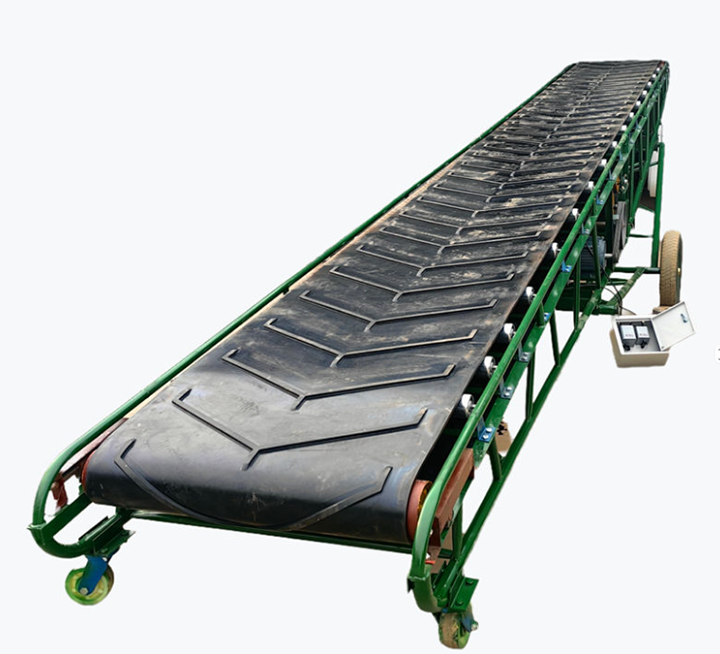
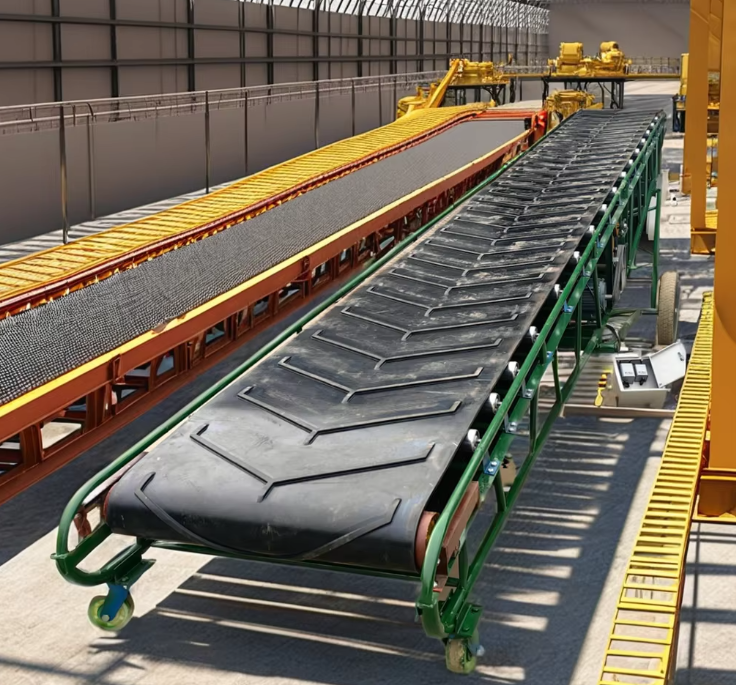
Patterned belt conveyor: Various raised patterns are molded or hot-vulcanized on the conveyor belt cover to increase frictional resistance between the material and the belt surface to prevent slippage. Simple structure, requiring only replacement of the special conveyor belt. Suitable for bagged materials or bulk materials with a certain cohesiveness, such as wet sand, clay bags, and fertilizers. Inclination angle range: 30°-45°. Due to its limited belt speed, conveying height is limited to within 50 meters, and distance generally does not exceed 200 meters.
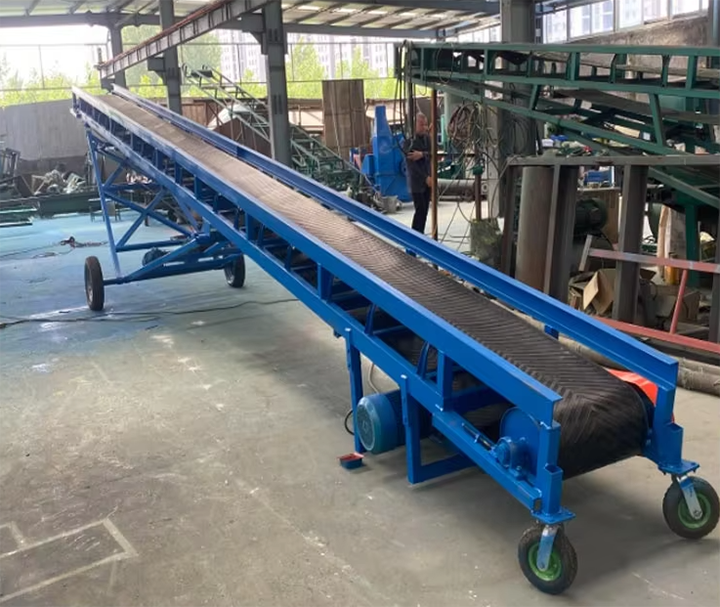
Pressure belt high-angle conveyor: Uses two synchronously running conveyor belts, clamping the material between them for conveying, and lifting the material through pressure. The material is completely enclosed, providing excellent dust and spill prevention. It can transport materials ranging from powder to large lumps such as cement, gravel, and municipal solid waste. The inclination angle ranges from 30° to 90°. Conveying capacity can be designed to exceed 5000 t/h, conveying height can reach over 100 meters, and distances can be varied, offering flexible layout options.
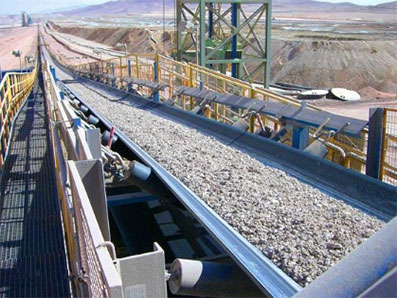
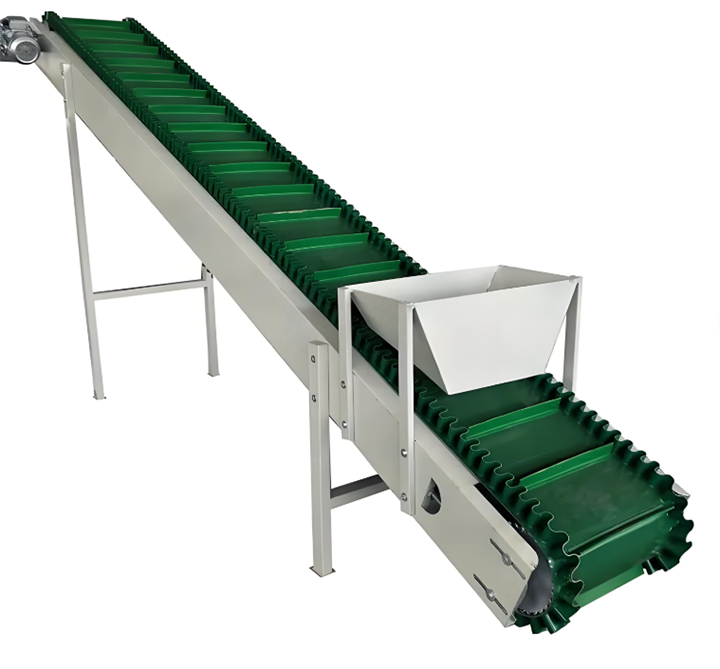
Deep-groove high-angle belt conveyor: Utilizing multi-section deep-groove angle idler rollers, the conveyor belt forms a deep groove shape, increasing the material wrap angle and thus enhancing lateral pressure and friction. Suitable for free-flowing granular bulk materials such as grain, fertilizer, and molding sand. The inclination angle ranges from 20° to 35°, the conveying height can reach 30 meters, and the conveying distance can exceed 100 meters.
Classification of High-Angle Belt Conveyors Technical Parameters
| Conveyor Type | Maximum Conveying Inclination | Belt Width (mm) | Conveying Capacity (t/h) | Conveying Distance (m) | Power (kW) | Suitable Materials |
| Corrugated Sidewall Belt Conveyor | 35°-45° | 400-1200 | 50-1000 | 20-100 | 5-55 | Powder, Fine-grained Materials |
| Patterned Belt Conveyor | 30°-40° | 500-1000 | 80-1500 | 30-150 | 7-75 | Block, Granular Materials |
| Press Belt High-Inclination Conveyor | 45°-60° | 500-1200 | 100-2000 | 20-100 | 15-110 | Powder or Fine-grained Materials |
| Deep Trough High-Inclination Belt Conveyor | 30°-45° | 600-1400 | 150-2500 | 30-150 | 18-132 | Block, Granular Materials |
Advantages and disadvantages of classifying High-Angle Belt Conveyors
The following outlines the advantages and disadvantages of four types of High-Angle Belt Conveyors classification from the perspectives of investment, operation, and maintenance. This helps to provide a more comprehensive understanding of the equipment and facilitate the selection of the appropriate model based on actual needs.
Corrugated Sidewall Conveyors: Advantages include the strongest inclination angle capability and the smallest space occupation. Disadvantages include high conveyor belt cost, difficult cleaning, and lower belt speed. They have low energy consumption and are suitable for general working conditions.
Patterned Belt Conveyors: Advantages include the lowest modification cost and simple maintenance. Disadvantages include limited inclination angle capability, narrow material adaptability, and easy wear of the pattern.
Pressure Belt Conveyors: Advantages include good sealing performance, wide material adaptability, and large conveying capacity. Disadvantages include complex structure, high equipment investment, extremely high requirements for synchronization, and the highest maintenance difficulty.
Deep Groove Conveyors: Advantages include compatibility with general conveyor components, high conveying efficiency, and suitability for long distances. The disadvantages are limited tilt angle, high resistance due to the large number of idlers, and high energy consumption.
Application scenarios of classification of High-Angle Belt Conveyors
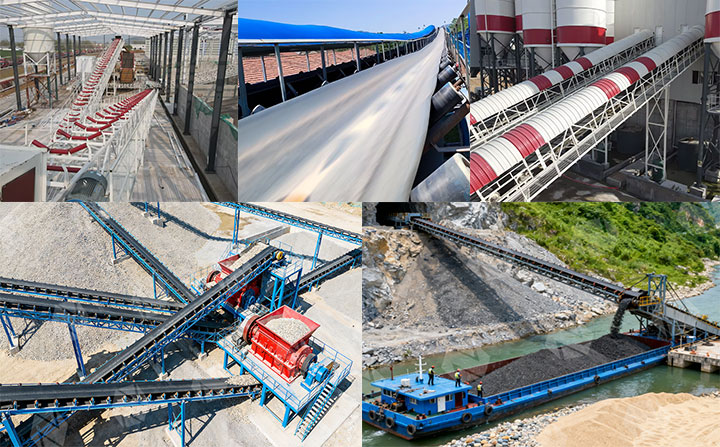
High-Angle Belt Conveyors are suitable for vertical or steep slope lifting in space-constrained situations, such as material transport from underground mines to the surface, between narrow factory floors, and within tunnels; they are also suitable for processes requiring large-angle transfer, such as the connection between crushing and screening, and from drying to storage in mineral processing plants, chemical plants, and cement plants; they are suitable for scenarios with strict material handling requirements, such as the closed-loop transport of easily dusty materials like waste treatment plants and power plant desulfurization gypsum using belt conveyors; and they are used in bulk cargo terminals and warehousing logistics scenarios for transfer from ship holds to storage yards and from storage yards to silos, saving floor space.
Case Study on the Classification of High-Angle Belt Conveyors
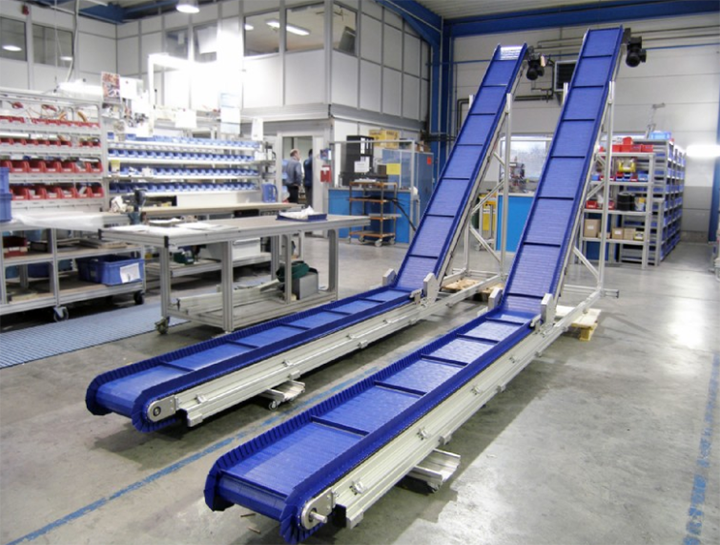
High-Angle Belt Conveyors have applications in agriculture and mineral development, and two scenarios are introduced below. A large cement production line needs to vertically lift limestone from the bottom of the stockpile at an 85° angle to the raw meal grinding head silo. A corrugated sidewall belt conveyor with an 85° angle, a lifting height of 45 meters, and a horizontal length of 50 meters was selected, solving the problem of limited space. The conveying capacity is 800 t/h, ensuring continuous and stable raw meal supply. At a grain terminal, bulk grain after unloading needs to be conveyed at a 40° angle to a belt conveyor on an elevated trestle. Based on the grain's flowability and breakage prevention requirements, a deep-trough high-angle belt conveyor was selected. With an angle of 38°, a single machine length of 120 meters, a lifting height of 75 meters, and a conveying capacity of 1500 t/h, it achieves low breakage rate transfer.
High-Angle Belt Conveyors are classified into various types based on structure, material, and conveying angle, each with its own characteristics. Suppliers are distributed across industries such as mining machinery, metallurgical equipment, port machinery, and building materials equipment, primarily from countries such as China, Germany, the United States, and Italy. European and American suppliers have technological advantages in high-end belt conveyors and complex system integration, while Chinese suppliers such as Dahan Machinery have design and manufacturing capabilities and cost advantages in the fields of corrugated sidewall conveyors and deep trough conveyors. Their products have been applied in mining, power, and port industries at home and abroad.