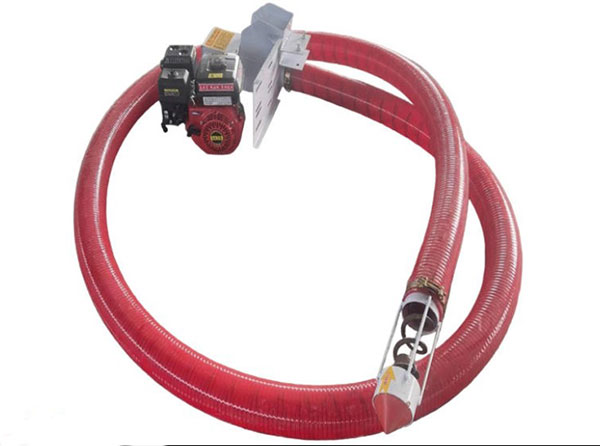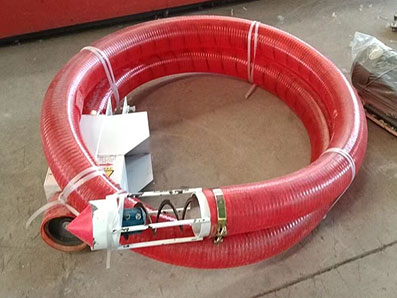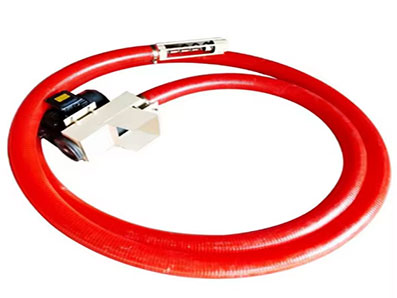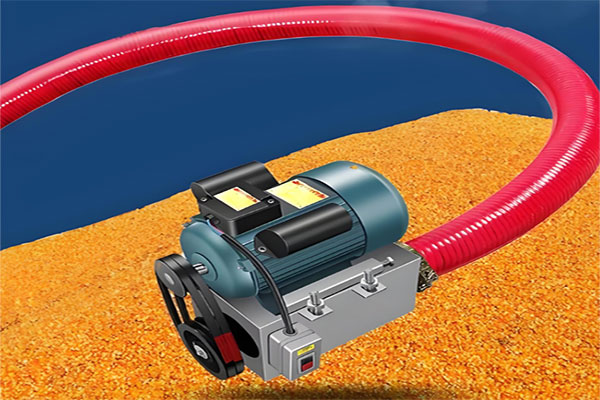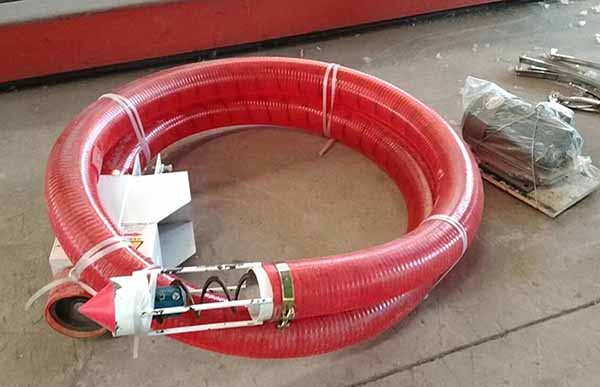
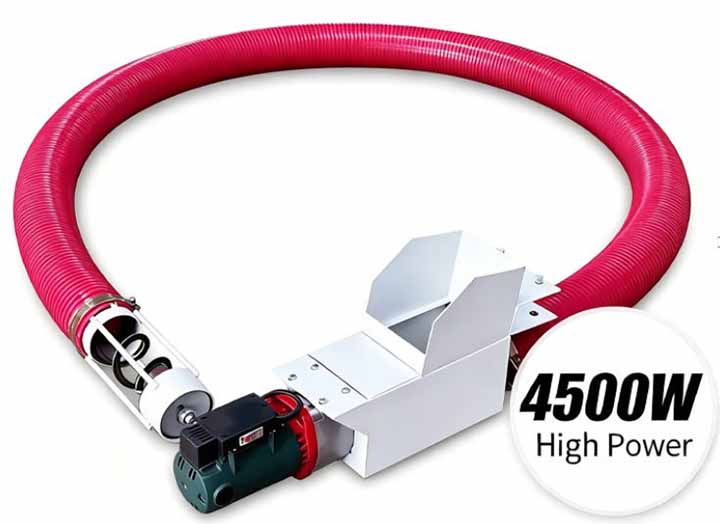
Electric Flexible Screw Conveyor
Conveying Capacity: 100 kg/h–20 t/h
Conveying Distance: Up to 25 m
Tube Diameter: 60–168 mm
Motor Power: 0.75–7.5 kW
Conveying Direction: Horizontal, Inclined & Vertical
What Is an Electric Flexible Screw Conveyor?
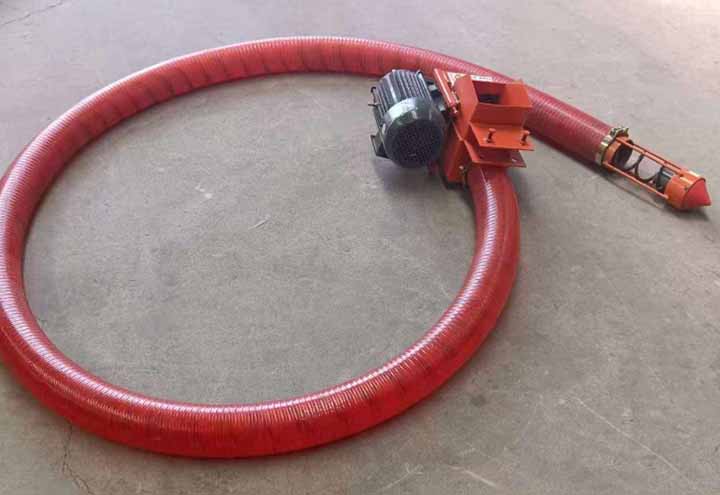
An Electric Flexible Screw Conveyor is a conveying system that uses an electric motor to drive a flexible screw inside an enclosed tube for the continuous transfer of powders and granular materials. Unlike a conventional rigid screw conveyor, the flexible screw can follow curved tube routes, allowing the conveyor to be installed horizontally, at an incline, or vertically according to the available plant layout. It is suitable for conveying flour, cement, plastic pellets, grains, and many other bulk materials.
-
For free-flowing powders and granules, the conveyor provides stable material movement. For materials that tend to bridge or absorb moisture, options such as an agitator, vibrating hopper, or specially designed hopper can be added. Conveying capacity depends on the tube diameter, screw diameter, conveying length, lifting height, bulk density, and screw speed. Standard capacities typically range from 100 kg/h to 20 t/h, with different models available for laboratory use, small-batch production, and continuous production lines.
Why Choose a Flexible Screw Conveyor Instead of a Traditional Screw Conveyor?
When selecting a conveying system, many buyers compare a flexible screw conveyor with a traditional screw conveyor. Although both move materials by rotating a screw, they differ in installation, maintenance requirements, and application scenarios.
| Comparison Item | Electric Flexible Screw Conveyor | Traditional Screw Conveyor |
| Conveying Route | Flexible curved layout available | Mainly for linear conveying |
| Installation Space | Can bypass equipment and columns | High requirements for installation space |
| Conveying Direction | Horizontal, inclined, vertical lifting | Mostly used for horizontal or fixed inclined angle |
| Pipe Form | Closed flexible hose | Rigid trough or steel pipe |
| Disassembly & Assembly Method | Convenient pipeline adjustment | Heavy workload for adjustment |
| Maintenance Parts | Relatively simple structure | Multiple intermediate supports |
| Applicable Materials | Powders, granules | Powders, granules and some block materials |
| Retrofit Project | Suitable for upgrading existing production lines | Commonly used for new production lines |
If installation space is limited or the conveying route must pass around columns, beams, or existing equipment, a flexible screw conveyor offers greater installation flexibility and reduces the difficulty of modifying the production line.
What Materials Can Be Conveyed?
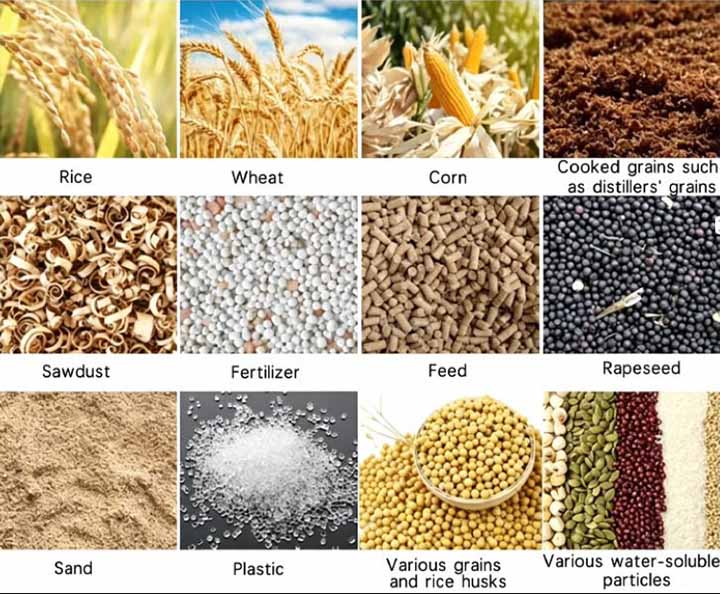
An Electric Flexible Screw Conveyor can handle powders, granules, blended materials, and lightweight bulk materials. Since every material has different flow characteristics, understanding the material properties is an important step before selecting a conveyor.
Powder Materials
Typical materials include flour, starch, cement, lime powder, talcum powder, calcium carbonate, carbon black, seasoning powder, and cocoa powder. These fine materials usually require enclosed conveying.
Granular Materials
Common examples include plastic pellets, fertilizer granules, grains, corn, wheat, rice, beans, and coffee beans. Uniform particles generally move smoothly through the conveyor.
Mixed Materials
Some production lines handle mixtures of powders and granules. In these cases, the tube diameter and screw speed should be selected according to the material composition.
Lightweight Materials
Wood flour, sawdust, rice husks, and similar materials have relatively low bulk density, so conveyor specifications should be selected according to the conveying distance and capacity.
For wet, sticky, or long-fiber materials, the material characteristics should be evaluated before selecting the screw design.
Choosing the Right Flexible Screw Conveyor
When purchasing a flexible screw conveyor, conveying distance is only one factor. The equipment should also match the production process and installation environment.
The following information is usually required for equipment selection:
- Material name
- Bulk density
- Required conveying capacity (kg/h or t/h)
- Horizontal conveying distance
- Vertical lifting height
- Tube diameter
- Power supply
- Motor power
- Tube material
- Installation location
- Continuous or intermittent operation
- Variable frequency speed control requirement
- Mobile base requirement
- Level sensor requirement
Providing these details helps determine the appropriate conveyor configuration and simplifies installation and commissioning.
Flexible Screw Conveyor Configurations
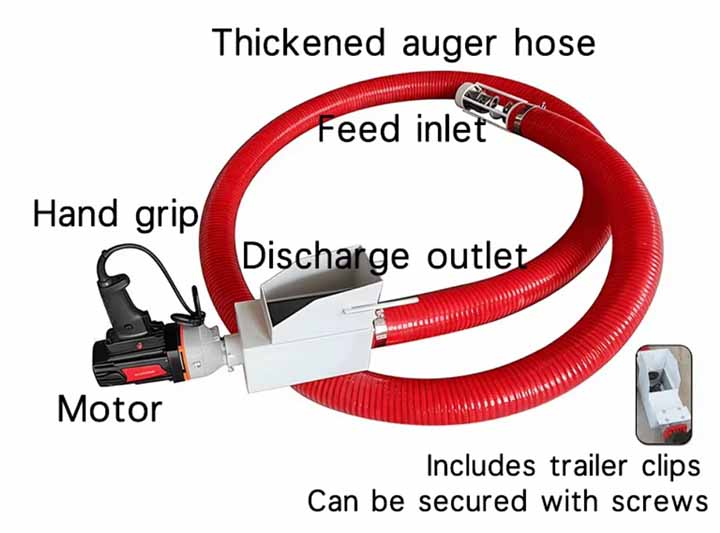
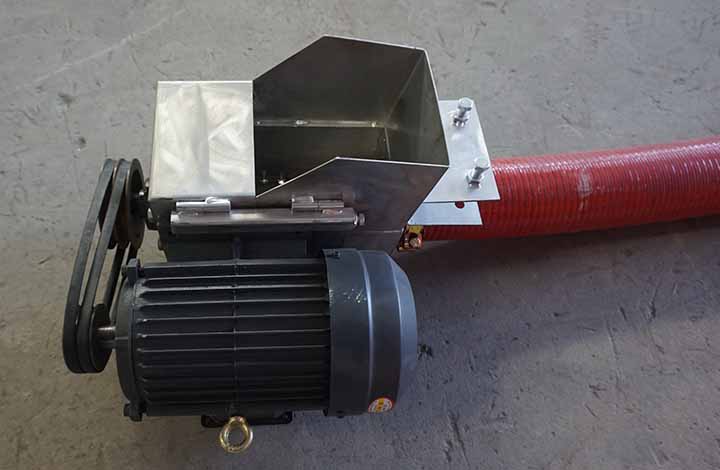
Flexible screw conveyors can be configured with different components to meet various production needs. Common configurations include open hoppers, covered hoppers, vibrating hoppers, mixing hoppers, mobile bases, fixed supports, multi-outlet designs, quick-release pipes, observation windows, frequency converters, automatic start/stop controls, magnetic separators, dust collection interfaces, and liquid level detection devices. Different configurations can be combined and installed to adapt the equipment to different production processes.
Technical Specifications
The following specifications are provided as a general reference.
| Item | Parameter Range |
| Conveying Capacity | 100kg/h - 20t/h |
| Conveying Length | 1-25m |
| Lifting Height | 1-10m |
| Conveying Angle | 0°-90° |
| Pipe Diameter | 60mm-168mm |
| Screw Diameter | Configured according to pipe diameter |
| Motor Power | 0.75-7.5kW |
| Conveying Speed | Adjustable |
| Power Supply | 220V / 380V / Customized |
| Pipe Material | Carbon Steel, 304 Stainless Steel, 316 Stainless Steel |
| Control Mode | Button Control or Frequency Conversion Control |
| Installation Method | Fixed Type, Mobile Type |
Electric Flexible Screw Conveyor Price
The price of an Electric Flexible Screw Conveyor depends on the conveying capacity, conveying length, lifting height, tube diameter, construction material, motor configuration, and optional accessories. Quotations are normally prepared according to the customer's operating conditions.
Common Problems and Solutions
Material Blockage
Blockage may be caused by wet materials, oversized particles, or unsuitable screw speed. Check the material condition, adjust the screw speed, or install a hopper agitator if necessary.
Reduced Conveying Capacity
Longer conveying distances, higher lifting angles, or screw wear may reduce output. Inspect the screw condition and confirm that the equipment matches the application.
Dust Leakage
Check all tube connections and replace worn seals when necessary.
Increased Operating Noise
Noise may result from bearing wear, contact between the screw and tube wall, or incorrect installation.
Unstable Material Discharge
Irregular feeding or material bridging can interrupt discharge. An agitator or a modified hopper design can improve material flow.
Flexible Screw Conveyor vs Other Conveyors
Different conveying equipment is suitable for different production conditions.
Compared to belt conveyors, flexible screw conveyors are suitable for enclosed conveying of powders and granules, and have a relatively smaller footprint.
Compared to bucket elevators, flexible screw conveyors can not only lift but also convey horizontally and be arranged in turning configurations.
Compared to vacuum conveyors, flexible screw conveyors do not require a compressed air system and have a relatively simple structure.
Compared to tubular chain conveyors, flexible screw conveyors are suitable for conveying powders and granules over short to medium distances, and the equipment composition is relatively simple.
Equipment selection should be based on a comprehensive consideration of conveying distance, material condition, installation space, and budget.
Industries
Flexible screw conveyors are used in grain processing, building materials, plastic manufacturing, rubber production, mineral powder processing, animal feed production, coffee processing, seasoning production, dairy ingredient processing, fertilizer manufacturing, and metal powder handling.
Customer Cases
A flour processing company needed to transfer flour from a storage silo to a mixer. The conveying distance was 12 m with a 4 m vertical lift, and several steel columns prevented the installation of a straight conveyor.
A flexible screw conveyor with a Ø114 mm conveying tube, 3 kW motor, 500 L hopper, and 3 t/h conveying capacity was installed. The conveying tube bypassed the structural columns and fed directly into the mixer, reducing manual handling while keeping the existing production layout unchanged.
Frequently Asked Questions
Q:Can it convey plastic pellets?
A:Yes. Plastic pellets are commonly conveyed using a flexible screw conveyor.
Q:Can it convey powder materials?
A:Yes. Flour, cement, starch, and many other powders can be conveyed.
Q:What is the maximum conveying distance?
A:The conveying distance depends on the selected model and installation layout.
Q:Can it lift materials vertically?
A:Yes. Inclined and vertical conveying configurations are available.
Q:Can the conveying speed be adjusted?
A:Yes. A variable frequency drive can be installed to adjust the conveying speed.
Q:Can the equipment be customized?
A:Yes. Dimensions and configurations can be manufactured according to project requirements.
Q:Can the conveying tube be routed around obstacles?
A:Yes. The flexible tube allows curved installation paths.
Q:Can it operate continuously?
A:Yes. Continuous operation is supported with routine maintenance.
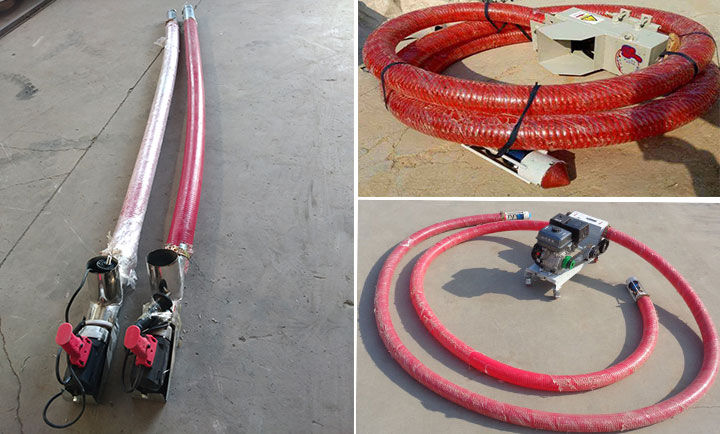
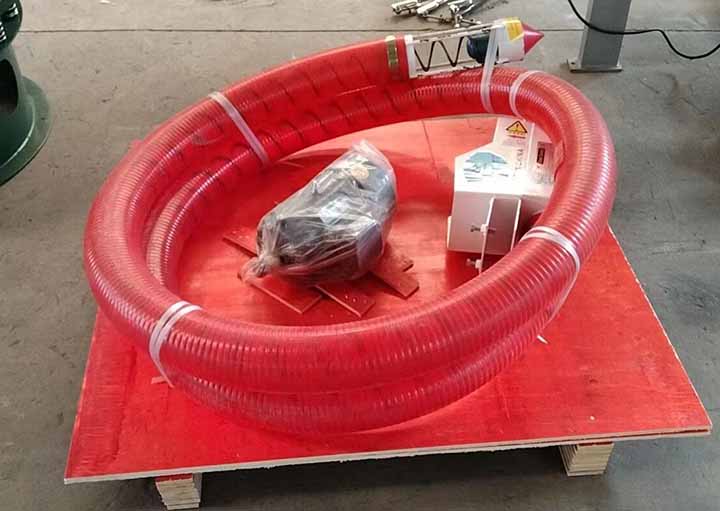
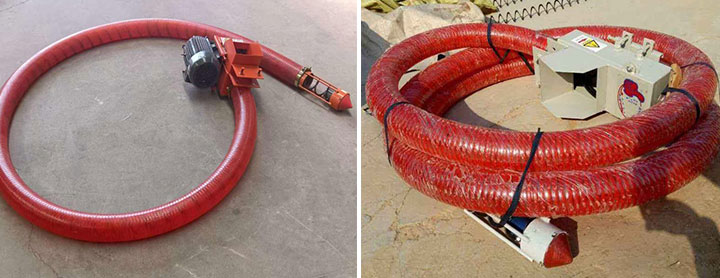
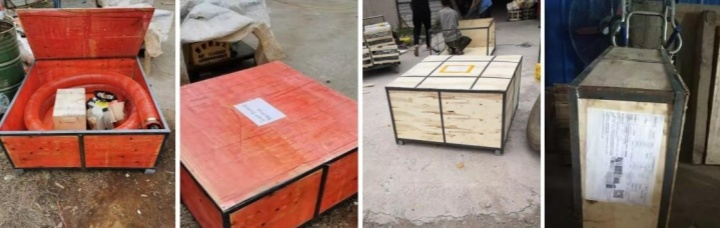
Electric Flexible Screw Conveyor Packaging
An Electric Flexible Screw Conveyor is suitable for conveying powders and granular materials through horizontal, inclined, or vertical routes. Different models are available to match various conveying capacities and installation requirements. Selecting the proper configuration according to the material, conveying distance, lifting height, and installation space helps achieve stable material handling throughout the production process.