Flexible Tube Screw Conveyor
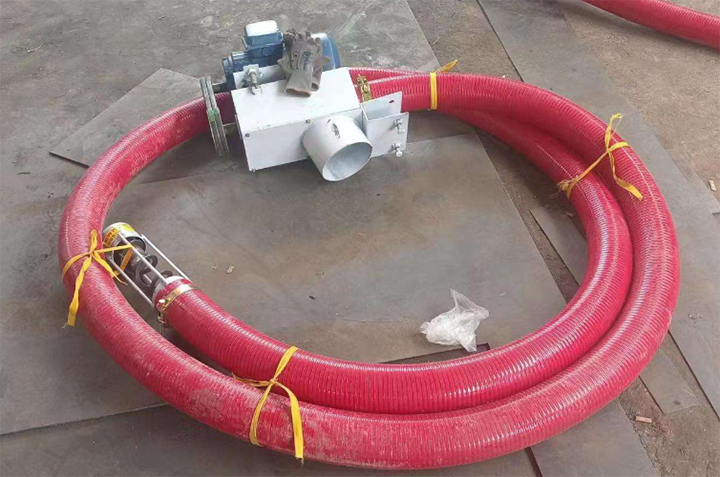
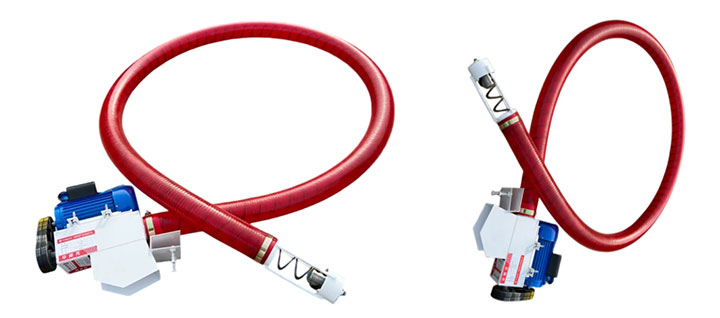
Flexible Tube Screw Conveyors are designed for continuous, dust-free conveying of powders, granules, and small bulk materials. The flexible shaftless screw and bendable tube allow routing around columns, tanks, and existing equipment, making them ideal for space-limited production lines. Prices typically range from $2,000 to $25,000.
Conveying capacity: 300-8,000 kg/h
Conveying distance: 3-20 m
Lifting height: 1-10 m
Tube diameter: 50-168 mm
Screw diameter: 35-150 mm
Motor power: 0.75-7.5 kW
Tube material: PVC, PU, Stainless Steel, Carbon Steel
Installation: Fixed or Mobile
Flexible Tube Screw Conveyor Overview
Built from real conveying applications. This flexible tube screw conveyor configuration was developed based on our field installations in food powder and plastic pellet production lines, where space constraints and dust control were the primary concerns.
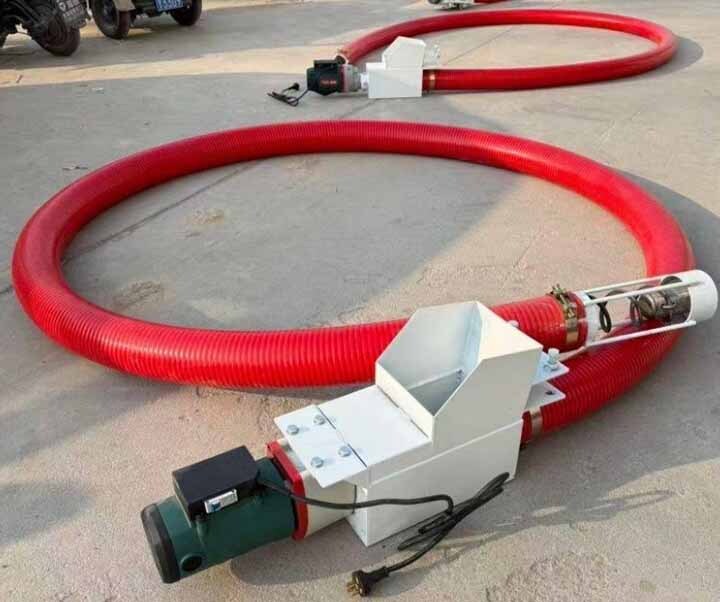
Flexible Tube Screw Conveyor, also known as a Flexible Screw Conveyor or Flexible Auger Conveyor, is designed for the continuous conveying of powders, granules, and small bulk materials.Across our installations, the most common configuration is a 4–6 meter flexible tube screw conveyor with a 100 mm tube diameter, used for transferring flour and starch from storage hoppers to weighing systems. It can be integrated with storage hoppers, mixers, weighing systems, packaging machines, and other processing equipment to form a continuous material handling system. Inside the enclosed conveying tube, a flexible shaftless screw moves material from the inlet to the discharge outlet while reducing material loss during transport. Standard conveying capacities range from 300 to 8,000 kg/h, with conveying distances typically between 3 and 20 meters. Depending on the plant layout, the conveyor can be installed horizontally, at an incline, or vertically.
The shaftless flexible screw works together with the flexible conveying tube, reducing material accumulation inside the conveyor while allowing the tube to bend around columns, tanks, or production equipment. This makes it suitable for facilities where installation space is limited. Whether you need a powder flexible screw auger conveyor, a flexible screw conveyor for pellets, or a small diameter screw conveyor, the equipment can be configured according to the material type, conveying capacity, lifting height, and conveying distance.
Why Choose a Flexible Tube Screw Conveyor Instead of Other Conveyors?
Different conveying systems are suitable for different production conditions. The comparison below helps buyers quickly understand the differences before selecting equipment.
| Comparison Item | Flexible Tube Screw Conveyor | Belt Conveyor | Pneumatic Conveyor | Bucket Elevator |
| Powder Conveying | Suitable | Material spillage easily occurs | Available for conveying | Not suitable for partial powders |
| Granule Conveying | Suitable | Suitable | Partial granules will be worn | Suitable |
| Pipe Sealing | Fully sealed pipeline | Open type | Sealed pipeline | Semi-sealed |
| Elbow Installation | Available | Inconvenient | Available | Inconvenient |
| Floor Space | Small | Large | Medium | Small |
| Daily Disassembly & Assembly | Relatively convenient | Medium difficulty | Many pipelines | Medium difficulty |
| Conveying Direction | Horizontal, inclined, vertical lifting | Mainly horizontal | Pipeline layout | Vertical lifting |
When installation space is limited or the conveyor must pass around existing equipment, a flexible shaftless screw conveyor provides more installation flexibility than many conventional conveyors. For powder and granular materials, combining a powder flexible screw auger conveyor with a discharge screw conveyor can also create a continuous material feeding system.
How Does a Flexible Tube Screw Conveyor Work?
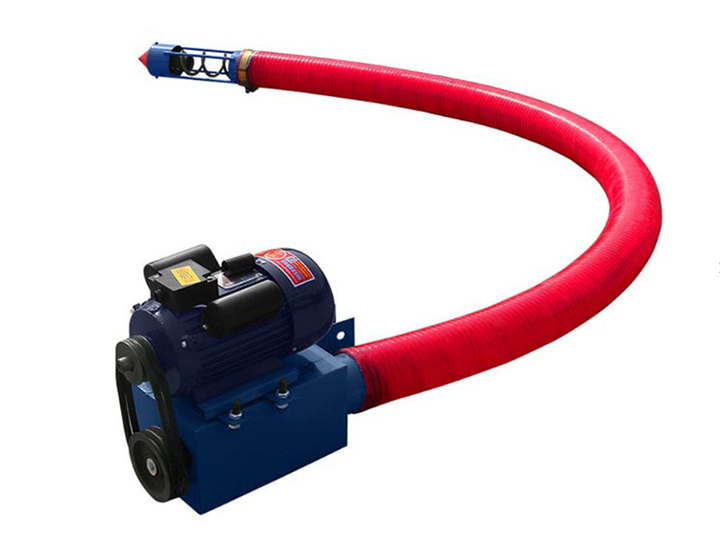
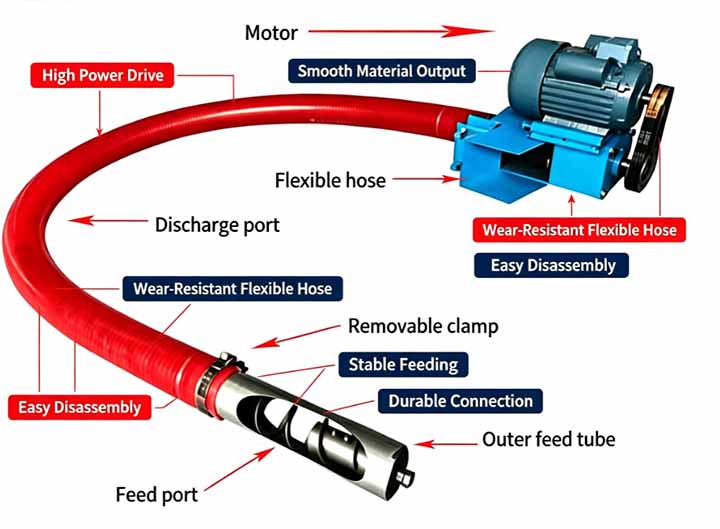
A Flexible Tube Screw Conveyor combines a flexible shaftless screw with an enclosed conveying tube. The flexible screw follows the curve of the tube, allowing the conveyor to be installed around columns, tanks, and other equipment without requiring a straight conveying path. The enclosed round tube helps reduce material loss and limits dust entering the conveying system, making it suitable for flour, starch, PVC powder, graphite powder, and flexible screw conveyor for pellets applications. The shaftless design also reduces material build-up in the center of the conveyor while the rotating screw continuously moves material toward the discharge outlet. The drive unit is generally installed at the discharge end, simplifying the transmission structure and making routine inspection and maintenance easier. Screw diameter, tube diameter, and rotational speed can all be selected according to conveying distance, material characteristics, and required capacity.
What Materials Can Be Conveyed?
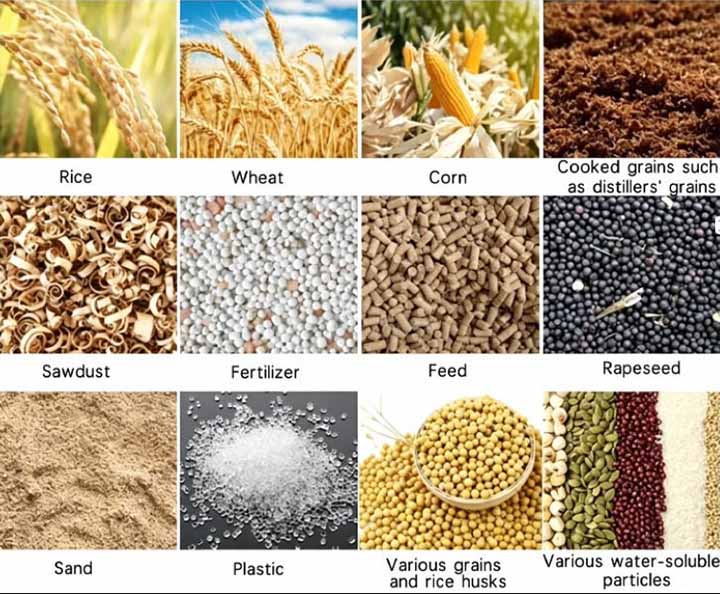
Before selecting a Flexible Tube Screw Conveyor, the material characteristics should be evaluated, including particle size, bulk density, moisture content, and flowability. These factors influence the screw design, tube diameter, conveying speed, and overall conveyor configuration.
| Conveyed Material | Recommendation | Description |
| Flour | √ | Dry powder |
| Starch | √ | Good fluidity |
| White Sugar | √ | Crystalline granules |
| Milk Powder | √ | Fine powder conveying |
| Coffee Powder | √ | Sealed conveying |
| PVC Powder | √ | Industrial powder |
| Calcium Carbonate | √ | Micro-powder conveying |
| Plastic Pellets | √ | flexible screw conveyor for pellets |
| Color Masterbatch Pellets | √ | Granule conveying |
| Animal Feed | √ | Powder-granule mixture |
| Grain | √ | Small granules |
| Wood Shavings | √ | Lightweight material |
Common conveying materials include flour, starch, sugar, milk powder, coffee powder, PVC powder, calcium carbonate, plastic pellets, color masterbatch, grain, animal feed, wood chips, and other free-flowing powders or granules. If the material tends to absorb moisture, bridge, or form lumps during storage, additional devices such as agitators, bin activators, or vibration units can be installed to maintain a continuous material supply. A small diameter screw conveyor is often selected for applications with limited installation space or relatively low conveying capacity.
Material-specific considerations. While the table above lists commonly conveyed materials, two categories require additional attention. Milk powder tends to bridge in the feeding hopper during humid seasons — we typically recommend adding a bin activator or vibration unit in these cases. Wood shavings have low bulk density and can accumulate on the screw surface during continuous operation; a reduced-pitch screw design combined with periodic inspection is the practical solution.
Typical Applications
A Flexible Tube Screw Conveyor is commonly used as part of a complete material handling system rather than as a standalone machine. Depending on the production process, it can be connected with hoppers, storage bins, mixers, weighing systems, and packaging equipment to create different conveying lines.
For bag unloading, materials can be transferred from a manual feeding hopper to a storage hopper through a Flexible Tube Screw Conveyor. In packaging systems, materials stored in a hopper can be conveyed by a Flexible Screw Conveyor to weighing equipment before entering the packaging machine. Multiple storage bins may also feed a mixer through a Flexible Auger Conveyor for continuous batching. For plastic processing, a Flexible Screw Conveyor for Pellets can transfer plastic pellets directly into the machine hopper. After mixing, a Discharge Screw Conveyor combined with a Flexible Tube Screw Conveyor can transport finished materials to the packaging line, reducing manual handling and supporting continuous production.
How to Choose the Right Flexible Tube Screw Conveyor?
Choosing the right Flexible Tube Screw Conveyor involves more than comparing prices. The first step is identifying the material to be conveyed, such as flour, plastic pellets, calcium carbonate, or wood chips, since different materials require different screw designs. The required conveying capacity should also be specified, for example 500 kg/h, 1,000 kg/h, or 3,000 kg/h, as this determines the screw diameter, tube size, and motor power. Conveying distance, lifting height, and available installation space should also be provided to determine the conveyor layout. If the conveyor needs to pass around existing equipment or structural columns, a flexible tube configuration can be selected. Tube material and screw material should also match the operating conditions and the characteristics of the conveyed material. Providing information such as material name, conveying capacity, conveying distance, lifting height, and site drawings or photos helps engineers recommend a suitable conveyor configuration while reducing design revisions.
A common mistake. The most frequent configuration error we see is undersizing the screw diameter based on average capacity rather than peak capacity. A conveyor rated for 1,000 kg/h average may need to handle 1,300–1,500 kg/h during batch discharge. If the screw diameter is selected based only on the average figure, material accumulation and motor overload occur during peak periods. Always specify the maximum instantaneous capacity, not just the daily average.
How Can Different Flexible Screw Types Match Different Materials?
Flexible screws are available in different profiles and materials to match various conveying applications. Instead of selecting a screw based only on conveying capacity, factors such as particle size, bulk density, flowability, and conveying distance should also be considered.
Round Flexible Screw
The round flexible screw is commonly used for free-flowing powders and granules, including flour, sugar, coffee powder, plastic pellets, and grain. It provides stable material flow and is widely used in flexible screw conveyor for pellets and general powder conveying applications.
Flat Flexible Screw
A flat flexible screw offers a larger contact area with the conveyed material, making it suitable for lightweight powders, low-density materials, and certain blended products. It is often selected for short conveying distances and medium conveying capacities.
Heavy-Duty Flexible Screw
Heavy-duty flexible screws are manufactured from thicker steel to handle materials with higher bulk density, such as quartz sand, calcium carbonate, and mineral powders. They are suitable for continuous-duty applications and higher conveying loads.
Stainless Steel Flexible Screw
Stainless steel flexible screws are suitable for conveying flour, milk powder, seasonings, coffee powder, and other materials that require improved corrosion resistance. The screw material can be selected according to the characteristics of the conveyed product and the working environment.
Which Flexible Tube Options Are Available?
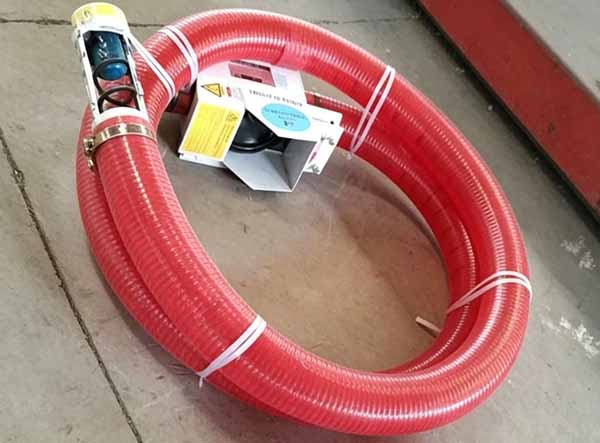
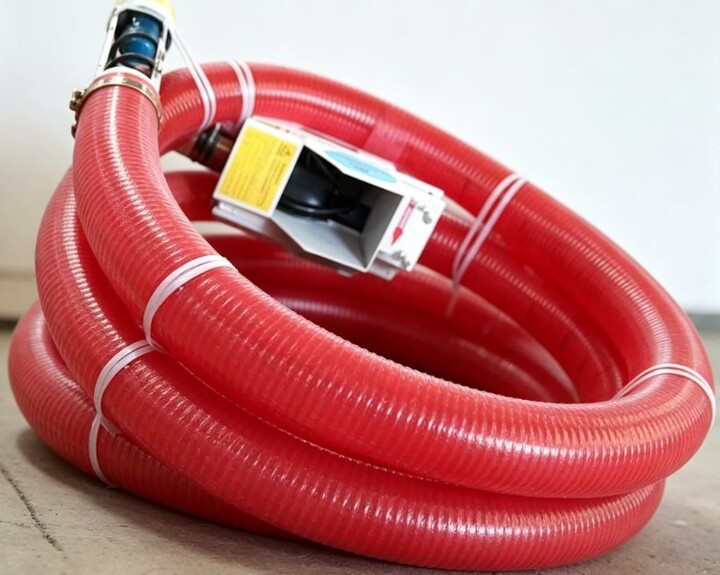
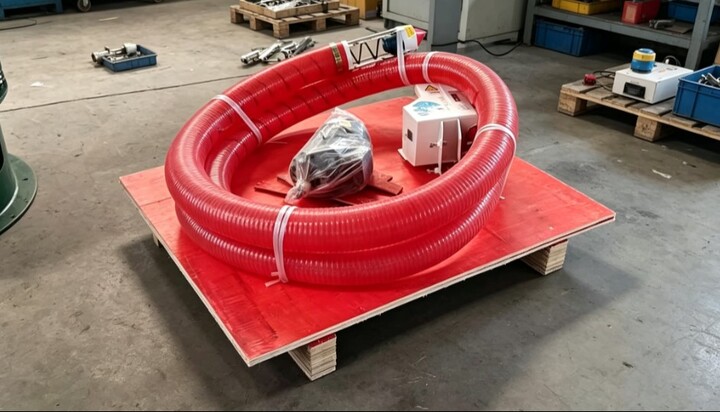
The conveying tube affects both installation flexibility and material handling performance. Common tube options include PVC Flexible Tube, PU Flexible Tube, Stainless Steel Tube, Carbon Steel Tube, and Small Diameter Tube. PVC tubes are transparent, allowing operators to observe material flow during operation. PU tubes offer increased wear resistance and are suitable for plastic pellets, feed pellets, and wood chips. Stainless steel tubes are commonly selected where corrosion resistance or metal construction is preferred, while carbon steel tubes are suitable for general industrial conveying applications. For a small diameter screw conveyor, compact tube sizes can be installed beside packaging machines, weighing systems, or small batching units where installation space is limited.
What Specifications Should Be Considered Before Buying?
The following specifications are commonly reviewed when selecting a Flexible Tube Screw Conveyor.
| Item | Common Range |
| Conveying Capacity | 300 ~ 8000 kg/h |
| Conveying Length | 3 ~ 20 m |
| Lifting Height | 1 ~ 10 m |
| Pipe Diameter | 50 ~ 168 mm |
| Screw Diameter | 35 ~ 150 mm |
| Motor Power | 0.75 ~ 7.5 kW |
| Power Supply | 220V / 380V / 415V |
| Conveying Angle | Horizontal, inclined, vertical lifting |
| Rotating Speed | Adjustable |
| Pipe Material | PVC, PU, Stainless Steel, Carbon Steel |
| Screw Material | Carbon Steel, Stainless Steel |
| Installation Method | Fixed type, Mobile type |
Typical specifications include conveying capacity from 300 to 8,000 kg/h, conveying lengths of 3 to 20 meters, lifting heights up to 10 meters, tube diameters ranging from 50 to 168 mm, and screw diameters between 35 and 150 mm. Motor power generally ranges from 0.75 to 7.5 kW, with available power supplies including 220V, 380V, and 415V. Conveyors can be installed horizontally, inclined, or vertically, and both screw speed and tube material can be configured according to the conveyed material and operating conditions. Final specifications are determined by factors such as bulk density, conveying distance, installation layout, and required throughput.
Which Installation Options Can Fit Different Workshops?
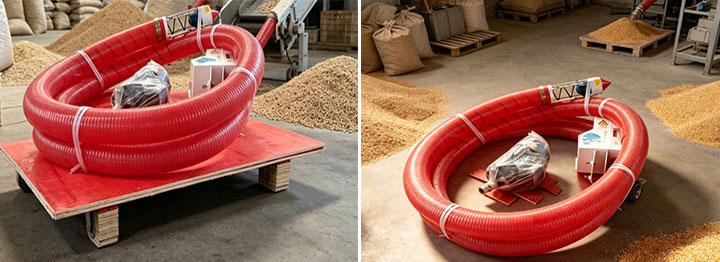
A Flexible Tube Screw Conveyor can be installed in different configurations to match the available workspace and production layout. Horizontal installation is suitable for transferring materials between nearby processing equipment. Inclined installation is commonly used when materials need to be lifted from floor level to a hopper or storage bin. Vertical conveying can be selected for applications requiring higher discharge positions. Mobile units equipped with wheels allow the conveyor to be moved between different workstations, while fixed installations mounted on support frames are suitable for continuous production lines. Multiple inlet points can also be incorporated into one conveyor system to collect materials from different locations. When columns, tanks, or existing machinery limit the available installation space, the flexible conveying tube can be routed around obstacles to simplify system integration.
Xinxiang Dahan Vibrating Machinery Co., Ltd. — Founded in 2008, Xinxiang City, Henan Province, China. Manufacturer of flexible screw conveyors, belt conveyors, bucket elevators, and complete bulk material handling systems. ISO 9001:2015 certified (Certificate No. 016BJ19Q31898R0S). Products exported to 80+ countries in food, chemical, plastics, and mining industries.
Frequently Asked Questions
What materials can a Flexible Tube Screw Conveyor handle?
Flexible Tube Screw Conveyors are suitable for conveying powders, granules, and small bulk materials such as flour, sugar, starch, coffee powder, milk powder, calcium carbonate, PVC powder, plastic pellets, grain, feed, and wood chips. Material characteristics should be confirmed before selecting the conveyor configuration.
What is the maximum conveying distance?
Standard conveying distances generally range from 3 to 20 meters. Longer conveying distances can be achieved by selecting the appropriate screw diameter, tube size, motor power, and conveyor layout based on the application requirements.
Can a Flexible Screw Conveyor transport plastic pellets?
Yes. A flexible screw conveyor for pellets is commonly used to transfer plastic pellets from storage hoppers to processing equipment. The screw design and tube diameter can be selected according to pellet size and conveying capacity.
What factors affect the price of a Flexible Tube Screw Conveyor?
The price depends on several factors, including conveying length, conveying capacity, tube diameter, screw material, tube material, motor specification, installation configuration, and optional accessories. Providing information such as the material type, required capacity, conveying distance, lifting height, and installation drawing helps suppliers prepare an accurate quotation.
What maintenance is required for a Flexible Screw Conveyor?
Routine maintenance includes checking the flexible screw for wear, inspecting the drive motor and gearbox, examining the conveying tube and connection points, and removing any material remaining inside the tube after operation. Regular inspection helps maintain stable conveying performance and extends equipment service life.
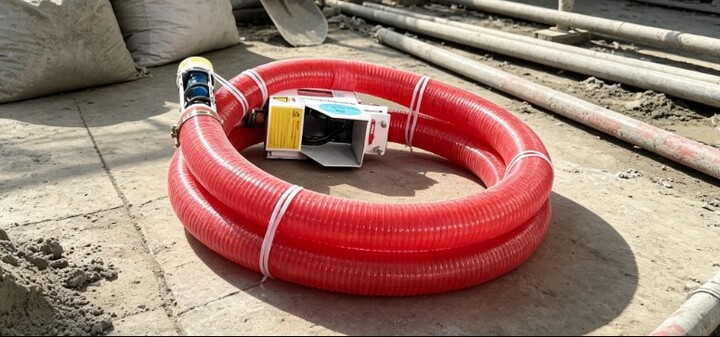
A Flexible Tube Screw Conveyor is a practical solution for the continuous conveying of powders, granules, and other free-flowing bulk materials. It can be integrated with storage hoppers, mixers, weighing systems, packaging machines, and other processing equipment to create a continuous material handling system. With multiple screw designs, tube options, installation configurations, and customizable specifications, the conveyor can be adapted to different production requirements.
Before selecting a conveyor, it is recommended to provide the material name, bulk density, conveying capacity, conveying distance, lifting height, and available installation space. Site drawings or photos can also help engineers recommend a suitable configuration and prepare a proposal based on the actual working conditions.Content based on field feedback from our installation and service team.