Flexible Screw Conveyor Selection Guide
Tuesday October-13 2026 10:29:46
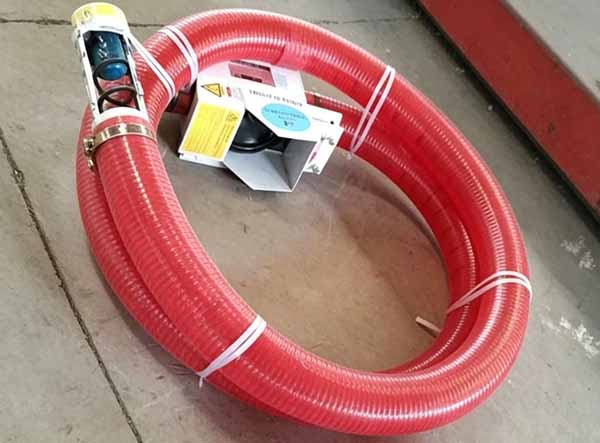
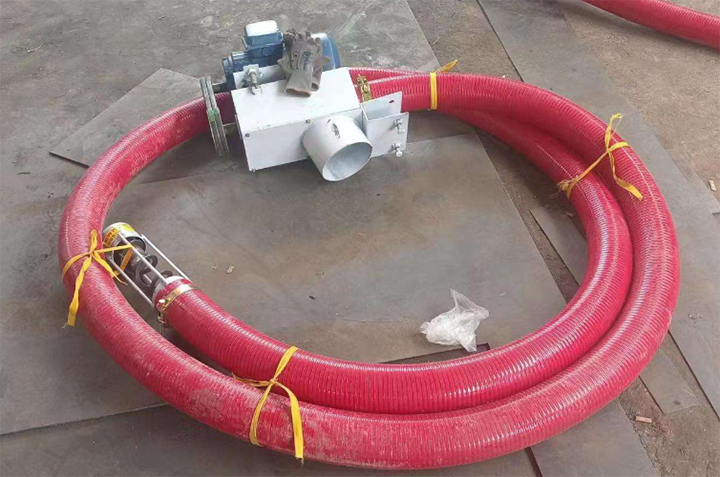
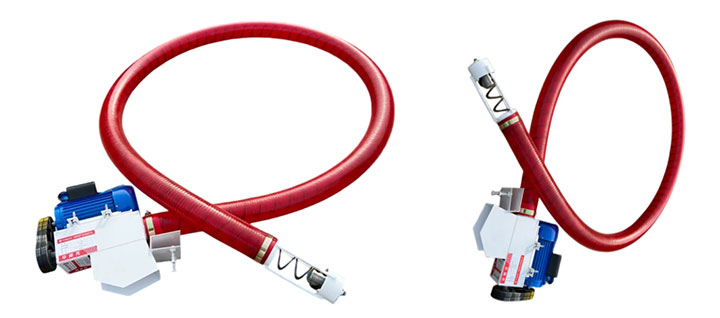
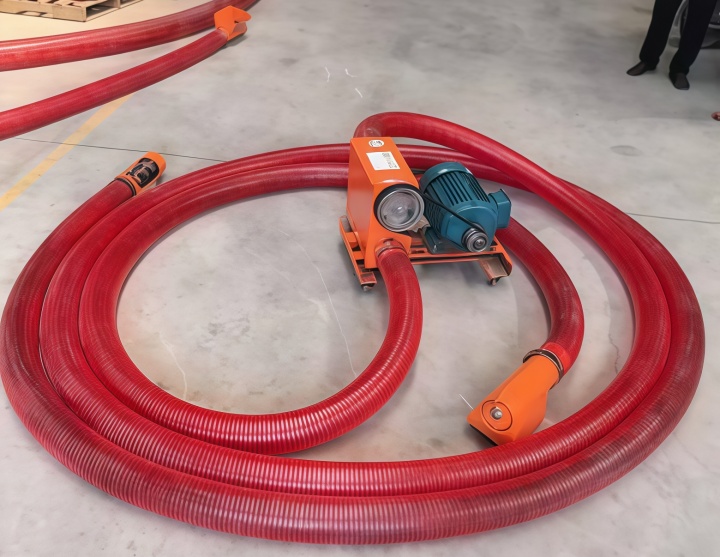
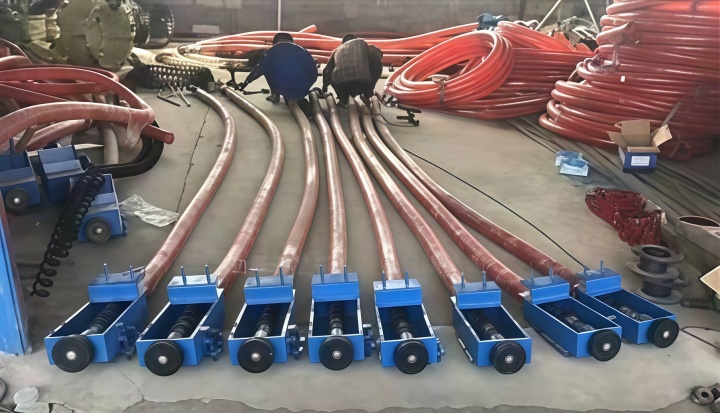
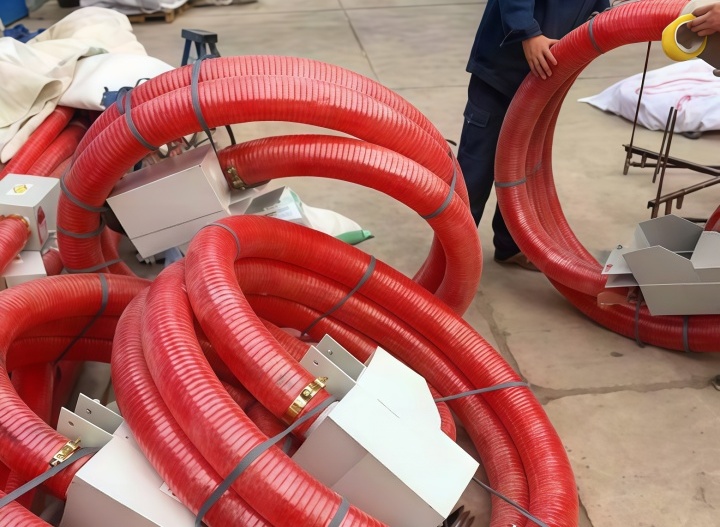
The core decision chain in this Flexible Screw Conveyor Selection Guide is material compatibility, throughput matching, space constraints and maintenance expense. A Flexible Tube Screw Conveyor consists of a stainless steel screw rotating inside a food-grade UHMW polyethylene tube. It suits powders, granules and flakes with a bulk density no more than 2.5 kg per liter. A single unit usually conveys horizontally no more than 20 meters, with throughput up to 40 tons per hour.
When Materials Are Not Suitable: Direction for Flexible Screw Conveyor Selection
Free-flowing powders and granules are suitable for a flexible screw conveyor, but three types should be excluded. Materials with high moisture and stickiness, fragile materials, and large particles bigger than one-tenth of the pipe diameter.
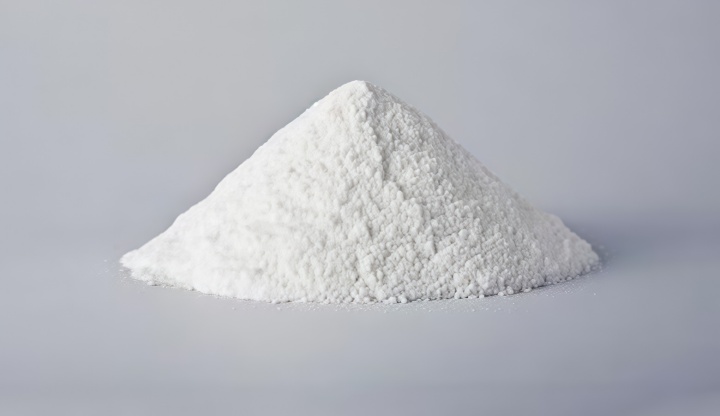
Cocoa powder is a non-free-flowing material with a bulk density of about 560 kg per cubic meter. It is hygroscopic and tends to cake and deposit on equipment surfaces. If the material is sticky or has large particles, the selection direction should turn to pneumatic conveying or other mechanical conveying methods.
How Flexible Screw Conveyor Selection Matches Throughput and Pipe Diameter
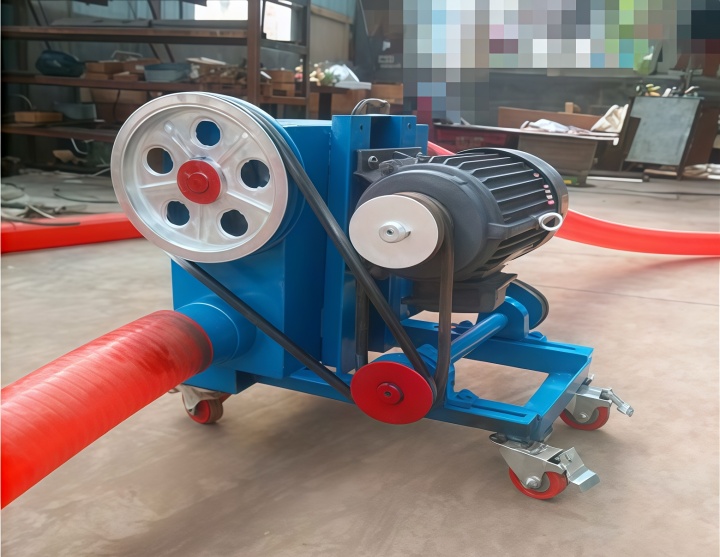
Throughput is affected by pipe diameter, screw speed and bulk density. Pipe diameters range from 65 mm to 200 mm, corresponding to throughput from several hundred kilograms per hour to over ten tons per hour.
An easily overlooked factor is the combination of screw pitch and speed. Under standard pitch, increasing speed can raise throughput, but beyond a critical speed the material residence time inside the tube shortens and the fill rate drops instead. During selection, determine the pitch based on measured bulk density and particle size distribution, then calculate the required speed. This avoids throughput deviation caused by selecting on volumetric flow while ignoring bulk density.
Adjustment Approach for Flexible Screw Conveyor Selection When Space Is Limited
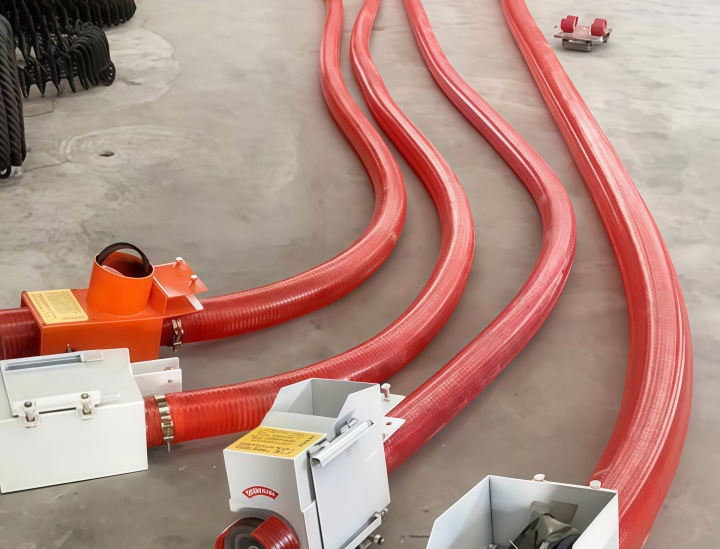
The advantage of this equipment is three-dimensional routing around obstacles, but bend radius and incline angle both have practical limits. In a case at UK food and spice manufacturer Food and Spice Product Manufacturing, a 10 ft long, 4.5 in diameter flexible screw conveyor crossed through a wall at a 45-degree angle, conveying raw material from storage to a mill through two separate rooms.
A second 6.5 in diameter conveyor with a 22 ft bend lifted material to a height of 8 ft. Incline angles greater than 45 degrees noticeably reduce conveying efficiency. In a Philippine case at Blaine Manufacturing, a 6 m long conveyor runs at a 40-degree incline, working with a 150 mm rotary valve to feed powder into two 1,000 kg capacity mixers.
High-Frequency Mistakes and Maintenance Assessment in Flexible Screw Conveyor Selection
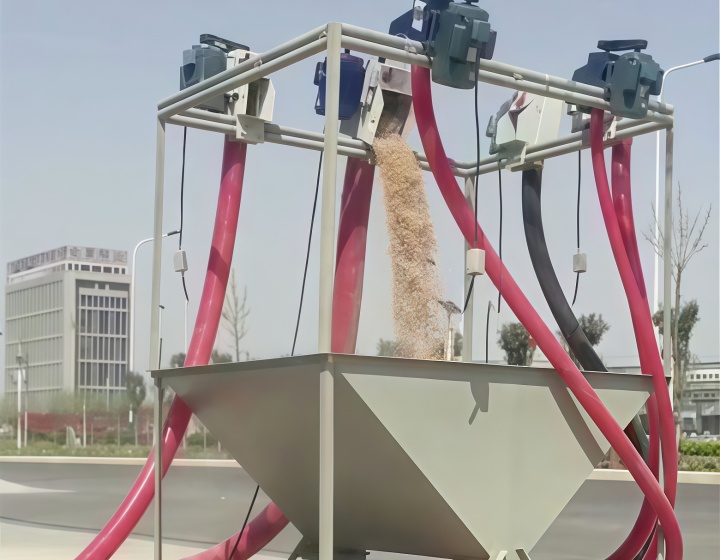
Problems that recur in actual projects fall into several areas. First is long idle running. This equipment is designed to work full of material, and idle running produces excessive noise and accelerates wear on the screw and pipe wall. Second is poor inlet design causing bridging. Third is poor outlet design causing pressure build-up inside the tube. Fourth is ignoring bulk density fluctuations between batches.
Maintenance centers on the screw and the conveying tube. The screw wears faster with abrasive materials and wears more slowly with non-abrasive materials. Both the tube and screw can be replaced quickly. When multiple units in the same plant use the same pitch and screw construction, spare part inventory types can be reduced, lowering warehouse management expense.
The cocoa powder conveying case at Burton's Biscuit in the UK records a real correction process. The plant installed two flexible screw conveyors in a chocolate cream production line to feed two different cocoa powder recipes into horizontal paddle mixers. Cocoa powder has a bulk density of about 560 kg per cubic meter, is hygroscopic, and tends to compact and cake.
The conveyor consists of a stainless steel flexible screw inside a 3 m long, 90 mm outer diameter plastic tube, set at a 70-degree incline, driven by a 2.2 kW motor located above the discharge outlet. The two conveyors feed material to the mixer at a full-feed rate of 1.85 cubic meters per hour, automatically switching to a trickle feed mode near the target weight. The screw uses a special geometry to reduce radial forces and increase axial flow, preventing compactable material from packing inside the tube. Conveyor start and stop are controlled by a PLC, feeding 15 kg of one cocoa powder and 25 kg of another in sequence according to the recipe.
Conclusion
The core decision chain in Flexible Screw Conveyor Selection is whether the material can be conveyed, whether throughput can be matched, whether space can accommodate the route, and whether maintenance is controllable. Start by organizing three data points: bulk density, moisture content and particle size distribution, then check them against the logic in this article. The parameters and cases above apply to most powder and granular material scenarios. Specific selection still needs to be verified against actual site conditions.
Flexible Screw Conveyor Selection FAQ
Do I need extra pipe support during Flexible Screw Conveyor Selection?
Short suspended runs usually do not require it, but long straight sections benefit from hangers to prevent sagging. The supplier can recommend spacing based on pipe diameter and material weight.
Can abnormal vibration be avoided during Flexible Screw Conveyor Selection?
First check whether feed is uniform and continuous; feed fluctuation is a common source of vibration. If feed is normal, stop the machine and check whether the screw is deformed or foreign material is inside the tube. Confirming the feed method during selection can reduce this issue.
Are food or pharmaceutical materials suitable?
Yes, but food-grade tubing and a screw that meets sanitary standards are required. During selection, specify the material requirements for all product-contact parts, and connections should be easy to clean.
Can the equipment start and stop frequently?
Frequent starts and stops are not recommended. Each start applies higher torque that accelerates wear on the screw and motor. If the process requires intermittent operation, tell the supplier during selection so a suitable starting method can be matched.