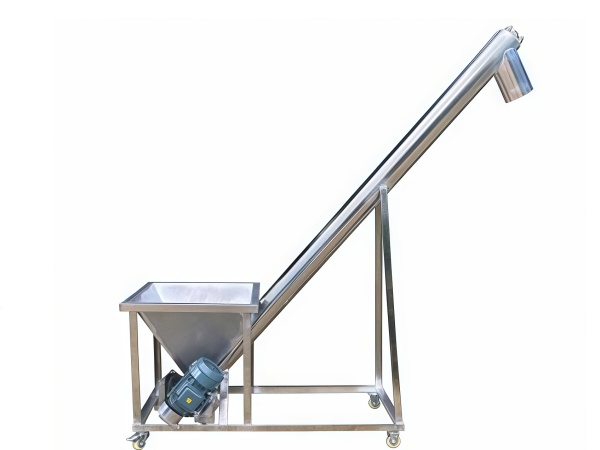
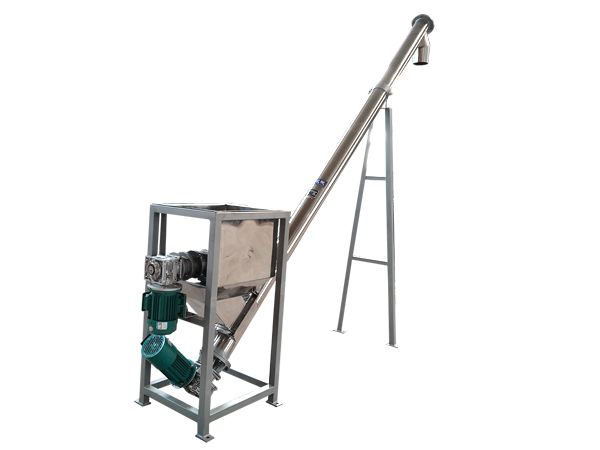
How to Select a Sanitary Food Grade Screw Conveyor
Wednesday October-21 2026 11:05:29
Quick summary: When choosing a Sanitary Food Grade Screw Conveyor, four core aspects deserve attention. The wetted parts are made of 304 or 316L stainless steel with surface finish up to Ra ≤ 0.8 µm. Conveying parameters match actual material conditions, the construction supports CIP cleaning, and machining specifications suit continuous operation. Compact entry-level versions start at around 500 US dollars, while large custom-built units with sanitary finishing, explosion-proof and variable frequency components may reach 20000 US dollars. Material testing with sample submissions is suggested before final selection.
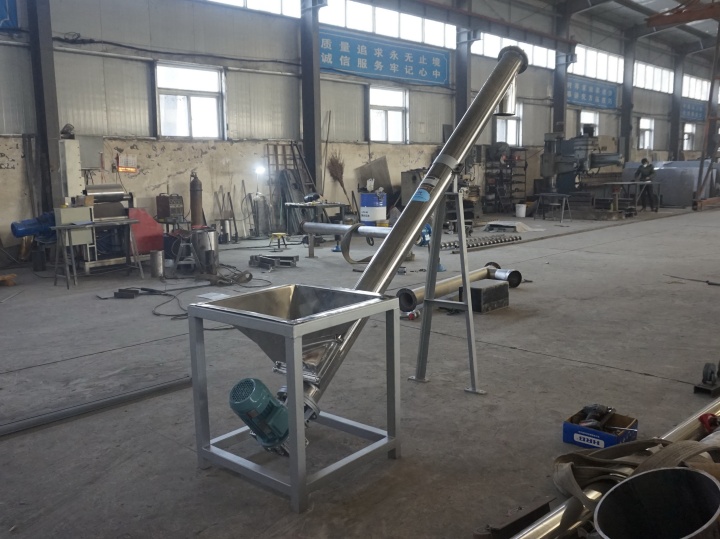
Sanitary food grade screw conveyors are widely adopted for enclosed transfer of powder, granule and semi-fluid materials in food, pharmaceutical and beverage sectors. The enclosed design reduces material exposure and lowers risks of cross-contamination. Many models on the market come with different configurations, and How to Select a Sanitary Food Grade Screw Conveyor shapes compliance status, conveying performance and service-related expenses of production lines.
Check Material Specifications and Sanitary Requirements
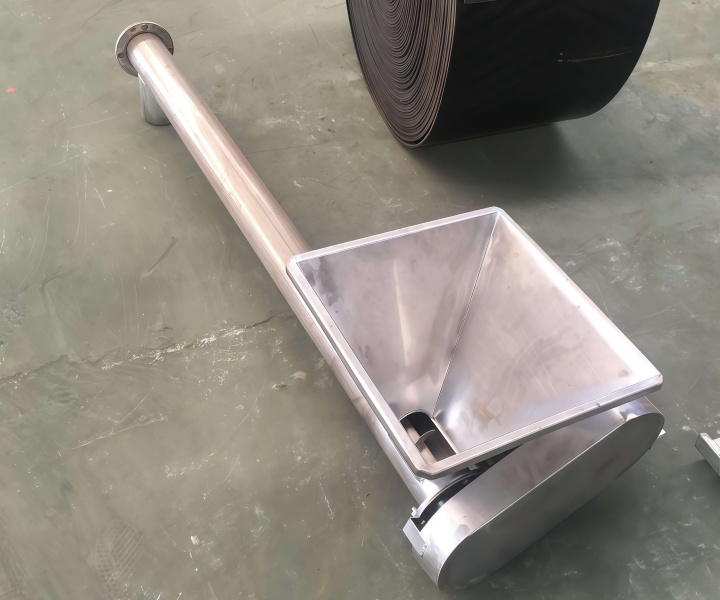
Parts touching process materials are commonly made from 304 or 316L stainless steel. Grade 316L holds better resistance to chloride ions and weak acids, suitable for pickled ingredients, fruit juice and other acidic salt-containing materials. The contact surface finishes at Ra ≤ 0.8 µm to cut down material adhesion and restrict bacterial growth. Seals are fabricated from food-grade silicone or fluororubber. Ordinary rubber shows limited resistance and tends to degrade and leak under repeated high-temperature CIP cycles.
When working through How to Select a Sanitary Food Grade Screw Conveyor, do not rely merely on material labels. Material certificates and roughness test reports should be reviewed. The material system shall comply with FDA 21 CFR Part 177 and EU 1935/2004 framework requirements.
Sort Out Conveying Conditions Based on Material Properties
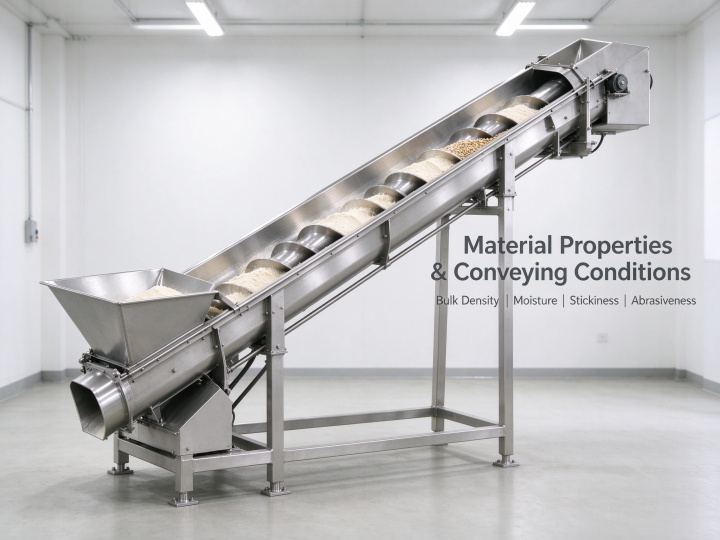
Bulk density, moisture content, stickiness and abrasiveness alter conveying behaviours, so nominal values from product sheets should not be applied directly. Under CEMA guidelines, standard units cover a conveying range from 2.2 to 458 m³/h, with screw diameters ranging 100–1250 mm and effective length between 4 m and 45 m. Inclined installation changes conveying performance, and performance drops as inclination angle increases.
For sticky, caking materials, shaftless screws or flights with scraping structures can be considered. Units for high-temperature or flammable materials are fitted with explosion-proof motors and sealing barriers. While going through How to Select a Sanitary Food Grade Screw Conveyor, sample testing under load is recommended. Record material uniformity, residual content and running noise to support the decision.
Review Cleaning Layout and Service Accessibility
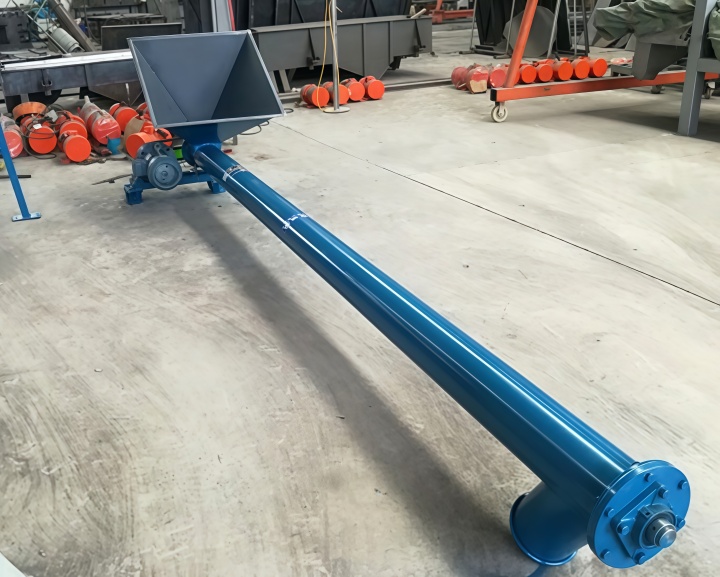
CIP cleaning is frequently used in food processing plants. Equipment layout links closely with cleaning workflows and residue control. Designs with hinged covers, quick-release flanges and separation between bearing assembly and material cavity are preferred. External UHMW sanitary bearings are recommended to avoid grease entering process streams, and such layouts have been implemented widely in dairy and bakery lines.
Confirm supply lead time for replaceable flights and trough segments during evaluation. Request drawing packages for cleaning and disassembly from a supplier, and estimate time required for two operators to complete cleaning against plant shift schedules. How to Select a Sanitary Food Grade Screw Conveyor also involves weighing service accessibility.
Examine Machining Quality and Budget Range

Runout of screw flights and uneven trough alignment trigger vibration and accelerate component wear, leading to abnormal noise and material leakage. Records from no-load and loaded factory tests can be requested to check noise levels. Budget assessment should not focus only on equipment price; set aside funds for spare components, power consumption and service work.
316L construction, premium surface finishing, explosion-proof modules and variable frequency drives push up overall cost. Ask a supplier to break down pricing line by line to observe cost shifts caused by configuration adjustments. How to Select a Sanitary Food Grade Screw Conveyor calls for balance between construction plans and available budget.
Watch for Overlooked Points in Selection
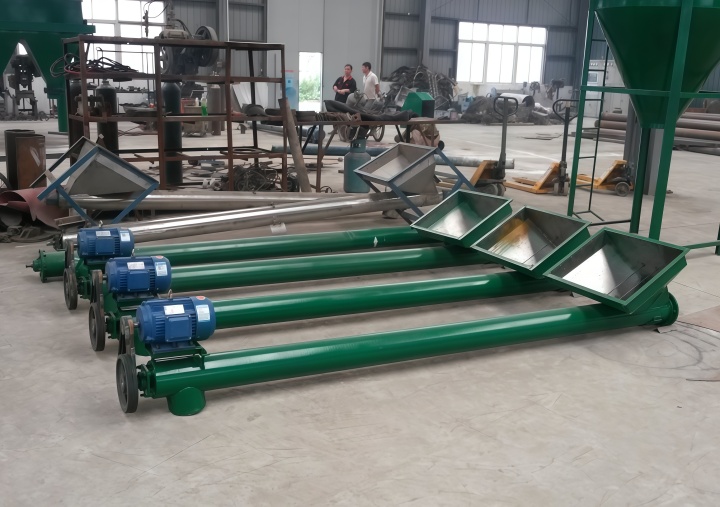
Some judgements made during equipment selection deviate from site realities because evaluations are built only on written documentation. Some buyers place orders following catalog data without noticing performance decline brought by installation angle and material stickiness. Other proposals adopt standard internal bearings which cannot sustain repeated CIP exposure, resulting in gradual seal deterioration.
There are also cases where screw speed and pitch are confirmed without sample testing. Fragile materials may break apart easily and sticky materials may block the flow. A sample test clause can be added to the purchasing contract with a supplier to verify performance before shipment. How to Select a Sanitary Food Grade Screw Conveyor with these risks addressed helps reduce troubles in later operation.
Frequently Asked Questions
Q1: What extra sanitary standards apply for dairy and meat processing lines?
A: Dairy equipment follows 3-A Sanitary Standards, meat processing systems refer to USDA-FSIS requirements, and EHEDG Doc. 2 offers guidance for hygienic design under CIP conditions. These are supplementary specifications built upon FDA requirements.
Q2: How to reduce cross-contamination between different batches?
A: Install purge ports or dedicated discharge outlets to remove residual materials. Cleaning sequences shall match disassembly features of the unit to minimise uncleaned zones.
Q3: What methods can reduce breakage of fragile feedstock?
A: Adopt flights with larger pitch and slower rotational speed to lessen shear force. Guide plates at feed inlet cushion material impact.
Q4: Can this type of conveyor link with upstream and downstream equipment?
A: Variable frequency drives and general signal interfaces enable coordinated speed regulation. Confirm communication protocols at an early stage to lower connection failures.
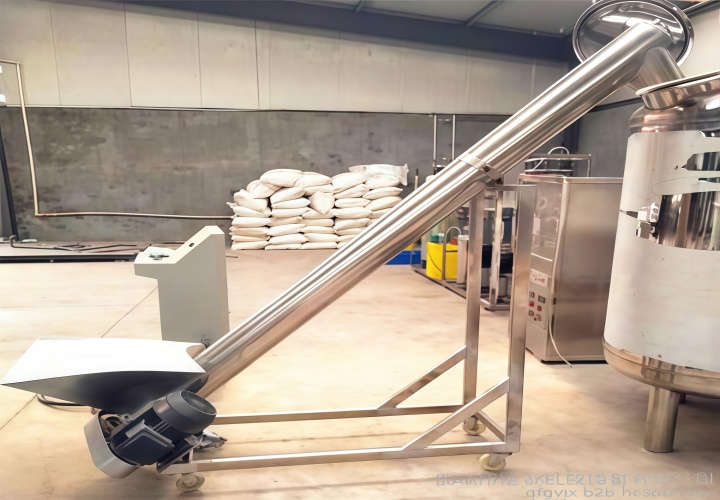
In summary, How to Select a Sanitary Food Grade Screw Conveyor requires balanced consideration of material compliance, material compatibility, cleaning layout, fabrication quality and total running expenditure. Collect material property data and clarify site cleaning protocols in advance to lower modification and maintenance work afterwards. Compare weak points of different proposals from these perspectives, so the conveyor fits sanitary workflows in food workshops.