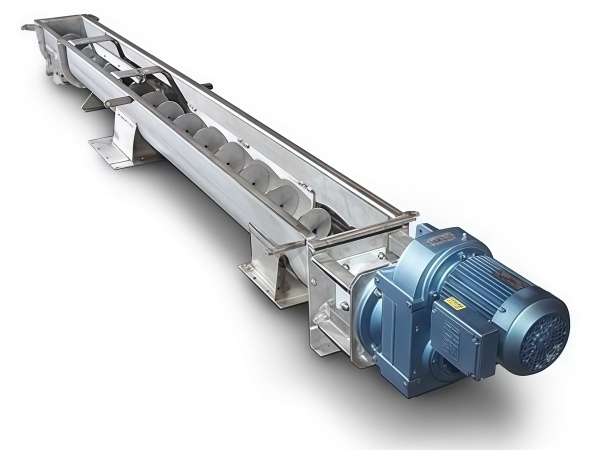
Shaftless Screw Conveyor for Dewatered Sludge Cake
Shaftless screw conveyors are continuous conveying devices used to move dewatered sludge cake from dewatering equipment discharge outlets to sludge storage hoppers. Without a central shaft or intermediate hanger bearing, they resist fiber clogging, operate in an enclosed sealed trough, and suit horizontal or inclined installation for municipal, industrial chemical, food-processing, and papermaking sludge.
Screw diameter: 260-550 mm
Production capacity: 2-45 m³/h
Drive power: 1.5-18.5 kW
Screw speed: 15-20 rpm
Typical conveying length: 3-15 m
Applicable solids content: 15-35%
Shaftless Screw Conveyor for Dewatered Sludge Cake: What Is It?
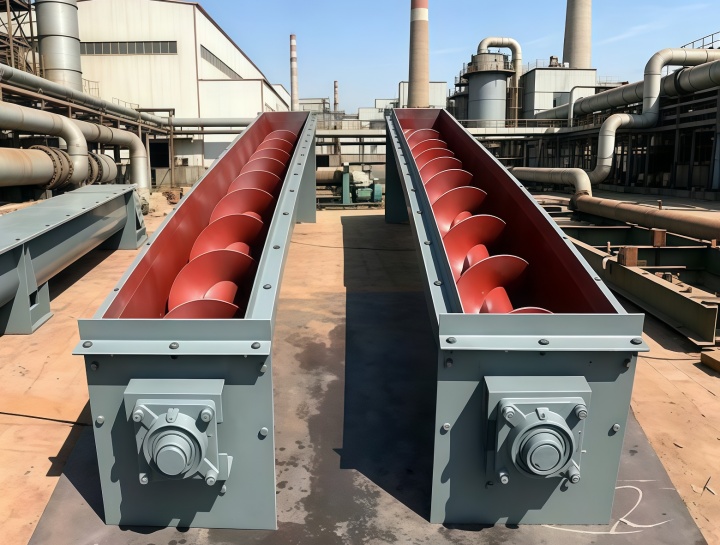
Shaftless Screw Conveyor for Dewatered Sludge Cake is a continuous conveying device for dewatered sludge cake. A traditional shafted screw conveyor tends to accumulate material at the intermediate hanger bearing, causing overload or blade deformation. This product removes the central shaft. The screw blade is drawn from high-tensile alloy steel and pushes material inside a U-shaped trough.
It is suitable for sludge cake with a solids content between 15 and 35 and is often installed between a dewatering machine discharge outlet and a sludge storage hopper.
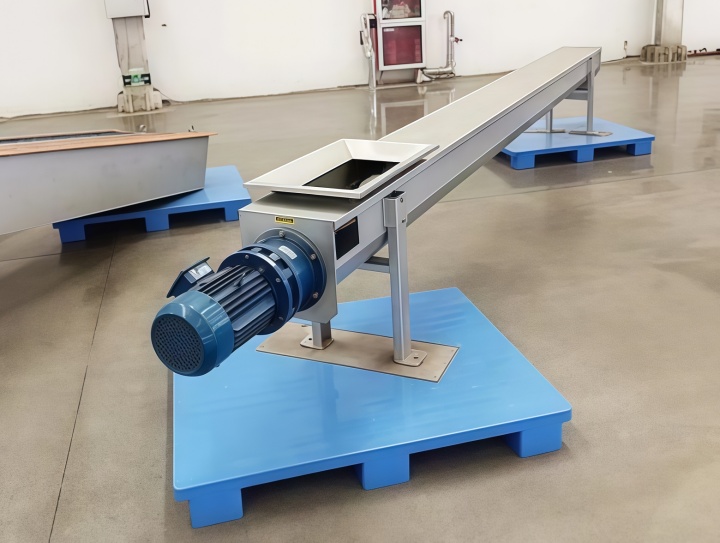
How Does Shaftless Screw Conveyor for Dewatered Sludge Cake Operate?
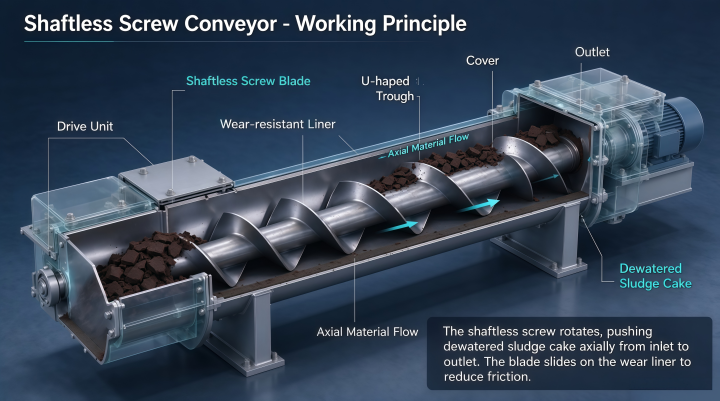
During operation, the drive unit rotates the shaftless screw. Sludge cake enters the U-shaped trough through the inlet and is pushed axially to the outlet by the blade. Wear-resistant liners are laid on the trough bottom, and the blade slides on the liners to reduce friction. The unit is interlocked with the dewatering machine. After the dewatering machine stops, the conveyor continues for five to ten minutes before stopping.
What Are the Technical Parameters of Shaftless Screw Conveyor for Dewatered Sludge Cake?
Parameters are divided by model. Actual selection should be corrected according to solids content and inclination angle.
| Model | Screw Diameter | Capacity | Drive Power | Screw Speed | Typical Conveying Length |
| WLS260-N | 260 mm | 2 to 4 m³/h | 1.5 to 2.2 kW | 15 to 20 rpm | 3 to 6 m |
| WLS300-N | 300 mm | 3 to 6 m³/h | 2.2 to 3 kW | 15 to 20 rpm | 3 to 8 m |
| WLS320-N | 320 mm | 4 to 6 m³/h | 2.2 to 4 kW | 15 to 20 rpm | 3 to 10 m |
| WLS355-N | 355 mm | 6 to 8 m³/h | 3 to 4 kW | 15 to 20 rpm | 3 to 10 m |
| WLS360-N | 360 mm | 6 to 10 m³/h | 3 to 5.5 kW | 15 to 20 rpm | 3 to 12 m |
| WLS400-N | 400 mm | 8 to 12 m³/h | 4 to 5.5 kW | 15 to 20 rpm | 4 to 12 m |
| WLS420-N | 420 mm | 10 to 16 m³/h | 4 to 7.5 kW | 15 to 20 rpm | 4 to 12 m |
| WLS450-N | 450 mm | 16 to 30 m³/h | 5.5 to 11 kW | 15 to 20 rpm | 4 to 12 m |
| WLS500-N | 500 mm | 20 to 35 m³/h | 7.5 to 15 kW | 15 to 20 rpm | 5 to 15 m |
| WLS550-N | 550 mm | 25 to 45 m³/h | 11 to 18.5 kW | 15 to 20 rpm | 5 to 15 m |
What Advantages Does Shaftless Screw Conveyor for Dewatered Sludge Cake Offer?
The product's performance in anti-clogging, sealing, maintenance and layout comes from its shaftless structure. The following items describe operating records from actual projects.
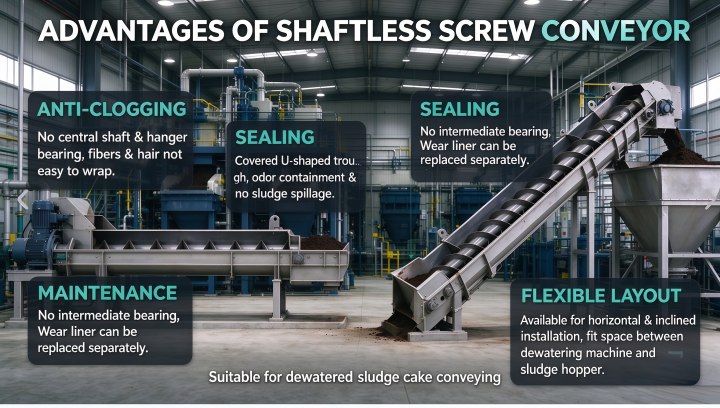
Anti-clogging. Without a central shaft and intermediate hanger bearing, fibers and hair do not easily wrap around. The Garmerwolde wastewater treatment plant in the Netherlands adopted this equipment in a 2024 retrofit to connect to a filter press, achieving continuous conveying and reduced maintenance.
Sealing. The U-shaped trough with a cover forms an enclosed space. Odors do not easily escape, and sludge cake does not easily spill.
Maintenance. The intermediate bearing is removed, so lubrication and bearing replacement are not needed. The bottom liner can be replaced separately after wear.
Layout. It can convey horizontally or on an incline, adapting to the space between a dewatering machine discharge outlet and a sludge storage hopper. The Bahr El-Baqar wastewater treatment plant in Egypt uses a 2 km conveyor of this type to move sludge to the drying area.
What Materials Is Shaftless Screw Conveyor for Dewatered Sludge Cake Suitable For?
Municipal sludge, industrial chemical sludge, food processing waste and papermaking and sugar fiber residue differ in moisture, stickiness and fiber content. The product's adaptation focus varies by scenario. The following items explain.
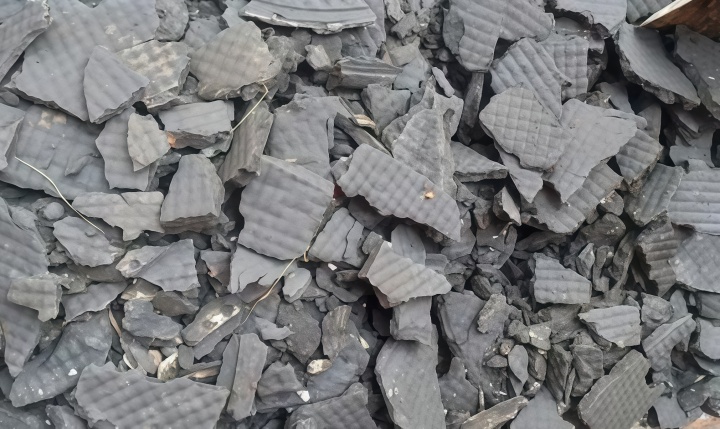
Municipal dewatered sludge cake. Moisture content 75 to 85, higher fiber content, requires continuous operation. The St. Clair wastewater treatment plant in the United States uses this equipment to receive dewatered sludge from a rotary filter press.
Industrial chemical sludge cake. Sludge cake from chemical, pharmaceutical and electroplating wastewater treatment. When corrosive components are present, stainless steel contact parts can be selected. The Clear Path Recycling project in North Carolina, United States, uses an inclined unit of this type to convey viscous and abrasive material.
Food processing organic waste. Fruit and vegetable waste, slaughterhouse waste and similar materials have higher moisture content. The enclosed structure helps control odor diffusion.
Papermaking and sugar fiber residue. Fibrous and sticky, easily wrapped around a shafted structure. This structure has good adaptability.
Selection Considerations for This Product
There are two calculation issues easily overlooked in selection, involving long-distance power configuration and capacity correction for large inclination angles. The following items explain.
When the conveying distance is above eight meters but power is configured as for a short-distance case, the screw torque demand increases non-linearly, and sludge cake may not be pushed in the rear section of the trough.
When the installation inclination is above fifteen degrees without capacity correction, sludge cake tends to slide back under gravity. The correction factor is about 0.7 to 0.8.
Frequently Asked Questions
What should be done if Shaftless Screw Conveyor for Dewatered Sludge Cake slips when the sludge cake moisture content is low?
When moisture content is below 60, sludge cake tends to clump and slip. A mixer can be added upstream, or the speed can be adjusted from 20 rpm to 16 rpm.
Can Shaftless Screw Conveyor for Dewatered Sludge Cake start in low outdoor temperatures?
In low temperatures, water in the sludge cake may freeze. A heat tracing cable can be added outside the trough, covered with 50 mm insulation.
How can sudden increased vibration in the trough of Shaftless Screw Conveyor for Dewatered Sludge Cake be diagnosed?
A common cause is a gap of 3 mm or more between the blade and the liner. Stop the machine, turn the screw manually, and measure the gap at the middle of the trough.
What should be noted when commissioning Shaftless Screw Conveyor for Dewatered Sludge Cake in linkage with a dewatering machine?
Start the conveyor before the dewatering machine. After the dewatering machine stops, let the conveyor run for five to ten minutes before stopping.
Sugested Products
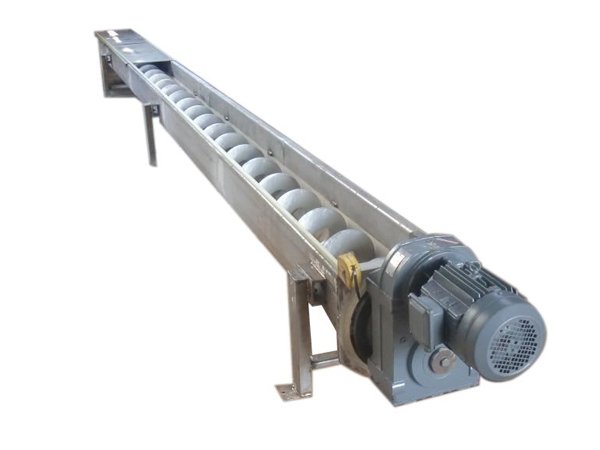
shaftless screw conveyor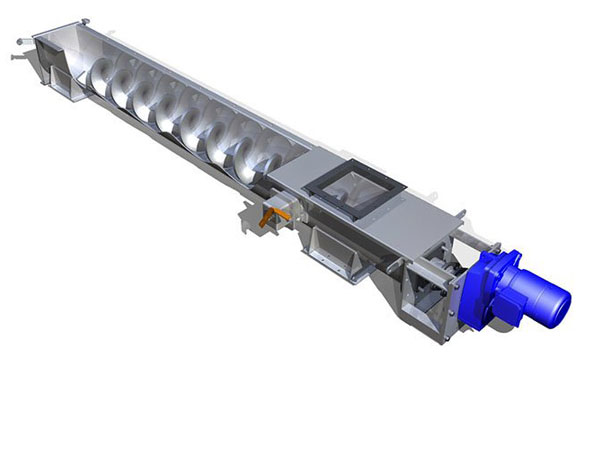
Sludge Screw Conveyor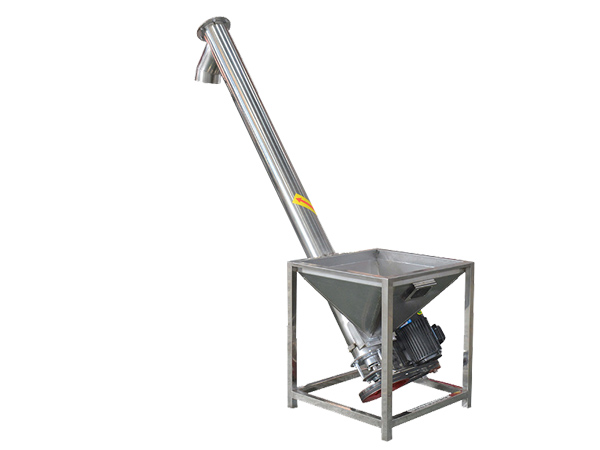
Inclined Screw Conveyor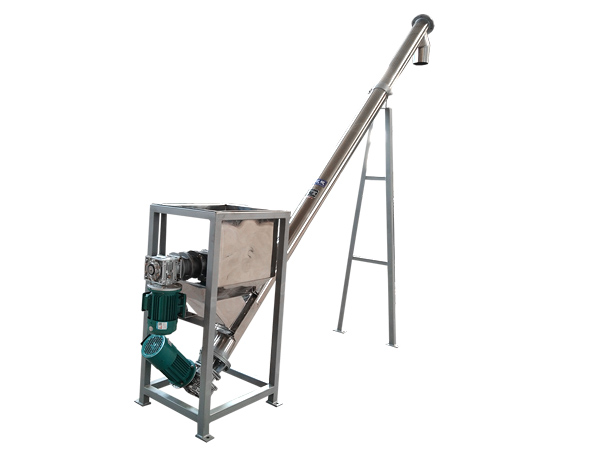
Stainless Steel Screw Conveyor