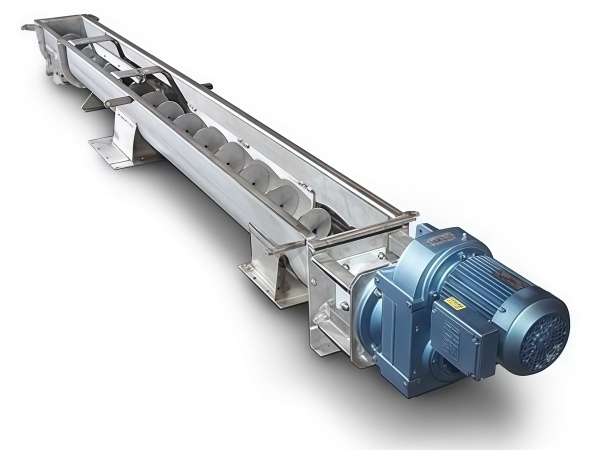
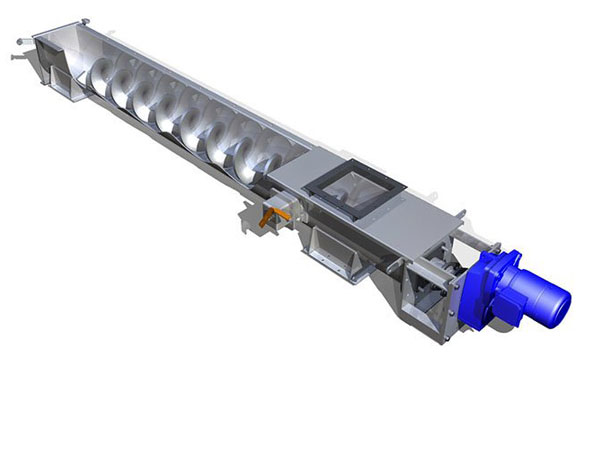
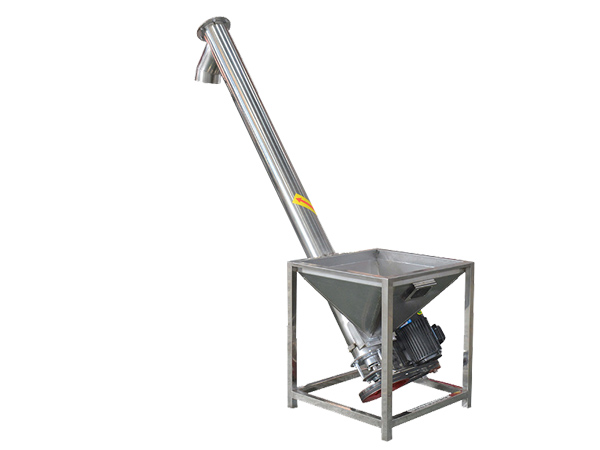
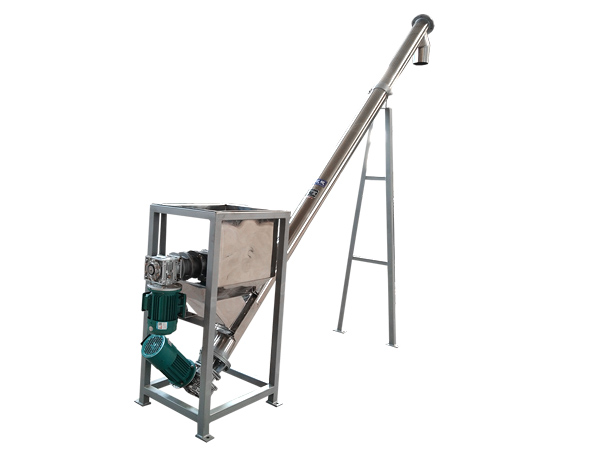
Shaftless Screw Conveyor for Dewatered Sludge Cake Selection
Monday September-28 2026 17:15:21
For dewatered sludge cake transport, the core selection criterion for a Shaftless Screw Conveyor for Dewatered Sludge Cake is whether the cake dry solids content remains within the 18 to 35 percent range. The parameters and cases in this article are based on publicly available operating reports from several municipal projects worldwide.
The global shaftless screw conveyor market was valued at about USD 321.5 million in 2025 and is expected to reach USD 467.2 million by 2032, growing at a compound annual rate of about 5.5 percent. The following sections cover material evaluation, blockage prevention, inlet interface differences, and capacity matching.
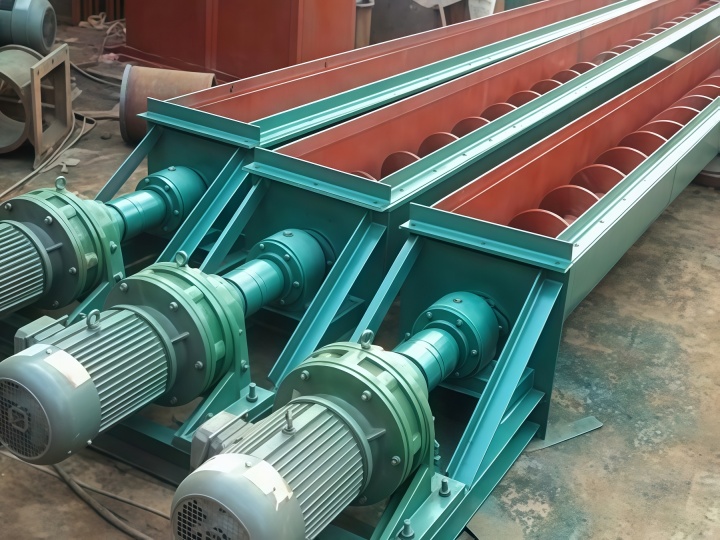
Key Evaluation Dimensions for Shaftless Screw Conveyor for Dewatered Sludge Cake Selection
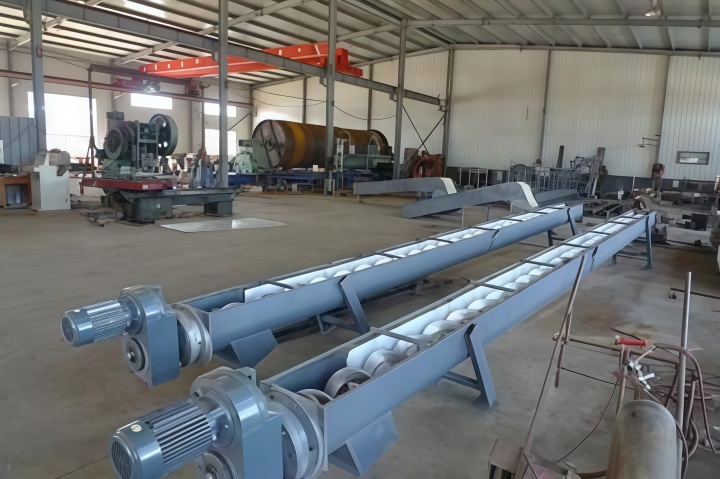
Mechanically dewatered sludge cake typically has a dry solids content between 18 and 35 percent. Below 18 percent, it approaches a paste-like state; above 35 percent, it begins to granulate and can increase abrasive wear on the flights. Screw diameter affects the effective volume limit of the trough, pitch controls axial advance, and an inclination above 15 degrees increases the chance of material backflow.
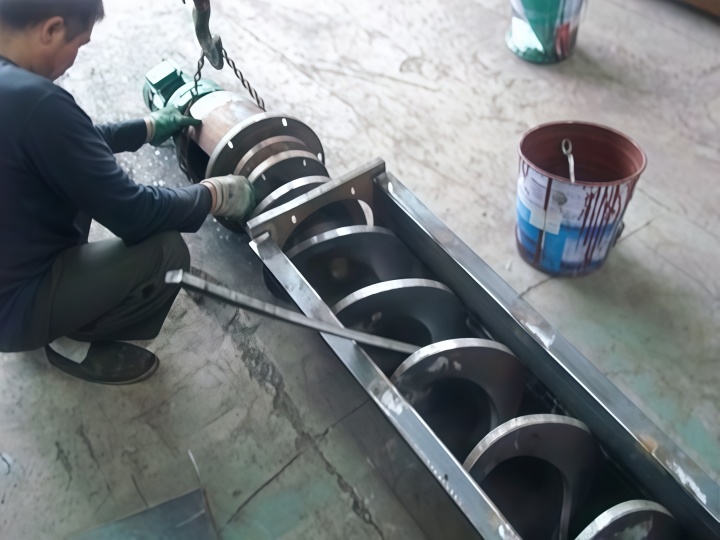
The following parameters come from public reports of several municipal projects:
| Parameter | Viscous sludge cake measured range | Granulated sludge cake measured range |
|---|---|---|
| Pitch-to-diameter ratio | 0.8 to 1.0 | 1.0 to 1.2 |
| Trough fill rate | below 30 percent | 30 to 40 percent |
| Rotation speed | 10 to 15 rpm | 15 to 20 rpm |
How to Prevent Blockage and Wear in Shaftless Screw Conveyor for Dewatered Sludge Cake Selection
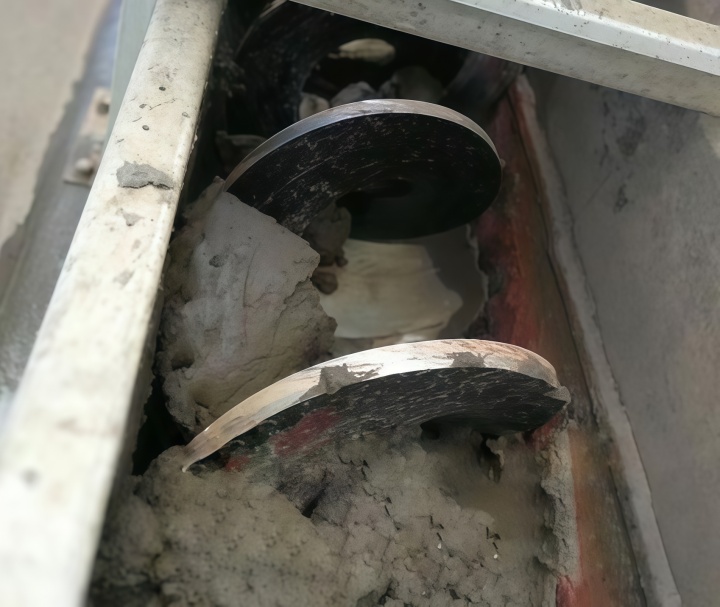
Blockage usually starts with bridging near the inlet. Keeping trough fill rate below 30 percent is a key measure. The Garmerwolde wastewater treatment plant in the Netherlands updated its sludge cake transfer facility in 2024, connecting a shaftless screw conveyor directly to a filter press and reducing energy consumption by about 30 percent. The project was built by Jansen en Heuning and completed while the plant continued operating.
The South Dearborn wastewater treatment plant in Indiana, USA, replaced its dewatering system in 2023, installing five shaftless screw conveyors integrated with multi-disc screw presses. Measured cake dry solids content reached above 18 percent, and filtrate quality reached above 98 percent. The original belt thickeners were replaced due to higher operating costs and frequent maintenance.
Field troubleshooting steps can quickly narrow the fault range: check whether drive current is more than 15 percent above normal; stop the machine and manually turn the screw to feel if resistance is even; open the inlet cover to observe pile shape; measure the gap between flight outer edge and trough liner, and replace the liner when the gap is more than twice the original. Troubleshooting this equipment should combine drive current, manual turning resistance, and liner gap.
Inlet Interface Differences for Shaftless Screw Conveyor for Dewatered Sludge Cake Selection
Belt filter presses discharge a continuous ribbon, so the inlet width only needs to be slightly larger than the belt width. Centrifuges discharge in intermittent lumps, so a buffer baffle should be installed. Plate and frame filter presses discharge in periodic large batches, so a buffer hopper above the inlet is advisable.
The Malabar wastewater treatment plant in Sydney, Australia, uses more than 16 shaftless screw conveyors for sludge transport. Some units are 20 meters long with an installation inclination of 32 degrees. This case shows that shaftless screw conveyors can operate in long-distance and large-inclination conditions, but drive power needs to be increased accordingly.
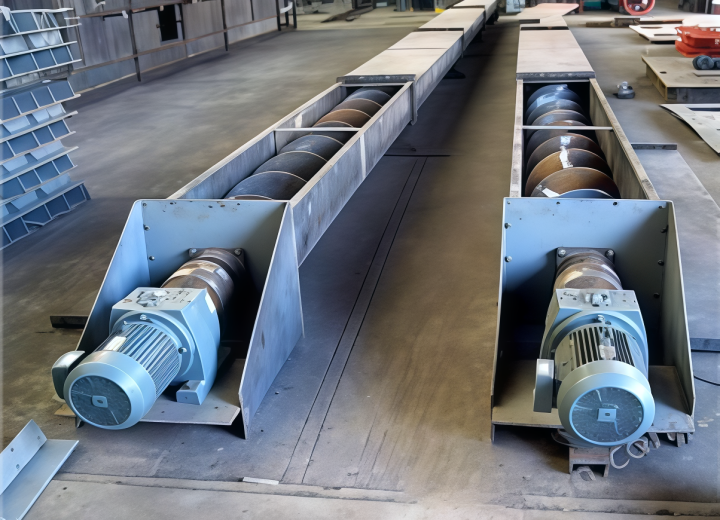
How to Calculate Capacity Requirements for Shaftless Screw Conveyor for Dewatered Sludge Cake Selection
The calculation starts with the dry solids throughput of the upstream dewatering equipment. Divide the hourly dry solids output by the cake dry solids content to get the wet cake volume flow. Allow a 20 to 30 percent margin in selection. Low speed with higher fill rate is an effective strategy for viscous materials. Recommended rotation speed is 10 to 20 rpm.
Conclusion
The core of selection is matching sludge properties, screw geometry, and capacity requirements. Global projects show that the shaftless structure reduces winding risk by removing the central shaft. For a specific project, providing actual cake test data and dewatering equipment parameters is more helpful than a general description.
FAQ
Q: Can this Shaftless Screw Conveyor for Dewatered Sludge Cake Selection be used in an explosive atmosphere, and what protection class is needed?
A: Motor and junction box should use a corresponding explosion-proof rating, commonly ExdIIBT4 or higher. All trough connections should have static grounding.
Q: Will continuous low-load operation of this Shaftless Screw Conveyor for Dewatered Sludge Cake Selection cause abnormal wear on flights or liners?
A: Continuous low load means low material fill, so flights may scrape the liner while idling. It is advisable to reduce speed appropriately or adjust the gap between flights and liner periodically.
Q: How to judge the replacement cycle for spare parts of this Shaftless Screw Conveyor for Dewatered Sludge Cake Selection?
A: Liner wear can be measured periodically with a depth gauge. Replace when wear is more than two-thirds of original thickness. If the hardfacing layer on flight edges is worn through, repair by welding in time.
Q: Can the control system of this Shaftless Screw Conveyor for Dewatered Sludge Cake Selection connect to an existing DCS or PLC?
A: Yes. Usually the drive motor run, fault, current, and ready signals are required. The specific interface protocol should match the plant control system.