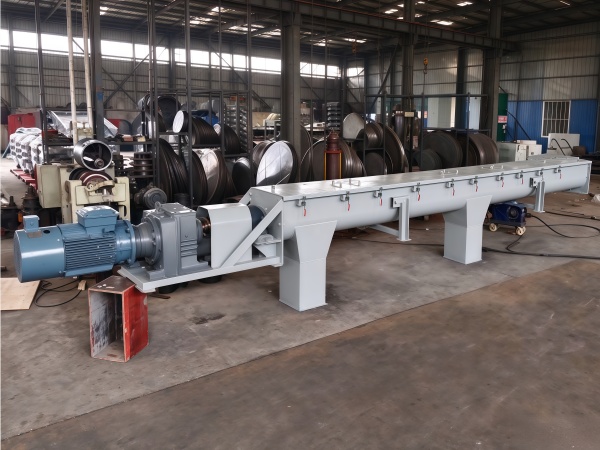
Sugar Cane Bagasse Conveyor
Sugar Cane Bagasse Conveyors are designed for handling wet, fibrous bagasse in sugar mills, biomass power plants, and paper mills. They feature anti-tangling screw blades and corrosion-resistant troughs for reliable operation. Prices typically range from $5,350 to $35,500.
Screw diameter: 114-600 mm
Conveying capacity: 1-100 m³/h
Max inclination angle: ≤60°
Screw speed: 62-130 r/min
Motor power: 2.2-18.5 kW
What is a Sugar Cane Bagasse Conveyor?
This page provides selection parameters, anti-tangling design details, maintenance guidance, and industrial application cases for the Sugar Cane Bagasse Conveyor . Below you will find the technical specifications, failure prevention methods, and real-world configurations for wet, fibrous bagasse transport.
This system handles large volumes of material, with typical conveying capacities ranging from 30 tons per hour in local regional sugar mills to over 300 tons per hour in centralized sugar refining facilities. The material is moved mechanically, with continuous chains, robust scrapers, or heavy-duty rubber belts pushing or conveying large volumes of loose fiber clumps along structured metal troughs.
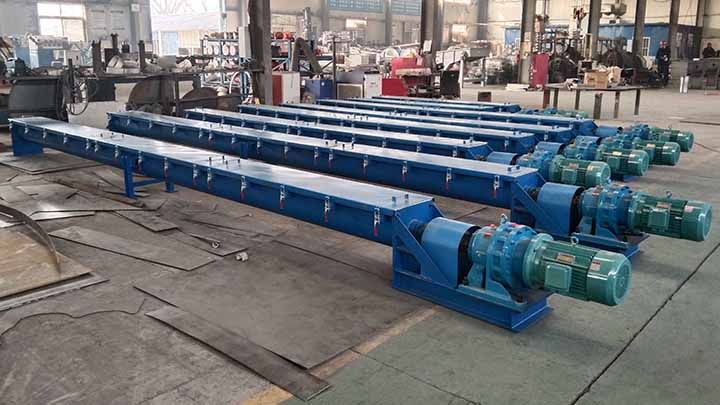
Overcoming Fiber Tangling and Corrosion in Bagasse Transportation
Standard bulk material handling equipment fails when the task is to move chopped sugarcane waste. Raw bagasse contains approximately 45% to 55% moisture and is mixed with residual sucrose, forming a long, fibrous, interwoven matrix. Standard belt systems or light grain screw conveyors experience severe jamming as long fibers become entangled in unprotected rotating shafts, tail rollers, and hanger bearings. Within a short time, the buildup generates high friction, causing the motor to overheat and seize. Furthermore, high moisture combined with ambient air creates a slightly acidic environment that rapidly corrodes untreated carbon steel, while embedded field mud and gravel can wear down standard trough liners within a single crushing season. To address these specific mechanical challenges, custom-built bagasse conveyors incorporate heavy-duty forged cable chains, raised trough walls, and anti-tangling blade geometry.
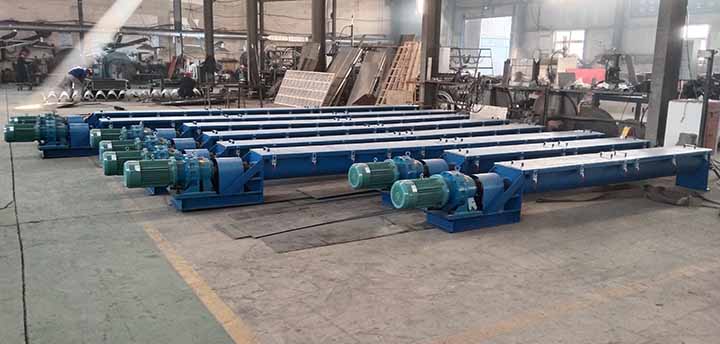
Common Failure Modes and Engineering Solutions
Based on field data from sugar mills and biomass power plants, the following failure modes are most frequently observed when standard conveyors are used for sugar cane bagasse. Each failure mode is paired with a proven engineering solution applied in custom-built bagasse conveyor systems.
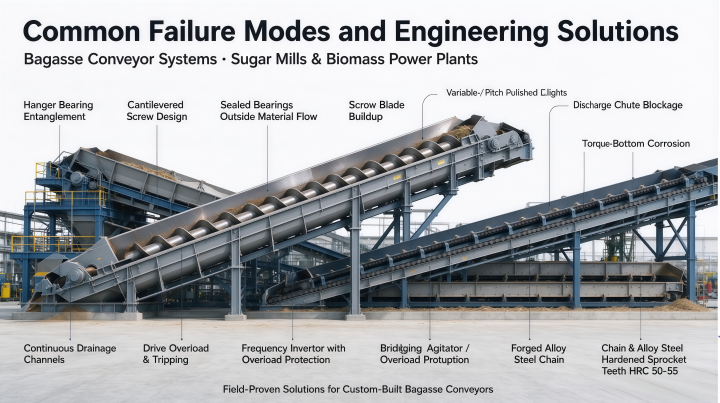
Hanger bearing entanglement: Long fibers wrap around unprotected hanger bearings, causing shaft seizure and motor overload. Solution: Eliminate hanger bearings by using a cantilevered screw design or increase bearing spacing to reduce wrapping points. For scraper chain conveyors, use sealed bearings mounted outside the material flow.
Screw blade buildup: Wet bagasse sticks to the screw flights, reducing conveying efficiency and causing uneven discharge. Solution: Use variable-pitch screw blades with polished surfaces (Ra ≤ 0.8 μm) and apply anti-stick coatings such as PTFE or chrome plating on the flight edges.
Trough bottom corrosion and liquid accumulation: Acidic moisture collects at the bottom of the casing, corroding carbon steel within one crushing season. Solution: Install continuous drainage channels along the trough bottom and line the lower section with SUS304 or SUS316L stainless steel. Slope the trough toward the discharge end to prevent standing liquid.
Drive overload and frequent tripping: Fiber jams and high starting torque cause motor overload and thermal protection trips. Solution: Increase the gearbox reduction ratio to provide higher torque at lower speed, and install a torque-limiting coupling or frequency inverter with overload protection.
Discharge chute blockage: Interwoven fiber clumps bridge over the discharge opening, stopping material flow. Solution: Increase the discharge opening cross-section by at least 30% compared to standard designs, and add an anti-bridging agitator or vibrator at the chute.
Chain and scraper wear: Abrasive field mud and gravel embedded in bagasse wear down chains, sprockets, and scrapers rapidly. Solution: Use forged alloy steel chains with hardened sprocket teeth (HRC 50-55) and replaceable polymer or wear-resistant steel scrapers. Inspect chain tension weekly and lubricate every 24 hours during crushing season.
Advantages of Heavy-Duty Bagasse Handling Equipment
During uninterrupted seasonal crushing, custom-built bagasse conveyors deliver predictable operational continuity. The deep trough design accommodates the low bulk density of loose sugarcane waste, typically ranging from 100 to 200 kg/m³. With trough depths of 400 mm or more, the system prevents crosswinds from dispersing fibers throughout the plant area, keeping the working environment clean and reducing material loss. The confined design also directs residual acidic moisture to the bottom of the casing, where built-in drainage channels collect liquid runoff at a rate of 0.5 to 2 liters per hour per meter of trough length. This keeps the surrounding ground dry and significantly reduces structural corrosion throughout the facility.
By replacing manual tractor transport with automated mechanical conveyors, a 5,000 t/d sugar mill achieved a stable boiler fuel supply and reduced temperature fluctuations in the thermal power generation system from ±50°C to within ±10°C. In one specific case, a scraper chain conveyor was installed to transport wet bagasse from the pressing workshop to the boiler house. The conveyor handled 150 tons per hour over a distance of 80 meters at an inclination of 25 degrees. During the entire six-month crushing season, the system operated continuously without a single unplanned downtime event, demonstrating the reliability of heavy-duty bagasse handling equipment under the most demanding conditions.
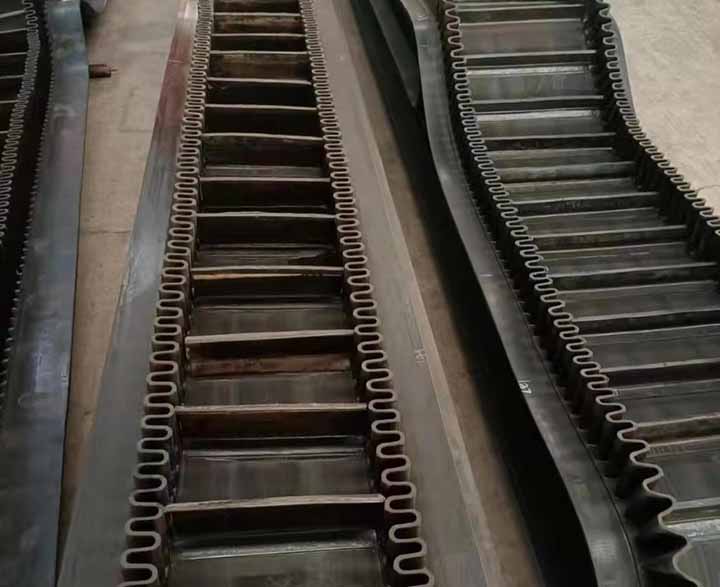
Main Types of Sugar Cane Bagasse Conveyor Systems
Choosing the correct machine configuration depends on the physical layout and distance of the processing facility. Three common types are scraper chain conveyors, belt conveyors, and screw conveyors.
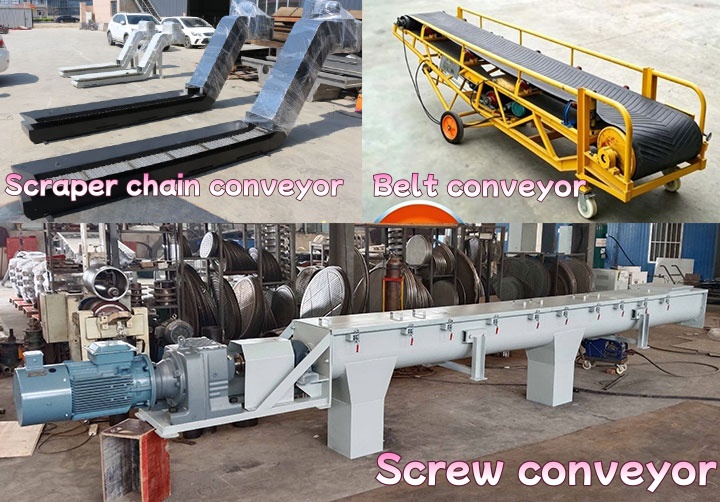
Scraper Chain Conveyors: Suitable for heavy-duty boiler feeding and transport on steep inclines up to 30 degrees. Heavy-duty forged chains pull steel or polymer scrapers through deep rectangular troughs, dragging the interwoven sugarcane fibers forward without slippage. Typical capacity ranges from 30 to 300 t/h, with chain speeds of 0.3 to 0.8 m/s and hardened sprockets (HRC 50-55). Weekly chain tension checks and daily lubrication are required. Compared with belt conveyors, they handle steeper inclines but consume more power and need more frequent wear-part replacement.
Belt Conveyors: Suitable for long-distance open-air transport to open storage yards. These conveyors utilize thick, multi-layered rubber belts running on deep trough-shaped idlers to prevent low-density bagasse from overflowing from the sides during long-distance, high-speed transport. Best for angles below 18 degrees, distances from 50 to several hundred meters, and capacities of 50 to 500 t/h. Belt speed is typically 1.0 to 2.5 m/s. They offer lower power consumption than scraper chains but cannot handle steep inclines and are more prone to wind scattering.
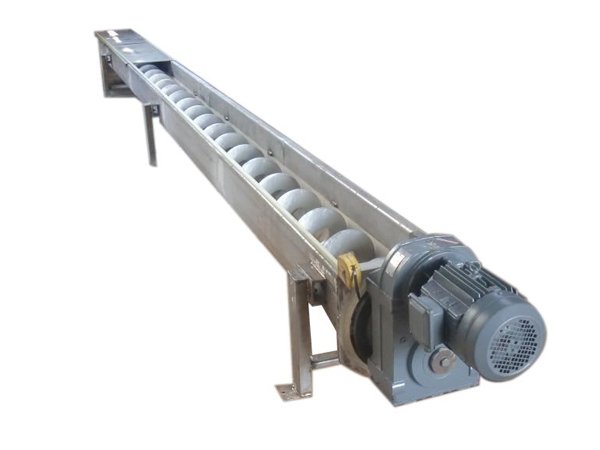
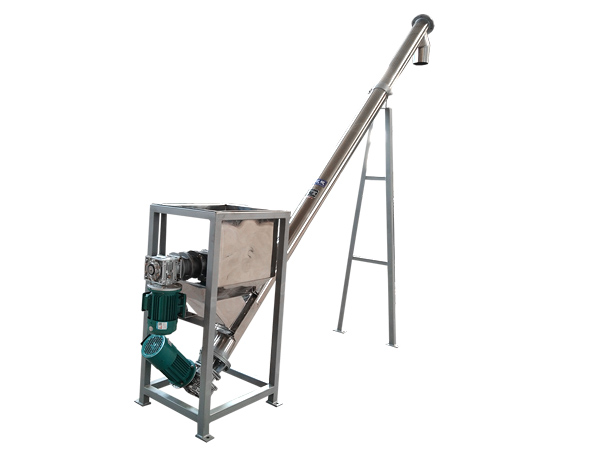
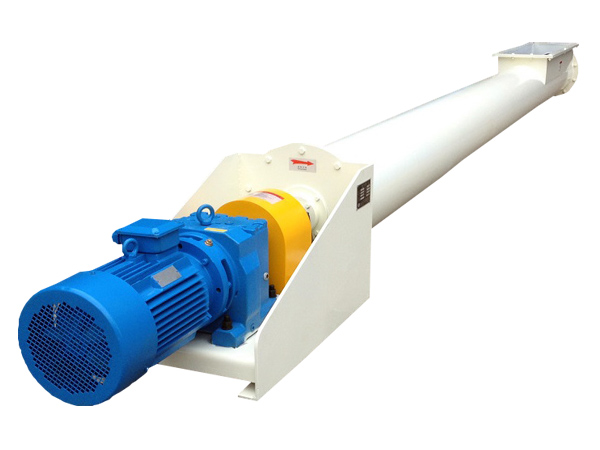
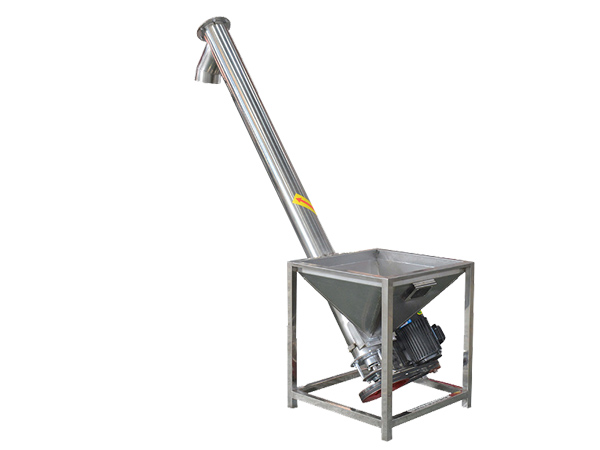
Screw Conveyors: Suitable for short-distance metering within boiler rooms and short-distance transport in confined spaces. This type of conveyor features specialized strip blades or segmented screws that deliver precise quantities to the furnace hopper while preventing long fibers from sticking around the central tube. Capacities range from 1 to 100 m³/h, screw speed 62 to 130 r/min, and inclined angles up to 60 degrees. They provide the most precise feeding control but are limited to short distances and lower capacities, requiring regular bearing lubrication and blade wear checks.
Parameter Table
| Model | LS114 | LS133 | LS159 | LS219 | LS245 | LS273 | LS315 | LS400 | LS500 | LS600 |
|
Diameter (mm) |
114 | 133 | 159 | 219 | 245 | 273 | 315 | 400 | 500 | 600 |
|
Rated speed (r/min) |
84- 130 | 84-130 | 84-130 | 84-130 | 84-130 | 84-130 | 84-130 | 62-100 | 62-100 | 62-100 |
|
Reference capacity (m³/h) |
1 | 1.3 | 5 | 15 | 20 | 30 | 40 | 45 | 70 | 100 |
|
Motor power (Kw) |
2.2-18.5 | |||||||||
|
Admission biggest gradient (o) |
<60 | |||||||||
Industrial Applications of Bagasse Conveying Equipment
Industrial bagasse handling systems can be applied in various processing environments, including sugar mill boiler feeding, outdoor storage yards, biomass pellet processing, paper fiber depigging and transfer, and biodegradable tableware molding feeding.
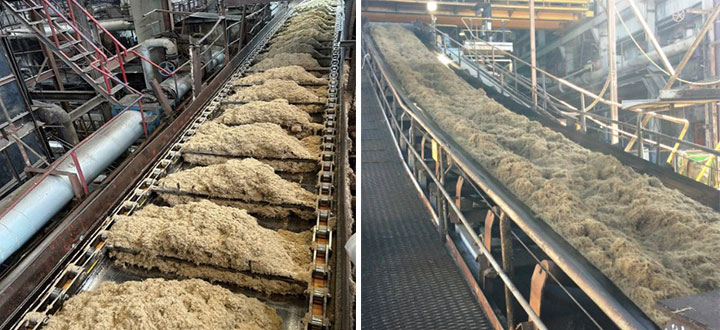
Biomass Power Generation: Conveyors directly transport moisture-containing bagasse from the final press unit, lifting it into a high-capacity storage hopper located directly above the biomass combustion boiler for use as the primary thermal fuel. For this application, scraper chain conveyors are typically recommended for inclined lifting up to 30 degrees and capacities of 100 to 300 tons per hour, while belt conveyors handle longer horizontal transfer runs before the lift.
Pulp and Paper Manufacturing: Machinery moves raw sugarcane waste into a dedicated depigging station, separating usable cellulose fibers from the pith cells before transferring the refined material to a chemical digester. Screw conveyors are often used for metered feeding into the depigging station at capacities of 5 to 50 m³/h, while belt conveyors manage longer-distance transfer between process stages.
Environmentally Friendly Tableware Production: The system conveys clean, depigging bagasse fibers to an automated pulp molding line, feeding them into a hydroforming oven, transforming the raw agricultural waste into biodegradable plates and containers. Screw conveyors with variable-pitch blades and polished surfaces are preferred for precise metering into the molding line, typically at capacities of 1 to 20 m³/h, to prevent fiber tangling and ensure uniform feed.
Frequently Asked Questions about Bagasse Conveyor Systems
Q: What is the price range for bagasse conveyors, and what factors affect this cost?
A: Prices typically range from $5,350 to $35,500. Costs are affected by conveyor length, inclination angle, and tonnage per hour. Using SUS304 stainless steel troughs, higher horsepower motors, and heavy-duty gearboxes will also increase investment.
Q: What is the expected service life of this equipment under continuous seasonal use?
A: The main frame and housing can last for more than 10 years. Wear parts such as forged chains, sprocket teeth, and bottom liners need to be inspected or replaced every 3 to 5 crushing seasons, depending on the degree of abrasion from the sugarcane.
Q: What routine maintenance procedures can prevent downtime?
A: During the crushing season, lubricate the bearings and chain links every 24 hours; check chain tension weekly to prevent jamming, and clean the bottom drain to prevent fiber buildup and blockage.
Q: What conveyor is best for sugar cane bagasse?
A: There is no single best type for all situations. Scraper chain conveyors are best for steep inclines and high capacities up to 300 t/h. Belt conveyors are best for long-distance horizontal transport. Screw conveyors are best for short-distance metering and confined spaces. The choice depends on angle, distance, and throughput.
Q: What is the maximum angle for a bagasse screw conveyor?
A: Standard screw conveyors can handle inclines up to 60 degrees, but for wet bagasse, the practical maximum is usually 45 degrees to prevent material backflow and jamming. For angles above 45 degrees, a scraper chain conveyor is recommended instead.
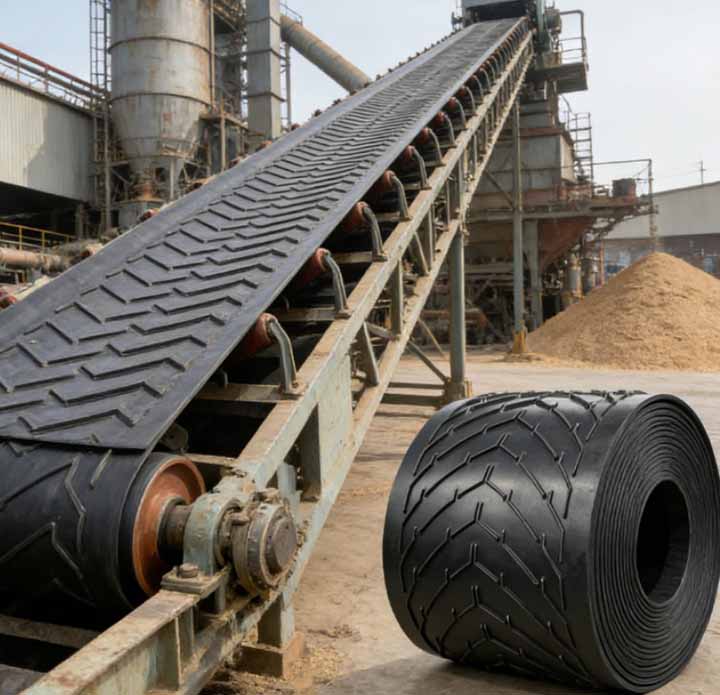
Bagasse conveyors provide automated, high-capacity mechanical transport of wet, fibrous agricultural waste between extraction workshops and storage or boiler facilities. The choice between scraper, belt, or screw configurations depends on the specific transport distance, inclination angle, and processing capacity required by the plant. Regular lubrication and proper material selection protect the machinery from structural wear and moisture corrosion during the long pressing season.