Sugar Cane Bagasse Conveyor Selection Guide
Thursday October-08 2026 13:49:50
Sugar Cane Bagasse Conveyor Selection starts with moisture content, conveying distance and incline. When moisture is above 55 percent, a chain-slat scheme should be considered first. When moisture is below 50 percent and the route is horizontal, a belt scheme is often economical.
Bagasse moisture usually ranges from 50 to 60 percent, and bulk density is low. Measured records from sugar mills in Louisiana in the United States show that bulk bagasse density is only 96 to 128 kg/m³. Fiber length can reach 10 to 30 mm. These light, loose, wet and tough material features make selection a recurring technical problem in sugar mill and biomass power plant equipment management.
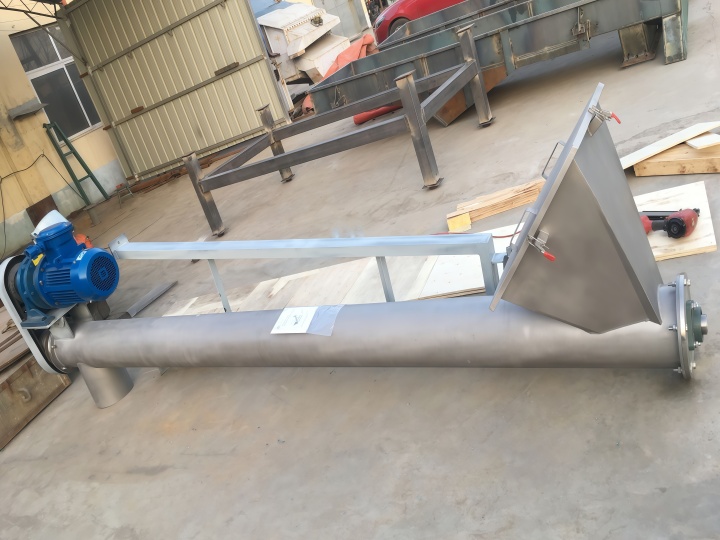
This article focuses on technical parameters and type comparison at the selection stage. Operation and maintenance details are outside its scope. This article was written by technical staff at our factory. Our factory has more than 15 years of field experience in sugar mill conveyor systems and has taken part in conveyor equipment upgrade projects at several sugar mills with a daily processing volume above 5000 t.
Sugar Cane Bagasse Conveyor Selection Step One Is to Face Material Features
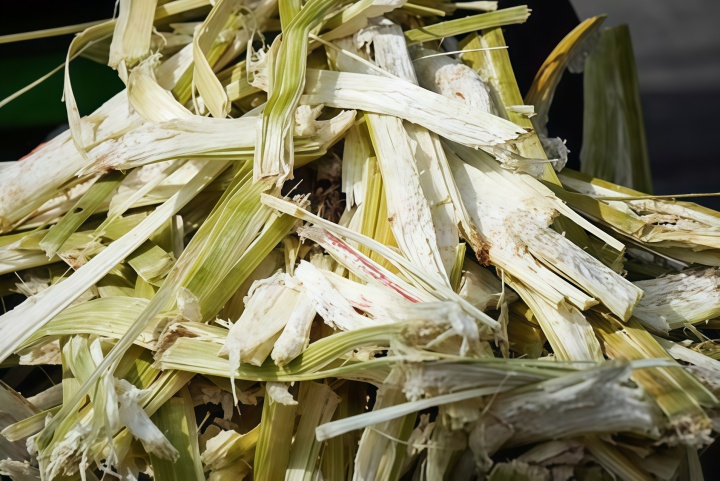
Bagasse moisture after pressing can reach above 50 percent. An ordinary tight belt does not breathe, and bagasse at the bottom can become moldy and ferment within 2 days. Fiber length is 10 to 30 mm, and toughness is close to that of hemp rope. Once fiber wraps around a smooth roller, the roller can jam and cause motor overload and burnout.
Low bulk density means very light weight for the same volume. When skirt height is not enough, bagasse can spill from both sides. Athani Sugars in Karnataka, India, uses 4 conveyors to handle sticky bagasse. Serious return-side carryback once caused a large increase in manual cleaning expense and equipment burden. Operators reported that material almost stuck along the entire belt path.
These features mean selection has to be designed around anti-stick, anti-wrap and anti-spill at the same time.
Sugar Cane Bagasse Conveyor Selection Needs to Define the Technical Boundary of Conveyor Types
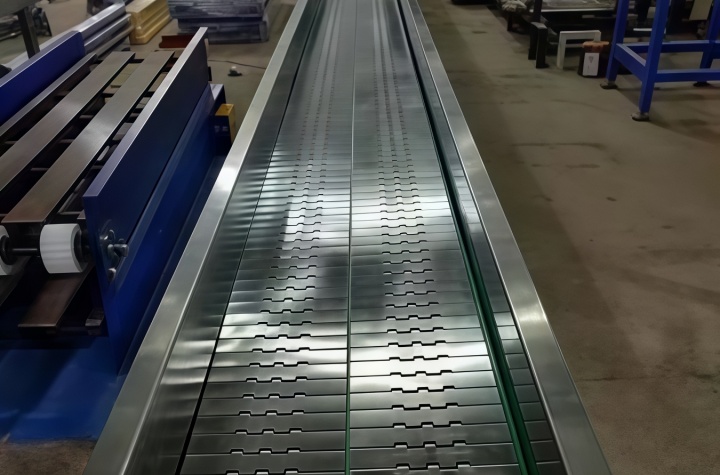
Main schemes fall into belt type and chain-slat type. A special study by the South African Sugar Technologists' Association points out that chain-slat conveyors have long held a major position in boiler feeding. However, their mechanical parts continuously face abrasion from bagasse and sand, and maintenance expense is higher.
Belt conveyors are simple in structure and lower in maintenance expense. They suit short and medium distance and horizontal or small incline conveying. They need a plough discharger for multi-point discharge. The South African study also notes that fine bagasse from modern shredders makes a belt type with plough discharger a workable option for boiler feeding.
The choice depends on the specific process layout of the sugar mill. If the boiler feed point is close to the pressing workshop and multi-point distribution is needed, a belt type with plough discharger is often economical. If the route includes a climb above 25° or a high-temperature flue gas environment, the weather resistance of the chain-slat type is noticeable.
Sugar Cane Bagasse Conveyor Selection Quantitative Basis Is the Match of Throughput and Line Speed
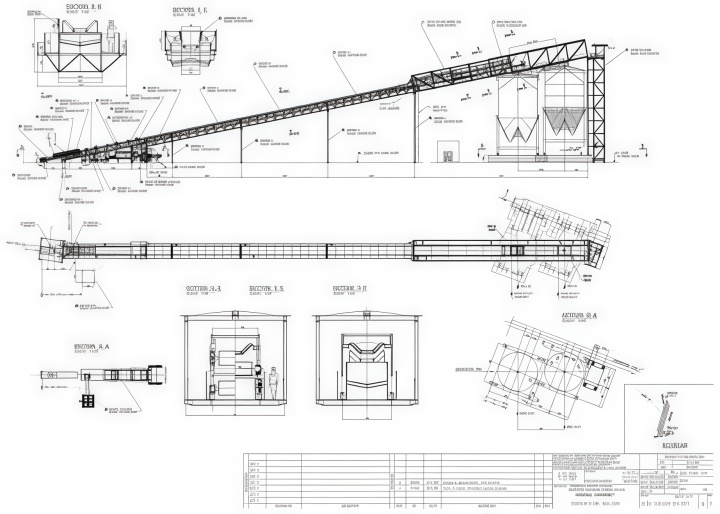
Core selection calculation centers on the relationship among throughput, belt width and belt speed. Agrolmos S.A. in Peru once completed a 150 m bagasse conveyor line design. The target throughput was 60 t/h. The CEMA standard method was used strictly for calculation. Final parameters were belt width 760 mm, belt speed 1.71 m/s and drive power about 15 kW.
For fibrous material, belt speed should not be too high. A recommended value is within 2 m/s. The aim is to reduce dust generation and material scatter. Belt width selection also needs to consider the fluffy nature of bagasse. Actual load section is often lower than that of general bulk material of the same weight, so the safety factor should be enlarged accordingly.
Sugar Cane Bagasse Conveyor Selection Value Over the Operating Cycle Is in Operating Expense Not Purchase Price
Conveyor purchase price is only part of total ownership expense. Bagasse is sticky. If return-side carryback is not cleared, it builds up on return idlers and can finally cause belt misalignment, adding manual cleaning expense and downtime.
San Pedro BioEnergy in the Dominican Republic uses 90 percent bagasse as fuel. It has a 30.5 MW turbine and 30 belt conveyors across the plant. Serious dust and spillage problems appeared at 3 transfer points. Newer parts failed early due to buildup, leading to excessive downtime and rising maintenance expense. The plant solved the problem by redesigning transfer points and installing heavy-duty cleaners.
Tracking data from the South African Sugar Technologists' Association shows that a correctly selected bagasse conveyor system can run continuously for 8 to 10 years under normal maintenance, with annual maintenance expense kept within 5 percent of purchase price. In corrosive environments, stainless steel chains or galvanized frames need higher initial input, but can clearly delay structural rust and replacement cycles.
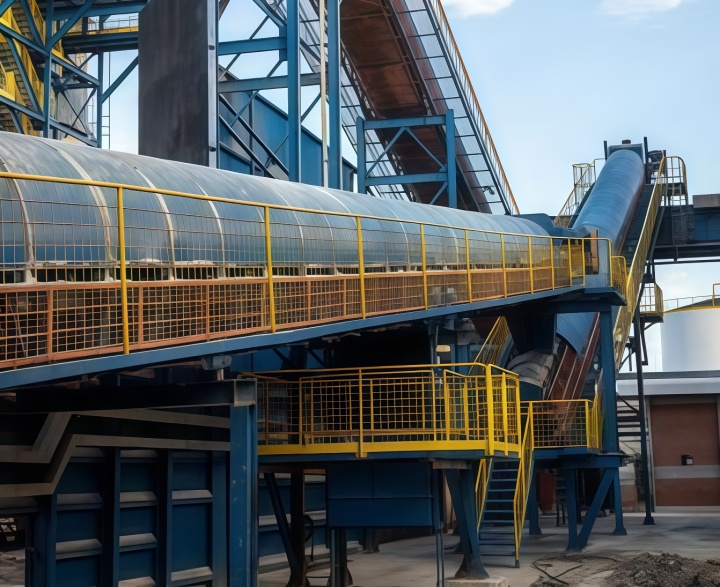
Key Parameter Quick Comparison
The table below compares core parameters of the two main types for initial screening.
| Comparison Item | Belt Conveyor | Chain-Slat Conveyor |
| Typical belt width or pan width | 760 to 1000 mm | Customized by pitch |
| Recommended belt or chain speed | 1.7 to 2 m/s | Not above 37 m/min |
| Upper incline limit | Not above 20° | Can reach above 60° |
| Multi-point discharge | Plough discharger | Gate control |
| Annual maintenance expense share | 3 to 5 percent of purchase price | 5 to 8 percent of purchase price |
| Typical application | Short and medium distance horizontal conveying | Large incline and high throughput |
New Considerations in 2026
Planners need to watch three trends. South African sugar industry statistics show that peak crushing rate grew from 216 t/h in 1964 to 532 t/h in 1999. Six sugar mills had a crushing rate above 400 t/h. Continuous growth in single-line throughput places stricter requirements on drive system reliability and structural stiffness.
At the same time, dust explosion protection rules are tightening in several production regions. A biomass fuel power plant in France faces dust explosion risk because of the high flammability of bagasse. All conveyor systems there need to meet EU ATEX rules. The plant solved the issue by installing heavy-duty cleaners that meet ATEX rules.
Modular design is also spreading. It allows conveyors to replace worn parts in sections without stopping production, reducing the impact of unplanned downtime.
FAQ
How to Handle High-Moisture Slipping in Rainy Season for Sugar Cane Bagasse Conveyor Selection?
Diamond rubber lagging can be used on the drive pulley, and two V-shaped cleaners can be added to reduce water film and sticky material. A handheld digital tension meter can measure belt tension during slipping to judge whether the take-up device needs adjustment. Before the rainy season, check drainage ditches and covers to keep rain from entering the conveyor section.
What to Check in Sugar Cane Bagasse Conveyor Selection When the Drive Motor Trips Often?
First measure no-load current and load current to judge whether the cause is mechanical jamming or a low electrical protection setting. For heavy-load starting, a soft starter or variable frequency control is suggested.
Usual Budget Range and Delivery Time for Sugar Cane Bagasse Conveyor Selection?
For a 60 t/h belt conveyor, the domestic purchase price in China is roughly 150,000 to 300,000 yuan. A chain-slat type is 40 to 60 percent higher. Standard delivery time is 4 to 8 weeks. A custom large-incline model may extend to 12 weeks.
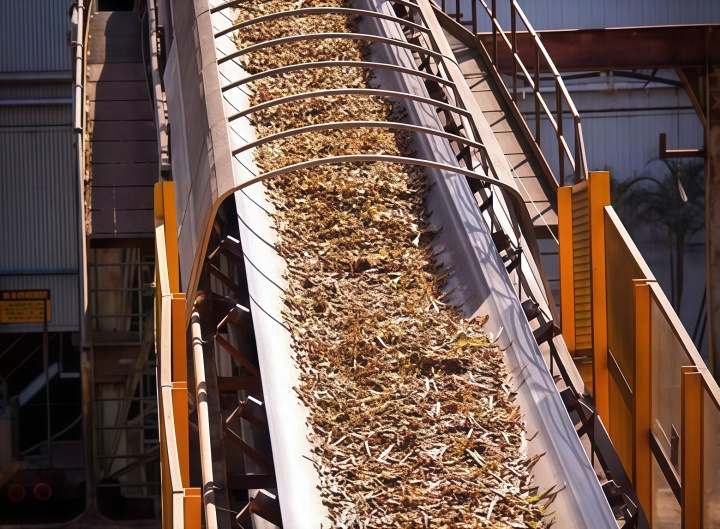
Sugar Cane Bagasse Conveyor Selection has no single answer that fits all cases, but there is a selection logic to follow. First confirm material moisture and fiber features. Then screen conveyor types based on route layout and throughput needs. Finally use a standard calculation method to lock belt width, belt speed and drive power.
If any of these three steps goes wrong, the problem will show up within 3 to 6 months after startup as spillage, misalignment or motor overload. If you have specific throughput data and site layout conditions, you can use the type comparison table and CEMA calculation example in this article for initial screening, narrow the type range, and then enter the inquiry stage.