Gypsum Belt Conveyor Selection Guide
Friday October-09 2026 09:26:03
Gypsum materials are increasingly transported in building materials, chemical desulfurization, and mining applications, yet belt conveyor failure rates remain high, often rooted in misjudging material properties during initial selection. An effective Gypsum belt conveyor Selection should move beyond general conveyor thinking and build judgment logic from adhesion, moisture fluctuation, and abrasion characteristics.
The core conclusion of this article is: the primary basis for gypsum conveyor selection is material moisture content and particle size, not throughput. Our factory has participated in selection and commissioning for multiple gypsum board production lines and desulfurization gypsum conveying projects. The following content is based on actual operating data.
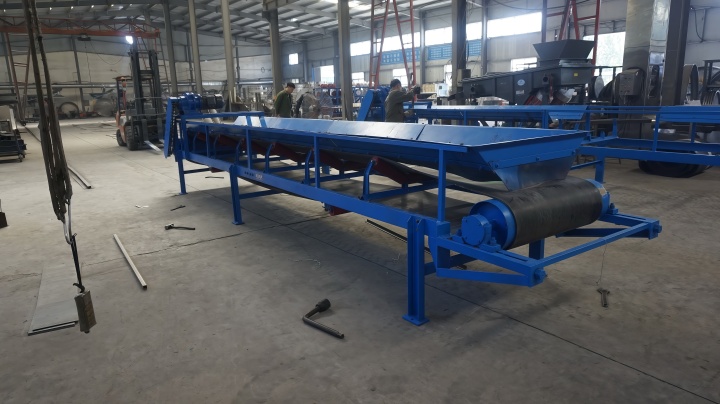
Material Properties Affecting Gypsum Belt Conveyor Selection Fundamentals
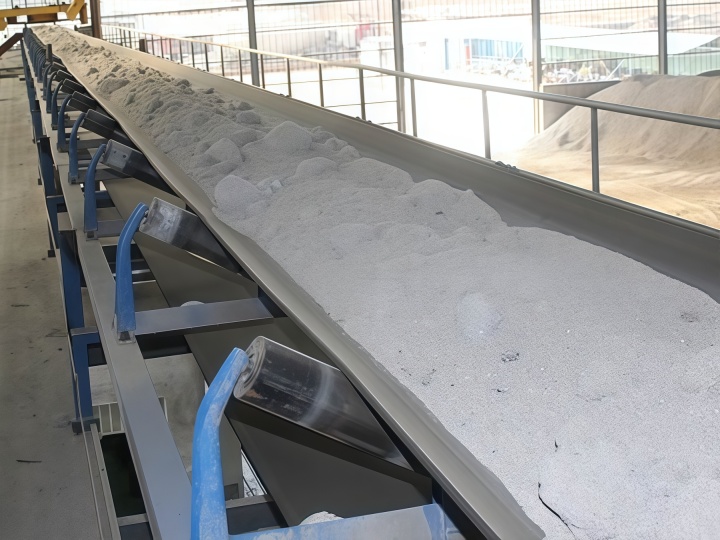
Selection does not start with a parameter table, but with confirming particle size distribution, moisture content range, and temperature conditions. In desulfurization gypsum projects we have handled, moisture content fluctuates from 8 to 22, particle size is concentrated between 20 and 80 microns, and fines below 30 microns account for over 40 percent. Adhesion is strong, and ordinary rubber belt surfaces easily accumulate material, increasing cleaner load and causing belt misalignment.
Natural gypsum after mining typically has moisture content below 5, with particle sizes ranging from a few microns to several millimeters, requiring impact and tear resistance. Calcined gypsum powder is very fine. Saint-Gobain product data sheets show that 90 percent of particles pass a 90-micron sieve, with loose bulk density of 900 kg/m³, and dust emission is obvious, requiring sealed dust control.
Ignoring these differences and applying general parameter tables is a common cause of spillage, blockage, and abnormal wear.
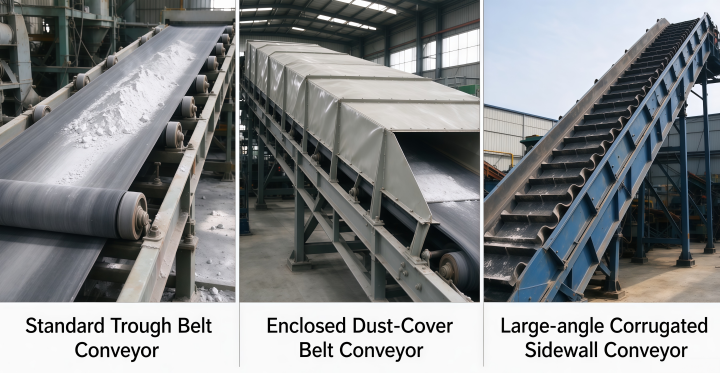
Three Conveyor Types in Gypsum Belt Conveyor Selection and Their Application Boundaries
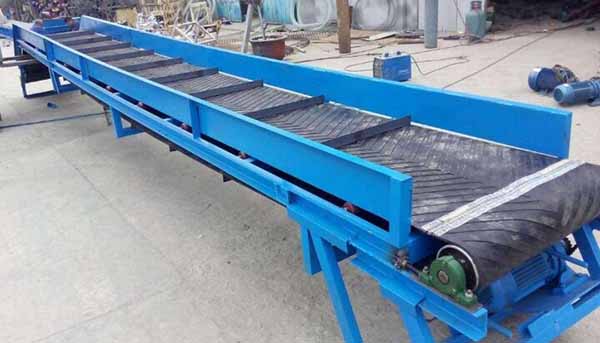
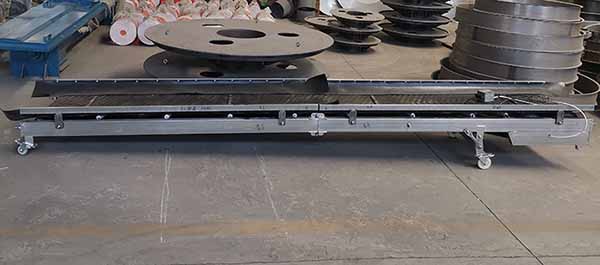
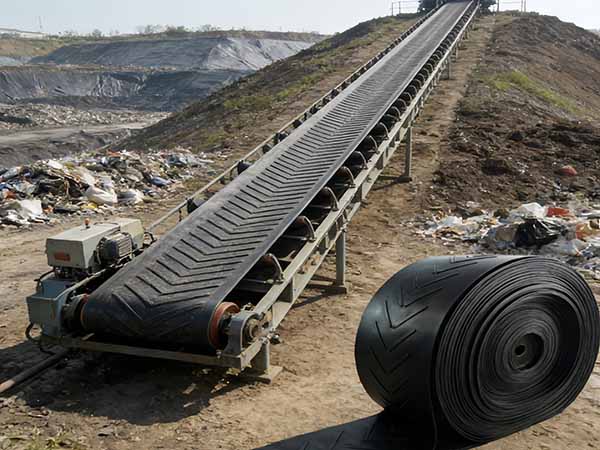
Standard trough belt conveyors use three-roller idlers, suitable for horizontal to 18 degrees, used for natural gypsum ore and dry calcined gypsum powder, with low maintenance. Common faults are dust escape and material rollback at large inclines.
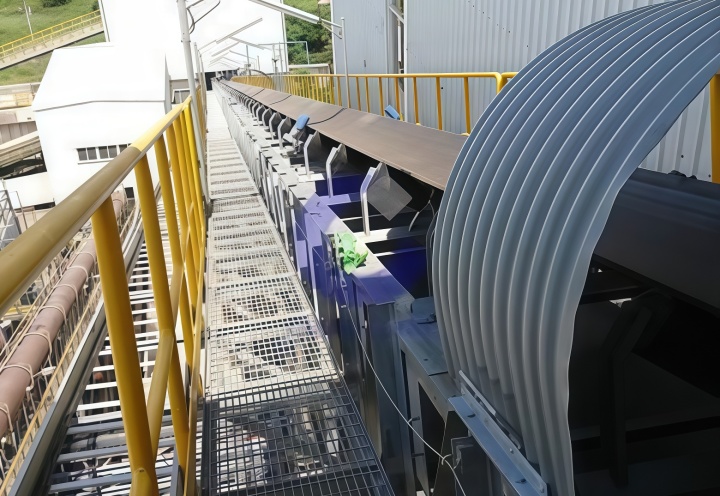
Enclosed dust-cover models add covers on the standard basis, suitable for horizontal to 15 degrees, used for dry calcined gypsum powder, with medium maintenance. Common faults are cover seal aging and internal material accumulation.
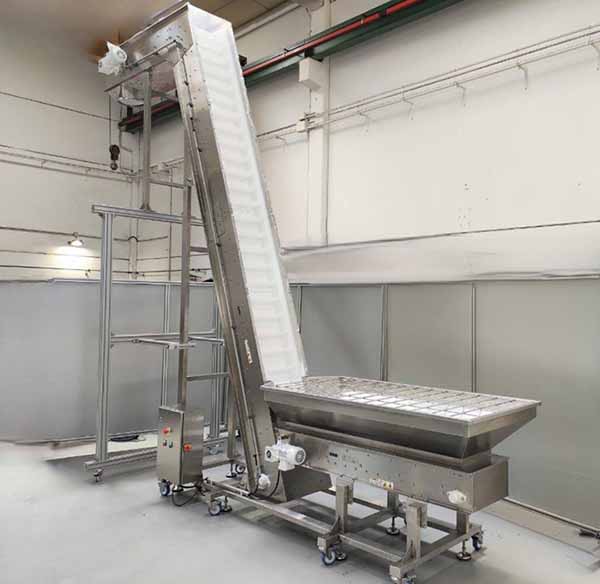
Large-angle corrugated sidewall models use wavy edges and transverse partitions, suitable for 30 to 90 degrees, used for high-moisture desulfurization gypsum, with high maintenance. Common faults are sidewall tearing and partition detachment.
Gypsum Belt Conveyor Selection High-Frequency Pain Points and Parameter Logic
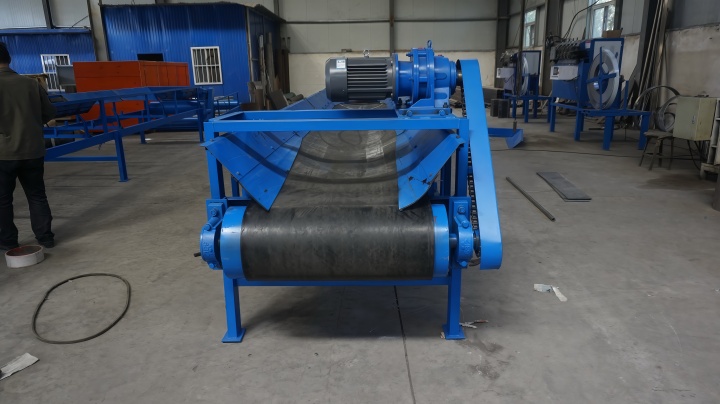
In Gypsum Belt Conveyor Selection, material carryback, dust escape, and misalignment are common issues. The core solution is preventive design rather than after-the-fact correction. Material carryback is addressed by hydrophobic belt surfaces plus multi-stage polyurethane cleaners, combined with V-shaped plows on the return side. Dust escape is addressed by skirt sealing at the loading point and slight negative pressure in the chute, allowing dust to settle inside the sealed cavity. Misalignment is addressed by three-roller trough idlers for centering plus automatic correction devices, which is more economical than retrofitting later.
In terms of parameters, a common mistake in gypsum conveyor selection is using the same bulk density value for volume calculation and power calculation. BHEL power station technical specifications and HPPCL desulfurization system tender documents both specify that gypsum bulk density is taken as 900 kg/m³ for volume calculation and 1,250 kg/m³ for torque and drive power calculation. Because power must overcome the mass inertia under compacted conditions, using the same value leads to undersized or oversized motors. BHEL also specifies that gypsum conveyor belt speed should not exceed 2.0 m/s, and all conveyor designs should consider 110 percent of rated capacity.
Life-cycle costs need to include belt replacement, idler maintenance, and downtime losses over three to five years.
Gypsum Belt Conveyor Selection Troubleshooting Reference
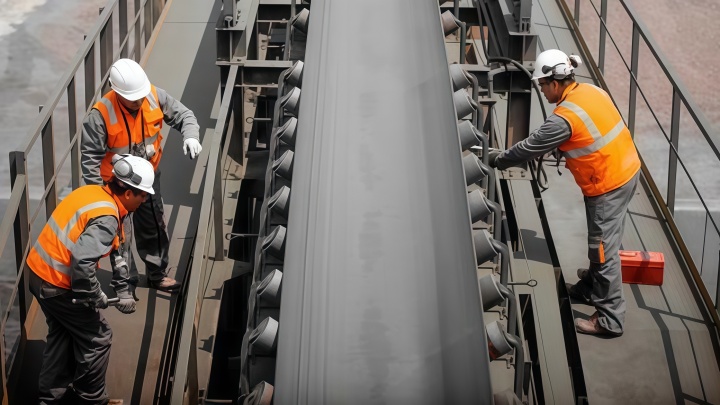
Most Gypsum Belt Conveyor Selection legacy issues appear as abnormalities during operation. Frequent misalignment and regular belt edge wear: check idler alignment accuracy and spacing matching. If idlers are correct, check whether belt width is too small, causing uneven material distribution.
Material carryback: check cleaner wear and belt surface anti-adhesion. If no improvement after replacement, consider whether the belt surface material suits the current moisture content. Abnormal noise near the drive pulley: check lagging wear and bearing seals. Gypsum fine powder intrusion is a high-frequency cause, and labyrinth-sealed idlers can reduce such faults.
U.S. federal regulation 30 CFR 56.4503 requires that in enclosed areas where belt slipping could cause a fire leading to restricted evacuation, the conveyor must be equipped with an automatic shutdown detection system.
Gypsum Belt Conveyor Selection FAQ
Can a gypsum conveyor turn horizontally?
Standard trough models cannot turn naturally and require turning idler sets or a pipe belt conveyor. When the turning radius is less than 300 meters, re-evaluating the route is recommended, because standard turning idler sets show a clear increase in misalignment risk below 300 meters, and continuous operation leads to abnormal belt edge wear.
Does gypsum powder conveying require an explosion-proof motor?
Dry gypsum powder itself is not explosive dust, but high-concentration dust clouds still carry combustion risk. Selecting dust explosion-proof motors and using anti-static conveyor belts can reduce hazards, especially in areas with higher dust concentration inside enclosed conveyors. The explosion-proof rating is recommended to be no lower than Ex tD A21.
How to calculate gypsum conveyor motor power?
It requires comprehensive consideration of throughput, vertical height, belt speed, and idler resistance, and cannot rely on a single formula. International standards ISO 5048 and German DIN 22101 both specify calculation methods for belt conveyor drive power. It is recommended to check against full-load startup and leave 15 percent margin, while considering additional resistance from increased material moisture content during rainy seasons.
Should gypsum conveyor belt joints use vulcanization or mechanical fasteners?
For continuous operation, hot vulcanization is preferred, with strength retention typically above 90 percent. Mechanical fasteners can be used for temporary repairs, but vulcanized replacement should be arranged soon, because mechanical fasteners wear faster in gypsum fine powder environments, typically requiring re-tightening or replacement within three to six months.
Conclusion
The judgment standard for gypsum conveyor selection is not whether parameters are complete, but whether the system still has adjustment room when material moisture content deviates from the design value. Starting from actual material data, matching the conveyor type, designing preventive measures for adhesion, dust, and misalignment, and then verifying with margin and life-cycle costs—this forms the complete closed loop of Gypsum Belt Conveyor Selection.
If you are planning a new line or modifying an existing system, you are welcome to share specific material parameters and operating conditions. We can discuss more targeted solutions based on actual data.