Bauxite Belt Conveyor Selection Guide
Friday October-09 2026 10:14:30
Bauxite conveying efficiency affects the logistics cost from mine to smelter. Bauxite moisture content can vary from 8% to 22%, and abrasion values also differ greatly, so general solutions often fail under bauxite working conditions.
Bauxite belt conveyor Selection needs to start from material testing and then derive belt, idler, cleaning, and chute configurations layer by layer. The data in this article comes from publicly available engineering records of global bauxite projects, covering major producing regions such as Guinea, Australia, and Indonesia.
The core decisions can be summarized in four points. Material testing is the starting point. Belt selection focuses on wear resistance and tear resistance. Idler and cleaning configurations target wet and sticky conditions. Chute and transfer points need impact and blockage prevention.
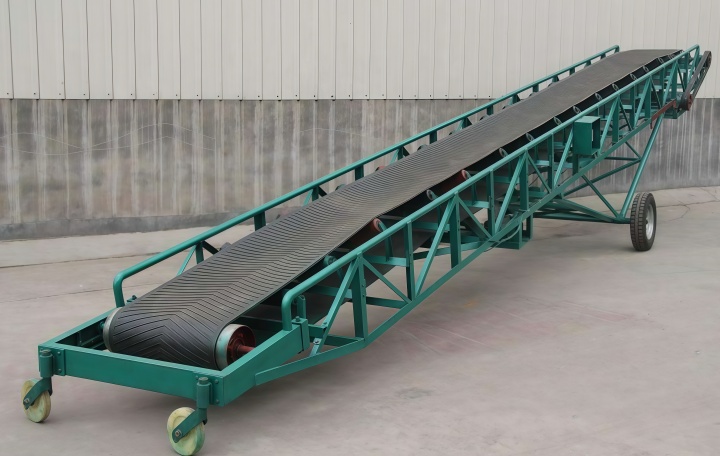
Why Bauxite Belt Conveyor Selection Must Start from Material Characteristics
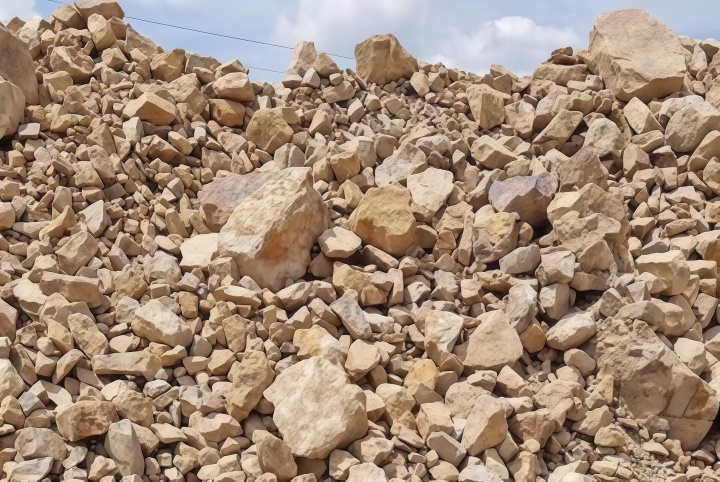
Bauxite differs significantly across mining regions. Guinea lateritic bauxite has high moisture and strong stickiness, so the return belt easily picks up mud. Ore from Australia's Pilbara region has sharp angular particles and a high abrasion rate.
The first step in selection is to obtain particle size distribution, bulk density, moisture content range, and Akron abrasion value. Entering equipment decisions without these data carries relatively high risk.
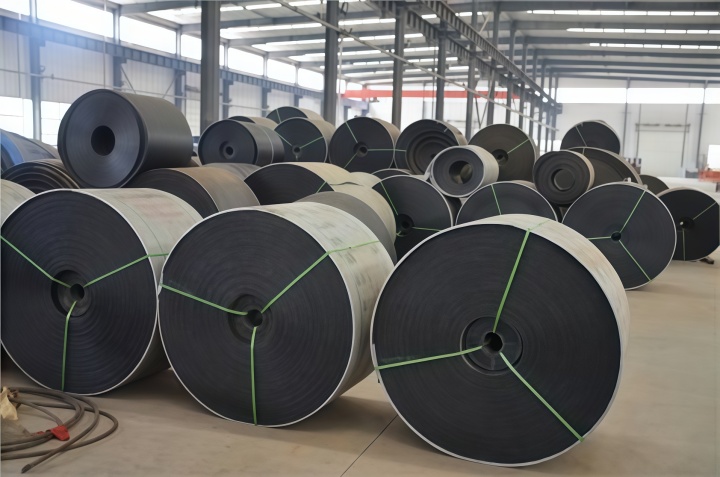
Belt Decision in Bauxite Belt Conveyor Selection
Cover rubber should reach at least DIN Y grade, and DIN W grade is recommended for coarse crushed bauxite with large lumps. According to DIN 22102, the maximum abrasion value for Y grade is 150 mm³, and for W grade it is 90 mm³, giving about a 40% increase in wear resistance.
When sharp lumps are present, choose ST2000 to ST5000 steel cord belts and add a cut-resistant layer. Return cover thickness should not be less than 6 mm.
A standard belt at an alumina refinery in Queensland lasted only 6 to 8 months on a short center distance feeder. After switching to high wear-resistant rubber, it was extended to 18 months, with only 2.8 mm of wear over 18 months. In a Pilbara project, cover rubber wear was below 1 mm after 12 months of operation.
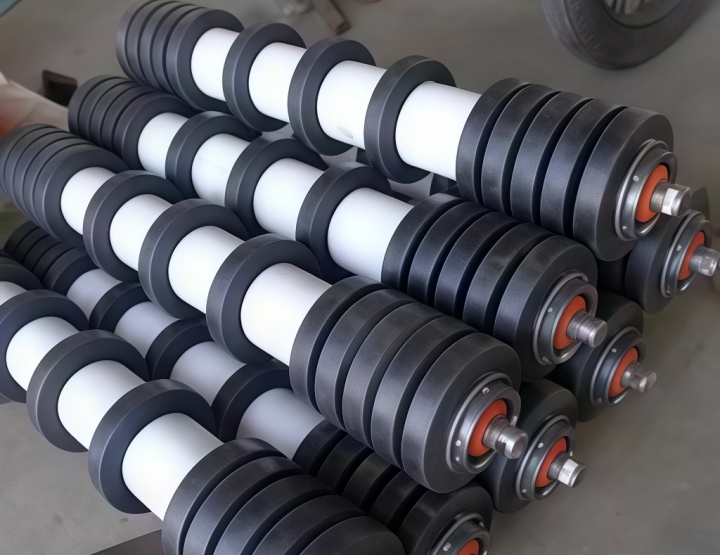
Idler and Cleaning Configuration in Bauxite Belt Conveyor Selection
Downtime is often caused by seized idlers and cleaning failures. In Bauxite Belt Conveyor Selection, the anti-stick property of return idlers is more important than load capacity.
Segmented rubber disc idlers can reduce contact area by more than 70%. Dual-blade tungsten carbide scrapers combined with rotating brushes are more reliable than single-stage scrapers.
One mining company used a belt turnover device in its bauxite conveyor system, turning the belt at the head and tail to better remove return-side carryback and prevent larger damage from sticky material. After return cleaning fails, sticky material begins to accumulate within three to six weeks and causes belt misalignment.
Chute and Cost Balance in Bauxite Belt Conveyor Selection
At the loading point, use a high manganese steel liner impact bed instead of idler groups to disperse impact and prevent material from embedding. For wet and sticky bauxite, a vibration assist at the bottom of the chute is advisable.
According to the Queensland alumina refinery case, the high wear-resistant rubber solution avoided about USD 10,000 in belt replacement costs over 18 months. Based on publicly available bauxite industry data, belt conveyor cost per ton-mile is about USD 0.016 to 0.032, while truck transport is about USD 0.048 to 0.16.
Belt replacement downtime is at least 36 hours, and upstream and downstream losses are considerable. High wear-resistant rubber has a higher initial input, but the Queensland case shows belt replacement costs were reduced by two-thirds. Evaluating by cost per ton of ore conveyed, replacing the belt no more than once in three years is relatively reasonable.
Common Fault Diagnosis in Bauxite Belt Conveyor Selection
The following diagnostic conclusions are based on operation and maintenance feedback records from global bauxite projects. Faults in bauxite conveyor lines are concentrated in four categories: misalignment, cleaning failure, chute blockage, and idler seizure.
Off-center loading and idler misalignment are important troubleshooting directions when misalignment persists after repeated adjustments. Mismatch between scraper material and particle size, as well as improper installation angle, are common causes of abnormal cleaner wear.
In a bauxite project in Boffa, Guinea, recurring joint cracking was improved by reviewing the complete joint process. Insufficient chute angle and thickened adhesion layer on the inner wall are main reasons for increased blockage frequency during the rainy season. Idler seal structures that do not adapt to dusty environments are a common root cause of roller seizure accompanied by abnormal noise.
Belt joints in bauxite conditions often fail earlier than the belt body itself. Highly abrasive particles preferentially wear the rubber filling and exposed steel cords at the joint, and the dynamic fatigue life of vulcanized joints is usually lower than that of the belt body.
During selection, confirm whether the joint process uses a three-step stepped splice and matches the same wear-resistant rubber grade as the cover. The sudden downtime caused by joint failure often exceeds the planned cost of normal wear replacement of the belt body.
| Parameter | Recommended Value | Basis |
| Cover rubber wear grade | DIN Y grade as starting point, DIN W grade for coarse crushed large lump scenarios | In the Queensland alumina refinery case, DIN W grade wore 2.8 mm over 18 months, while DIN Y grade lasted only 5 to 8 months in the Pilbara project |
| Steel cord belt strength | ST2000 to ST5000 | Tear resistance demand for sharp bauxite lumps, a general industry solution |
| Return cover thickness | Not less than 6 mm | Pilbara project experienced premature belt replacement due to return cover joint wear |
| Inclination recommendation | About 17 degrees for run-of-mine, about 23 degrees after dry grinding | Jamaica RopeCon project operated stably at 22 degrees with a capacity of 1000 tons per hour |
Bauxite Belt Conveyor Selection FAQ
Q: What is the maximum inclination for bauxite conveying?
A: About 17 degrees is recommended for run-of-mine bauxite, and about 23 degrees after dry grinding. When terrain relief is large, a ropeway conveyor can operate stably at 22 degrees.
Q: How to handle large moisture fluctuations in the rainy season?
A: Segmented return idlers and dual-stage scraper cleaners are common configurations for wet and sticky conditions in the rainy season, and rain covers should be added on open sections. Anti-stick liners should be used on chute inner walls with reserved vibration assist interfaces.
Q: How large is the cost gap between long-distance conveying and trucking?
A: Based on publicly available bauxite industry data, belt conveyor cost per ton-mile is about USD 0.016 to 0.032, while truck transport is about USD 0.048 to 0.16. The cost advantage of belt conveyors is relatively clear in long-distance scenarios.
Q: How to match shipping capacity at the port?
A: Work backward from the loading window of a typical vessel to determine conveyor capacity. Bauxite commonly uses 20,000 to 40,000 DWT dedicated vessels, and capacity usually needs to reach more than 2,000 tons per hour to maintain loading efficiency.
There is no universal formula for bauxite conveying solutions. The quality of Bauxite Belt Conveyor Selection depends on whether material data supports each subsystem configuration.
From wear-resistant belts to anti-stick idlers, and then to chute blockage prevention, all should be judged based on measured data. If you are planning a project, start with the material test report and check each key parameter item by item.