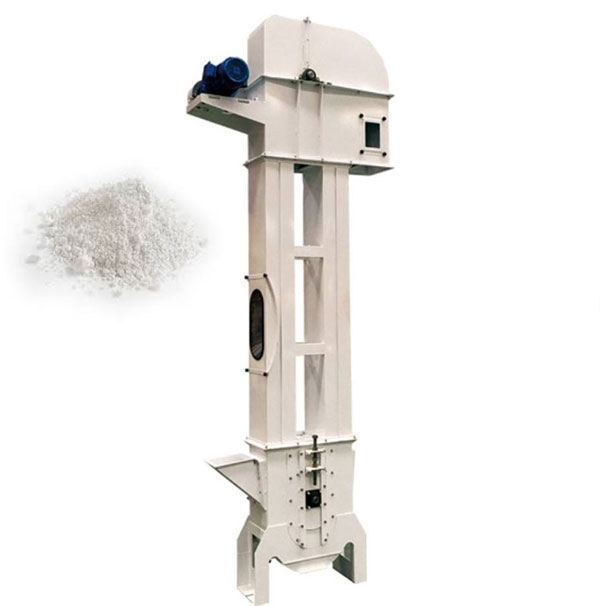
Lithium carbonate bucket elevator
Lithium carbonate bucket elevator overview
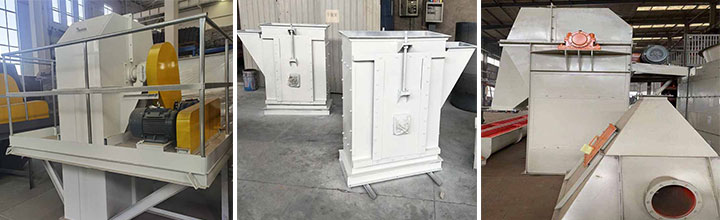
A lithium carbonate bucket elevator is a mechanical device used in lithium-ion battery cathode material production lines to vertically lift lithium carbonate powder to a high silo or reactor.
Lithium carbonate is characterized by its light weight, fine particle size, hygroscopic nature, and extreme sensitivity to iron impurities. The designed conveying capacity of a lithium carbonate bucket elevator is typically between 3 and 30 tons per hour. The machine casing and material contact parts are generally made of 304 or 316L stainless steel and lined with polyurethane non-metallic wear-resistant plates. The vertical lifting height of the equipment generally ranges from 5 to 35 meters, solving the problem of material leakage during long-distance vertical transport.
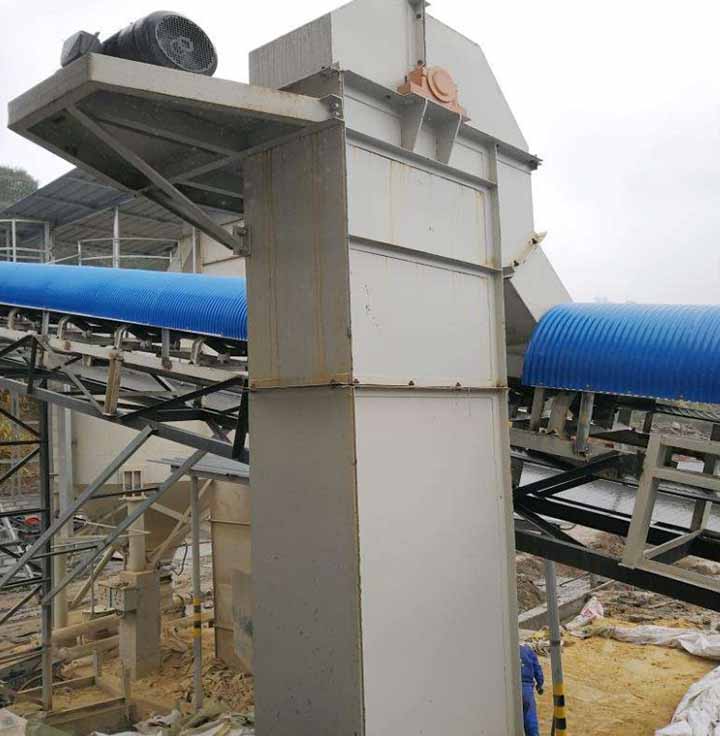
Comparison of challenges posed by ordinary materials and lithium carbonate to the equipment
| Comparison Dimension | Ordinary Materials (Such as Sand, Stone, Coal Powder) | Lithium Carbonate (Battery Grade Powder) |
| Challenges to Equipment | Allow trace mixing of metal wear impurities. | Zero tolerance for iron contamination: Extremely tiny amounts of magnetic substances such as iron and copper will cause battery short circuits, requiring no metal friction during operation. |
| Dust Emission & Seal Leakage | Only causes environmental dust accumulation. | Strict dust control required: The powder is extremely fine and inhalationally toxic; slight leakage will lead to raw material loss and workshop pollution. |
| Material Adhesion | Relatively stable fluidity. | Prone to moisture absorption and agglomeration: It tends to adhere to the inner wall of hoppers and the bottom of the base after moisture absorption, resulting in incomplete discharging and belt slipping. |
Bucket elevator technical specifications
| Model | Conveying Capacity (t/h) | Lifting Height (m) | Traction Component Material | Bucket Material | Power (kW) |
| TH-LC200 | 3 - 8 | 5 - 20 | High Wear-resistant Rubber Belt | High Density Polyethylene / Nylon | 3.0 - 5.5 |
| TH-LC250 | 8 - 15 | 10 - 25 | High Wear-resistant Rubber Belt | High Density Polyethylene / Nylon | 5.5 - 11 |
| TH-LC315 | 15 - 30 | 12 - 35 | High Wear-resistant Rubber Belt | Stainless Steel with Polyurethane Liner | 11 - 18.5 |
To address the special passivation and purity protection requirements of lithium carbonate, the engineering design abandons traditional metal chain drives and replaces them with high-strength rubber conveyor belts as the traction component, thus eliminating the potential for iron filings generated by sprocket friction. The head and tail bearings are externally mounted and equipped with airtight seals to introduce continuous compressed air and prevent dust from entering the bearings.
Structural Diagram & How It Works
The lithium carbonate bucket elevator consists of a drive unit, head assembly, stainless steel casing, high-wear-resistant conveyor belt, non-metallic hoppers, tail tensioning device, and anti-deviation monitoring system. Material flows into the hoppers from the tail inlet, is lifted upwards by the conveyor belt, and changes direction upon reaching the head, where it exits the hoppers and enters the discharge pipe.
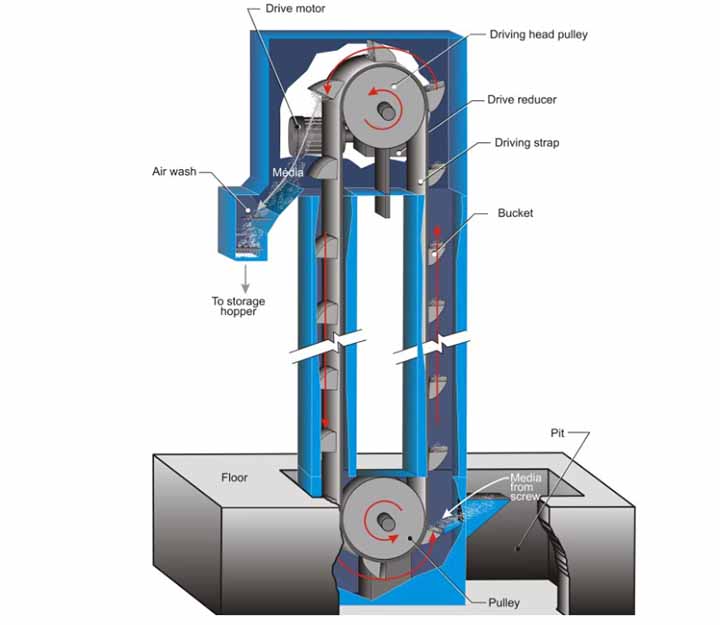
Regarding the unloading method, traditional centrifugal unloading (linear velocity > 1.5 m/s) would cause severe dust generation and wear on the casing due to centrifugal force. Therefore, continuous gravity unloading is required for lithium carbonate transport. The operating linear velocity is maintained at 0.5 - 0.8 m/s, with the hoppers closely spaced, allowing material to slide out along the back of the previous hopper. This low-speed inflow design reduces air turbulence and controls dust dispersion.
Application Case
In a project producing 20,000 tons of lithium iron phosphate cathode material annually, the original chain elevator frequently produced iron impurities due to wear on the metal chain links, leading to substandard finished products during random inspections. The plant subsequently introduced three stainless steel belt-driven bucket elevators with a lifting height of 18 meters and a conveying capacity of 10 t/h. The elevators were equipped with nylon buckets and fully enclosed casings, and a dust removal duct interface was added at the tail feed inlet. During 18 months of continuous operation, the magnetic material detection index in the finished lithium carbonate did not increase, and the dust concentration in the workshop was controlled below 2 mg/m³.
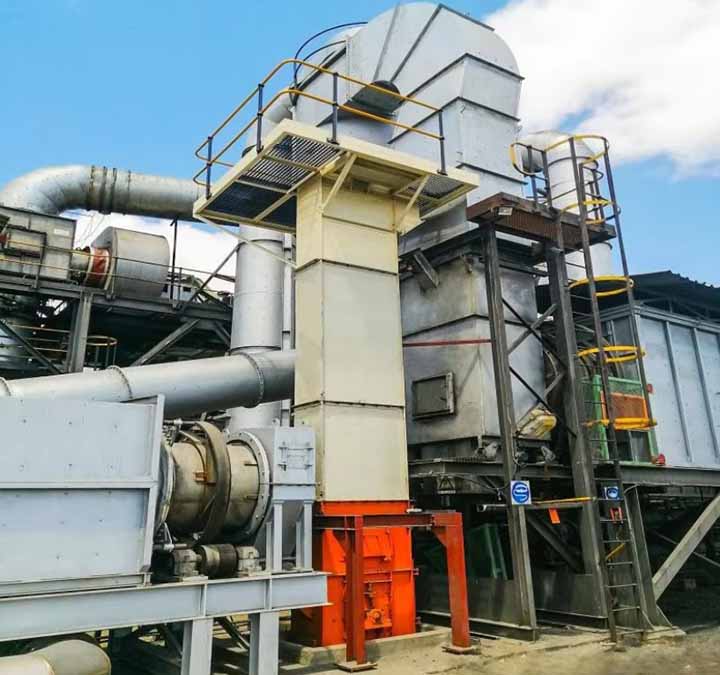
Bucket elevators for sale
Currently, the price range for common bucket elevators used for conveying lithium carbonate is between $4,600 and $15,600. Factors affecting the final cost include casing material, wear-resistant lining material, explosion-proof rating, and monitoring components. The price of an entire 316L stainless steel body is approximately 25% - 35% higher than that of 304 stainless steel. Adding 8mm thick polyurethane lining or alumina ceramic patches to the internal contact surfaces will increase costs. Equipping with explosion-proof motors (such as Ex d II CT4 level) and explosion-proof control boxes will raise the overall budget. Should a complete set of rotary paddle blockage switches, infrared belt misalignment switches, and bearing temperature measuring instruments be selected.
Frequently Asked Questions
Q: Why can't carbon steel be used to make lithium carbonate hoists?
A: Carbon steel is prone to rust. Rust falling off and mixing into the lithium carbonate will directly damage the electrochemical structure of the lithium battery.
Q: How can we ensure that the tape material does not generate foreign matter contamination?
A: Use solid woven polyester tape or food-grade silicone tape without a metal skeleton, with edges treated with vulcanization to prevent fiber shedding.
Q: How to solve the problems of bottom material accumulation and clumping?
A: The tail section is equipped with an arc-shaped self-cleaning base plate to reduce the gap between the hopper and the bottom of the container. Combined with a pneumatic vibrator, the base is periodically vibrated to prevent material accumulation.
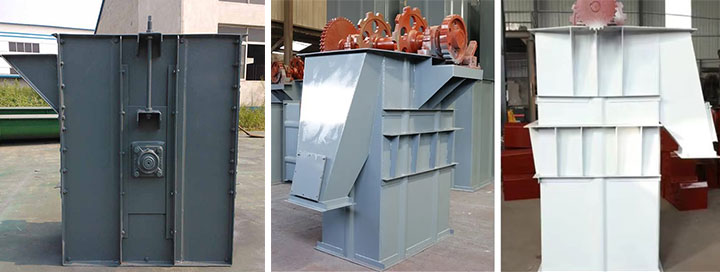
The Lithium carbonate bucket elevator, through the use of stainless steel, gravity unloading design, and a high-sealing air pressure structure, solves the problems of iron contamination and dust spillage that easily occur during vertical transport of lithium carbonate. By rationally configuring the material contact surface materials and safety monitoring instruments, it can meet the process specifications of lithium battery cathode material production lines regarding raw material purity and closed-loop transport.
Sugested Products
Sulfur bucket elevator
belt type bucket elevator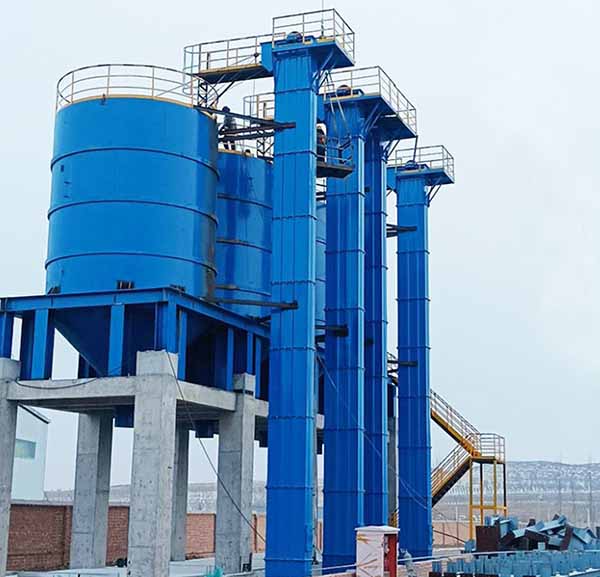
Carbon black bucket elevator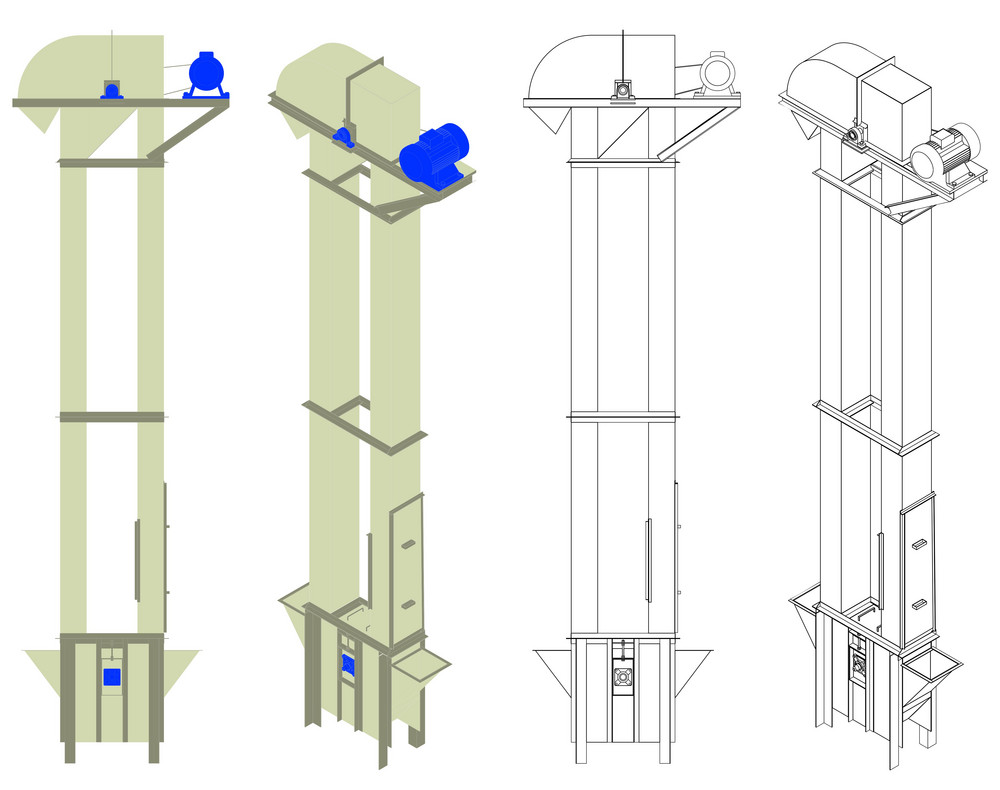
Corn Bucket Elevator