How to Prevent Auger Conveyor Clogging
Tuesday April-21 2026 10:48:13
How to Identify Auger Conveyor Clogging
Many on-site blockages don't occur suddenly.rather, the Auger Conveyor has been operating under strain for some time. Several changes can help identify problems. A decrease in conveying capacity is a clear signal; for example, if the conveying capacity drops from 5t/h to 3t/h while the feed rate remains the same, it indicates internal buildup may have begun. Simultaneously, abnormal motor loads and persistently high current reflect increased resistance as the screw pushes the material.
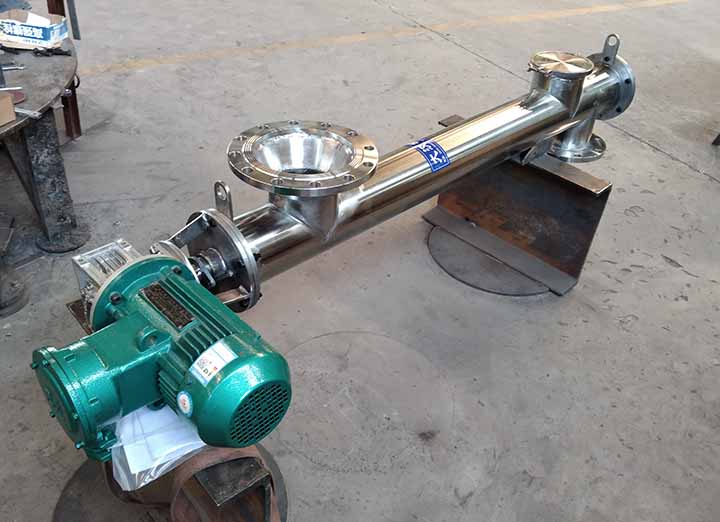
Another easily overlooked phenomenon is a change in sound. A normally operating Auger Conveyor produces a uniform and continuous sound. Intermittent friction sounds or muffled noises accompanied by slight vibrations often indicate that material is stuck at a certain point, and the blades are under pressure. These changes usually precede shutdown alarms; timely observation allows for early intervention and prevents further blockage.
4 Common Causes of Auger Conveyor Clogging
Auger Conveyor pipe blockages are usually related to material characteristics and equipment mismatch. Common causes include viscous materials, excessive moisture content, improper screw design, and excessive feed rate.
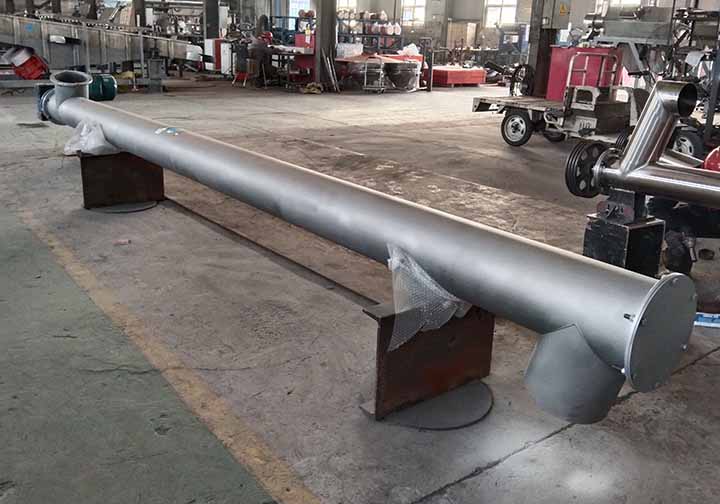
Sticky materials tend to adhere to the blades and pipe walls during conveying, forming a layer of residue over time. This gradually occupies internal space, causing material accumulation and ultimately affecting normal conveying.
Changes in moisture content also have an impact. For example, when handling sludge or wet sand with a moisture content exceeding 20%, the originally loose powder tends to clump together as the humidity increases, forming lumps inside the screw and accumulating in the middle section or at the outlet.
Design mismatches can also exacerbate blockages. For instance, an improperly selected screw pitch or an undersized diameter in the Auger Conveyor will cause the material to be compressed during conveying.
Uneven feeding or feeding large amounts of material in a short period, exceeding the conveying capacity of the screw conveyor, will cause material to accumulate at the inlet and be compressed inwards. As more material is fed in, the machine cannot handle it all, leading to blockages.
7 Proven Ways to Prevent Auger Conveyor Clogging
When using screw conveyors, clogging can be reduced through advance design or proper operation. Seven key points can help prevent or reduce the probability of clogging: proper screw pitch design, regular screw cleaning, adjusting the frequency converter, applying an anti-stick coating, controlling the material feed rate, motor size, and the feeding system.
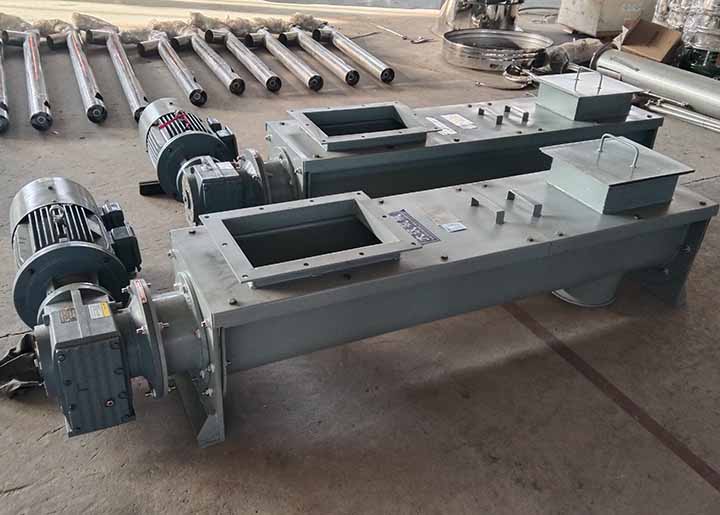
Screw pitch design directly affects the movement of materials in the pipeline. For materials prone to clumping or adhesion, a variable pitch structure can be used to gradually disperse the material and prevent it from being compacted at the inlet.
Cleaning also needs to be planned in advance, such as checking the inner wall for residue weekly to prevent long-term accumulation and the formation of a thick layer.
The speed can be adjusted using a frequency converter to reduce the time material stays in any section, especially when conveying wet powder; appropriately reducing the speed helps maintain flow.
Anti-stick coatings are suitable for applications where material easily adheres. Applying a coating to the blades and pipe walls can reduce the loading rate and decrease the frequency of cleaning.
Material control refers to the management of the material itself. Controlling the moisture content or adding a screening step before feeding can reduce the amount of large pieces of material entering the equipment.
The motor power needs to be matched to the actual working conditions. Too low a power will make pushing difficult, while too high a power may continuously compress the material under abnormal conditions, worsening blockages. If the current exceeds the rated value by 15%, even without stopping the machine, more than 30% of the material may have already accumulated inside.
A proper feeding system can make feeding more uniform. For example, using a screw feeder or a hopper buffer is easier to maintain continuous conveying than direct dumping.
Auger Conveyor Design to Avoid Clogging
Considering material characteristics during the Auger Conveyor selection phase will reduce material blockages during later operation. When conveying viscous or high-moisture materials, a U-shaped trough structure is easier to observe the internal condition and easier to clean than a fully enclosed tube. The type of helical blade also affects the conveying effect; a structure with cut edges is more suitable for handling agglomerated materials, while a ribbon helix reduces the contact area with the material, lowering the probability of adhesion. For longer-distance conveying, segmented drive or additional intermediate supports can be used to ensure more even material distribution and prevent concentrated accumulation in certain sections. The outlet design is equally important; if the outlet is too narrow or the angle is not smooth, material is prone to accumulate at the end, potentially causing blockages even if the preceding sections are operating normally.
Maintenance Tips for Long-Term Performance
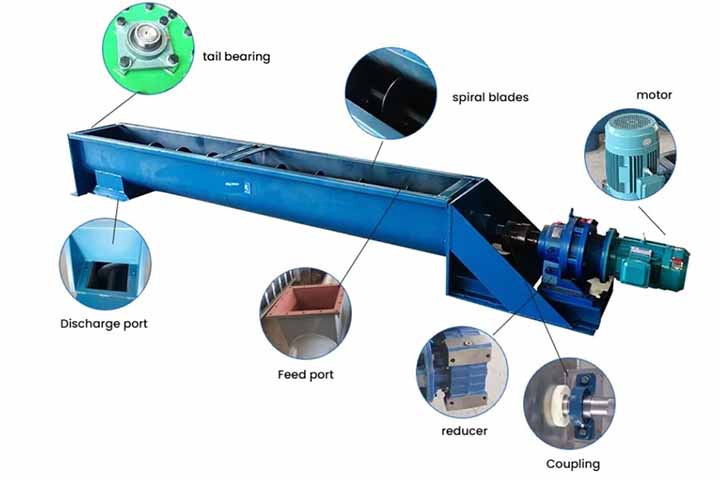
Problems with the Auger Conveyor usually accumulate gradually. Routine checks can begin with visual changes, such as current stability, uniform operating noise, and continuous discharge. Regularly check the wear of the auger blades; thinning or slight deformation will reduce material conveying speed and increase the likelihood of localized blockages. The condition of bearings and seals also affects overall operation; abnormal friction or gap changes can lead to instability in the conveying process. Lubrication management is equally crucial; insufficient lubrication increases frictional resistance, making the equipment more prone to overload during operation. When possible, record operating data such as current fluctuations, output changes, and the number of downtimes to help identify trends earlier, rather than waiting for blockages to occur.
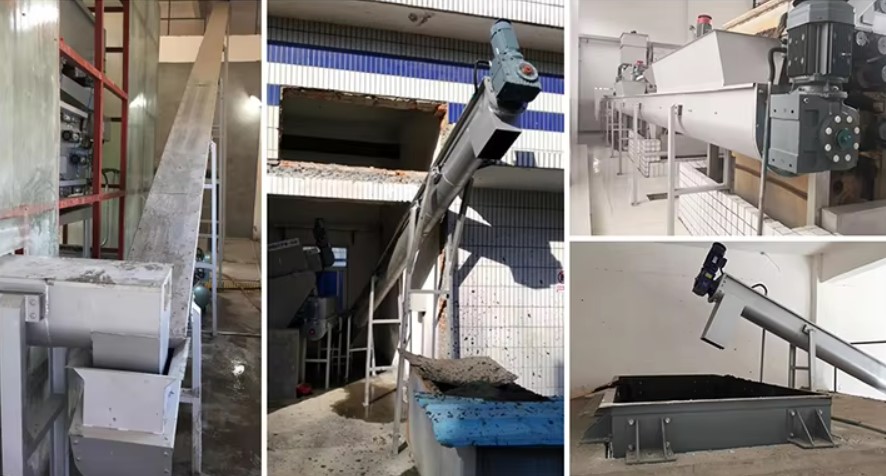
Material blockage in the Auger Conveyor is rarely caused by a single factor, but rather by a combination of design, material properties, and operational factors. Early detection through routine observation, such as decreased conveyor speed, changes in motor load, and unusual noises, allows for early problem control. A well-designed structure, a stable feeding method, and regular maintenance ensure smoother equipment operation and minimize downtime. If you are unsure whether your current material requires a variable pitch design, please send your material characteristics to our engineers for evaluation.
Sugested Products
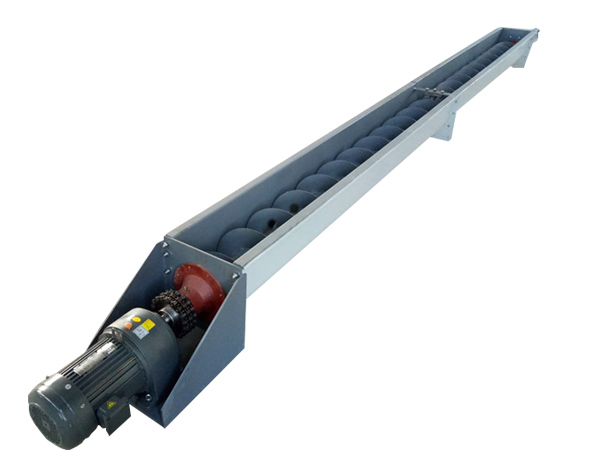
Shaftless Screw Conveyor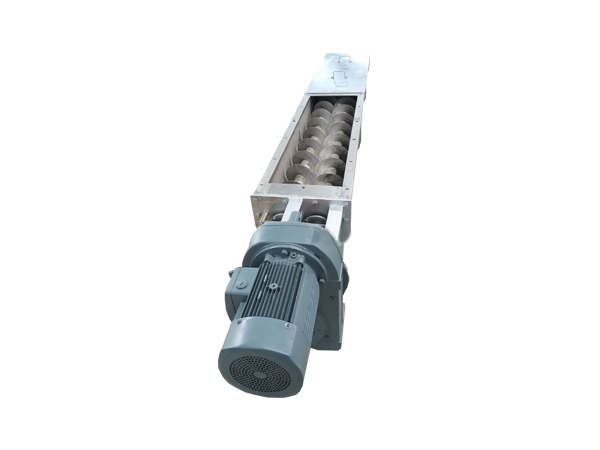
Twin Screw Conveyor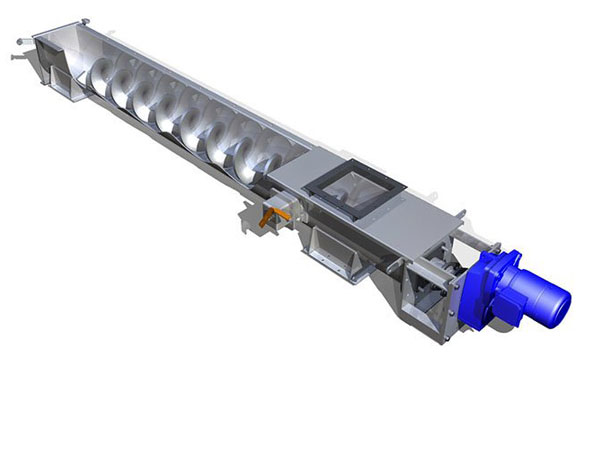
Sludge Screw Conveyor
Stainless Steel Screw Conveyor