PVC Conveyor Belt for Grain
Tuesday May-19 2026 16:12:26
During grain depot allocation and feed mill unloading, bulk wheat, rice, and corn continuously fall into the running PVC Conveyor Belt for Grain via feed hoppers. The belt is constructed from a PVC covering layer and multiple layers of polyester fabric, resulting in a smooth surface that minimizes debris generation during operation. Compared to older rubber conveyor belts, this reduces the amount of impurities mixed into the grain, and simplifies the subsequent cleaning process by reducing downtime for screening and impurity removal.
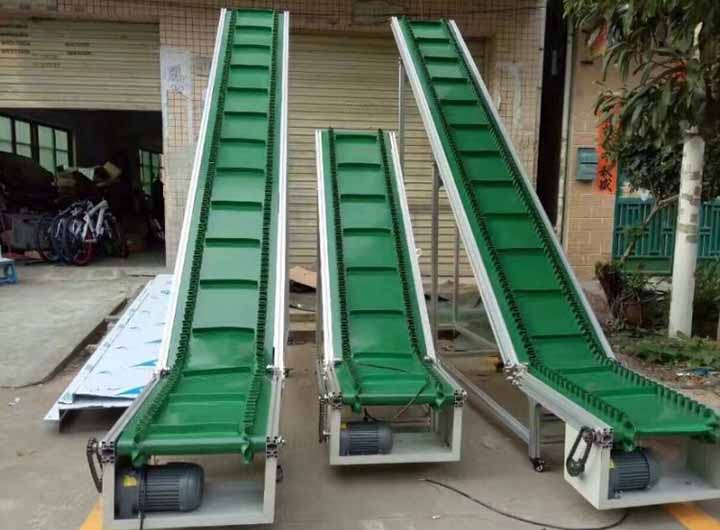
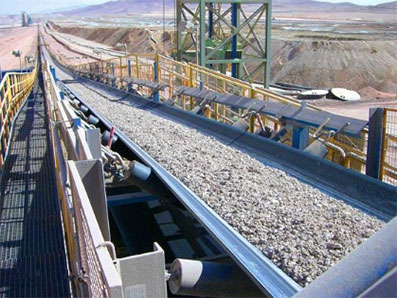
The grain is continuously conveyed forward on the belt surface, reducing friction and collisions between particles, allowing wheat and rice to remain relatively intact during unloading. Depending on the warehouse layout and conveying distance, the belt width typically ranges from 300mm to 1600mm, corresponding to a conveying capacity of approximately 30 to 800 tons per hour. On horizontal conveyor lines exceeding 100 meters, the belt maintains stable tension even under full load, minimizing significant elongation or deviation.
What are the advantages of a PVC Conveyor Belt for Grain?
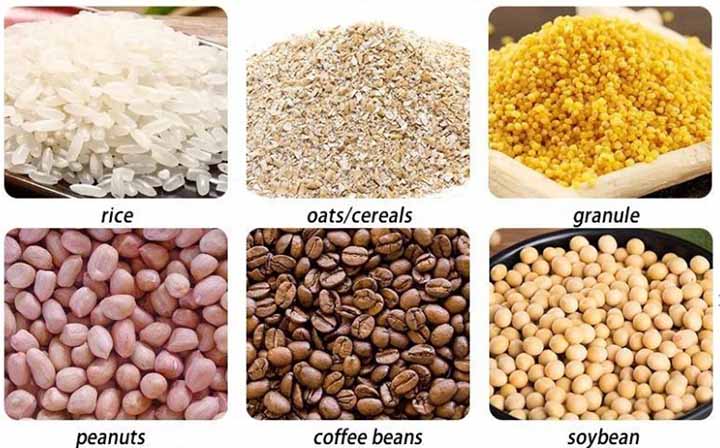
PVC Conveyor Belts for Grain come into direct contact with grain. Their surface formulation typically does not contain volatile components, preventing noticeable odors even during summer warehouse temperature increases or continuous equipment operation. This makes them suitable for conveying bulk grains such as wheat, corn, and rice. However, in enclosed grain silos, increased dust concentration can lead to static electricity generated by friction between the belt and idlers, posing a safety hazard. Anti-static PVC belts for grain handling, conforming to ISO 284, incorporate conductive materials to discharge charge to the grounding system; once the belt surface is removed from a heat source, the flame will not spread. For oily crops such as soybeans, rapeseed, and peanuts, the vegetable oil seeping out after crushing can easily cause the edges of ordinary PVC belts to warp and the rollers to slip. Oil-resistant conveyor belts for soybeans incorporate an oil-resistant formulation in the cover layer, slowing down oil penetration into the fabric. This results in less shape change during continuous conveying and reduces the frequency of downtime for replacements.
How to Choose the Right Conveyor Belt?
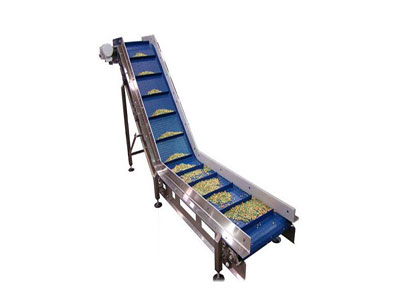
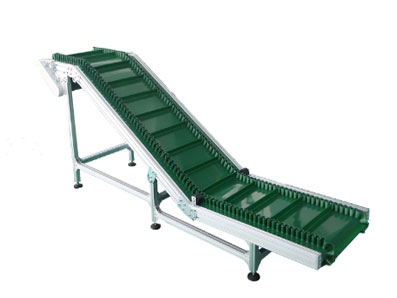
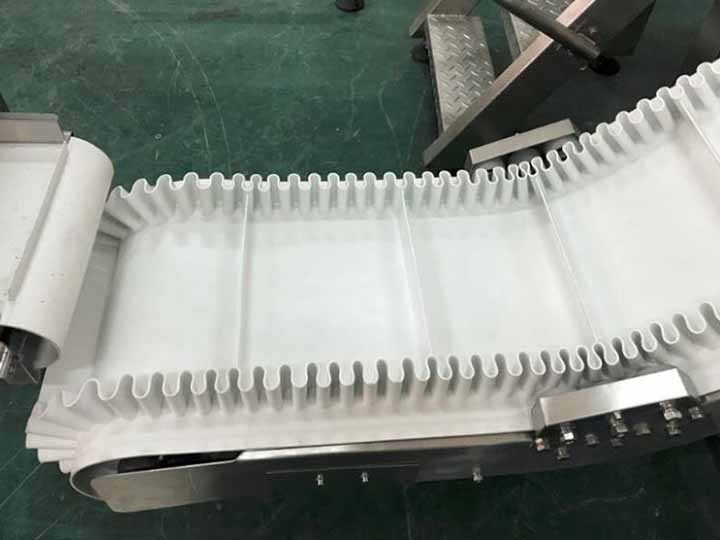
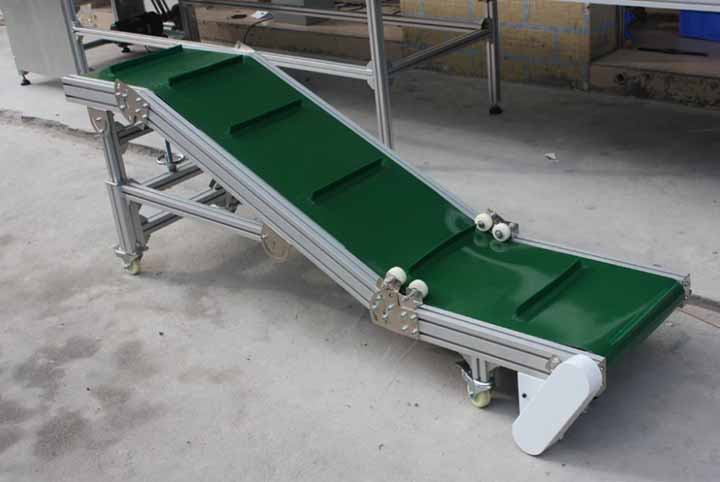
When selecting a conveyor belt, consider three on-site conditions: material characteristics, conveying angle, and operating load. Dry bulk grains such as corn and wheat generate a lot of dust during unloading. Odorless PVC conveyor belts with anti-static properties are usually sufficient for continuous conveying. Oil crops such as soybeans and rapeseed release vegetable oil after crushing, and prolonged contact can easily deform the edges of ordinary belts. In such cases, oil-resistant structures are more suitable. When the conveying line has a slope of more than 15 degrees, grain is prone to backflow or accumulation under gravity. In this case, a custom-cleaned PVC belt elevator with corrugated skirts and transverse baffles can be used to lift the material in a grid pattern. For longer conveying distances or heavier loads, a 2-, 3-, or 4-layer polyester fabric skeleton structure should be selected based on tension conditions to reduce tensile changes and joint maintenance frequency after long-term operation.
Technical Specifications of PVC Conveyor Belt for Grain Handling
| Model | Belt Width (mm) | Fabric Plies (ply) | Tensile Strength (N/mm) | Max Working Temp | Reference Capacity (t/h) | Cover Material |
| GRN-PVC 400 | 400 | 2-ply (EP100*2) | ≥ 200 N/mm | -10°C to +80°C | 30 - 60 | Food-grade, Anti-static |
| GRN-PVC 650 | 650 | 3-ply (EP150*3) | ≥ 450 N/mm | -10°C to +80°C | 80 - 150 | Food-grade, Anti-static, Flame-retardant |
| GRN-PVC 800 | 800 | 3-ply (EP200*3) | ≥ 600 N/mm | -10°C to +80°C | 150 - 300 | Food-grade, Anti-static, Oil-resistant |
| GRN-PVC 1000 | 1000 | 4-ply (EP200*4) | ≥ 800 N/mm | -10°C to +80°C | 300 - 500 | Heavy-duty, Anti-static, Oil-resistant |
| GRN-PVC 1200 | 1200 | 4-ply (EP250*4) | ≥ 1000 N/mm | -10°C to +80°C | 500 - 800 | Heavy-duty, Anti-static, Oil-resistant |
Application Scenarios of PVC Conveyor Belt for Grain
PVC conveyor belts for grain are commonly used for conveying grain in and out of flat warehouses, bulk grain stacking, and in flour mills for destoning and hulling. In port bulk grain unloading, PVC conveyor belts are also commonly used for long-distance horizontal transfer between the dock and storage area, continuously conveying grain from the unloading point to the temporary storage area or subsequent processing line. When plant space is limited, the conveying path needs to cross floors, or there is a significant vertical distance, a single conveyor belt layout will be restricted. In actual engineering, a segmented conveying method is usually adopted. The horizontal section uses a PVC conveyor belt for grain to achieve stable conveying, and after entering the vertical lifting section, it switches to a grain auger conveyor system, achieving closed lifting through helical propulsion. Using both methods in combination can reduce dust diffusion and adapt to complex conveying layouts.
The selection of PVC conveyor belts for grain is not only about meeting conveying capacity requirements, but also related to the operational stability of the entire production line and on-site specifications. During the continuous flow of grain from unloading to storage, the belt body needs to consider anti-static structure, resistance to vegetable oil penetration, and necessary skirt anti-slip design. These parameters will affect the operating status of downstream equipment. Matching these conditions during the design phase can reduce the need for frequent conveyor belt replacements or adjustments to misalignment during operation, as well as reduce maintenance pressure caused by downtime, ensuring a stable operating rhythm for the entire grain conveying system.