Twin Screw Mixer for Cement Powder
Saturday May-09 2026 16:24:41
A twin-screw mixer is used to mix cement, silica sand, fly ash, heavy calcium carbonate, and a small amount of additives together before feeding them into a silo or packaging machine. In dry mortar workshops, several silos discharge material simultaneously, with gray powder continuously falling into the mixing tank. If the internal movement of the Twin Screw Mixer for Cement Powder is singular, lightweight additives tend to float to the top, while heavy particles settle to the bottom, ultimately leading to deviations in the proportions of each bag of product.
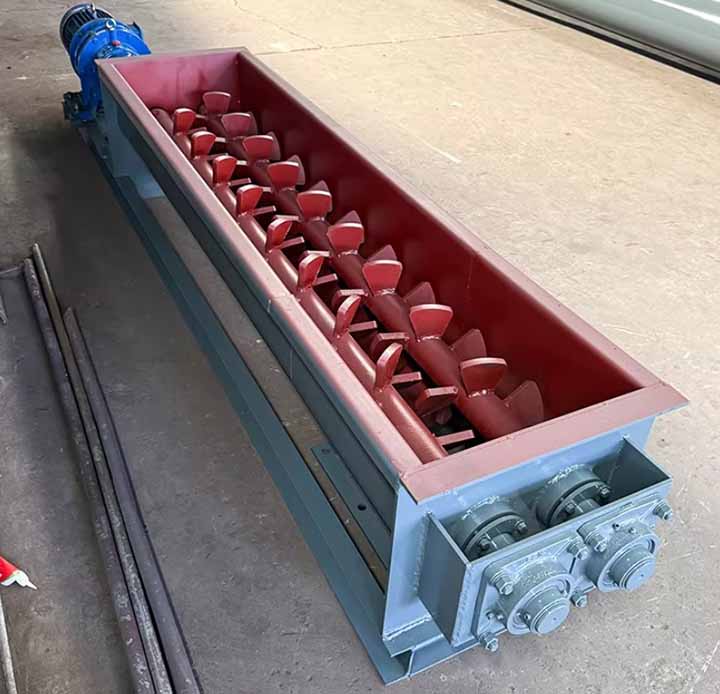
Cement powder particles are fine and easily generate dust during flow; in high humidity, it may also adhere to the silo walls. The twin-screw mixer has two parallel spiral shafts installed inside. As they rotate in opposite directions, one pushes the material from both ends towards the middle while simultaneously bringing the bottom powder to the top. The tank is typically made of carbon steel, with stainless steel or wear-resistant linings used in areas of high contact and wear. Common volumes range from 500 to 3000 liters, with a production capacity of approximately 1 to 20 tons per hour. After mixing, the bottom pneumatic door opens, and the material falls directly into the finished product silo.
Why Cement Powder Requires Efficient Mixing?
Cement powder may appear uniform in color, but its actual formulation often contains various raw materials with different densities. For example, a bag of tile adhesive contains cement, sand, cellulose ether, latex powder, and defoamer in addition to cement and sand. Some additives may be less than 1%, but they can affect water retention, adhesion, and workability. If the mixture is uneven, on the construction site, you'll find some materials are smooth after adding water, while others clump together; some adhere well to walls, while others develop hollow spots. When choosing a machine, it's important to consider whether each batch of powder can maintain consistency. Cement also generates a lot of dust during the feeding process, so the Twin Screw Mixer for Cement Powder is usually equipped with a sealed cap and a dust collection interface for connecting to a pulse jet dust collector.
Advantages of the Twin Screw Mixer for Cement Powder
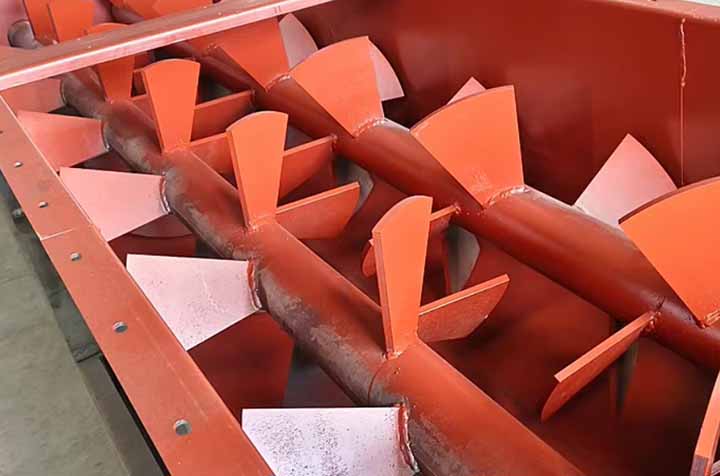
The double-helix structure allows the material to tumble and circulate within the tank, ensuring that small proportions of additives are dispersed throughout the entire batch of powder. Production staff typically take samples from the top, middle, and outlet to compare color and fineness changes to determine the mixing status. Single-batch mixing time is generally 3 to 8 minutes. For factories that need to switch between wall putty, grout, and self-leveling compound on the same production line, this rhythm makes production planning easier. The enclosed machine cover reduces dust spillage, preventing dust accumulation on the workshop floor. The machine can simultaneously process cement, pigments, short fibers, and polymer powders. If the formula requires the addition of a small amount of liquid, a spraying system can be installed. Control can be achieved through touchscreen formula management, facilitating switching between different products. With the top access door open, workers can directly enter to clean up residues, reducing cross-mixing during material changes.
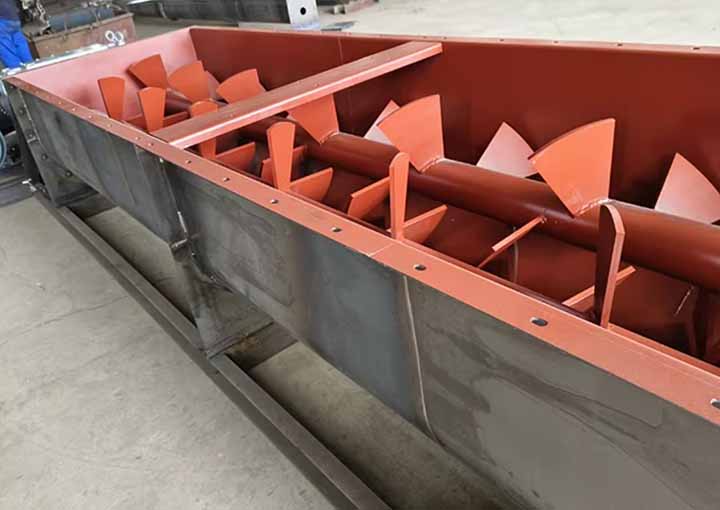
Twin Screw Mixer for Cement Powder Parameter Table
| Parameter | Typical Range |
|---|---|
| Batch Capacity | 500–3000 L |
| Production Capacity | 1–20 t/h |
| Mixing Time per Batch | 3–8 min |
| Mixing Uniformity | CV ≤ 5% |
| Main Motor Power | 7.5–55 kW |
| Screw Speed | 20–60 rpm |
| Material of Construction | Carbon Steel / Stainless Steel Contact Parts |
| Discharge Type | Pneumatic Bottom Door |
| Control System | Push Button / PLC Touch Screen |
| Dust Collection Port | DN100–DN200 |
| Filling Coefficient | 60%–80% |
| Voltage | 220V / 380V / 415V / 460V |
| Optional Features | Load Cells, Liquid Spray System, Wear-Resistant Lining |
| Typical Applications | Dry Mortar, Tile Adhesive, Grout, Wall Putty |
Application of Twin Screw Mixer for Cement Powder
Twin screw mixers are commonly found in dry mortar production lines, used to mix cement and sieved sand before automatic packaging. In tile adhesive production, the stability of bonding performance is closely related to the uniformity of mixing. In grout production, pigments and crack-resistant additives need to be fully dispersed. Self-leveling mortar requires high powder uniformity; otherwise, variations in flowability will occur during on-site construction. Powdered concrete admixtures, wall putty, and various ready-mixed building materials are also frequently mixed in batches using this type of machine.
How to Choose a Suitable Cement Powder Mixer?
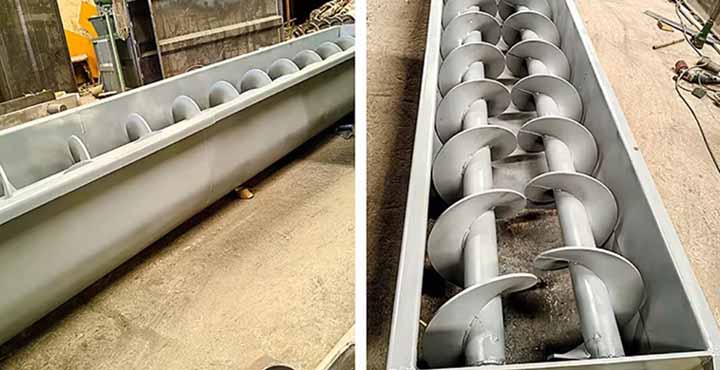
First, consider production capacity requirements. If a factory produces 5 tons per hour, the equipment size and motor configuration will differ significantly from a 20-ton/hour production line. Next, consider the complexity of the formula. Products containing fibers and trace additives require more sophisticated internal circulation. The lower the additive ratio, the stricter the requirements for mixing quality. For automation, weighing systems, PLC touchscreens, and formula storage functions can be configured according to needs. Material selection depends on wear conditions; for long-term processing of formulas containing silica sand, it is recommended to add wear-resistant liners to the tank walls. If there is a lot of dust on site, consider sealing covers, ventilation interfaces, and pulse dust collection systems.
Frequently Asked Questions
Q: Can a twin-screw mixer handle cement and additives?
A: Yes, it can blend cement with small-dose additives such as cellulose ether, redispersible polymer powder, pigments, and fibers in the same batch.
Q: How long does each mixing batch take?
A: A typical batch takes about 3 to 8 minutes, depending on the batch size, filling level, and formula complexity.
Q: What capacity is suitable for dry mortar production?
A: For most dry mortar plants, mixers from 1000 to 3000 liters are commonly selected, with output ranging from about 3 to 20 tons per hour.
Q: Can the mixer be customized?
A: Yes, the mixer can be built with different materials, discharge designs, control systems, and dust collection options to fit the production line.
While cement powder mixing may seem like simply putting several raw materials into equipment and stirring, it actually involves issues such as particle flow, dispersion of trace additives, and discharge residue. The Twin Screw Mixer for Cement Powder uses two counter-rotating spiral shafts to continuously tumble and circulate the powder within the tank, making it suitable for producing dry mortar, tile adhesive, grout, self-leveling compound, and wall putty. When the equipment's volume, materials, and control methods are matched to production needs, the finished product typically exhibits greater stability during packaging and application.
Sugested Products
Twin Screw Mixer
Sludge Screw Conveyor
Garbage screw conveyor
Ash screw conveyor