How to Choose an Auger Conveyor for Bulk Materials
Thursday April-16 2026 17:54:38
Auger Conveyor play a crucial role in the continuous propulsion of materials in bulk material conveying systems. They propel materials forward through rotating helical blades within a trough. Also known as screw conveyors, they are commonly used for conveying powders and granular materials.
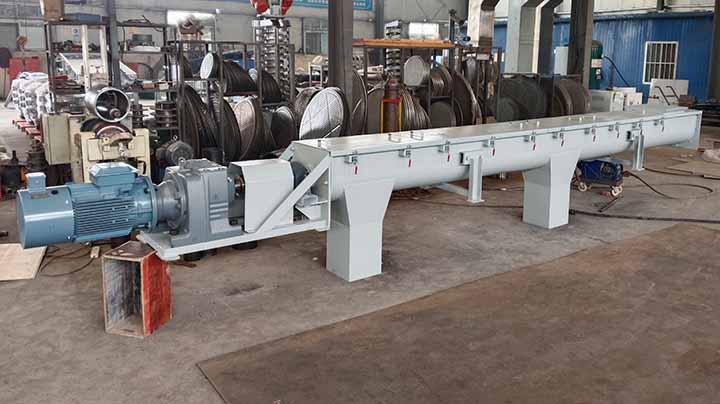
The machines can convey materials over distances of approximately 10-30 meters, transporting 5-50 tons of material per hour. In bulk material handling, they are used for workshop loading, warehousing transfers, and process connections. The structural materials are typically carbon steel or stainless steel. They are used for the movement and flow of non-corrosive building sand and gravel, or food-grade starch, etc.
Comparison of Four Common Auger Conveyor Types
The choice of which bulk material auger conveyor configuration to use depends on your plant structure and the materials stored in the silos.
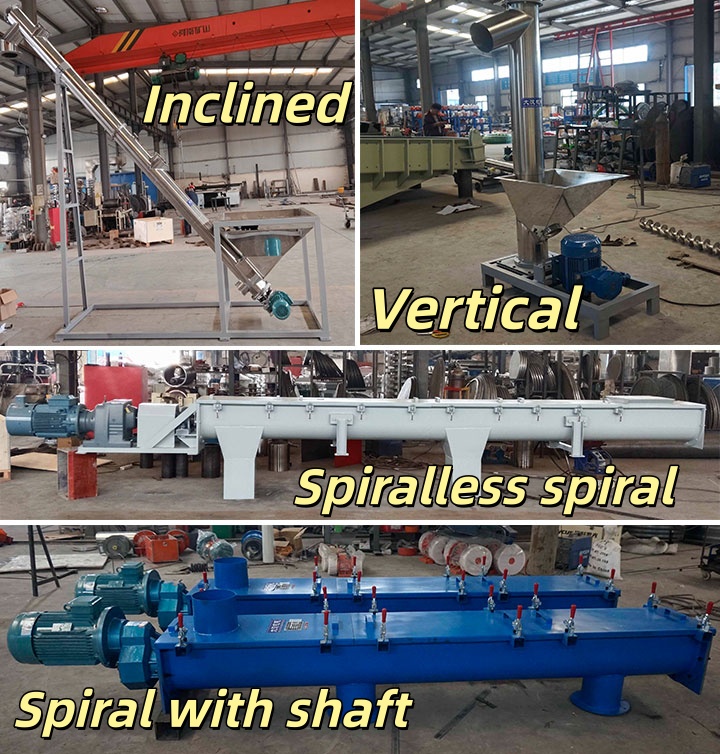
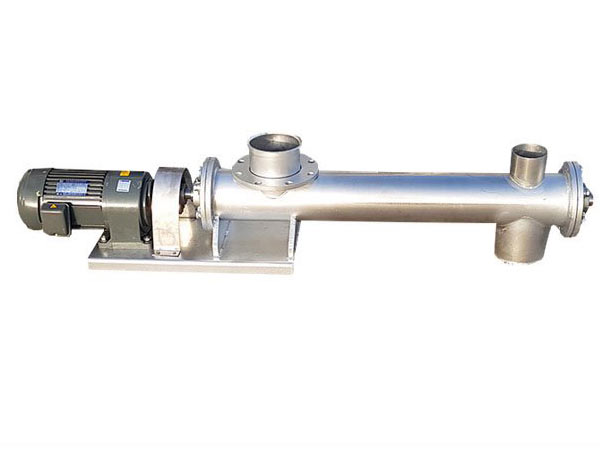
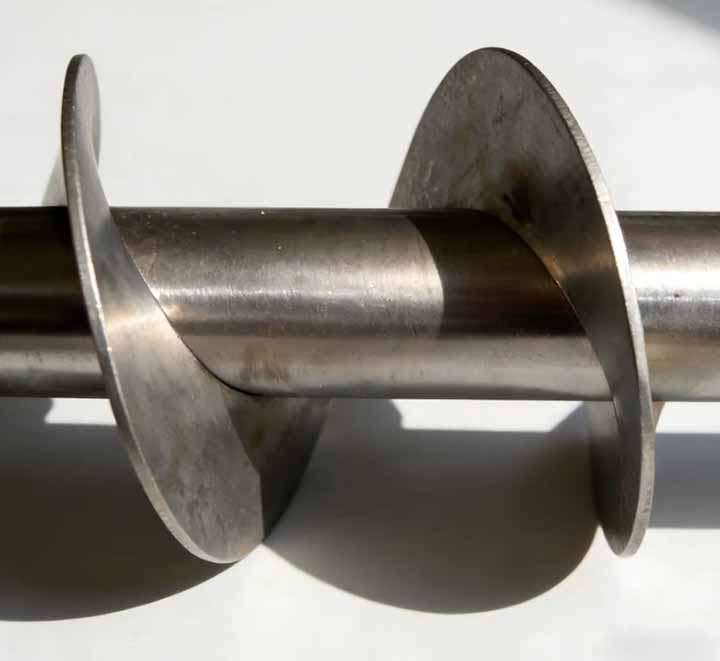
Shafted Auger Conveyors: This type is characterized by a central tube supporting the blades, with materials propelled along the screw. They are suitable for dry, free-flowing grains and powders.
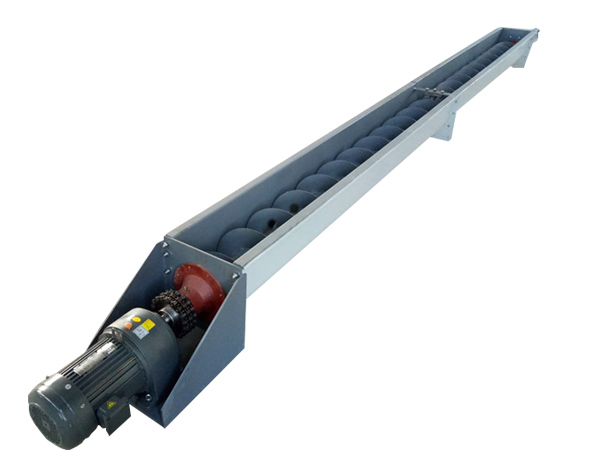
Shaftless Auger Conveyors: Eliminating the central shaft structure, they use a heavy-duty screw that rotates directly on a liner, reducing the risk of entanglement and clogging. This structure can handle fibrous or sticky materials that easily entangle on the shaft, suitable for wet, sticky sludge.
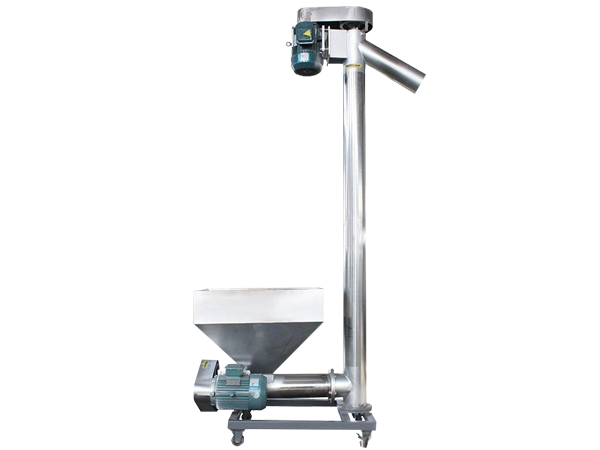
Vertical Auger Conveyors: These machines lift goods vertically at a 90-degree angle, saving floor space. They require high rotational speeds to overcome gravity. Suitable for lifting and conveying dry granules.
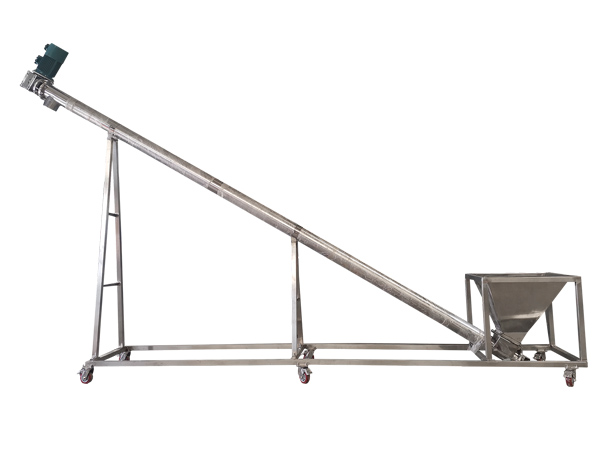
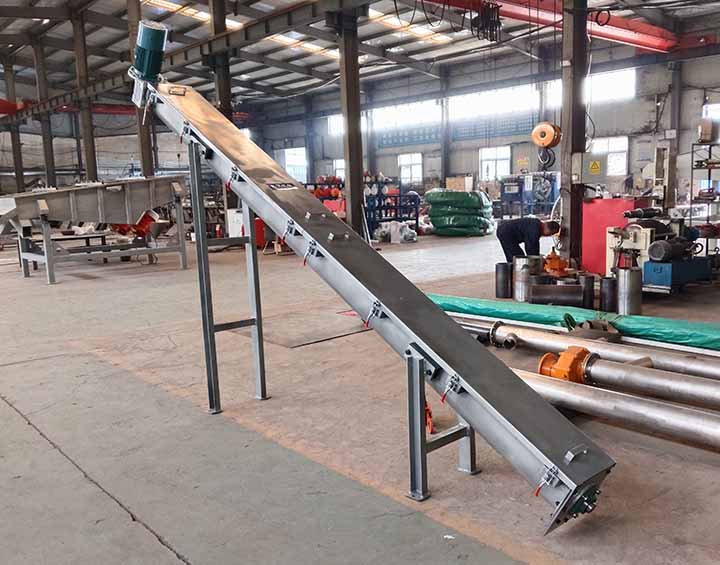
Inclined Auger Conveyors: Installed between 15 and 45 degrees, they help connect floors of different heights. Suitable for mixed bulk materials in limited space.
Model Parameter Table for Bulk Material Auger Conveyors
| Model | Screw Diameter (mm) | Pitch (mm) | Speed (r/min) | Capacity (m³/h) | Max Length (m) | Installation Angle |
| LS100 | 100 | 100 | 71-140 | 1.1-2.2 | 2-10 | 0°-45° |
| LS125 | 125 | 125 | 63-125 | 1.9-3.8 | 2-12 | 0°-45° |
| LS160 | 160 | 160 | 56-112 | 3.6-7.1 | 3-15 | 0°-45° |
| LS200 | 200 | 200 | 50-100 | 6.2-12.4 | 3-18 | 0°-60° |
| LS250 | 250 | 250 | 45-90 | 10.9-21.8 | 3-20 | 0°-60° |
| LS315 | 315 | 315 | 40-80 | 24.2-38.8 | 4-25 | 0°-60° |
| LS400 | 400 | 355 | 36-71 | 31.7-62.5 | 5-30 | 0°-75° |
| LS500 | 500 | 400 | 32-63 | 49.6-97.7 | 6-35 | 0°-75° |
| LS630 | 630 | 450 | 25-50 | 69.3-138.5 | 8-40 | 0°-75° |
Aspects to Consider When Selecting a Auger Conveyor
The state of the material directly affects the type of screw conveyor. For example, powders are prone to dust generation during conveying, while materials containing moisture may adhere to the screw blades; granular materials require greater attention to flow stability. Conveying distance and installation angle also affect drive power configuration; for example, larger angles result in more noticeable material slump. The operating environment may involve ambient temperature workshops, areas with corrosive gases, or high-temperature sections, all of which will influence the selection of shell and screw materials. Cleaning methods and maintenance space also affect the user experience, such as the ease of disassembling end covers or internal inspection.
Three Common Purchasing Misconceptions
Some users choose bulk material screw conveyor models based on price, ignoring differences in material characteristics. For example, directly using a shaft-type structure for highly viscous sludge can easily lead to entanglement and accumulation during operation. Others neglect to calculate conveying capacity, resulting in a mismatch between production line cycle time and conveying capacity, leading to material accumulation or insufficient supply. Ignoring the installation angle is a hidden problem; a screw designed for horizontal use will lose nearly 30% of its conveying capacity if installed at a 25-degree angle without increasing the speed or motor power.
How to Choose a Supplier
When selecting a supplier, pay attention to whether their processing capabilities support customization to site dimensions, such as the ability to handle details like inlet/outlet positions, pipe diameter changes, and drive layout adjustments. Relevant certification documents reflect whether the processing system is standardized, but more importantly, whether project case studies cover similar material conditions. Companies like Dahan Machinery have extensive experience in bulk material screw conveyor equipment and related systems, making it easier to align with on-site requirements during communication.
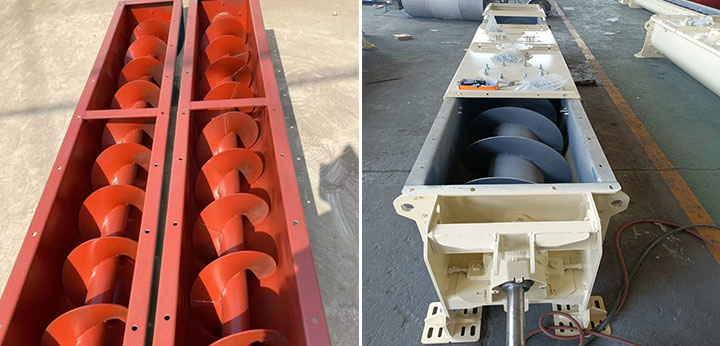
The selection of a bulk material screw conveyor is not a simple comparison of parameters, but rather a result of the combined influence of material state, conveying route, and installation conditions. Different structures perform differently when handling powdery, granular, or moist materials, and changes in conveying length and angle will alter the operating state. Before procurement, most sites will conduct trial material conveying to observe for any backflow or blockages, and then adjust the configuration based on the production line cycle. The more detailed the understanding of the equipment structure, the clearer the room for adjustment during subsequent operation, and the less need for repeated modifications.