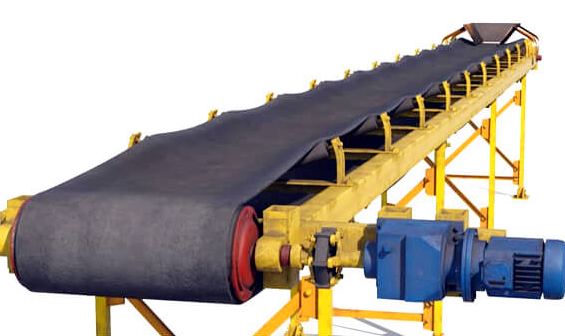
Industrial Conveyor Belts: A Selection Guide
Wednesday September-02 2026 16:03:56
Selecting the wrong Industrial conveyor belts costs far more than the figure on the purchase invoice. One hour of belt downtime—the semi-finished products piling up on the line, the orders waiting to be shipped, the labor to re-commission equipment—can easily add up to dozens of times the belt's unit price. Many plant managers have experienced this: a new belt that looks perfectly spec-compliant on paper, but within three months develops cover layer blistering, edge cracking, or chronic mistracking that spills material all over the floor. The ripple effects of choosing the wrong Industrial Conveyor Belts often aren't fully appreciated until the moment the line stops.
Selection is difficult not because there are too few options on the market, but because most specification sheets list only length and width, leaving the usage details that truly determine service life for users to discover through trial and error. Take the same PVC belt: on a room-temperature carton conveyor it can run for three years, but on a clinker line above 60°C it hardens and cracks within three months. These differences don't show up on a spec sheet—they can only be assessed by returning to the actual operating conditions.
This guide provides concrete data and actionable decision steps, grounding the selection process in verifiable metrics rather than a few numbers on a specification sheet.
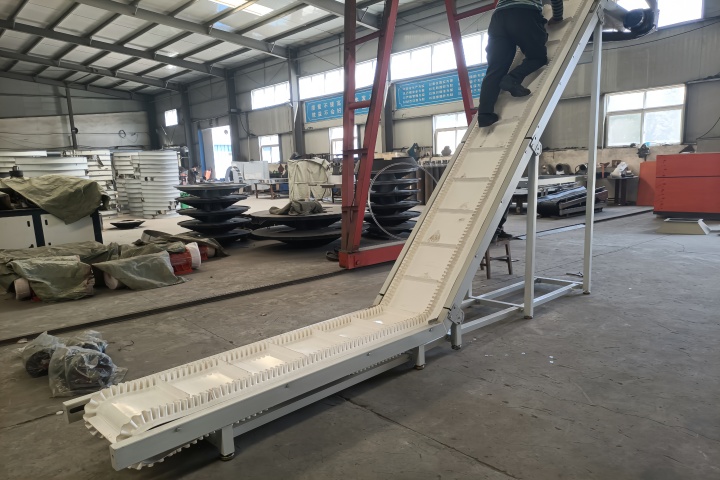
Core Selection Criteria: Start with Material and Site Conditions
The first step in selection is not flipping through catalogues, but answering three questions: What is the material temperature? How long is the conveyor run? Is there oil, water, or chemicals on site?
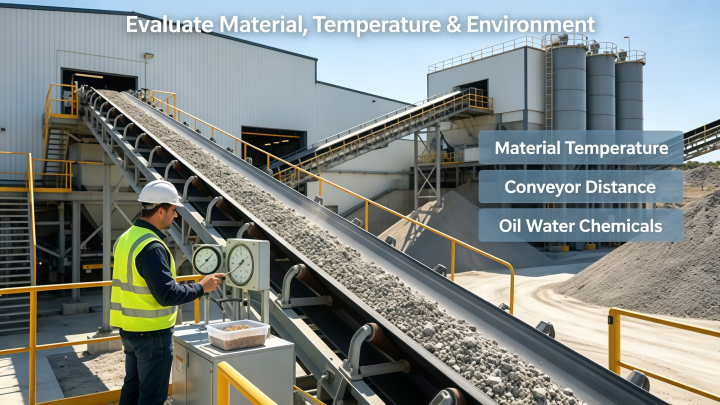
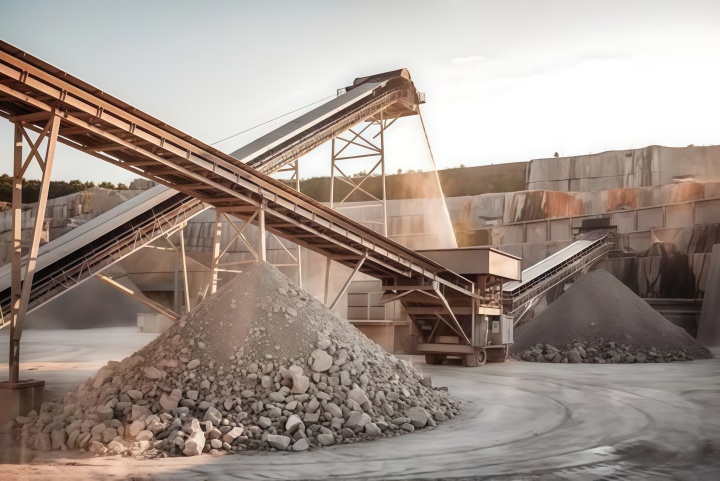
When material temperature exceeds 80°C, conventional PVC belts soften and deform rapidly, requiring a shift to heat-resistant rubber or steel cord construction. For materials with sharp edges such as ore or metal scrap, if the impact force peak exceeds 40% of the belt's nominal tensile strength, the cover layer will develop through-cuts within two months. For conveyor runs exceeding three kilometres, the elongation of conventional fabric-core belts becomes excessive, leaving steel cord as the only viable option.
Oily environments cause ordinary rubber to swell and degrade. Humid conditions require the belt carcass to have hydrolysis-resistant properties. Food processing plants mandate that cover materials pass FDA extractables testing. Overlooking these hard criteria and selecting the wrong product leaves replacement as the only practical course of action.
Common Types of Industrial Conveyor Belts and Key Parameter Quick Reference
The following data is compiled from the ISO 14890 conveyor belt standard and mainstream manufacturers' technical manuals, representing typical operating ranges. The specific tensile strength and temperature range values above can be cross-referenced with the performance classification tables for different belt types in the ISO 14890 standard.
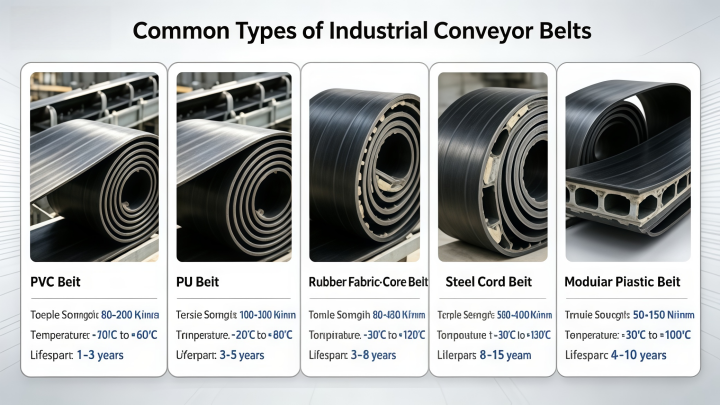
PVC belts offer tensile strength of 80 to 200 N/mm, operating temperature from -10°C to +60°C, service life of 1 to 3 years under standard conditions, and relatively low purchase cost. Not suitable for environments exceeding 60°C or continuous contact with oils and greases.
PU belts offer tensile strength of 100 to 300 N/mm, operating temperature from -20°C to +80°C, normal service life of 3 to 5 years, and moderate cost. Wear-resistant and food-grade compliant, but should be avoided in heavy-impact applications with large lump ores.
Rubber fabric-core belts offer tensile strength of 80 to 450 N/mm, operating temperature from -30°C to +120°C, actual service life of 3 to 8 years, and moderate cost. They withstand significant material impact but age rapidly in oily environments and frequent hot-water wash-down scenarios.
Steel cord belts offer tensile strength of 500 to 4,000 N/mm, operating temperature from -40°C to +200°C, with premium products achieving 8 to 15 years of service life under normal conditions, at higher cost. Suitable for long-distance and high-tension applications, but not for compact equipment with small pulley diameters.
Modular plastic belts offer tensile strength of 50 to 150 N/mm, operating temperature from -30°C to +100°C, with service life ranging from 6 to 10 years depending on material and conditions, at moderate-to-high cost. Convenient for localised repair by replacing individual modules, but the gaps between modules require careful consideration in facilities with stringent sanitation requirements.
Three-Step Decision Method for Industrial Conveyor Belts Selection
The selection decision revolves around three dimensions—temperature, distance, and environment—narrowing the options to one or two materials through sequential elimination. Each step corresponds to a hard metric; failure to meet it directly eliminates the corresponding material.
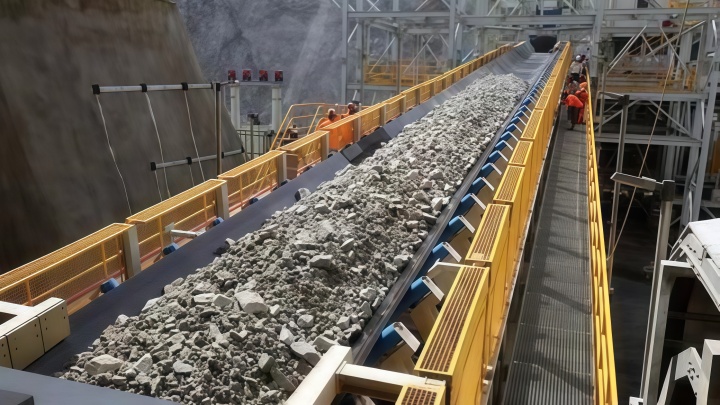
Step 1: Determine the maximum material temperature. Exceed 80°C and PVC is ruled out. Exceed 120°C and heat-resistant rubber or steel cord belts are required.
Step 2: Determine the single conveyor run length. Beyond 3 kilometres, only steel cord belts can meet the demand.
Step 3: Determine any special environmental requirements. For food contact applications, prioritise PU or food-grade PVC. In oily environments, rule out ordinary rubber. In combustible dust environments, select antistatic models that have passed ISO 340 flame-retardance testing.
The above decision criteria reference the temperature and strength grading recommendations in the ISO 14890 and DIN 22102 conveyor belt selection standards, with the latest version of ISO 14890 having been published in 2026.
Total Cost of Ownership: A Clear Calculation
Many procurement professionals compare belts on unit price alone, overlooking the hidden costs. Total cost of ownership encompasses seven elements: purchase, installation, energy consumption, maintenance, repairs, downtime losses, and disposal.
Taking a five-year operating period as an example, purchase price typically accounts for only 20% to 30% of total expenditure, while downtime losses and maintenance costs often exceed half. A higher-quality belt with a 30% higher unit price, if its service life doubles and its failure rate halves, actually delivers a lower total cost of ownership.
Common Selection Mistakes
Cognitive biases and operational blind spots in the selection process are often the direct cause of premature belt failure. Companies tend to make oversights in five areas: material judgement, equipment matching, splice workmanship, safety protection, and system maintenance.
First, looking only at belt thickness while ignoring cover compound quality—belts of the same thickness can differ in wear life by three to five times depending on the rubber formulation. Second, neglecting belt-to-pulley matching—excessively high tensile strength paired with undersized pully diameters causes the belt to repeatedly bend at the pulley and fail prematurely. Third, underestimating the importance of splices—if the vulcanisation process is substandard, the failure point will almost always be at the splice.
Fourth, ignoring antistatic and flame-retardant requirements—using ordinary belts in dusty or flammable environments can create safety hazards. Fifth, focusing only on the belt itself while neglecting idler and scraper conditions—seized idlers or excessive scraper pressure accelerate localised belt wear.
Daily Maintenance Essentials
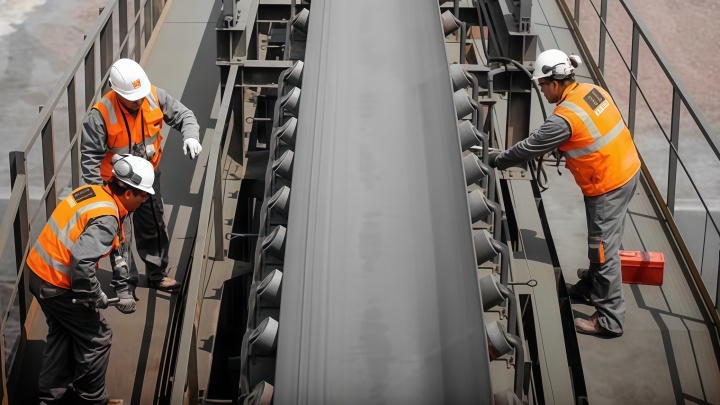
The quality of maintenance work directly affects belt service life and failure frequency. Inspection items at different intervals each have their own focus, forming a systematic maintenance rhythm from daily to quarterly.
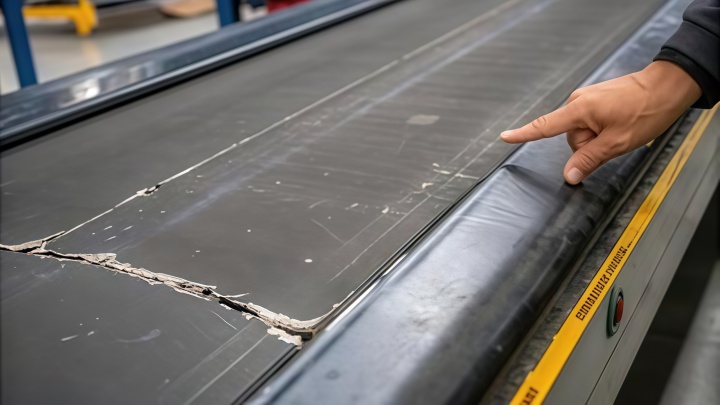
Check the belt surface daily before start-up for scratches, blisters, or embedded foreign objects. Clean accumulated material and oil from the belt surface weekly.
Inspect splice condition monthly—check mechanical fastener tightness and look for delamination or blistering on vulcanised splices. Measure belt elongation quarterly to determine whether re-tensioning is required. Every hour invested in maintenance can save several hours of unplanned downtime.
Closing Remarks
Selection is not a matter of filling out a spec sheet and calling it done. Material temperature, conveyor distance, site conditions, and maintenance practices—every variable affects how long a belt will run. If belts are failing frequently, or if you're undecided on a new line, work through the dimensions covered in this guide one by one. A belt's value isn't on the purchase invoice—it's in the hours it runs without failure.
Frequently Asked Questions
Why do newly installed Industrial Conveyor Belts develop mistracking issues so soon?
Mistracking is often not a belt quality issue at all, but rather results from non-parallel pulleys during installation, frame deformation, or off-centre material loading points.
What's the real difference between cheap and expensive Industrial Conveyor Belts?
The price difference comes primarily from raw material costs—low-cost belts use low-grade carbon black and inferior synthetic fibres, and their service life can be just one-fifth that of high-quality belts.
How can you tell when an Industrial Conveyor Belts needs replacing?
When through-cracks appear on the belt surface, the cover layer is worn down to expose the fabric carcass, or splices loosen frequently, the service life has reached its limit.
Industrial Conveyor Belts keep slipping even after tightening the take-up—what should be done?
Slippage is more likely due to worn pulley lagging or reduced friction from oil or water contamination on the belt surface. Simply increasing tension will only accelerate belt and bearing damage.