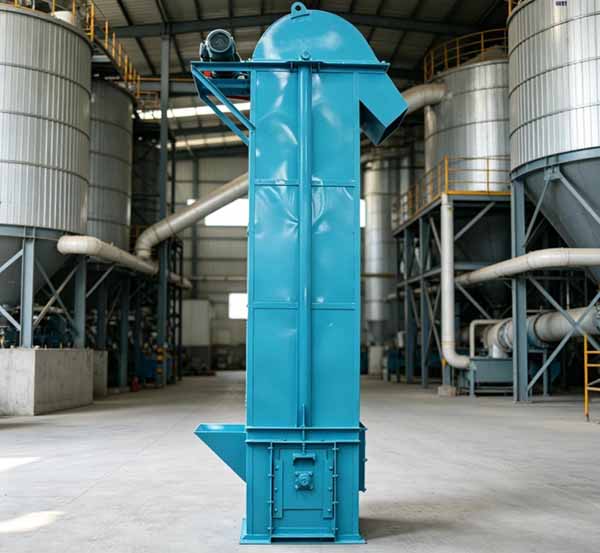
Industrial Vertical Bucket Elevator System Manufacturer & Supplier
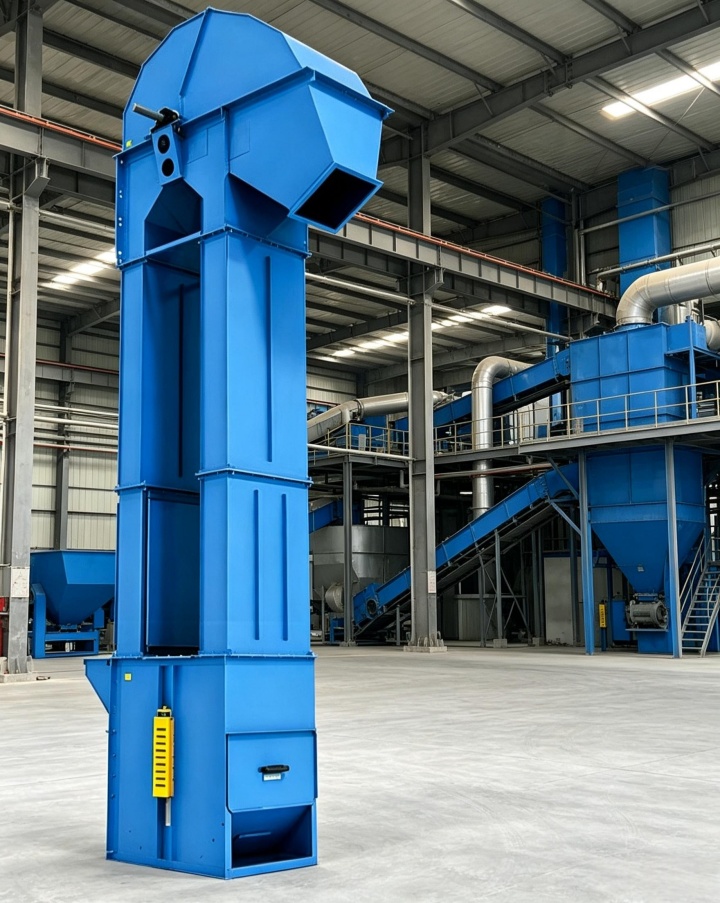
An Industrial Vertical Bucket Elevator System moves bulk materials vertically from lower feed points to elevated discharge positions. This machinery configuration replaces large-footprint inclined conveyors, maximizing factory floor utilization. Equipment dimensions adapt to plant layouts, delivering throughput capacities from 10 m³/h to 500 m³/h and vertical lifting heights reaching 50 meters. The mechanical structural thickness, motor power, and internal components match the specific density, moisture content, and abrasiveness of the handled cargo. This engineering approach yields a non-standard, custom-built vertical transport solution that reduces degradation in fragile particles and withstands heavy-impact wear in mineral applications.
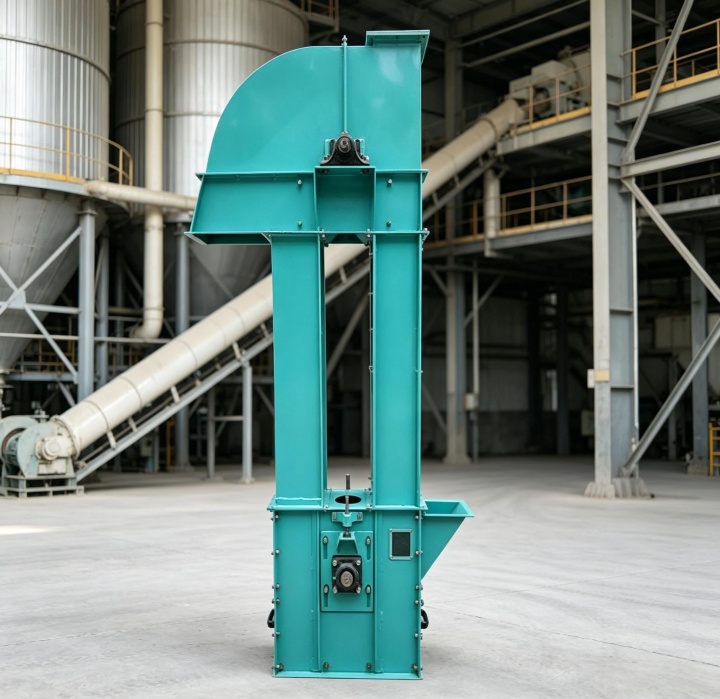
Industrial Vertical Bucket Elevator System Types
Depending on the tension element and construction design, these vertical transport systems fall into distinct categories:
Belt Bucket Elevators: These utilize a high-tensile rubber or PVC belt as the pulling component. They operate at higher linear speeds, handling lightweight, non-abrasive materials like grains, wood pellets, and small plastic regrinds.
Chain Bucket Elevators: This configuration employs single or double strand steel round-link or roller chains. It suits heavy, high-temperature, or sharp materials like cement clinker, crushed limestone, and hot ash, where rubber belts would suffer thermal or mechanical cut damage.
Deep Bucket vs. Shallow Bucket Systems: The physical geometry of the bucket itself defines the system type. Deep buckets handle dry, free-flowing materials, while shallow or V-type buckets prevent sticky substances from packing into the bottom corners.
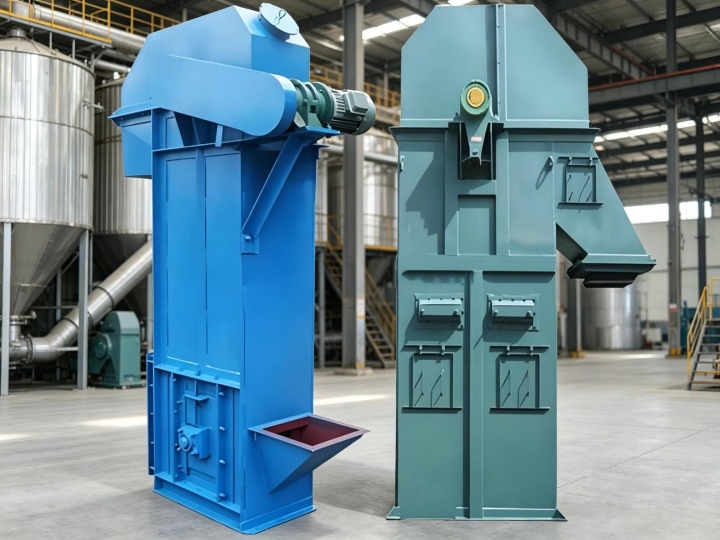
How the Industrial Vertical Bucket Elevator System Operates
The material handling process follows a structured mechanical sequence within an enclosed casing:
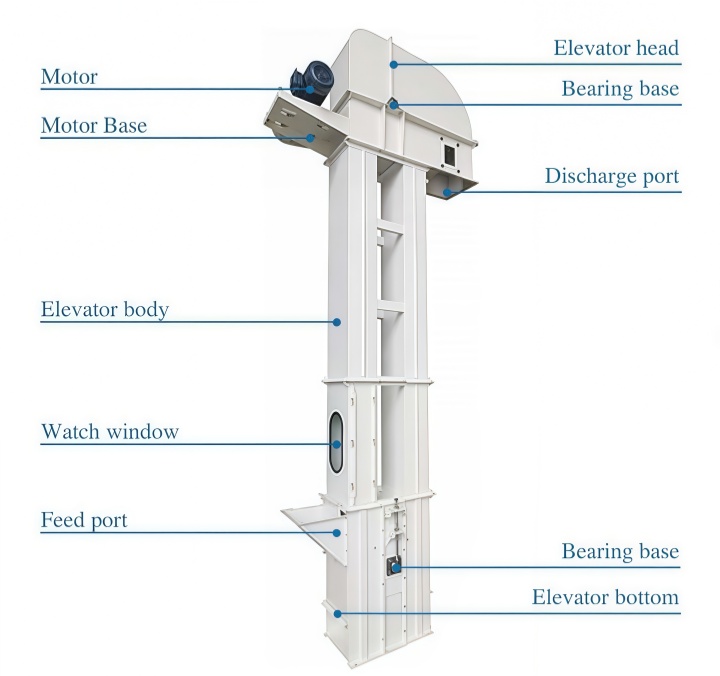
Feeding Phase: Bulk solids enter the boot section at the bottom via an inlet hopper. The moving buckets either scoop the material directly from the bottom boot or receive it via a direct directed chute into the buckets.
Ascending Phase: An electrical motor coupled with a gear reducer drives the top head pulley or sprocket. This mechanical rotation pulls the tension belt or chain upward, carrying the filled buckets vertically inside the intermediate casings.
Discharge Phase: As the buckets reach the top drive pulley or sprocket, they pass over the upper apex. Centrifugal force or gravitational pull forces the material out of the buckets, directing it down the discharge spout into a silo or subsequent processing machinery.
Centrifugal vs. Continuous: Choosing the Right Bucket Elevator Conveyor
| Comparison Metric | Centrifugal Discharge Elevator | Continuous Discharge Elevator |
| Discharge Mechanism | Centrifugal force flings material into the chute. | Gravity drops material onto the back of the preceding bucket. |
| Operating Speed | Higher linear speed (1.2 m/s - 2.5 m/s). | Lower linear speed (0.5 m/s - 0.8 m/s). |
| Material Fit | Free-flowing, durable grains, sand, dry gravel. | Fragile, abrasive, slow-flowing, or large lump materials. |
| Bucket Spacing | Buckets mounted at specific intervals. | V-type buckets mounted tightly back-to-back. |
What Materials Can the Industrial Vertical Bucket Elevator Handle?
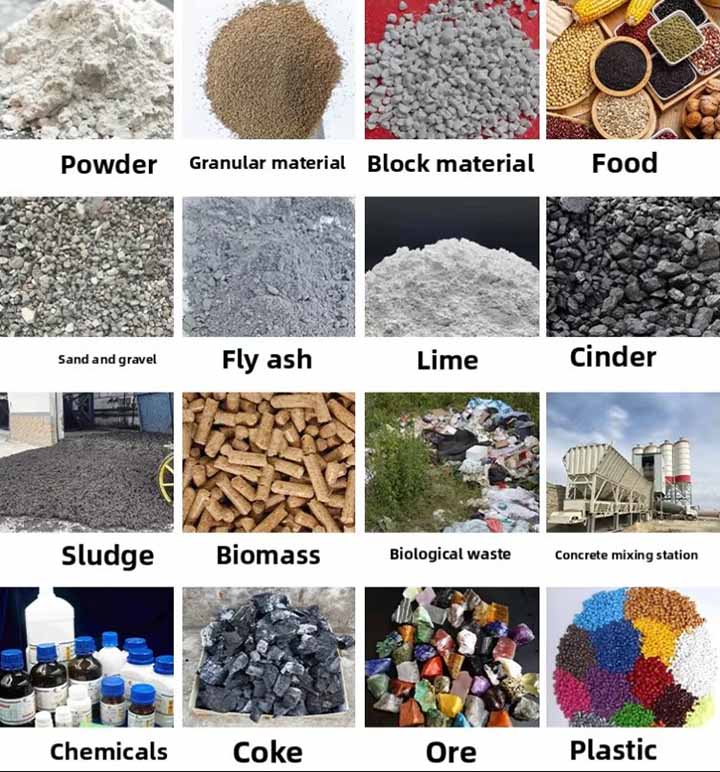
This vertical machinery handles distinct material classifications across multiple industries:
Agricultural Bulk Commodities: Wheat, corn, soybeans, rice, canola seeds, sunflower seeds, and processed animal feed pellets.
Minerals and Construction Aggregates: Dry sand, cement powder, crushed quartz, gypsum, limestone gravel, coal fines, and potash.
Chemical Materials: Fertilizer granules, soda ash, plastic resin pellets, salt crystals, and dry industrial sludges.
Premium Bucket Elevator Parts & Heavy-Duty Components
| Component Name | Engineering Specification | Structural Function |
| Maxi-Lift Buckets | High-density polyethylene (HDPE), nylon, or welded steel (2mm - 6mm thickness). | Houses the material; resists structural deformation during bottom scooping. |
| Elevator Casing (Legs) | Laser-cut carbon steel plates (3mm - 5mm) with welded angle-iron flanges. | Prevents dust leakage; provides the structural support skeleton for the head section. |
| Drive Pulley / Sprocket | Rubber-lagged drum pulley or hardened steel sprockets (HRC 50-55). | Increases friction with the belt to eliminate slippage; drives the chain. |
| Take-Up Assembly | Heavy-duty screw or internal gravity-weighted sliding take-up frames. | Maintains constant tension on the belt or chain to prevent tracking errors. |
Technical Specifications
| Model Indicator | Maximum Capacity (m³/h) | Maximum Height (m) | Motor Power Requirement (kW) | Maximum Material Linear Speed (m/s) |
| VB-160 | 15 | 20 | 2.2 - 5.5 | 1.4 |
| VB-250 | 35 | 30 | 4.0 - 11.0 | 1.6 |
| VB-315 | 60 | 40 | 7.5 - 22.0 | 1.8 |
| VB-400 | 120 | 45 | 11.0 - 37.0 | 2.0 |
| VB-630 | 380 | 50 | 30.0 - 75.0 | 2.2 |
Quality Control & Manufacturing Standards
Manufacturing follows strict technical procedures to ensure mechanical alignment. All sheet metal cutting utilizes CNC fiber laser systems to guarantee a ±0.1mm tolerance on casing bolt holes, preventing twisting during vertical assembly. Head and tail shafts undergo ultrasonic flaw detection to identify internal micro-cracks before lathe machining. Welded structural parts are stress-relieved to avoid operational warping. Each drive pulley undergoes dynamic balancing to ISO 1940 G2.5 standards, minimizing vibration at full load. Finished units run empty for 4 continuous hours in the workshop to verify bearing temperature stability below 65°C and check chain alignment before crating and shipping.
Frequently Asked Questions
Q1: What is the difference between a bucket elevator conveyor and a pallet elevator?
A bucket elevator conveyor uses small containers attached to a loop to move loose, un-packaged bulk solids like sand or grain. A pallet elevator uses flat, large platforms to transport whole wooden pallets, crates, or finished packaged boxes between factory floors.
Q2: Can this vertical bucket lift be integrated with a vacuum elevator system?
Yes. The bucket lift transports high-volume material to a roof-level storage bin. A negative-pressure vacuum system connects to the bin discharge spout, drawing precise amounts of dust or powder into indoor mixing machines.
Q3: Do you provide universal industries bucket elevator parts for replacement?
Yes. Punching patterns on our belts and attachment links match international hole spacings. We supply standard nylon buckets, steel chain links, and rubber-lagged pulleys that fit legacy vertical installations from other industrial manufacturers.
Summary
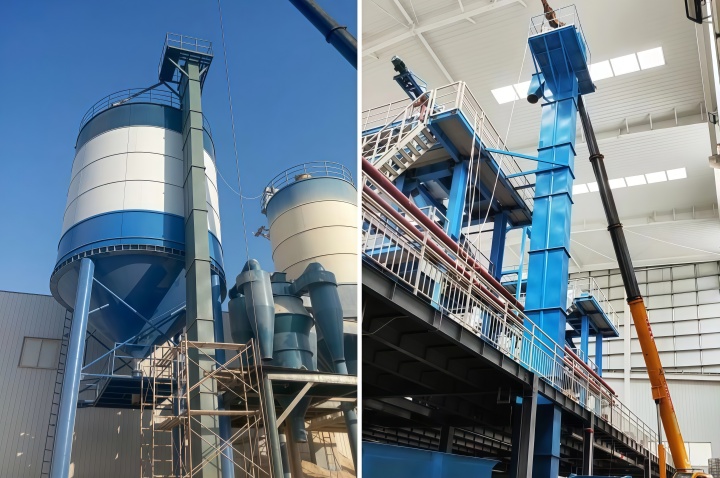
The Industrial Vertical Bucket Elevator System provides space-saving vertical transport for dry bulk materials within processing plants. Utilizing a chain or belt pulling mechanism inside sealed steel casings, it lifts solids up to 50 meters while containing dust emissions. By altering bucket shapes, linear drive speeds, and steel plate thicknesses, this equipment accommodates abrasive mining ores, granular agricultural products, and chemical compounds. Standardized components like HDPE buckets and dynamic-balanced pulleys fit existing global conveyor layouts, streamlining routine field maintenance. This configuration bridges the physical gap between ground-level intake hoppers and roof-top storage silos, maintaining a steady material flow rate across industrial manufacturing, milling, and mineral processing facilities.
Sugested Products
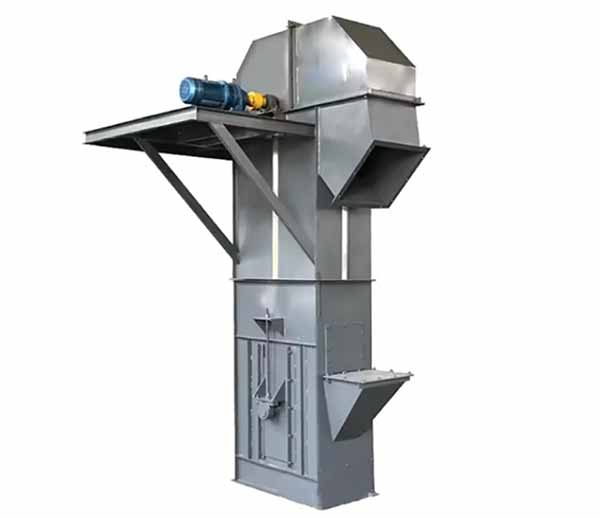
Grain Silo Bucket Elevator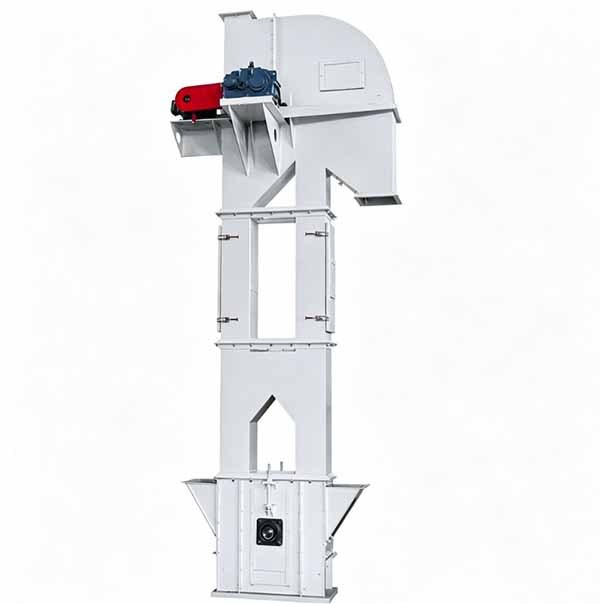
Industrial bucket elevator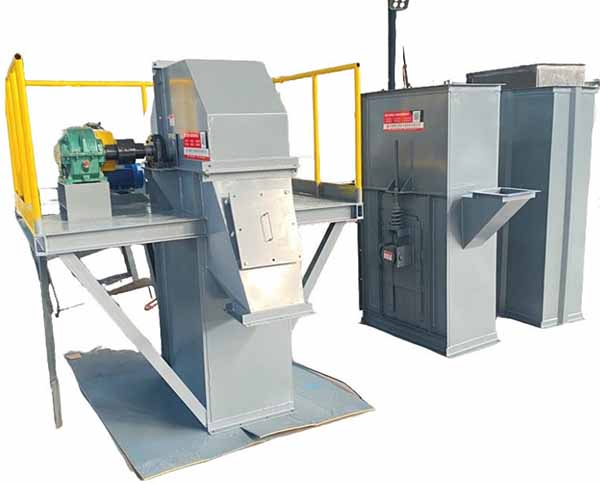
Soda ash bucket elevator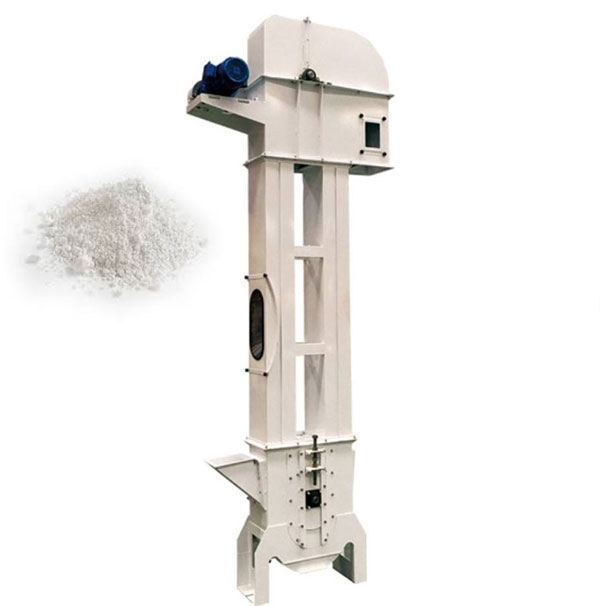
Lithium carbonate bucket elevator