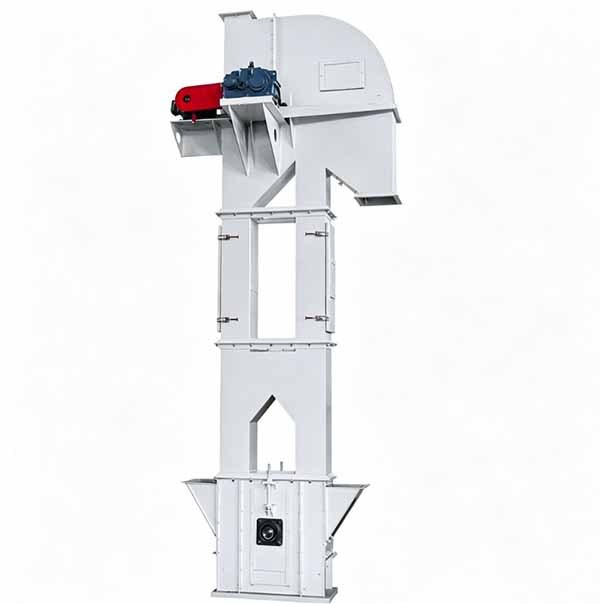
Industrial bucket elevator
Lifting Height: 10 m – 60 m (Customizable for heavy-duty requirements)
Conveying Capacity: 5 m³/h – 500 m³/h
Bucket Width: 160 mm – 500 mm
Operating Speed: 0.5 m/s – 2.5 m/s (Continuous vs. Centrifugal type)
Traction Medium: High-tensile Rubber Belt or Heavy-duty Steel Chain
Overview of Industrial Bucket Elevator
Industrial bucket elevators, as vertical conveying systems, are designed to move bulk materials from a lower level to a specific height.
These systems vertically lift materials when horizontal space is limited and standard belt conveyors cannot achieve steep inclines. They typically achieve lifting heights from 10 to 60 meters, with heavy-duty custom designs extending even further. In terms of conveying capacity, these machines can handle volumes ranging from 5 cubic meters to 500 cubic meters per hour, depending on material density and bucket size.
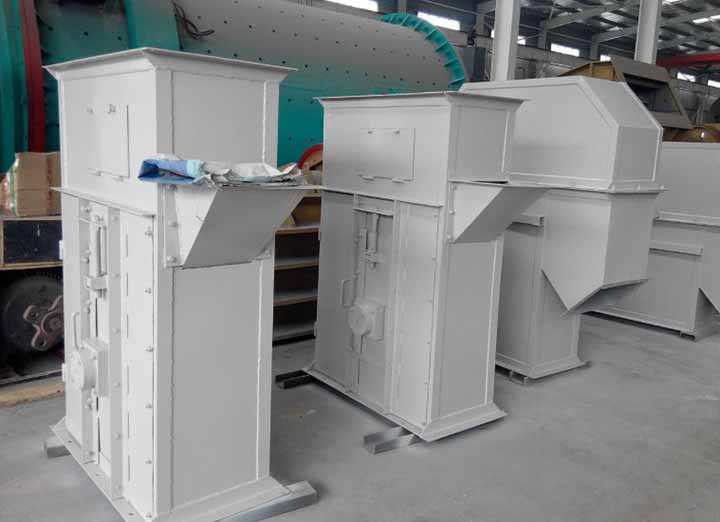
Types of Industrial Bucket Elevators
The method of unloading at the top end categorizes these machines into two distinct types: Centrifugal bucket elevators and Continuous bucket elevators. Choosing the correct type can prevent material degradation and optimize unloading speed.
| Characteristic | Centrifugal Bucket Elevator | Continuous Bucket Elevator |
| Discharging Mechanism | When the bucket passes over the head sprocket, materials are thrown out by centrifugal force. | Gravity guides materials to slide down along the back of the previous bucket which acts as a chute. |
| Operating Speed | Fast (typically 1.2 to 2.5 meters per second). | Slow (typically 0.5 to 1.0 meters per second). |
| Bucket Spacing | Buckets are arranged at regular intervals along the belt or chain. | Buckets are closely arranged with no gaps between consecutive buckets. |
| Most Suitable For | Materials with good flowability, wear resistance and fine particle size, such as dry sand, grains and fine crushed stones. | Fragile, aerated, large lump or abrasive materials, such as fertilizer pellets and clinker. |
Configuration and Component Details
Industrial bucket elevators consist of several components designed to withstand continuous friction and mechanical stress.
Casing
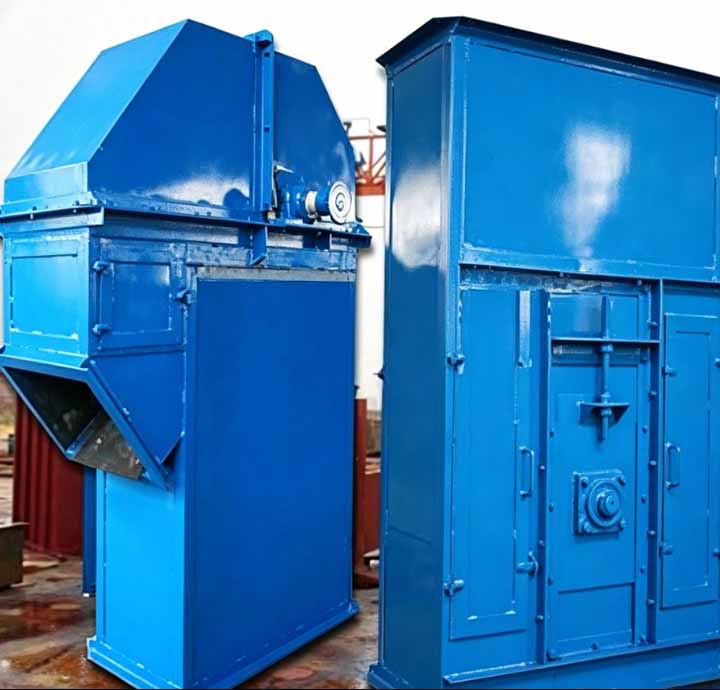
The external structure employs an enclosed bucket elevator design. This structural steel casing seals the entire operation, confining dust inside the machine and isolating external moisture. It consists of a head section, a middle housing module, and a base section equipped with a tensioning frame.
Traction Component
Internal lifting force relies on a high-tensile rubber belt reinforced with a steel wire rope core or a heavy-duty steel chain. This choice changes the configuration of the entire drive sprocket.
Chain Type
For different types of bucket elevator chains, the manufacturer installs specific engineered chains. Circular link chains are used for standard industrial applications with moderate abrasion; roller chains are suitable for high-load requirements, offering structured chain plates and pins. Engineered bushing chains are used for lifting large blocks of ore subject to impact loads.
Manufacturing Material
The grade of steel determines the machine's lifespan. Carbon steel with an industrial coating is sufficient for non-corrosive environments. However, when handling corrosive salts, wet materials, or components requiring strict contamination control, a stainless steel bucket elevator (using 304 or 316 grade steel) must be used.
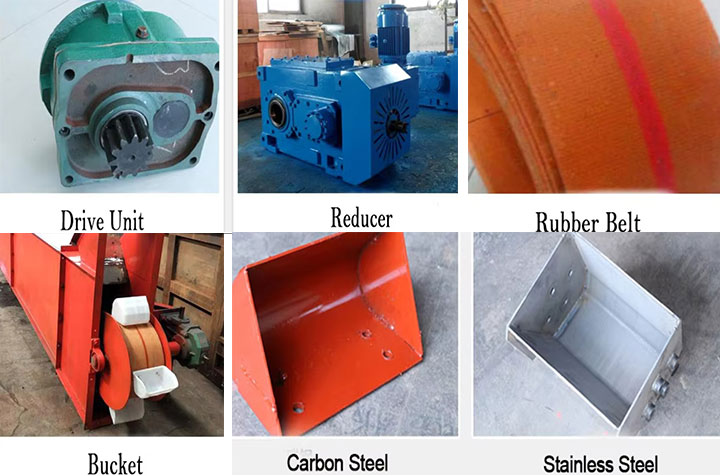
Model Specifications
| Model | Traction Type | Bucket Width (mm) | Max Capacity (m³/h) | Max Height (m) | Motor Power (kW) |
| TD160 | High Tensile Rubber Belt | 160 | 15 | 25 | 2.2 - 5.5 |
| TD250 | High Tensile Rubber Belt | 250 | 32 | 30 | 4.0 - 11 |
| TD315 | High Tensile Rubber Belt | 315 | 58 | 35 | 5.5 - 18.5 |
| TD400 | High Tensile Rubber Belt | 400 | 90 | 40 | 7.5 - 30 |
| TH160 | High Strength Circular Chain | 160 | 18 | 25 | 3.0 - 7.5 |
| TH250 | High Strength Circular Chain | 250 | 35 | 30 | 5.5 - 15 |
| TH315 | High Strength Circular Chain | 315 | 62 | 35 | 7.5 - 22 |
| NE15 | Plate Sleeve Roller Chain | 150 | 15 | 30 | 2.2 - 7.5 |
| NE30 | Plate Sleeve Roller Chain | 300 | 30 | 35 | 4.0 - 15 |
| NE50 | Plate Sleeve Roller Chain | 400 | 50 | 40 | 7.5 - 22 |
| NE100 | Heavy-duty Double Row Plate Chain | 500 | 100 | 45 | 11 - 45 |
We offer buckets ranging from deep and shallow to various custom sizes. For high-capacity bucket elevators, our engineering team will individually calculate and customize bucket sizes and motor power based on material bulk density and vertical height.
Application Scenarios
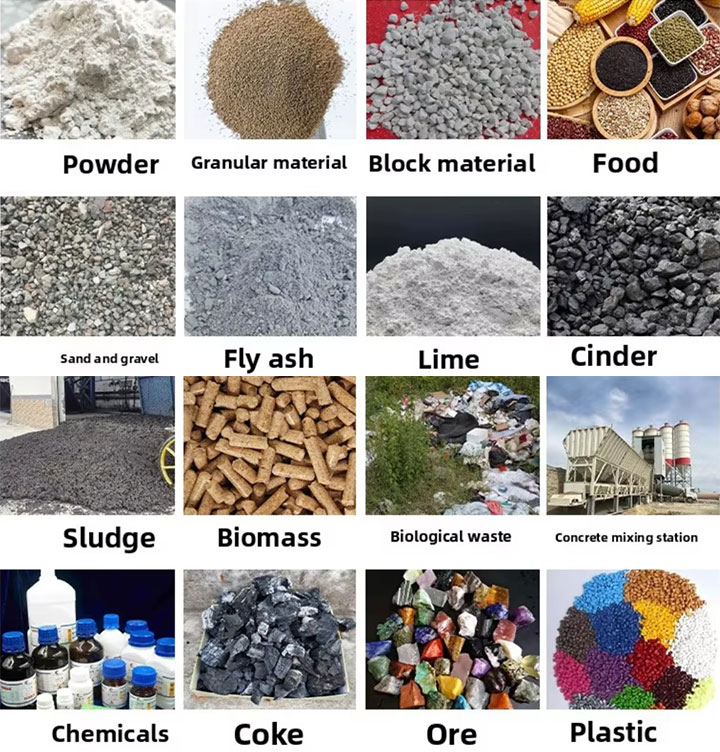
These vertical lifting systems operate in multiple sectors handling dry bulk solids.
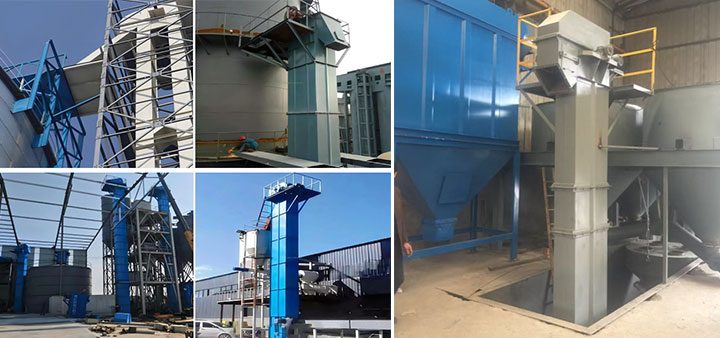
- Agriculture and Grain Storage: Moving wheat, corn, soybeans, and rice from feed pits to tall storage silos or grinding silos without damaging the grains.
- Mining and Minerals: Lifting crushed limestone, iron ore, copper concentrate, and gypsum from underground levels or crushing stations to surface processing plants.
- Building Materials: Feeding raw sand, aggregate mixtures, crushed stone, and dry cement powder into concrete batching plants and asphalt mixing towers.
- Chemical Production: Conveying synthetic granules, soda ash, urea granules, and crystalline powders into packaging hoppers or mixing drums.
Industrial bucket elevator transports materials
Industrial Bucket Elevator Prices
Industrial bucket elevators are priced between $4,150 and $25,500, with no fixed price due to customization to project specifications. The total cost is determined by three main variables: In terms of vertical height and volume, taller towers require thicker steel, reinforced structures, and high-power motors, directly increasing material costs; in terms of material grade, stainless steel costs 40% to 150% more than standard painted carbon steel; and in terms of component specifications, using special engineering chains, flame-retardant belts, or explosion-proof motors will incur additional manufacturing costs.
Related FAQs
Q: How to choose between belt and chain bucket elevators?
A: This decision depends on the temperature and abrasiveness of the material. For materials below 120°C and without abrasiveness (such as grains or fine flour), choose a belt elevator. When handling high-temperature materials (up to 250°C) or sharp, pointed substances that can cut rubber (such as quartz and heavy minerals), choose a chain elevator.
Q: What causes material backflow in bucket elevators, and how can it be prevented?
A: Backflow occurs when discharged material fails to enter the discharge chute and falls back into the casing. This stems from incorrect belt speed, incorrect head geometry, or misaligned discharge chutes. This can be prevented by adjusting the frequency converter to match the specified centrifugal speed and modifying the position of the tongue plates inside the head.
Q: Can your bucket elevator handle high-temperature materials?
A: Yes. For high-temperature materials, the system uses steel chains instead of rubber belts, paired with cast iron buckets. The internal bearings are moved outside the casing to isolate them from direct heat conduction.
Q: What routine maintenance is required for a fully enclosed industrial bucket elevator?
A: Maintenance requires weekly checks of the tensioning device in the base section to verify belt or chain tension. Technicians must check the wear-resistant liners inside the head discharge chute monthly, lubricate the external bearings every 200 hours of operation, and check for loose bucket bolts using the access door.
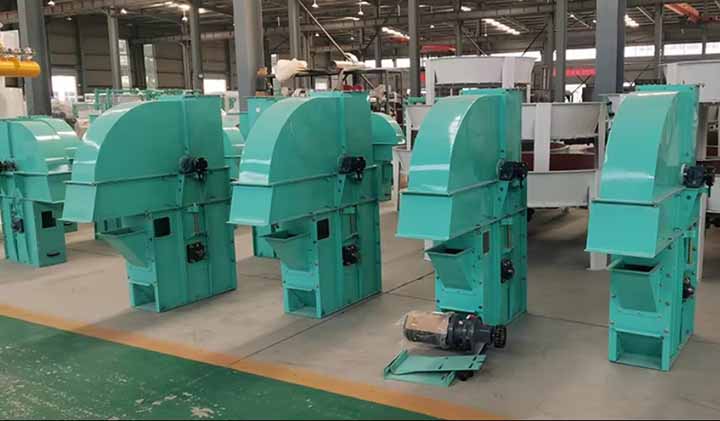
Industrial bucket elevators solve the problem of vertical bulk material conveying when space optimization is required. Understanding the differences between centrifugal and continuous discharge mechanisms, and selecting the appropriate chain or stainless steel configuration, determines the system's service life. Matching the metallurgical materials and traction types of components directly to the specific density and temperature of the material can prevent premature mechanical failure.
Sugested Products
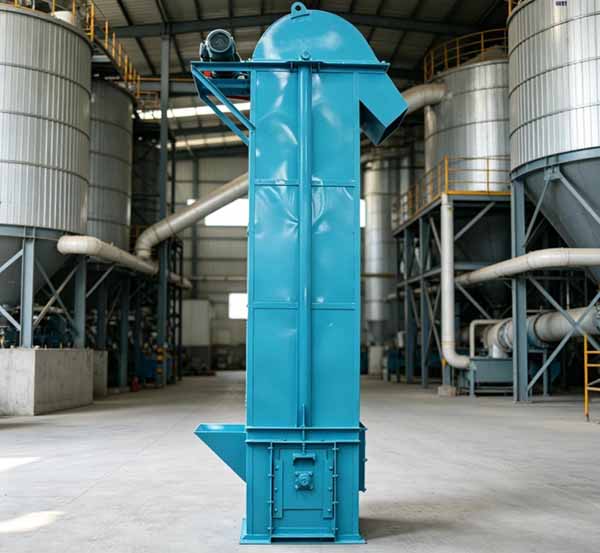
Industrial Vertical Bucket Elevator System Manufacturer & Supplier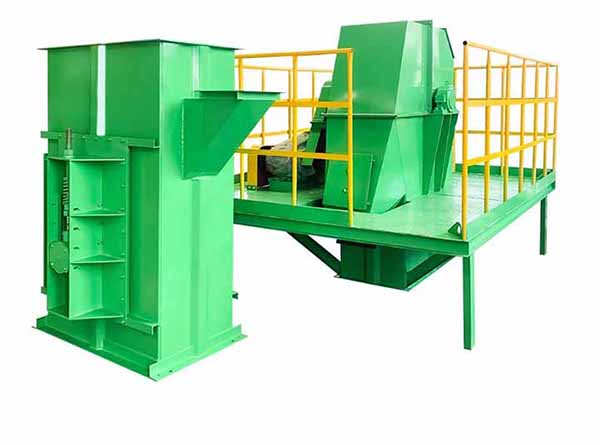
Sulfur bucket elevator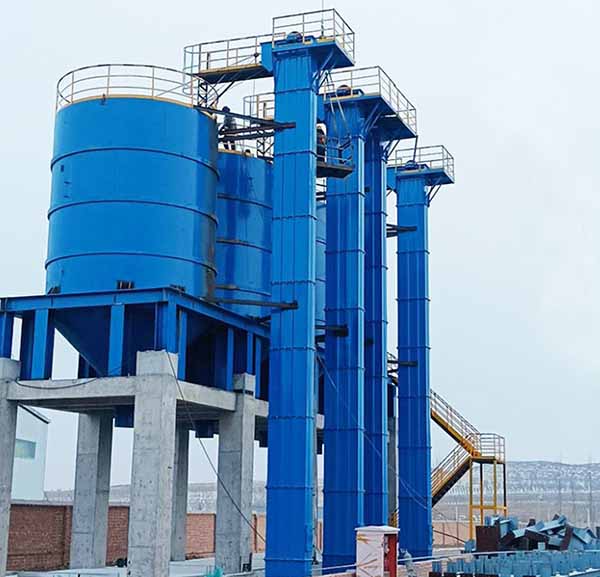
Carbon black bucket elevator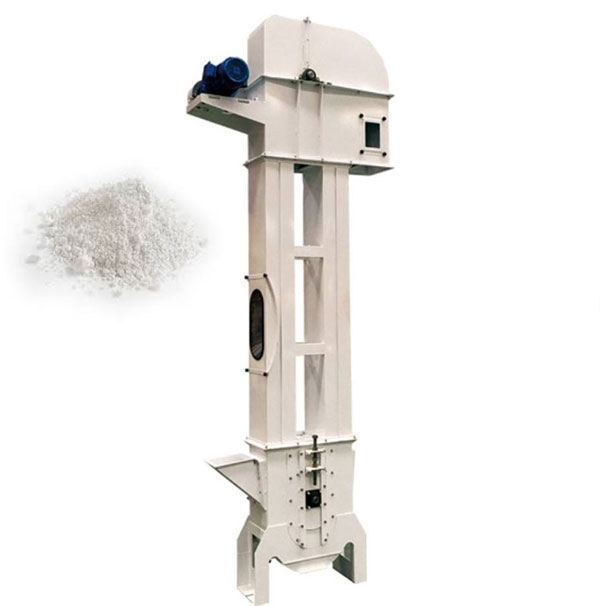
Lithium carbonate bucket elevator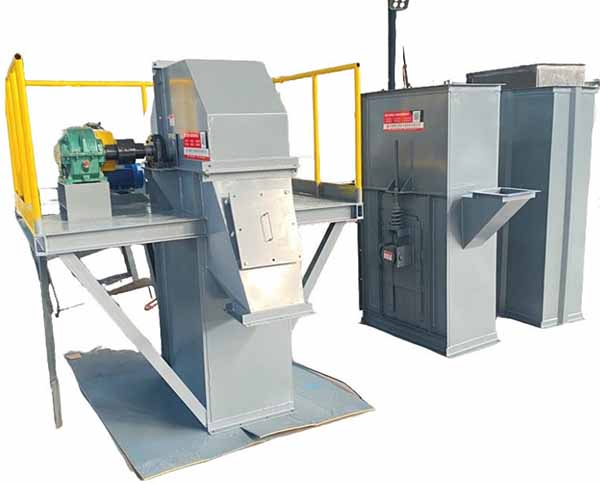
Soda ash bucket elevator