Industrial conveyor belts for coal handling materials
Tuesday March-24 2026 14:19:57
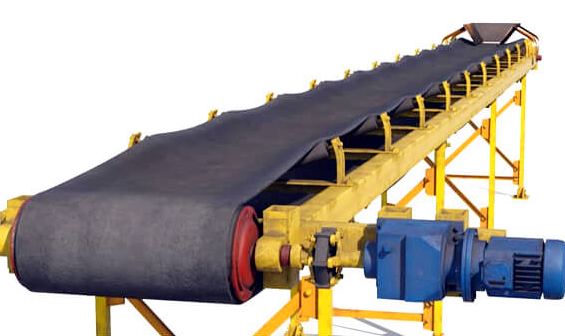
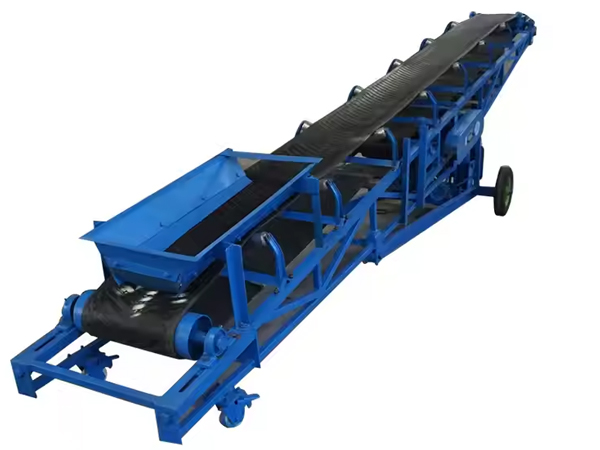
Industrial conveyor belts for coal handling materials play a crucial role in continuous transportation within coal material handling systems. Their function is to move mined raw coal, washed and processed clean coal, or fuel coal used in power plants from one work site to another.
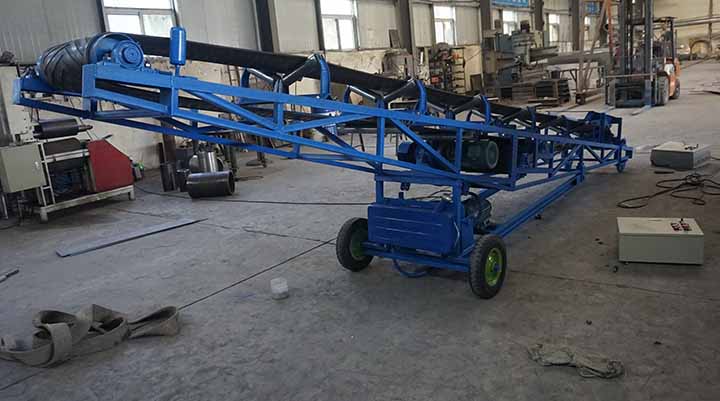
Coal is highly abrasive; sharp-edged coal chunks continuously impact the belt surface upon falling, and coal dust can accumulate static electricity during friction, posing a fire risk. Using wear-resistant materials, industrial conveyor belts for coal handling materials can reduce these problems during coal transportation. The conveying capacity of these devices typically ranges from 1000 to 8000 tons per hour, and the conveying distance of a single unit can extend from 10 meters to 10 kilometers. Through multi-stage relays, the entire transportation chain can cover complex terrain spanning tens of kilometers.
What types of industrial conveyor belts for coal handling materials are there?
Based on operating conditions and load requirements, industrial conveyor belts for coal handling materials are generally classified into several specific physical types.
Steel cord conveyor belts, with longitudinally arranged steel wires embedded inside, possess extremely high tensile strength and extremely low elongation, enabling single-unit transport over distances exceeding 15km and a conveying capacity of over 10,000 tons per hour. They are suitable for the high-tension environments of large mines.
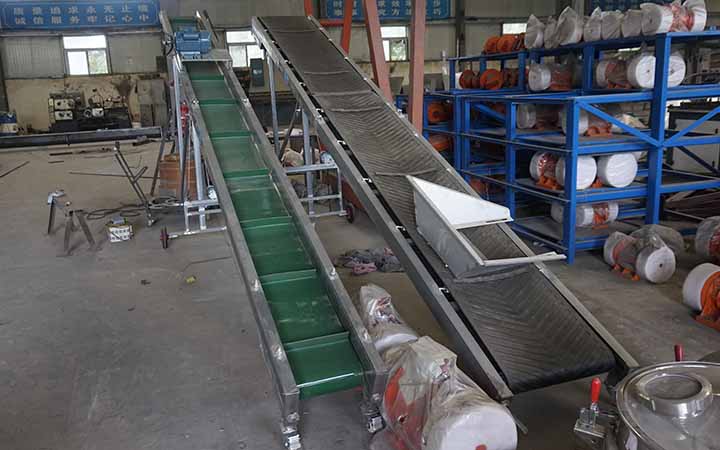
Multi-layer fabric core conveyor belts typically use polyester or nylon as the skeleton material, offering good flexibility. Conveying distances are usually within 2km, with conveying capacities ranging from 500 to 2,500 tons, making them suitable for short to medium-distance transfers.
Tubular conveyor belts, during operation, are coiled into a cylindrical shape by idler rollers to enclose the coal. This allows for medium to long distance crossings of around 5km and reduces material spillage and protects the surrounding environment from dust during transport of 1,000 to 4,000 tons.
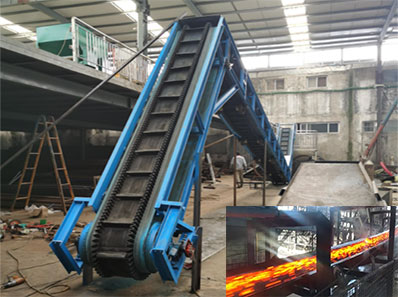
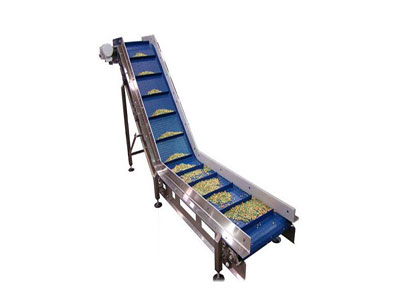
High-angle corrugated sidewall belts, by adding transverse partitions and side skirts, achieve vertical or high-angle lifting in confined spaces. Although the conveying distance is typically within 100 meters in height, its conveying capacity can be adjusted to around 1,000 tons depending on the belt width, solving the problem of coal transfer in space-constrained areas.
Technical Parameters of Industrial Conveyor Belts for Coal Handling Materials
| Key Parameters | Standard Range |
| Carcass Material | Steel Cord / Polyester Fabric (EP) / Nylon (NN) |
| Capacity | 500 t/h - 10,000 t/h |
| Length | Single Machine 50m - 15km+ |
| Tensile Strength | 500 N/mm - 5400 N/mm |
| Belt Width | 800 mm - 2400 mm |
| Belt Speed | 1.25 m/s - 6.3 m/s |
| Cover Thickness | Top Cover: 6mm - 12mm / Bottom Cover: 3mm - 6mm |
| Fire Resistance | Conforms to ISO 340 / DIN 22103 / MSHA |
| Operating Temp | -20°C to +80°C |
Components of Industrial Conveyor Belts for Coal Handling Materials
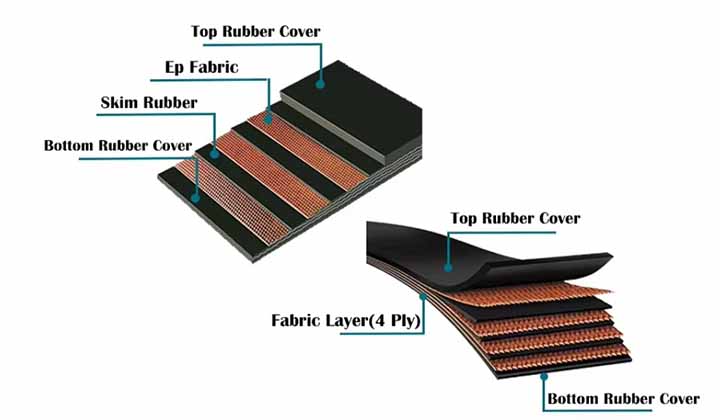
Understanding the construction of industrial conveyor belts for coal handling materials helps in understanding their operation. Its overall structure mainly consists of three layers: the top layer, which directly contacts the coal, incorporates wear-resistant and flame-retardant components to withstand coal scraping and prevent friction-induced fires; the middle layer is the load-bearing skeleton layer, equivalent to the belt's "spine," determining its load-bearing capacity; and the bottom layer, which contacts the rollers and idlers, primarily aims to reduce friction while protecting the skeleton from damage. The belt edges are also reinforced to prevent delamination or tearing during long-term operation. These three layers are firmly pressed together into a single unit through a high-temperature vulcanization process, ensuring the belt's robustness and durability during high-intensity transportation.
What are the application scenarios for industrial conveyor belts for coal handling materials?
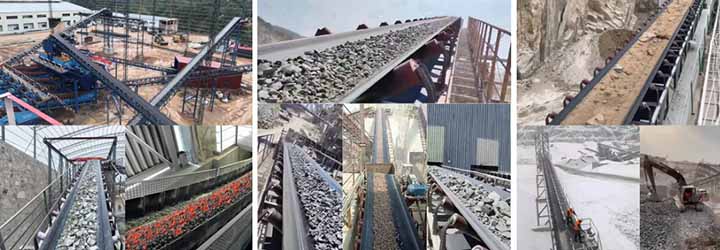
In practical applications, industrial conveyor belts for coal handling materials demonstrate significant operational value. In large open-pit coal mines, steel cord conveyors transport coal directly from the mining face to the washing plant, replacing traditional truck transportation and reducing operating costs. In thermal power plants, complex coal conveying systems utilize multiple fabric cord conveyors to connect coal bunkers to coal mills, ensuring a stable fuel supply. In large import and export ports, stacker cranes and reclaimers work in conjunction with long-distance conveying systems to rapidly load tens of thousands of tons of coal from open-pit yards into cargo ships. These applications demonstrate the supporting role of conveying systems in resource circulation, requiring operators to adjust equipment parameters based on changes in material particle size, moisture content, and slope under different operating conditions.
Industrial conveyor belts for coal handling materials have specific technical requirements in every aspect, from physical properties that withstand wear and fire risks, to structural types covering different spans and capacities, and adaptability to various operating environments. DaHan Machinery, as a conveyor belt manufacturer, can provide a product catalog of belt conveyors and can customize conveyor belt types according to users' needs for belt conveyor components and functions. As a source manufacturer, the prices of industrial conveyor belts for coal material handling are also competitive.