Portable Belt Conveyor System Selection Guide
Tuesday September-15 2026 14:24:34
Portable belt conveyor system in construction sites, mines, warehouses, or grain transfer stations often fail to discharge material properly, or they run with frequent spillage and belt misalignment. The problem is rarely the equipment itself. It usually comes from Portable Belt Conveyor System Selection that did not match the actual working conditions.
Our factory is located in Xinxiang, Henan, and we manufacture bulk material handling equipment. Our portable belt conveyors cover belt widths from 300 to 1200 mm, lengths from 5 to 30 meters, and capacities from 30 to 150 tons per hour. The following four core dimensions break down the practical points of selection. Each dimension carries similar weight and supports the others.
How Material Characteristics Affect Portable Belt Conveyor System Selection for Belt Configuration
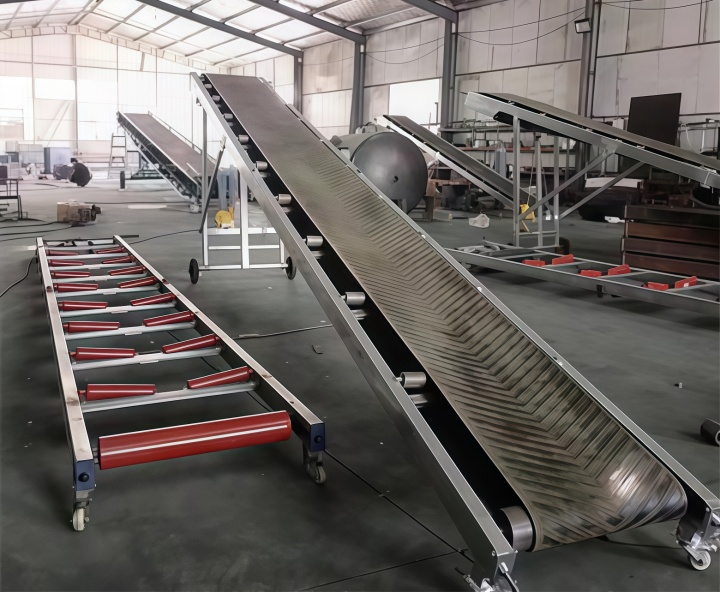
Material sets the baseline for the whole machine and also affects later maintenance frequency. According to the CEMA bulk material classification table, dry sand and gravel have an angle of repose around 30 degrees and a maximum conveying incline of 12 degrees. Wet clay materials can have an angle of repose up to 45 degrees and a maximum incline of 23 degrees. This means the same machine needs different belt configurations and idler spacing when handling dry sand versus wet clay.
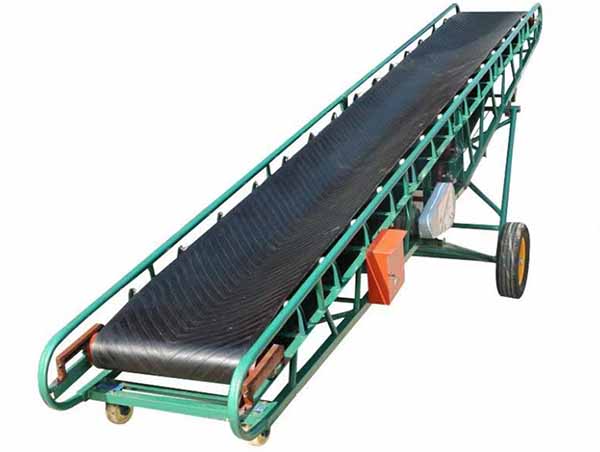
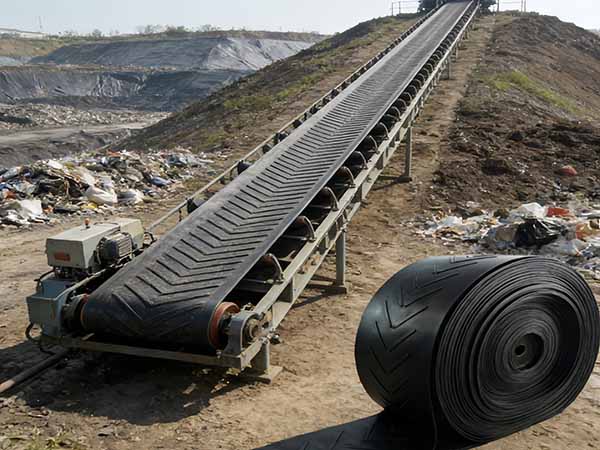
For materials with a bulk density above 1.6 tons per cubic meter, carrying idler spacing usually needs to be shortened to 1000 mm. Below that density, it can be extended to 1200 mm. In wet sand conditions with higher moisture content, smooth belts lose friction noticeably, while chevron belts maintain more stable grip. Technical data from the international rubber manufacturer Forech shows that for wet and sticky materials, chevron belts can raise the maximum climbing angle from around 20 degrees with smooth belts to 30 to 35 degrees.
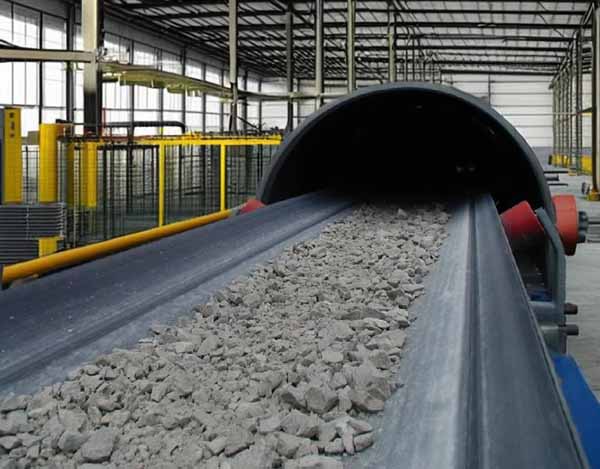
When the maximum lump size exceeds one third of the belt width, impact at the loading point can quickly damage the belt edge. In that case, impact idlers should be added in the loading section. Our factory recommends reducing idler spacing further to 300 to 400 mm. In actual use, belt misalignment frequency dropped by about 60 percent. Once material density, moisture, lump size, and packaging form are confirmed, most later faults are already ruled out.
Hard Constraints of Conveying Distance and Incline on Portable Belt Conveyor System Selection
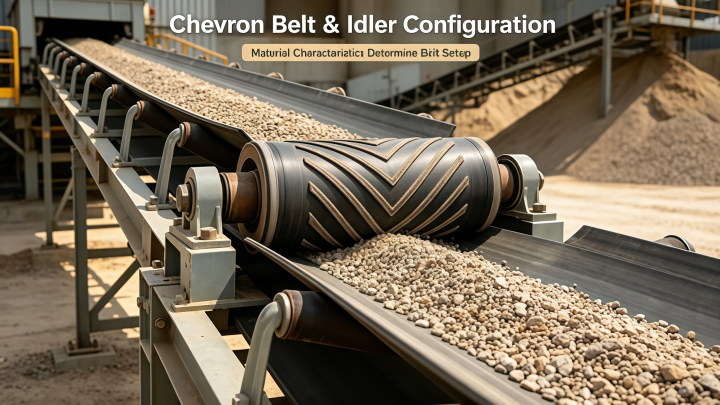
Distance and incline pull against each other and cannot be judged separately. Our portable belt conveyors cover belt widths from 300 to 1200 mm, lengths from 5 to 30 meters, and capacities from 30 to 150 tons per hour. According to CEMA and academic material conveying data, dry sand and gravel begin to roll back on smooth belts beyond 15 to 18 degrees. Washed and screened gravel has a maximum allowable incline of only 12 degrees.
Chevron belts can extend this limit to 25 to 30 degrees. For wet sand and wet clay materials, the limit can reach 35 to 40 degrees. If the site needs to cross a significant vertical height, a compact low-power unit often cannot maintain stable flow. A wider belt and a larger drive configuration become necessary.
Selection cannot only look at whether material can be conveyed upward. It must also look at whether the belt remains in its normal working range after the material is conveyed up. The larger the incline, the higher the risk of material rollback, and the more frequent the material accumulation and misalignment at the tail pulley.
Actual Weight of Mobility and Site Conditions in Portable Belt Conveyor System Selection
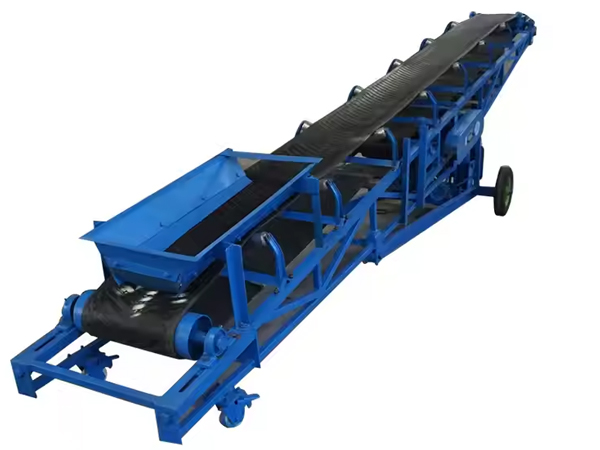
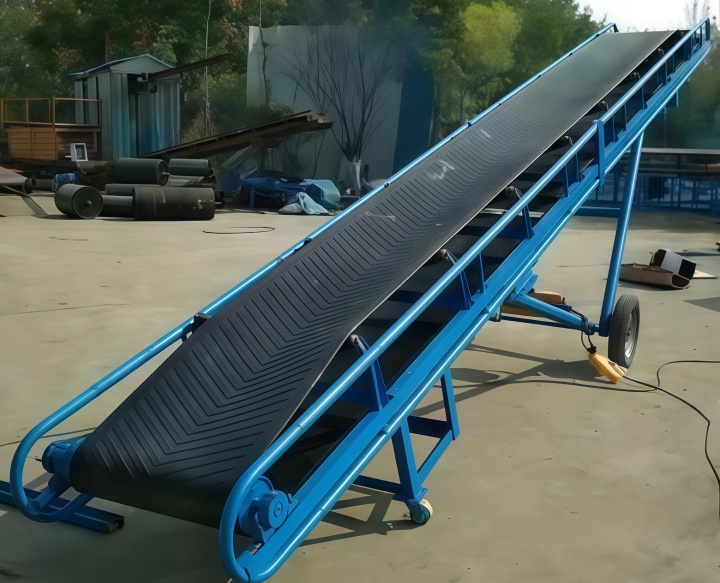
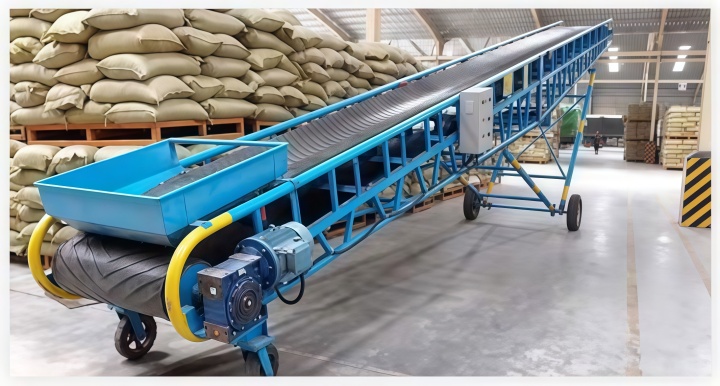
The word portable comes with a cost. The common industry approach uses pneumatic or solid rubber wheels with a diameter of 300 to 400 mm for easy transfer. However, a wheeled structure usually has less rigidity under full load than a fixed frame. BS 4531:1986 is a British standard specifically for portable and mobile troughed belt conveyors. It sets clear requirements for frame structure, idler diameter, and pulley dimensions.
If the equipment needs frequent lifting and transfer between floors, the total machine weight becomes a factor that cannot be ignored. On flat ground in warehouses or workshops, the equipment can be compact and light. At open-pit mines or demolition sites, the torsional strength of the frame and the load capacity of the wheel set must be prioritized.
The more frequent the transfer, the more attention must be paid to bolt loosening at frame connections and consistency of tire pressure. Otherwise, misalignment tends to appear together on the first start after transfer.
Total Cost of Ownership and the Long-Term View of Portable Belt Conveyor System Selection
Purchase price reflects only part of the spending. CEMA estimates that the annual maintenance cost of a belt conveyor is about 2 percent of the structural equipment purchase price plus 5 percent of the belt purchase price. The United States Environmental Protection Agency engineering cost report gives a wider range. It states that annual maintenance cost for belt conveyors is between 0.32 and 6.85 percent of installed cost, depending on material abrasiveness and particle size.
Research on rubber conveyor belt wear also finds that the belt itself can account for 30 to 70 percent of the purchase and maintenance cost of a conveying system. It is the single most economically sensitive component. Under the same working conditions, a belt with greater cover thickness usually lasts longer. The difference in annual maintenance cost can reach about 10 percent or more of the purchase price.
The overall judgment should be based on total spending and downtime risk over the expected service life, not on a single quotation. For projects with frequent transfers and low single-shift utilization, leasing or choosing a modular split structure may be more reasonable than buying a complete machine.
Site Assessment Before Selection and Portable Belt Conveyor System Selection
Site condition confirmation before equipment arrival is often skipped. Whether the ground is level affects the force distribution on the wheels and support legs. Sites with a larger slope need anchoring measures on the tail pulley side. CEMA recommends that the width of the discharge chute should not exceed two thirds of the receiving belt width. The internal width of the chute should be at least 2.5 to 3 times the maximum lump size.
If the loading point deviates from the belt centerline beyond a certain distance, noticeable misalignment will appear after a few hours of operation. These details need to be checked on site with a tape measure and a spirit level, not adjusted passively after the equipment arrives. Power capacity and cable distance also need to be confirmed in advance. If the motor power is selected correctly but the on-site voltage drop is too large, insufficient speed and belt slippage will still occur during full-load startup.

Fault Prediction During Portable Belt Conveyor System Selection
The following two faults can be avoided in advance during the selection stage. They are also the problems most likely to appear in the first few weeks after a portable belt conveyor is put into use.
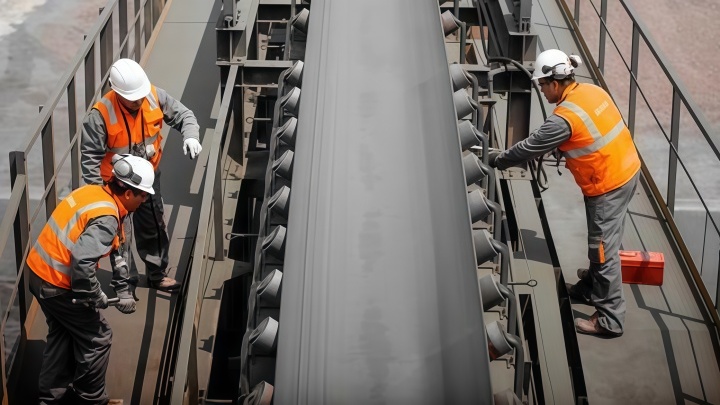
Belt misalignment usually starts with a slight offset to one side. The field guide from the international belt manufacturer Fenner Dunlop points out that common causes include idler axis misalignment, loading point deviation from the belt center, an unlevel frame, and improper tension. Our factory encountered severe misalignment on the first start after transfer at a bulk cargo terminal project in Southeast Asia. Inspection showed that inconsistent tire pressure had tilted the frame. This is directly related to the stability requirements for mobile conveyors in BS 4531. During no-load operation, observe the belt position at the tail pulley. If it keeps shifting to one side, first check whether the idler axis is perpendicular to the belt centerline, then confirm whether the loading point is centered. Adjustment should start from the tail pulley and proceed group by group toward the head pulley. Do not start by tightening the tensioning device. Industrial maintenance data suggests that self-aligning idlers should be installed at a spacing of one group for every 10 to 15 standard idlers, which is about every 15 to 30 meters.
Belt slippage mainly shows as the drive pulley rotating while the belt does not follow. Common causes listed in industrial maintenance guides include drive pulley lagging wear, material accumulation on the pulley surface, insufficient tension, and overload. Most people first react by tightening the tension. The real cause is often lagging wear or material buildup. The correct order is to stop the machine and clean the pulley surface first, then check whether the lagging is intact, and then judge whether tension adjustment is needed. A maintenance article in an Australian mining magazine points out that improperly installed or severely worn lagging can lead to premature belt wear and even fire risk. Over-tensioning can damage the belt carcass, and that damage is irreversible.
Portable Belt Conveyor System Selection FAQ
The following four questions come from common inquiries during actual selection.
Can a portable belt conveyor handle grain?
Yes, but food-grade belts and dust sealing are needed. Grain particles are small, and a baffle should be added at the loading point to prevent spillage.
How to choose between an internal drum motor and an external motor?
For loading scenarios with a belt width below 600 mm and a length under 15 meters, an internal drum motor is usually sufficient. Beyond that range, the heat dissipation advantage of an external gear motor becomes apparent.
Is tightening the tension enough when the belt slips?
Not necessarily. First check pulley lagging and surface buildup, then judge whether tension adjustment is needed.
Does a portable belt conveyor need recalibration after transfer?
Yes. After each transfer, check frame levelness and belt tension. Misalignment often appears on the first start after transfer.
Portable Belt Conveyor System Selection Conclusion
Portable Belt Conveyor System Selection is not a process of finding a universal model. It is a specific configuration reached by aligning four conditions: material behavior, conveying geometry, site constraints, and cost structure.
In our factory after-sales records, 90 percent of repair calls in the first three weeks can be traced back to one of these four dimensions being skipped during selection. If you have working condition parameters under evaluation, including material type, daily throughput, climbing height, and transfer requirements, you can use this information for a targeted matching calculation and compress selection error before the equipment arrives.