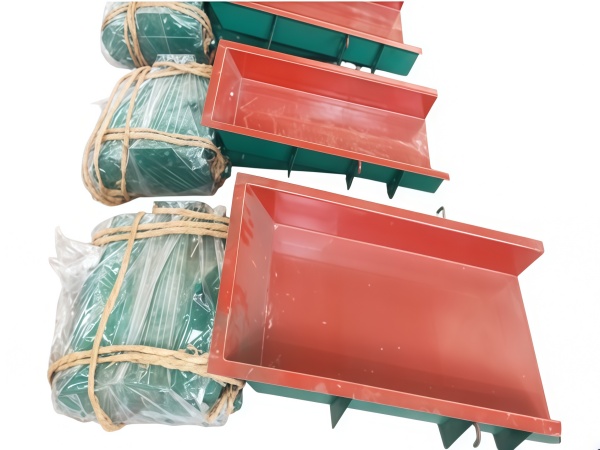
Electromagnetic Vibratory Feeder for Quartz Sand | Heavy Duty Sand Feeder
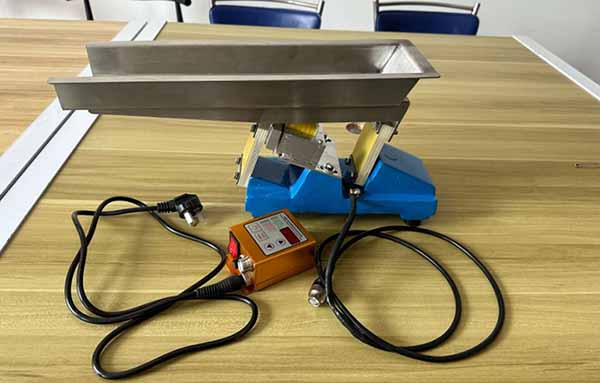
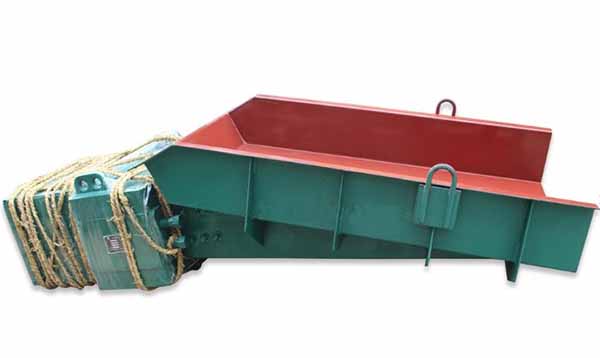
The equipment is driven by an electromagnetic exciter to vibrate the feeding trough. Under micro-amplitude vibrations at 3,000 cycles per minute, it achieves continuous and quantitative feeding of coarse sand and fine powder.
- Feeding Capacity Range: 0.5 t/h – 100 t/h (converted based on a bulk density of 1.6 t/m³)
- Trough Fabrication Material: Q235B Carbon Steel / 304 Stainless Steel / 316L Stainless Steel
- Liner Hardness Rating: NM400 (Brinell Hardness ≥ 370 HBW) / Hardox 450 / Shore A85 Polyurethane
- Protection Rating: IP65 fully sealed drive coil structure
- Vibration Control Voltage Regulation: 0–220V thyristor stepless voltage regulator controller
Electromagnetic Vibratory Feeder for Quartz Sand | Heavy Duty Sand Feeder is purpose‑built to tackle the high‑abrasion, dust‑prone feeding challenges of quartz sand and silica powder production lines. Engineered with heavy‑duty wear‑resistant options, fully‑sealed drive structure and flexible dust‑proof enclosure solutions, this series electromagnetic vibratory feeder achieves precise, instant‑response continuous quantitative feeding for coarse quartz grains to high‑purity fine quartz powder. Available in multiple trough material and liner configurations, it covers throughput from 0.5 t/h up to 100 t/h, and supports seamless connection with automatic batching, weighing and PLC control systems for glass sand processing, quartz purification, drying‑screening and large‑scale silica sand plant operations.
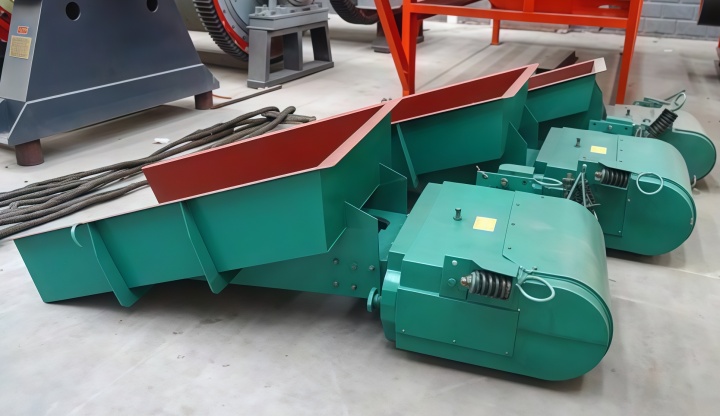
Why Choose a Dedicated Design for Handling Quartz Sand?
Quartz sand reaches a Mohs hardness of 7. In its dry powder state, it easily damages the flow channel, and friction between particles rapidly erodes standard carbon steel troughs. Meanwhile, quartz fine powder above 200 mesh easily spills during transport, causing workplace dust concentrations to exceed allowable limits.
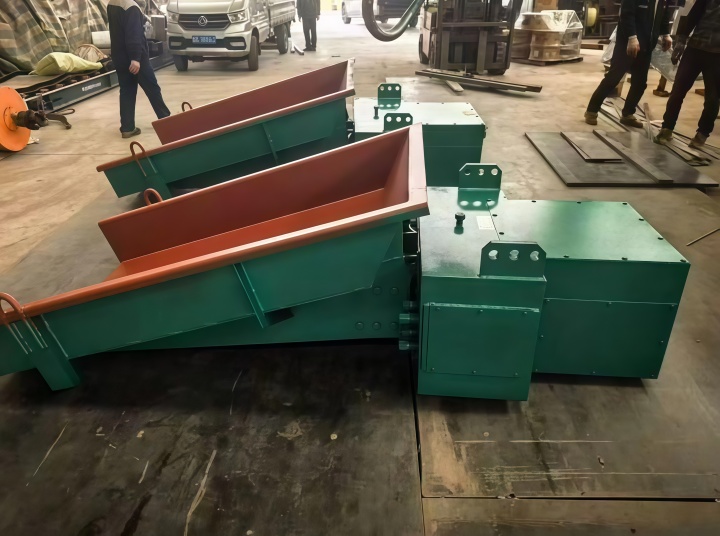
Wear-Resistant Liner Configuration
To block hard particles from directly scouring the bottom of the trough, detachable liners are installed on the inner wall:
NM400 / Hardox 450 Wear-Resistant Steel Plates: Suitable for scouring by coarse-grained quartz sand from 10 mesh to 80 mesh. Liners are secured to the trough bottom via countersunk bolts, with bolt heads recessed 5 mm below the liner working surface to prevent direct particle impact on the bolts.
High-Polymer Polyurethane Liners: Suitable for high-purity quartz powder from 100 mesh to 320 mesh. Polyurethane features elastic impact-absorption characteristics, which not only extends trough service life but also prevents iron elements from mixing into the quartz powder due to metallic friction.
Dust-Tight Enclosure Structure
Flexible Flange Sealing: Silicone cloth sleeves are used for flexible connections at the inlet and outlet, secured with 304 stainless steel hose clamps at the upper and lower ends to prevent fine powder leakage.
Enclosed Covered Trough: A trough cover with rubber sealing strips is installed above the trough, clamped tightly around the edges with quick-release clamps to maintain a slight negative pressure inside the trough during operation.
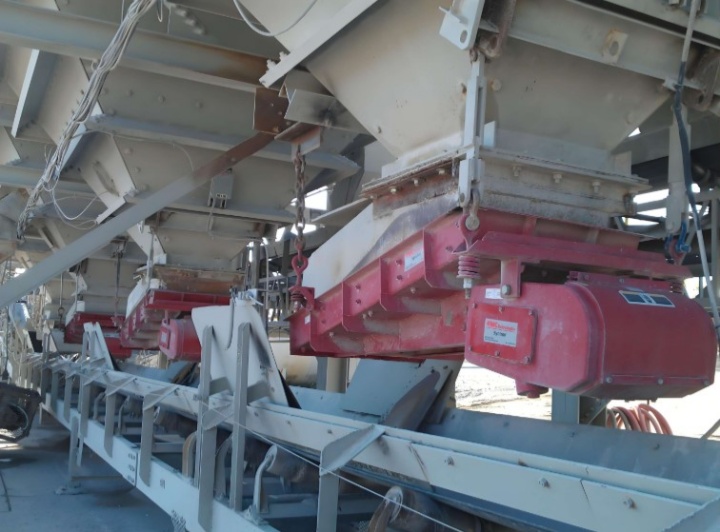
Technical Specifications
| Parameter Item | Model GZV-1 | Model GZV-3 | Model GZV-5 | Model GZV-7 |
| Handling Capacity (t/h) | 0.5 – 3 | 3 – 15 | 15 – 40 | 40 – 100 |
| Trough Dimensions (L×W×H mm) | 500×150×100 | 800×250×150 | 1200×400×200 | 1500×600×300 |
| Double Amplitude (mm) | 1.75 | 1.75 | 1.75 | 1.75 |
| Vibration Frequency (Hz) | 50 / 60 | 50 / 60 | 50 / 60 | 50 / 60 |
| Coil Power (kW) | 0.15 | 0.45 | 1.2 | 3.0 |
| Applicable Particle Size (mm) | ≤ 3 | ≤ 10 | ≤ 15 | ≤ 25 |
How to Choose the Right Quartz Sand Vibratory Feeder for Your Production Line
| Production Requirement | Recommended Model | Recommended Configuration | Why This Configuration |
| Small laboratory dosing | GZV-1 | Standard carbon steel trough | Provides high feeding accuracy for low-capacity applications. |
| Medium glass sand production line | GZV-3 | 304 stainless steel trough | Prevents contamination while ensuring stable continuous feeding. |
| Quartz sand drying & screening line | GZV-5 | NM400 wear-resistant liner | Handles medium production capacity with excellent abrasion resistance. |
| Large silica sand processing plant | GZV-7 | Hardox 450 wear liner | Designed for heavy-duty continuous operation and long service life. |
| High-purity quartz powder | GZV-3 / GZV-5 | Polyurethane liner + 304/316L stainless steel | Minimizes iron contamination for high-purity material handling. |
| Highly abrasive coarse quartz sand | GZV-5 / GZV-7 | NM400 or Hardox 450 replaceable liner | Extends equipment life under severe wear conditions. |
Selection Tip: The recommended model depends on material properties, required capacity, particle size, installation conditions, and production requirements. For customized selection, please provide your material characteristics, hourly capacity, and application details to our engineering team.
Custom Industrial Sand Feeders for Sale
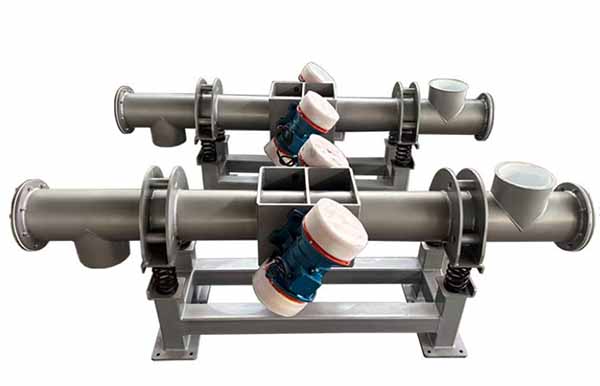
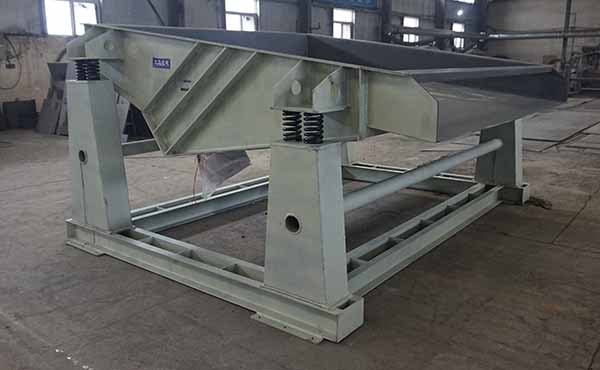
Production lines can customize various electromagnetic feeding equipment configurations according to process nodes such as quartz sand purification, drying, color sorting, and batching for glass melting furnaces. Trough features like open tops, enclosed tubular designs, downward incline slopes, or bottom dual discharge ports can be adjusted according to on-site installation topology.
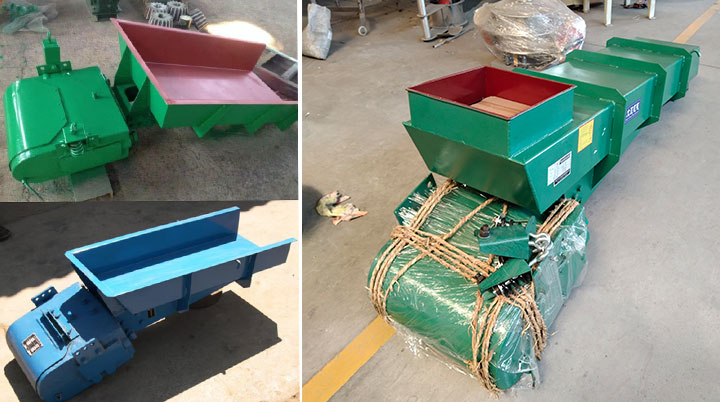
Cost-effective Alternative to Syntron Electromagnetic Feeders
For customers seeking replacement units for Syntron electromagnetic feeders, our factory equipment provides dimensional matching and performance-compatible interfaces:
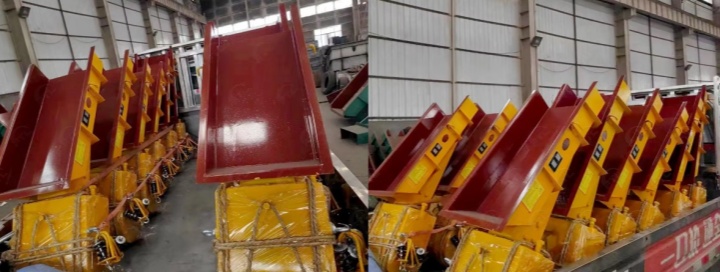
Installation Dimension Alignment: Mounting bolt hole patterns at the bottom of the feeder and foot bracket spacing can be machined to match Syntron F-TL and BF series physical dimensions, requiring no cutting or re-welding of existing steel structure platforms during replacement.
Control Box Signal Seamless Compatibility: The controller supports 4–20mA and 0–10V industrial standard signals, directly interfacing with original Syntron PLC control card slots and speed regulation potentiometers.
Spare Part Interchangeability and Cost Reduction: Coil packs, leaf spring stacks, and thyristor trigger boards are supplied as independent standardized components, reducing long-term operational maintenance expenditures.
How to Select the Right Quartz Sand Vibratory Feeder
| Selection Factor | Recommended Configuration | Why It Matters |
| Material Type | Dry quartz sand or silica sand | Electromagnetic feeders provide stable and precise feeding for free-flowing materials. |
| Particle Size |
10–80 mesh → NM400 / Hardox 450 liner 100–320 mesh → Polyurethane liner |
Coarse particles require high wear resistance, while fine powder needs anti-contamination protection. |
| Feeding Capacity |
0.5–15 t/h → GZV-1 / GZV-3 15–100 t/h → GZV-5 / GZV-7 |
Proper model selection improves feeding accuracy and extends equipment life. |
| Purity Requirement | 304 Stainless Steel / 316L Stainless Steel | Suitable for glass sand and high-purity silica applications requiring low iron contamination. |
| Dust Control | Enclosed trough with flexible sealing sleeves | Minimizes dust leakage and maintains a cleaner production environment. |
| Control Method | Manual Controller / PLC (4–20mA & RS485) | Supports automatic batching and continuous production lines. |
| Installation Environment |
Indoor → Standard Configuration Outdoor → IP65 Sealed Coil |
Improves reliability in dusty or outdoor operating conditions. |
Frequently Asked Questions
Q1: Why use an electromagnetic vibratory feeder instead of a motor vibratory feeder for quartz sand?
Answer: Electromagnetic feeders vibrate by using an electromagnetic coil to attract an armature, reaching a vibration frequency of 3,000 cycles per minute (at 50Hz) with a small amplitude (1.5–2.0 mm). Compared to heavy vibration driven by motors, electromagnetic vibration does not cause severe impact on quartz sand particles, lowering particle breakage rates. Additionally, the electromagnetic controller responds to stop or alter feeding volume within 0.1 seconds by modifying output voltage. Without the inertial residual vibration of a stopping motor, it avoids over-feeding.
Q2: How do you handle the high abrasion of quartz sand?
Answer: Managing high abrasion relies primarily on three measures:
Lining the trough interior with replaceable NM400 wear plates or 8 mm thick polyurethane liners;
Adjusting the trough slope to a 10°–15° downward incline, combining material self-weight with micro-vibrations to descend, reducing sliding friction distance of particles along the trough bottom;
Setting up a quartz sand self-accumulating cushion bed below the feed inlet so incoming sand strikes directly onto previously accumulated sand, forming a "sand-on-sand" protective barrier.
Q3: Can this feeder be integrated with automated quartz sand weighing systems?
Answer: Yes. The electromagnetic feed controller comes equipped with an RS485 communication interface (Modbus RTU protocol) and analog input terminals. When interlocked with a belt scale or weighing hopper sensors, real-time weight differential values detected by the weighing instrument feedback to the thyristor trigger. The controller adjusts coil current within milliseconds to alter trough vibration amplitude and achieve feeding accuracy control targets.
Ordering and Technical Support
To request selection drawings, CAD layout files, or factory quotes, please submit the following parameters to our technical department:
Quartz sand mesh size / particle distribution range
Required hourly feeding capacity (t/h)
Material moisture percentage
On-site power supply voltage and frequency (e.g., 380V 50Hz / 440V 60Hz)