How to Select the Right Industrial Bucket Elevator
Saturday October-10 2026 10:58:51
For bulk solids handling across multiple sectors, Industrial bucket elevator serves as a reliable vertical conveyance solution. Mining, building materials, grain processing and chemical works are among the major fields of application. According to statistics from Dataintelo’s global industry report, these four sectors form the major application scenarios for bucket elevators. Industrial Bucket Elevator Selection serves as a critical technical procedure in engineering projects. The matching degree of equipment affects operating status and maintenance input.
Global engineering records show most irregular operation of bucket elevators arises from improper matching at the selection stage rather than inherent defects of the device. Many purchasers only refer to nominal parameters in product brochures while ignoring differences in material features and site working conditions. This may lead to material accumulation, spillage, accelerated component wear and insufficient output. Combining overseas implemented projects and general standards for bulk material handling, this article sorts practical selection ideas to help engineering teams avoid common operational risks.
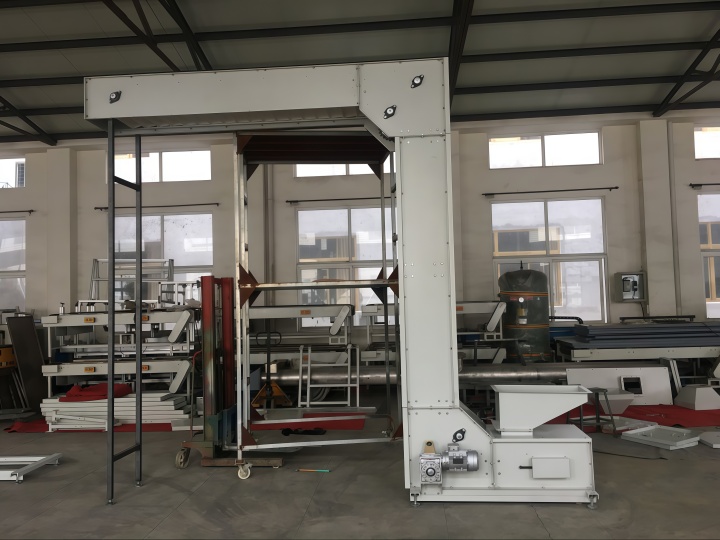
Confirm Material Characteristics and Match the Basic Adaptability of industrial bucket elevator
Material parameters act as the core basis for stable operation of bucket elevators, influencing bucket material selection, conveying speed setting and sealing structure configuration. There are reference ranges for filling factors in the industry. For powder material conditions, values should be lowered moderately to offset material retention caused by backflow during discharge. Sticky materials with high moisture content tend to stick to bucket inner walls and trigger accumulation inside buckets.
The urea conveying project in Gujarat, India adopts a sealed housing with variable frequency speed regulation to ease material adhesion and maintain steady equipment operation. Abrasive materials with high hardness speed up wear of traction components. The lithium mineral project in Australia uses wear-resistant chain plates paired with hardened buckets to improve component working conditions. For flammable and explosive powder materials, housings and supporting assemblies shall comply with common explosion-proof specifications. Stainless steel buckets are often used in food processing scenarios to prevent material contamination.
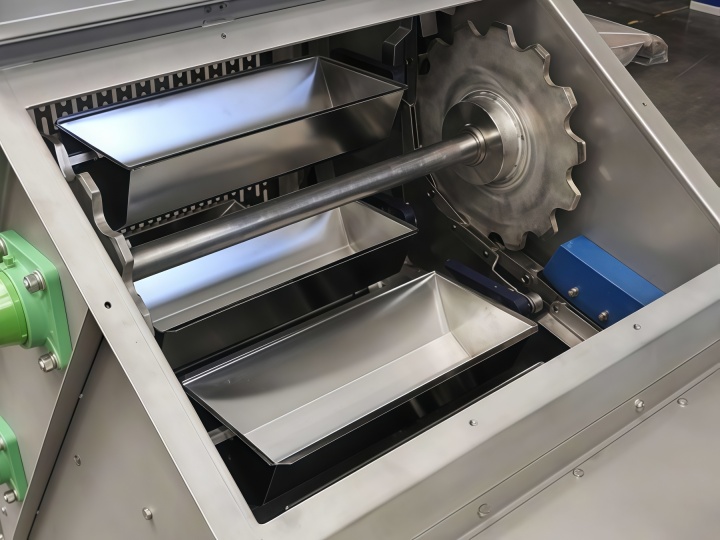
Calculate Output Parameters and Lifting Height to Determine Basic Specifications of industrial bucket elevator
Nominal output parameters marked in product manuals are measured with dry standard materials and cannot fit complex site working conditions. In engineering practice, theoretical parameters are adjusted moderately based on material viscosity and stacking state. Reasonable margins are reserved to accommodate dynamic changes in production conditions. Lifting height calculation shall not only adopt the net vertical transport distance of materials, but also include structural height occupied by head and base sections.
The grain terminal project at Port Klang, Malaysia provides valuable reference. There is an obvious gap between the net material lifting dimension and the overall installation dimension of the machine. Solely relying on net dimensions may cause mismatches during on-site installation. The bucket elevator in this project fits grain terminal bulk handling scenarios and continuous operation requirements, serving as a common reference for grain port selection. Proper calculation of height and output parameters helps prevent the device from becoming a bottleneck of production lines.
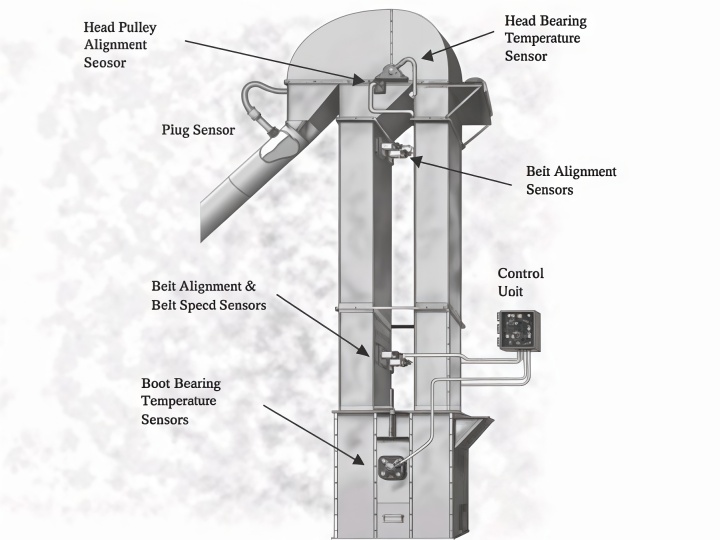
Choose Traction Structure and Match the Operating Mode of industrial bucket elevator
Bucket elevators fall into two traction types: belt and chain. Different structures adapt to distinct working scenarios. Belt-type units run with low noise and reduce material breakage, suitable for grain and light powder materials. A rice mill project in Punjab, India uses plastic buckets mounted on belt structures to cut grain breakage, representing a common solution for grain industries.
Chain types include link chains and plate chains, featuring strong load-bearing capacity and impact resistance for ores and high-temperature clinker with abrasive properties. The plate-chain bucket elevator deployed at a cement plant in Vietnam transports clinker at 120°C. The fully sealed housing meets relevant guidelines for dust emission and adjusts maintenance schedules. Discharge types need to be confirmed during selection: centrifugal discharge works for powders, while low-speed continuous discharge suits bulky fragile materials.
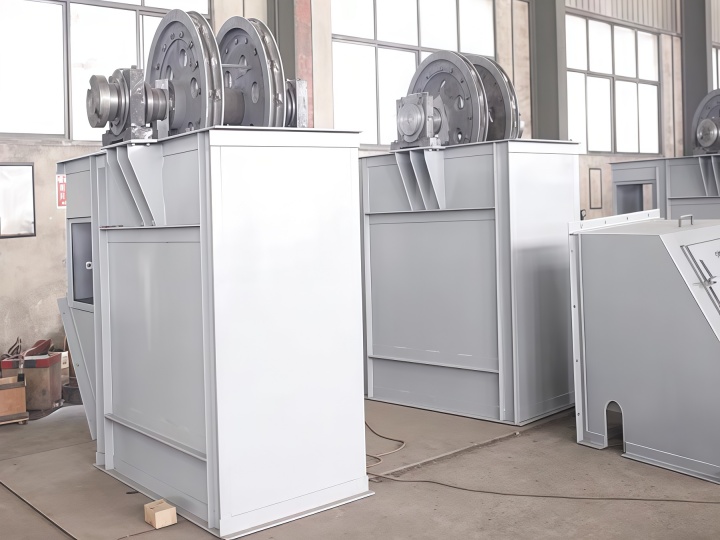
Evaluate On-site Installation and Maintenance Conditions and Optimize the Scheme of industrial bucket elevator
On-site space, environmental conditions and power supply parameters are easily overlooked during equipment selection. Compact machine bodies are preferred for plants with limited space. Interface dimensions of upstream and downstream equipment should be checked in advance to guarantee smooth connection. Shell reinforcement against corrosion and dust can be applied in dusty, humid or corrosive environments.
A coal-fired power plant fly ash project in Southeast Asia carries out anti-corrosion modification for housings. The adjustment reduces the frequency of component faults and streamlines maintenance arrangements. Power supply voltage and capacity on site also need verification to support stable startup and shutdown.
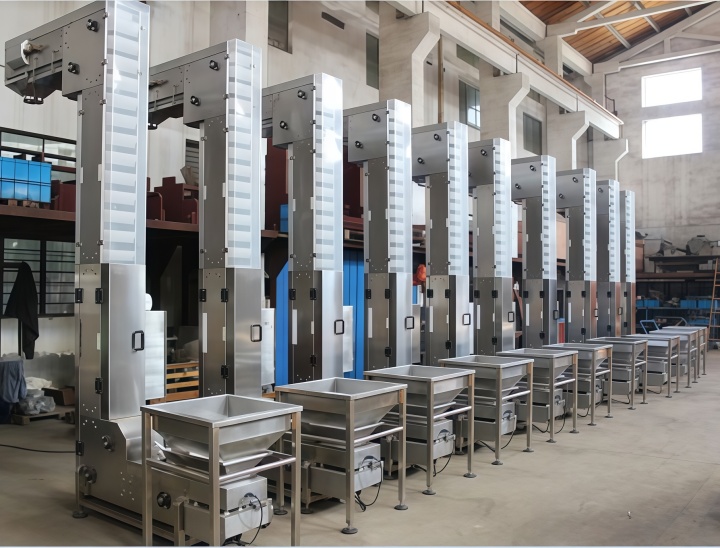
Reference Applicable Industries and Select Suitable Working Conditions for industrial bucket elevator
According to segmented data from Dataintelo 2025, chain bucket elevators are applied in various scenarios. There is no universal selection template across industries, as material properties and site environments vary greatly.
Mining projects focus on wear-resistant heavy-duty structures. Grain processing pays attention to material breakage and prefers low-speed transport. Cement manufacturing requires high-temperature and dust-proof sealing. Chemical processing needs multi-layer protection including anti-corrosion, anti-static and explosion-proof performance. All selections shall be judged based on measured material parameters.
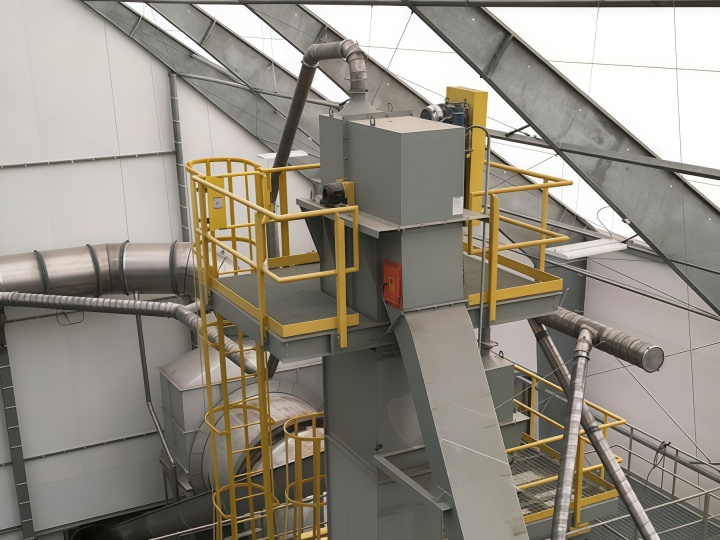
Pre-selection Checklist, Collect Working Condition Information for industrial bucket elevator
Before confirming equipment models, engineering teams can gather working condition data in the table below to reduce selection deviations.
| Information Category | Items to Collect |
|---|---|
| Basic Material Info | Material type, bulk density, moisture content, abrasion grade |
| Conveying Info | Regular conveying volume, peak conveying volume, actual lifting height |
| Site Environment Info | Vertical workshop space, ambient temperature, dust grade |
| Special Requirements | Explosion-proof, anti-corrosion configuration requirements |
| Connection Dimension Info | Interface specifications of upstream and downstream equipment |
Check Common Selection Pitfalls and Avoid Hidden Risks When Picking industrial bucket elevator
Three typical pitfalls appear in equipment selection. Oversized motor power leads to extra power consumption. Ignoring filling factors creates discrepancies between theoretical reference values and field performance. Seasonal changes in material moisture may trigger material accumulation in humid periods.
Material properties, conveying demands, lifting height and site environment should be assessed jointly to confirm whether the device fits production lines. The core of selecting industrial bucket elevator lies in working condition matching rather than simple parameter comparison. Complete and accurate collection of material and site data cuts down downtime risks and helps engineering teams find suitable conveying solutions.
Common Questions about industrial bucket elevator
Q: What is the reference service period of industrial bucket elevator?
A: Service period relates to material abrasion and operation hours. Different ranges apply to low-abrasion and high-abrasion mining scenarios. Regular maintenance helps sustain good working status.
Q: Can industrial bucket elevator convey mixed materials with varied particle sizes?
A: Materials with minor particle size differences can be handled. Large gaps among particle sizes may cause uneven feeding and material accumulation, affecting operation stability.
Q: What essential safety configurations does industrial bucket elevator need?
A: Basic configurations include speed monitoring and anti-reverse devices. For flammable powder materials, dust-proof and explosion-proof assemblies can be added to meet relevant explosion-proof codes.
Q: Can the lifting height of industrial bucket elevator be adjusted after fabrication?
A: Finished equipment is not fit for lifting height modification. Height adjustment requires re-customization of housing, traction parts and counterweights, which counts as overall reconstruction.